


The swift and dramatic legal intervention came as a surprise to many, overturning a decision that had been made just hours earlier and throwing the future of a highly controversial project into question. The temporary restraining order, issued by a federal judge, represents a significant victory for those who have opposed the monument, and a major setback for the administration that has championed it. The legal battle is far from over, with the order providing only a brief pause for further consideration, but the message from the court was clear: the swift approval and planned groundbreaking warranted a closer look. The judge’s action served as a powerful reminder that even the most politically charged projects must still navigate the complex legal and procedural landscape that governs the nation’s capital.
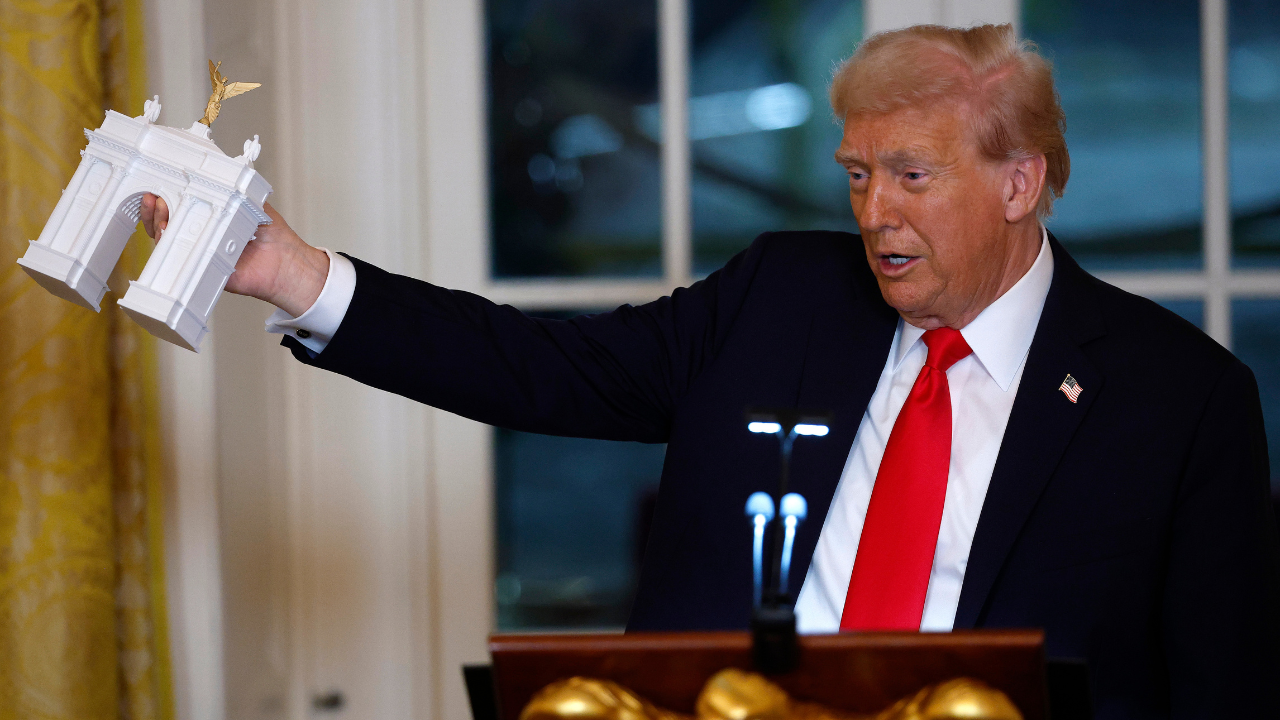
At the heart of the dispute is the monument itself, a towering 250-foot-tall structure inspired by the Arc de Triomphe in Paris. This colossal edifice is conceived as a triumphal arch, meant to serve as a grand and heroic gateway connecting the hallowed grounds of Arlington National Cemetery to the heart of Washington, D.C. The project is deeply embedded with symbolic weight, intended to be a modern-day testament to what its proponents see as American greatness. The design is deliberately grandiose, featuring granite cladding and topped with three golden statues, and is strategically positioned along the Memorial Bridge to be one of the first things visitors see when entering the capital from Virginia. For its backers, it is a necessary and powerful statement of national pride, a a physical manifestation of a bold and unapologetic vision for how the United States should memorialize its heritage and achievements.
The driving force behind the project, President Trump, has been vocal about his desire to see this vision become a reality, drawing direct comparisons to the awe-inspiring monuments of Paris, Rome, and London. He sees the arch not just as a static memorial, but as a vibrant and functional symbol of American strength. The President’s plans extend beyond a purely ceremonial structure, encompassing a vision for a multi-purpose complex that would serve as a military installation. He has publicly stated that the arch would be used to deploy drones in large numbers, with strategic positions for snipers on its roof and in the surrounding plazas, and would include storage for significant quantities of ammunition. This proposed dual purpose, combining commemoration with military readiness, adds another layer of complexity and controversy to a project that was already facing significant headwinds from various factions.
This pragmatic, and to some, alarming, approach to the monument has become a focal point for the opposition. The project has drawn widespread criticism from a coalition of adversaries, including preservationists, lawmakers, and veterans’ groups. Their primary concerns are both aesthetic and procedural. Aesthetically, they argue that a massive, 250-foot-tall structure would irreparably damage the sightlines and the contemplative atmosphere of the National Mall, disrupting the historic views from the Lincoln Memorial and casting a long shadow over the serenity of Arlington National Cemetery. They frame the project as a visually intrusive and discordant addition to a landscape designed to promote reflection and solemnity. Procedurally, opponents have raised serious legal questions, challenging whether the administration has the authority to bypass what they see as a necessary approval from Congress for a project of this scale and national significance. They contend that due process was not followed, and that the project is being rushed through in a manner that avoids proper scrutiny.
The internal conflicts and legal battles over the project highlight a fundamental disagreement about the nature of public monuments. The approval granted by the National Capital Planning Commission, a federal panel, was hard-won and deeply divided, passing with a vote of 8-4. The testimony before the commission exposed the deep rifts in opinion, with the Trump-appointed chairman, Mark Paoletta, acting as a passionate advocate for the monument. His arguments were steeped in a particular philosophy of national identity, asserting that grand monuments are essential for a country to display who it is to the world. He framed the project as a necessary reflection of presidential leadership and the importance of creating enduring physical symbols of national power. This perspective directly clashes with the opposing viewpoint, which prioritizes historical accuracy, environmental impact, and the sanctity of the existing historical landscape.
The judge’s decision to grant the temporary restraining order is a significant procedural action that now forces a critical pause. The 14-day block on construction provides a window of time for the court to hear further arguments and assess the validity of the legal challenges. The central question that will be weighed is whether the project truly has the legal authority to proceed as it has been planned, or whether it constitutes an overreach of executive power requiring explicit congressional consent. For the plaintiffs—the District of Columbia, the Commonwealth of Virginia, and the group of Vietnam veterans and historians—the decision represents a validation of their right to challenge the sudden and sweeping changes to their historic surroundings. It is a moment of relief, halting the bulldozers and providing an opportunity for a more deliberate and deliberative process. The future of this triumphal arch now hangs in the balance, suspended between a vision of grand ambition and a deeply rooted commitment to preserving the historical narrative of the nation’s capital. The next two weeks will be crucial in determining whether this ambitious project will ever break ground, or if it will become just another footnote in the ongoing, contentious debate over how America chooses to remember its past and define its future.