


There is something deeply Alaskan about a political scandal that starts with a quiet meeting in Wasilla and ends with the FBI knocking on doors in a community so remote that a man can simply disappear. David Eastman, a conservative former member of Alaska’s state House, never expected to be at the center of a federal controversy. But when an FBI agent reached out to him, Eastman knew exactly what the conversation would be about. Months earlier, he had sat across from a man who introduced himself under a false name, claimed to represent conservative donors, and urged Eastman to run for the U.S. Senate. That encounter, Eastman later realized, was part of something much stranger: an alleged plot by Democratic operatives to put a “Decoy Dan Sullivan” on the ballot to confuse voters who wanted to support the incumbent Republican senator, Dan Sullivan. The scheme was so audacious that it sounds like a satirical take on American politics, but it is real enough that federal investigators are examining it, a congressional committee has demanded testimony, and Alaska’s governor has opened an investigation. At the heart of the matter is a simple but corrosive question: how far can political operatives go to shape an election before it becomes an attack on the right to vote itself? For Eastman, the meeting was confusing and then unsettling. He had been approached through a constituent by an operative he later identified as Jerid Kurtz, a man named in a New York Times report about the alleged effort. Kurtz presented himself as someone looking for conservative candidates to run for federal office. None of that, Eastman says, was true.
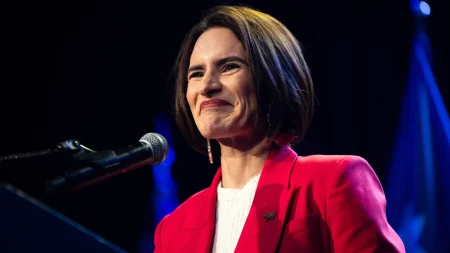
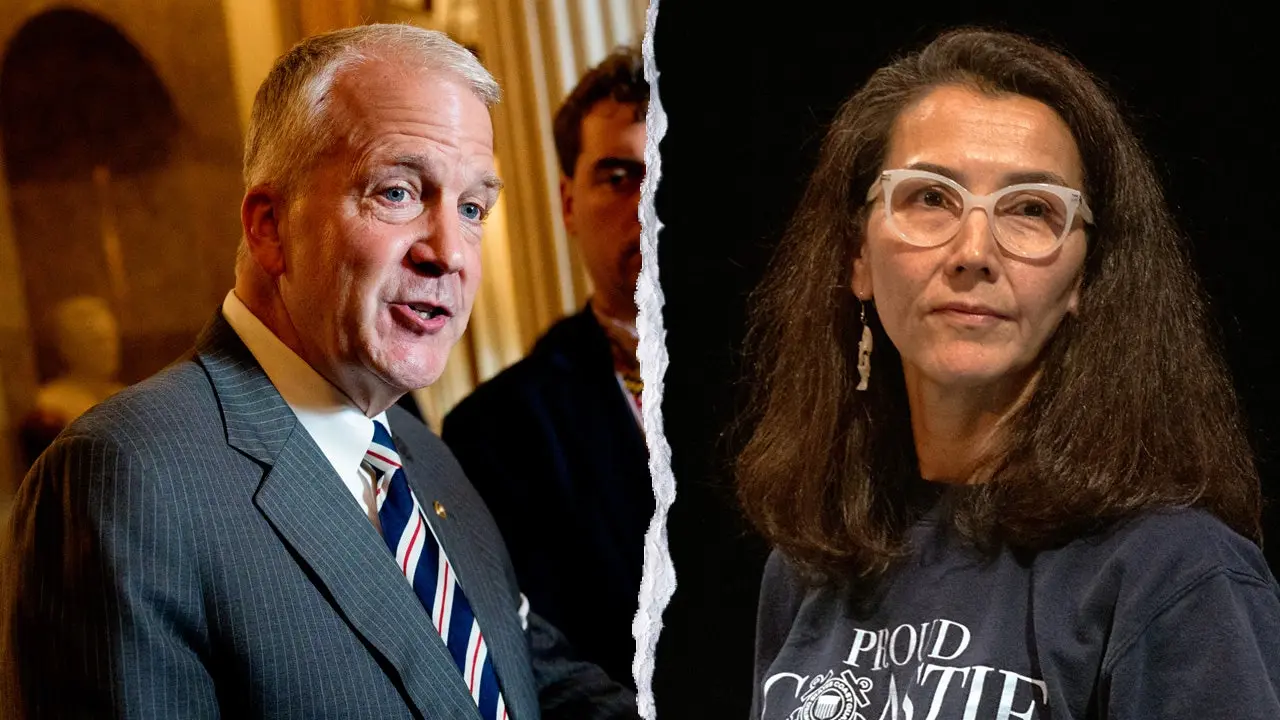
According to the New York Times, former campaign staffers for Democratic Senate nominee Mary Peltola spoke publicly about their knowledge of a coordinated effort to stack Alaska’s four-person ballot with other candidates named “Dan Sullivan.” The idea was brutally simple: by placing at least one additional Dan Sullivan on the ballot, operatives could create confusion among voters who came to cast their ballots for the incumbent Republican, Dan Sullivan. The final ballot in that race included Peltola, incumbent Republican Dan S. Sullivan, Republican Gerald Heikes, and a retired Petersburg teacher named Dan J. Sullivan. The existence of two Dan Sullivans—one with a middle initial and one without—was enough to make honest voters hesitate. In a state with ranked-choice voting, where every ranking matters, even a small number of misdirected votes could change the final outcome. The report suggested that Democratic operatives had quietly worked behind the scenes to recruit a “decoy” who shared the incumbent’s name, in the hope that some voters would accidentally vote for the wrong man. Whether the similarly named candidate actually diverted votes or affected the outcome remains unproven, but the controversy has already left a stain on the state’s political process. The report also revealed that several people involved in the alleged scheme were tied to the Peltola campaign, the Democratic Senatorial Campaign Committee, and a firm called Wingspan Strategies, where Kurtz is named as a co-owner in congressional documents. The denials have been muted; the questions have not gone away.
The legal stakes are significant. Will Chamberlain, an attorney with the Article III Project, told Fox News Digital that the alleged scheme could amount to a federal felony under a long-standing civil rights statute. Specifically, he pointed to 18 U.S.C. § 241, which makes it illegal for two or more people to conspire to injure, oppress, threaten, or intimidate any citizen in the exercise of a constitutional right. Among the most cherished constitutional rights is the right to vote for the candidate of one’s choice. “The basic concept is you’re not allowed to conspire to injure or harm people’s constitutional rights. And one of those rights is to vote for the candidate of your choice,” Chamberlain said. He argued that the supposed conspiracy to put a fake “Decoy Dan” on the ballot was intended to trick people who went into voting booths intending to vote for Senator Dan Sullivan. “There’s a lot of good precedent on this that suggests that’s a crime and a felony punishable by up to 10 years in prison,” he added. Chamberlain acknowledged that no case exactly like this one—recruiting a same-name candidate to deceive voters—has ever been tested in court. He also noted that much of political messaging, even misleading messaging, is protected speech. If a candidate simply claims to be the better Republican, or runs a dishonest ad, that is not necessarily a conspiracy against rights. The difference, he explained, is that this alleged scheme did not rely on persuasion. It relied on trickery, on the chance that a voter would look at a ballot, see a familiar name, and cast a vote for someone they had never heard of. That, he argued, crosses a line from ordinary political gamesmanship into a deliberate effort to deprive voters of their ability to choose who represents them.
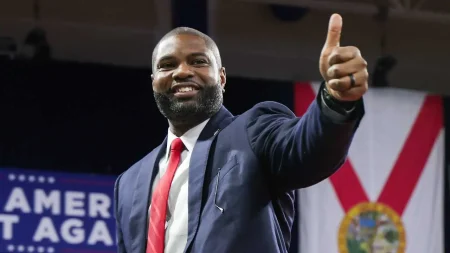
Eastman’s own story is a reminder of how close the scheme came to succeeding. He was a Republican lawmaker from the Matanuska-Susitna Valley, known for a conservative record and a willingness to buck party leadership. In April, he agreed to meet with Kurtz after an introduction from a constituent. The meeting took place in Wasilla, and Eastman says Kurtz told him he represented conservative donors interested in recruiting strong candidates for federal office. It was flattering, and Eastman admits he took the meeting seriously. But something felt off. Kurtz did not specifically mention Senator Dan Sullivan, nor did he say anything about trying to confuse voters. He simply encouraged Eastman to consider running. Eastman did not run, and the conversation passed without incident—until the New York Times report brought the whole scheme to light. Then Eastman began connecting the dots. He recognized Kurtz, wrote a blog post about the encounter, and later confirmed that the FBI had interviewed him. Fox News Digital reached out to the FBI for comment but did not receive a response. Eastman also shared copies of “fake mailers” he had received, which were framed as nonpartisan candidate guides. The mailers listed several candidates for the Senate race but conspicuously omitted the actual incumbent, Dan Sullivan. To anyone reading them, the implication was that the only Dan Sullivan in the race was the one who was not the sitting senator. For Eastman, the mailers were proof that the alleged operatives were willing to go to extraordinary lengths to deceive voters, even before a single ballot was cast.
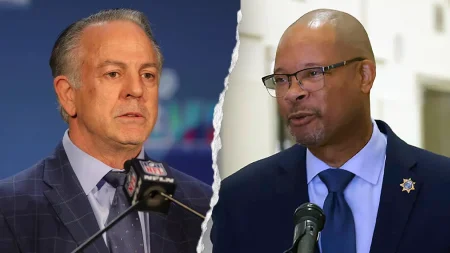
The controversy has now reached Capitol Hill. On October 29, House Oversight and Government Reform Committee Chairman James Comer, a Republican from Kentucky, sent a letter to Jerid Kurtz demanding that he appear for an in-person, transcribed interview on November 6. In the letter, Comer wrote that Kurtz, as a Democratic operative allegedly tasked with assisting in the effort, possesses information that would aid the committee’s investigation. “If you do not voluntarily appear for the interview, we will be forced to evaluate the use of compulsory process,” Comer warned, making clear that a subpoena was possible. The House probe is just one layer of the broader fallout. Alaska’s governor has also ordered a state investigation after the New York Times report. The Justice Department, meanwhile, faces substantial legal challenges in any potential prosecution, including questions of intent and the statute of limitations. Even the actual “Decoy Dan” candidate, retired schoolteacher Dan J. Sullivan, has reportedly vanished as investigators began knocking on doors in his remote community, according to the Wall Street Journal. That image—a man disappearing into the Alaska landscape just as the questions begin—captures the surreal tone of the entire saga. Democratic operatives have largely gone quiet, with the Peltola campaign, the Democratic Senatorial Campaign Committee, and Wingspan Strategies declining to comment to Fox News Digital. The silence has done little to calm the public’s unease.
At bottom, the Decoy Dan affair is about trust. Alaska is a place where voters pride themselves on taking elections seriously, where small populations and close-knit communities mean that candidates are often known personally, not just by name. The alleged scheme took that familiar connection and weaponized it. It used a common name as a cover for electoral interference, treating voters’ confusion as a legitimate political resource. There are many legal ways to persuade people, to run negative ads, to spend money, and to push ideology. But when a voter walks into a polling place prepared to support an incumbent, and a decoy candidate with the same name is waiting on the ballot, the entire act of voting becomes corrupted. No one has said that the scheme definitely changed the outcome of the race. No one has been charged with a crime. But the FBI’s interview with Eastman, the House Oversight Committee’s demand for Kurtz’s testimony, and the governor’s investigation all point to a recognition that something serious may have happened. For Eastman, the experience has left him skeptical of political operatives who promise one thing and intend another. “He pretended to represent conservative donors and was looking for conservative candidates to run for federal office; none of which was true,” Eastman said. That sentence captures the cold cynicism at the heart of the allegations. If operatives are willing to lie to a candidate’s face, how far will they go to deceive an entire electorate? The strange case of the two Dan Sullivans may not answer that question, but it has forced Alaska and the nation to confront it.