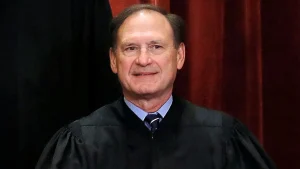


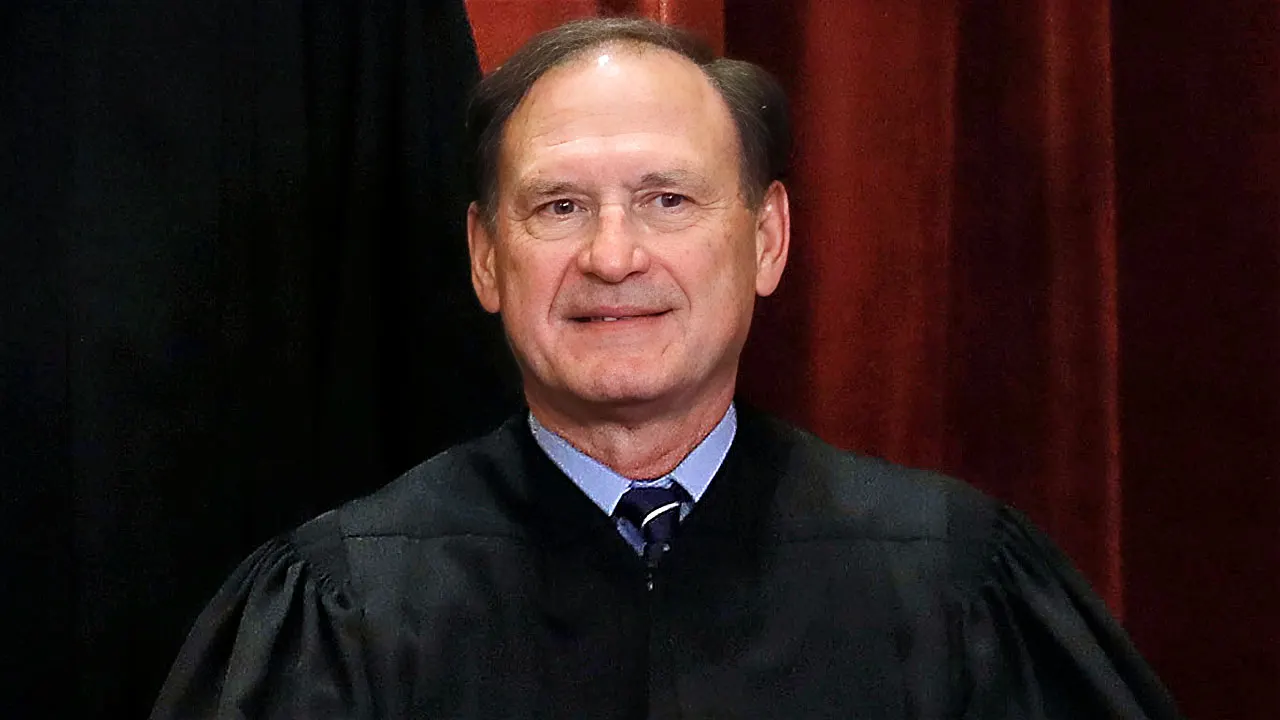
For months, the rumor mill around Washington had been churning with a singular, high-stakes question: Was Supreme Court Justice Samuel Alito about to call it quits? Every legal commentator, every political strategist, and every armchair analyst seemed to have an opinion. Then, on Thursday, the 76-year-old justice himself cut through all the noise. Alito confirmed to Fox News that he has absolutely no plans to retire and intends to see the current term through, at least until it ends in late June. It is a simple, human statement, but in the world of Washington politics, it landed like a thunderclap. Imagine the scene: a man who has spent decades interpreting the Constitution, who has been at the center of some of the most consequential and contentious decisions in modern American history, calmly telling the world that he is not going anywhere. There is something almost defiant in that, a quiet signal that age and external pressure do not matter. For supporters of the conservative legal movement, it was a relief; for those hoping for a Democratic appointment, it was a reminder that the high court does not simply reshuffle according to election cycles. At 76, Alito is the second-oldest justice, behind only 78-year-old Clarence Thomas, and the natural question of succession has hung over the Court like a shadow. With this announcement, at least for now, that shadow has lifted, replaced by the steady, grinding work of deciding cases that will shape the lives of everyday Americans for generations.
But why was there so much speculation in the first place? The answer lies in the political earthquake that just shook the Republican Party. The midterm elections were, by any measure, a disastrous night for the GOP. When the new congressional term begins in January, Democrats will find themselves in firm control of the Senate, and the math is brutal for conservatives. Florida Governor Ron DeSantis, never one to shy away from a blunt prediction, took to X to spell out the grim arithmetic: the chance of confirming a worthy successor to Justice Thomas or Justice Alito during President Donald Trump’s term is exactly zero. And if a hypothetical Republican administration were to take office in 2029, the odds might still be zero, because Republicans likely will not recapture enough Senate seats until at least 2028, and perhaps not until 2033. To put it in human terms, the Supreme Court suddenly looks like a fortress that conservatives can no longer reinforce. Every seat matters, every retirement can alter the balance of power on issues like abortion, gun rights, executive authority, and voting laws, and for the people who care deeply about these issues, the idea of a vacancy in this political environment is terrifying. DeSantis did not mince words, writing that assuming Republicans lose the seats where prediction markets have Democrats at 90 percent or higher to win, that would produce 55 Democratic Senate seats. That is a supermajority of sorts, not enough to overcome a filibuster on most legislation but more than enough to block any Supreme Court nominee. The message is unmistakable: if Alito or Thomas were to leave the bench now, there is no realistic path for a conservative successor. For the first time in years, the judicial future is not bright red; it is dangerously blue, at least from the perspective of the right.
Conservative legal expert Ed Whelan, who clerked for the late Justice Antonin Scalia, drove the point home even further. In a series of posts on X, Whelan explained that President Trump is now effectively blocked from appointing any federal judges or Supreme Court justices during the final two years of his term. It is a stunning reality for a president who made remaking the judiciary one of his signature achievements. Whelan’s analysis goes beyond the immediate term: even if a Republican is elected president in 2028, that president will not be able to appoint any justices or judges until Republicans regain the Senate. Given the deep electoral hole Republicans now find themselves in, Whelan notes that might not happen until 2033. Let that sink in. A generation of judicial appointments could be frozen by a single election cycle. The Supreme Court is not just a building in Washington; it is a living institution that interprets the law for every American, and its composition affects everything from environmental regulations to the rights of workers, from the powers of the president to the freedom of the press. Whelan’s words are colder and more precise than any political slogan. He is not talking about wishes or last-minute maneuvers; he is talking about arithmetic, and arithmetic does not care about momentum, fundraising, or rally crowds. If the Senate remains in Democratic hands, the traditional role of “advice and consent” becomes an immovable wall. And for those who worry about the long-term legitimacy of the Court, this is a moment of deep anxiety. The judiciary was always supposed to stand above politics, but in modern America, it is the most political battlefield of all, and Whelan’s assessment is a stark reminder that there is no escape hatch, no clever procedural trick that can overcome a simple lack of votes in the Senate.
What about the so-called “lame duck” possibility? Could a justice strategically resign before the new Senate is sworn in, forcing a quick confirmation vote while Republicans still hold a slim majority? Whelan, again, poured cold water on that idea. He explained that a justice resigning during the upcoming lame-duck session is highly unlikely, and even if it happened, Republicans would have a hard time securing the 51 votes needed to confirm a new nominee. This is where the human element of politics really comes into focus. The Senate is not a monolith, and the Republican conference is far from a unified bloc. Whelan specifically named several GOP senators who would likely resist any extreme or controversial nominee: Susan Collins and Lisa Murkowski, the two moderate women who have often broken with their party on judicial votes; John Cornyn, Thom Tillis, and Bill Cassidy, none of whom are eager to do Trump any favors; and John Curtis of Utah, who Whelan said would be leery of anyone Trump pushed through. The picture is one of a party in disarray, not a well-oiled machine ready to jam a judge through at the last second. Imagine trying to convince five or six skeptical senators to risk their political careers on a rushed nomination in the chaotic final days of a session, with Democrats screaming foul and the media scrutinizing every move. It would be a nightmare. Even the most loyal conservative groups would struggle to rally the troops on such short notice. So the lame-duck option, while theoretically possible, is practically dead. The human truth is that Supreme Court confirmations are not just legal procedures; they are wars of attrition, requiring years of coalition-building, media strategy, and careful timing. None of that exists in the compressed, panicked atmosphere of a lame-duck session after a devastating election loss. Whelan’s conclusion is gloomy but realistic: the judicial door has effectively slammed shut, and no amount of wishful thinking will pry it open.
Beyond the immediate political calculations, Alito’s decision not to retire speaks to something deeper about the nature of the Court and the individuals who sit on it. These are not merely political appointees who clock in and out; they are people who have chosen a life of intense scrutiny, enormous responsibility, and often personal sacrifice. Alito has been in the public eye for years, enduring criticism, protests, and even security threats over decisions like the reversal of Roe v. Wade. To step down now, with a hostile Senate prepared to replace him with a liberal justice, would be to cede the very legacy he has spent a lifetime building. It would be understandable if he wanted to escape the pressure, to spend more time with family, to enjoy the quiet life of a retired jurist. But in his own words, he is committed to the work. That commitment is a reminder that for many judges, the law is not a political game; it is a calling. At the same time, the underlying uncertainty has not disappeared. Thomas is 78, Alito is 76, and the demands of the Court are grueling. There are no guarantees about health, energy, or the future. Every term could be someone’s last. The Democratic takeover of the Senate means that even if no vacancy occurs this year, the pressure will only build. A Republican could win the White House in 2028, but without a Republican Senate, the confirmation process would remain paralyzed. Meanwhile, the Court continues to hear cases on abortion, affirmative action, firearm regulations, artificial intelligence, and a host of other issues that touch ordinary Americans in intimate ways. The waiting game is agonizing, not just for politicians but for citizens who understand that the next few years will define the legal landscape for decades. Alito’s announcement provides temporary comfort, but it is not a permanent solution. It is, in some ways, like a captain announcing he will not abandon a ship during a storm: inspiring, perhaps, but the storm is still very real.
In the end, this entire episode reveals just how fragile and human the Supreme Court has become in the American imagination. We like to think of the justices as nine impartial, almost robotic figures who interpret the Constitution with mathematical precision. But they are human beings with ages, health conditions, ideological convictions, and personal fears. The recent political upheaval in the Senate has made the Court’s future more uncertain than it has been in years, and Alito’s statement, while firm, does not erase that uncertainty. It simply postpones it. The immediate crisis has been averted, but the deeper reality remains: the Supreme Court is caught between two eras, one where appointments were often bipartisan and one where every confirmation is a bitter, all-out war. Democrats now hold the keys to the Senate, and they have no incentive to confirm conservative judges. Republicans, for their part, have learned that elections have consequences, and the midterm losses are seismic. For regular people who do not follow politics every day, this might all seem distant, but it is not. The future of the Court affects whether your healthcare is protected, whether your vote counts, whether your children’s schools can be integrated, whether your business is regulated, whether your marriage is recognized, whether your privacy is respected. It is the ultimate battleground for the soul of the nation. Alito has decided to stay and fight; Thomas shows no signs of leaving; the political world is holding its breath. One thing is certain: the Supreme Court will continue to shape American life in profound ways, and the fight over who gets to sit on that bench will never be just a legal argument. It is a deeply human story about power, legacy, and the ticking clock that no one can escape. And for now, at least, the clock has not run out.