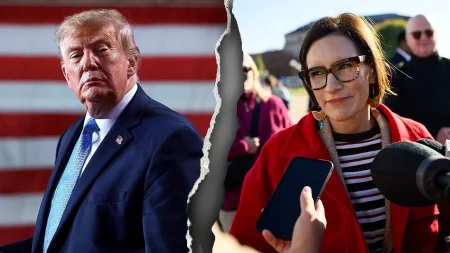



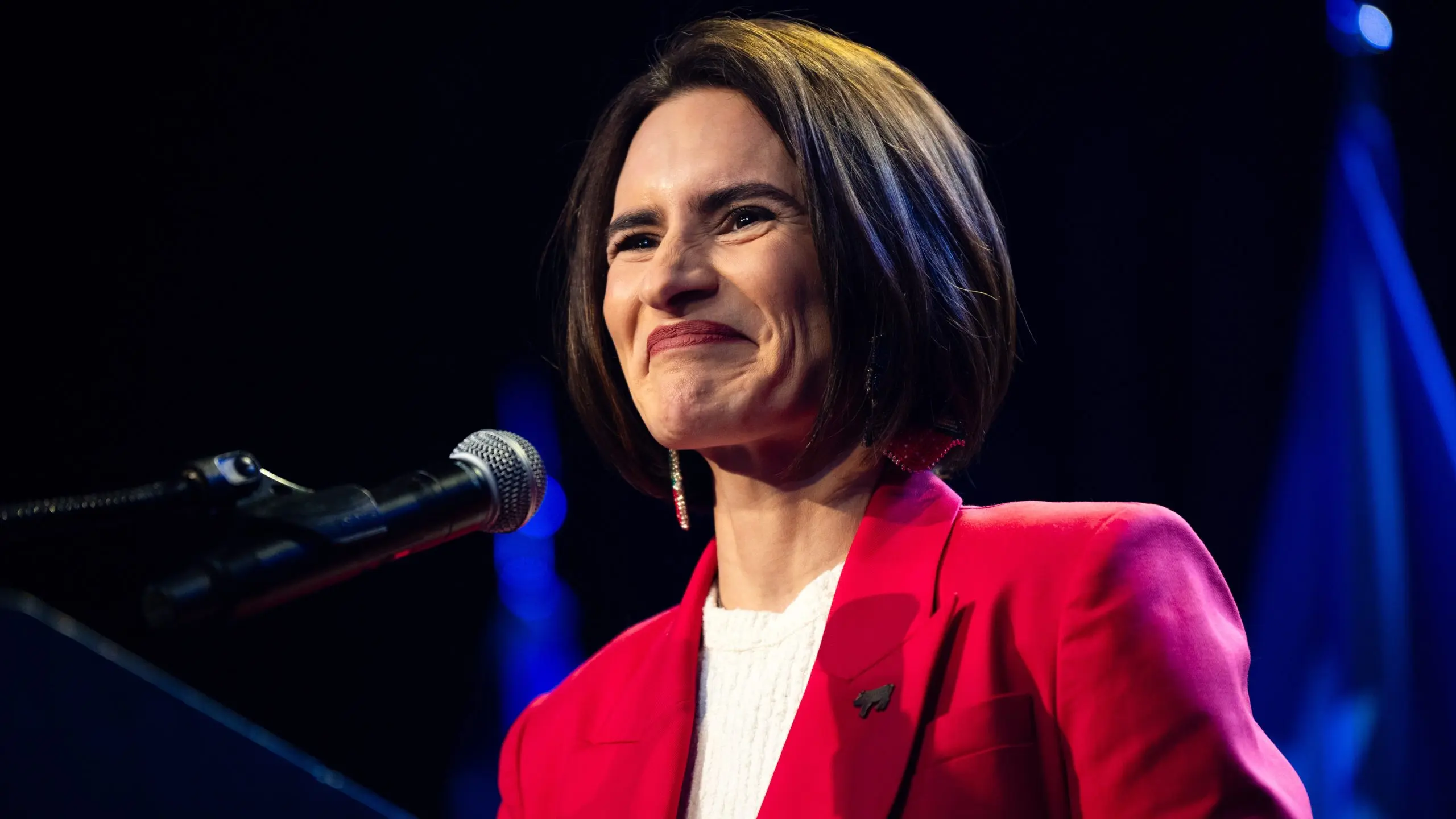
On a night when many Democrats were nervously scanning the horizon, Minnesota produced a result that felt less like a routine hold and more like a declaration. Lieutenant Governor Peggy Flanagan, a member of the White Earth Ojibwe nation and the Democratic nominee, defeated Republican Michele Tafoya, a former NFL sideline reporter who had the blessing of President Donald Trump. In the simplest political terms, the win keeps a U.S. Senate seat in blue hands. But the seat was already blue—it was not a Republican seat that Democrats had stolen. What made the victory matter was not the shift in partisan math; it was the telling snapshot of a state under siege. Minnesota had been deliberately targeted by the Trump administration in its immigration and anti-fraud campaigns. A multibillion-dollar daycare fraud scandal had erupted earlier in the year, throwing a glaring light on the state’s Democratic leadership and particularly on Governor Tim Walz and his lieutenant governor. The state became a symbolic battlefield, the place where federal enforcement went to prove a point. Flanagan’s win, then, was a repudiation of that federal pressure campaign. She did not merely defeat Tafoya; she outperformed a political environment that should have been toxic for her party. Progressives understood immediately what had happened: a candidate who refused to run from the ugliness, who refused to apologize for her values, had just won in a state that Washington had written off as a fraud-scandal embarrassment. Republicans, meanwhile, could take some strange comfort. They hadn’t lost a blue seat; they had simply failed to flip one. But the tenor of Flanagan’s victory—feisty, defiant, and directed at Washington as much as at her opponent—made it clear that the party’s progressive wing had a new champion, and that the Senate was about to get a little louder.
To appreciate why this race was so emotional, you have to go back to the backdrop that created it. Minnesota’s childcare crisis is not just a budget issue; it is a story about trust, theft, and the vulnerability of families. The sprawling, multibillion-dollar daycare fraud scandal that erupted earlier this year shook the state to its core. Federal investigators uncovered a scheme that involved millions of dollars in public money meant for child care, and several Somali immigrants were linked to the scheme. For Republicans, this was more than a local embarrassment; it was a national indictment. Here, they argued, was proof that progressive governance had gone soft on accountability. The Trump administration wasted no time. It sent Immigration and Customs Enforcement agents into Minnesota for what it called Operation Metro Surge, a broad crackdown targeting immigration violations and fraud. The operation had dramatic consequences. Two Minnesota residents, Renee Nicole Good and Alex Pretti, were killed by federal immigration agents, and their deaths became a rallying cry for opponents of the administration’s methods. The shockwaves reached Washington, D.C., where the controversy helped trigger yet another government shutdown. For Minnesota’s immigrant communities, the federal presence was terrifying; agents weren’t just abstract symbols in a political debate. They were knocking on doors, detaining neighbors, and turning daily life into a source of fear. Flanagan did not need a consultant to tell her how to react. She saw an administration that seemed to be punishing a whole state for the sins of a few, and she shifted from scandal management to political combat. What had started as an anti-Democratic scandal became, in her telling, a story about government overreach. The fraud was still there, and she never denied it. But she redirected the moral outrage toward the federal agents whose actions had made the state feel unsafe for innocent people—a narrative that would dominate the rest of the campaign.
Flanagan’s response was not subtle, and it was not designed to please moderates. She understood that the party’s traditional playbook—condemn fraud, vow to clean house, and hope the scandal goes away—would fail in a place that had been so visibly shaken. So she chose a different route. Shortly after winning her primary, she said plainly: “We need to rip ICE apart and stop them from terrorizing our communities.” The line was a gift to her critics, a ready-made attack ad, and a warning to national Democrats who had grown uncomfortable with abolitionist rhetoric. But Flanagan was not finished. She added, “And I know this. I know that we can fix our broken immigration system, secure the border, and create a real pathway to citizenship that aligns with our values.” By including “secure the border” in the same sentence as “rip ICE apart,” she tried to occupy a space that was more complex than simple left-wing sloganeering. It was also a challenge to Senate Minority Leader Chuck Schumer and the cautious incrementalists of her party. Tafoya, meanwhile, seized on the same material and turned it against her. At a debate last month, the Republican asked a question that should have been devastating: “My opponent has been second in command in this state for eight years, drawing a taxpayer-funded paycheck. And what do we have to show for that? We have massive fraud, historic fraud. We have test scores down. We have crime spiking. We have a massive surplus turned into a deficit.” It was the kind of comprehensive indictment that campaign strategists dream about. But Tafoya’s message did not land with the force it needed. Partly because Flanagan had already defined the race as a choice about federal intrusion, not just local misconduct. Voters looked at the deaths of Renee Nicole Good and Alex Pretti, looked at the government shutdown, looked at the armed federal presence in their communities, and decided that the fraud scandal was only half of the story. The other half was the cure, which felt worse than the disease. Tafoya may have been right about the failures of the past; Flanagan was more convincing about the kind of future they wanted.
The most delicate part of Flanagan’s campaign was her relationship with the man who had been her running mate for eight years: Governor Tim Walz. When the fraud scandal broke, Flanagan was in an awkward spot. She was not the governor, but she was not a bystander. She had spent the better part of a decade in the state’s second-highest office. Tafoya and her allies kept prodding: if Flanagan knew about the fraud, why didn’t she stop it? If she didn’t know, how effective was she? Flanagan’s response was a masterclass in political deflection, but it also created a quiet rift. She insisted that Walz, not she, was ultimately responsible. “He was the one who had oversight here,” she said, carefully choosing her words. Asked about the buck stopping, she repeated a line that protected her own interests while sounding respectful: “The governor has been very clear that the buck stops with him.” To her supporters, this was simply an accurate description of the chain of command. To Tafoya, it was a shameful attempt to abandon a boss she had stood beside for years. The back-and-forth exposed a truth about politics: in a scandal, no one wants to be second in command. Flanagan’s decision to put distance between herself and Walz may have cost her some goodwill among party loyalists who thought she was throwing him under the bus, but it allowed her to run as an outsider-insider, someone who could acknowledge the system had failed without accepting personal blame. It also made her appear stronger, more independent, and more willing to break with the state’s establishment—an image that, in the end, may have been more valuable than behind-the-scenes loyalty. Whatever happened in private between Flanagan and Walz, the public split was strategic. She was no longer running as his lieutenant; she was running as her own person. That distinction mattered, and it helped her survive the toughest political season of her life.
Now that Flanagan is heading to Washington, the complicated part begins. Her victory is a double-edged sword for Senate Minority Leader Chuck Schumer. On one hand, adding another Democrat to the caucus helps him, especially in a Senate chamber where every single seat matters. Had Flanagan lost, Republicans could point to Minnesota as proof that the Democratic brand was poison. Her win stops that narrative cold. On the other hand, Flanagan has shown no interest in becoming a loyal foot soldier of the Democratic leadership. She has actively run away from Schumer, criticized him when it helps her, and made it clear that she believes the party’s problem is not just the Republicans but its own caution. In an interview with The New York Times, she expressed what has become a mantra of the progressive left: “People want big, bold change. They are sick of nibbling around the edges.” That is a direct challenge to the incrementalism that Schumer has often championed, especially in a divided government where he believes compromise is the only path forward. Flanagan’s arrival in the Senate will therefore be a test of whether the Democrats can contain their internal tensions. Progressives will see her as a model for the future: a candidate who won by being unapologetic, by refusing to cave to the other side, and by telling voters that Washington is broken. Moderates will worry that she will become a wedge, giving Republicans a new villain and making it harder to reach any deal. Schumer will have to manage her carefully, giving her enough room to address the immigration issues that matter so much to her constituents without letting her blow up the coalition. For now, though, the pressure is on Schumer. Flanagan may be a new senator, but she arrives with a mandate from a state that just watched the federal government try to act like a conqueror. She didn’t come to Washington to be quiet. She came to make noise.
In the end, Flanagan’s victory is not just a political fact; it is a story about resilience. Minnesota went through a painful year. The daycare fraud scandal exposed cracks in a system that was supposed to protect children. The federal response, with its armed agents and its deadly encounters, turned grief into anger. And the political noise from Washington threatened to drown out the voices of the people caught in the middle. What Flanagan understood, and what her opponent could not quite grasp, is that a cultural moment sometimes matters more than a list of statistics. Tafoya could recite the litany of failures—fraud, test scores, crime, deficits—but Flanagan was speaking to something deeper. She was speaking to the fear that one’s neighborhood could be invaded, one’s family torn apart, one’s life turned upside down by a government that seemed to see everyone in the community as a suspect. That is why her promise to “rip ICE apart” resonated far beyond the activist left. It was not just a policy demand; it was a human promise to stop the terror. Now she takes that promise to the U.S. Senate, where the challenges are different and the answers are rarely simple. She will have to vote on budgets, immigration reform, and the future of her own party. She will face scrutiny from both sides, and every misstep will be magnified. But if there is a through-line in her life and in this campaign, it is that she has never been afraid to stand up to power. She won by doing that. And in the Land of 10,000 Lakes, where the federal government’s shadow once felt so dark, that kind of courage can be contagious. Whether Flanagan becomes a lasting force in Washington or simply another freshman senator who fades into the institution remains to be seen. But on this night, in this moment, her victory was a reminder that politics is not just about winning seats. It is about giving people a reason to feel seen, heard, and defended. That is what Flanagan did. And that is why her win will be remembered long after the headlines fade.