

For the first time in a very long time, the November international break arrives without the two names that have defined an entire generation of football. Lionel Messi and Cristiano Ronaldo have both stepped away from international duty, and that leaves a strange, almost hollow feeling when you look at the fixtures. It is like the end of an era that nobody wanted to acknowledge until it was actually here. For years, these windows were built around them, their rivalries, their records, their farewells. Now, we are being asked to move on. The calendar year has already given us Spain lifting the 2026 World Cup, a moment that felt like a passing of the torch in itself, and the final round of UEFA Nations League group games is set to close things out with some genuinely heavyweight matchups, especially in Europe. Spain, England, and Portugal have all released their squads, and there is a real emotional weight to this particular window. Spain will host England in Madrid on November 15, a match that should have been a straightforward footballing spectacle but will now carry something deeper. Between tragedy off the pitch and tragedy on it, this is a window that reminds us why football matters beyond the scoreboard, why it can heal, why it can unite, and why it can also make us confront the fact that nothing lasts forever.
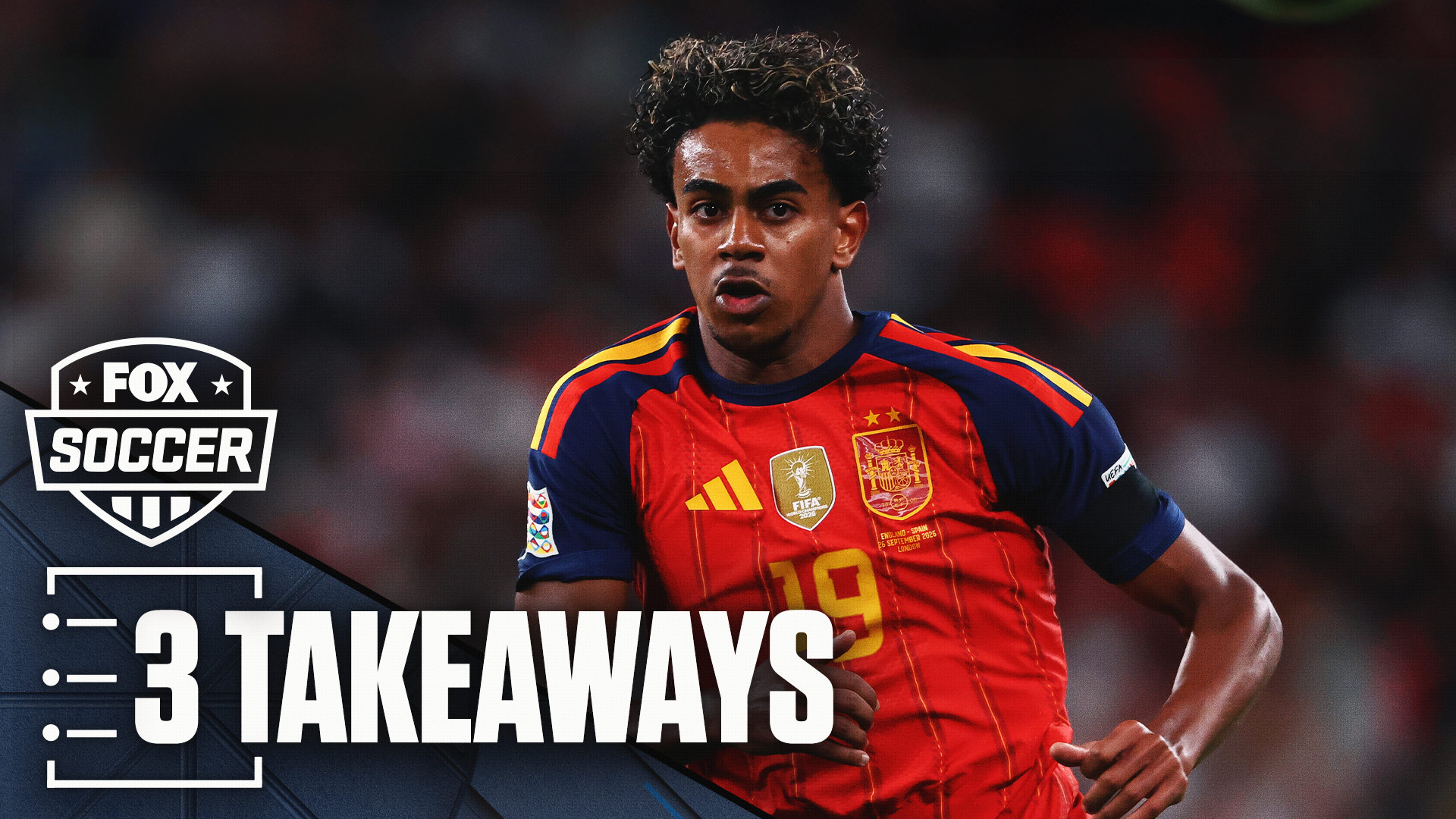
Spain’s squad announcement was never going to be just about football. The country has been through two devastating events in a matter of days, and the national team has chosen to respond with empathy and togetherness. A train collision in Urda, on the Madrid-Sevilla high-speed line, killed 69 people and injured 200 others, one of the worst transportation tragedies in European history and the second such disaster Spain has suffered this year. Then, days later, came the sudden and heartbreaking death of Jesús de Miguel Alameda, a 30-year-old striker for CD Tenerife, who collided with Andorra’s goalkeeper Jesús Owono during a match and passed away. It is impossible to put into words what that kind of loss does to a community, to a club, to a family. Manager Luis De La Fuente, who has built this Spanish side on a culture of family and togetherness, made sure the team stood with the country in its grief. He honored the victims of both tragedies when announcing his 27-man squad, saying that football must unite them more than ever, and he shared in the mourning for Jesús de Miguel, whose funeral was held in his family’s village, attended by De La Fuente himself and Real Madrid president Florentino Pérez. It was a quiet, human moment that speaks to the role football can play in dark times. The squad itself reflects the need for both continuity and new energy. World Cup winners like Lamine Yamal, Pedri, Pau Cubarsí, Fermín López, and goalkeeper Joan García return, giving Spain five Barcelona players, while injuries rule out Rodri, Dani Olmo, and Eric García. Gavi is once again left out, with De La Fuente feeling the young midfielder is still not quite up to speed. Tottenham’s Pedro Porro returns after missing the World Cup through injury, and there are fresh faces like Como defender Jacobo Ramón, Real Betis pair Marc Roca and Álvaro Valles, Atlético Madrid’s Pablo Barrios, and Real Sociedad’s Ander Barrenetxea. Spain are now 42 matches unbeaten and have won 11 straight, and they will use this window not only to keep that run going but to help a grieving nation begin to heal.
England, meanwhile, are dealing with their own fascinating mix of emotion, ambition, and unresolved tension. Harry Kane is back, freshly crowned as the Ballon d’Or winner, and that alone would have been enough to headline most international breaks. But the real intrigue surrounds the Bellingham brothers. Jude Bellingham has been a global superstar since his breakout World Cup campaign, and his form at Real Madrid has only continued to rise, so his inclusion in Thomas Tuchel’s 26-man squad was never in doubt. The surprise, and the genuinely lovely one, was the inclusion of 21-year-old Jobe Bellingham. Jobe has been captaining England’s Under-21 side and is currently making a name for himself at Borussia Dortmund, following the same path his older brother took before his move to Madrid. Tuchel, who previously managed Dortmund, spoke warmly about Jobe’s rhythm and influence, and you can sense that this might be one of those rare moments where a family story becomes a national story. It would not be the first time brothers have shared the pitch for England, of course. Gary and Phil Neville did it in the 1990s and 2000s, Bobby and Jack Charlton were part of the 1966 World Cup-winning side, and Nathaniel and Trevoh Chalobah both played for England, though never together. But the Bellingham brothers feel different, modern, exciting, and full of potential. Not everyone in England’s squad announcement is celebrating, though. Cole Palmer, the Chelsea playmaker who has been one of the most gifted attacking players in the Premier League, is once again missing. He was not included in the 2026 World Cup squad, he withdrew from last month’s matches with an injury, and now he has been left out of this camp entirely. Tuchel insists the door is always open, but with only three appearances in the last two seasons, it is hard to see how Palmer forces his way back in before the March 2027 window. That is a complicated and slightly sad subplot, because Palmer’s talent has never been the question, but the relationship between player and manager seems to have stalled. Still, England have Croatia and Spain to focus on, and the sight of two Bellinghams in the same squad is exactly the kind of story that makes international football feel special.
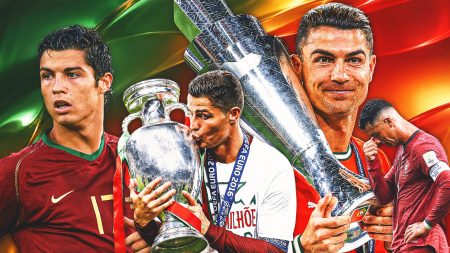
Portugal are entering completely new territory, and it is both thrilling and bittersweet. Cristiano Ronaldo’s retirement from international football has left a void that cannot be filled by any single player, and that is okay. It is tempting to hold on to what he gave the nation for so many years, the 146 goals, the Euro 2016 title, the countless memories that will never fade. But as Michael Jordan once said, the great ones want to be a bridge to the next generation. Portugal’s current window is about finally crossing that bridge. Manager Jorge Jesus has called up seven new faces in his 28-man squad, including five players from the Under-21 setup, and the message is clear: this is a new dawn. The spotlight is now on the attacking fluidity that Portugal have always promised but have sometimes struggled to fully unleash while prioritizing their greatest ever player. That is not a criticism of Ronaldo, it is simply a recognition that evolution is necessary. The young players stepping up are genuinely exciting. Gustavo Varela, the 21-year-old Monza striker, is currently leading Serie A in goals with nine from nine league appearances and 11 in all competitions, and his inclusion is a statement of intent. Rodrigo Mora, the 19-year-old Roma attacker, has been called up before but never featured, and now he finally gets his chance to make a name for himself. Nuno Tavares has been a weapon for Lazio, and with PSG’s Nuno Mendes injured, he has an opportunity to stake a real claim. Then there is Gonçalo Ramos, who joined AC Milan from PSG this summer in a record-breaking transfer and has scored three goals and one assist so far. This window is pivotal for him because he no longer has to live in Ronaldo’s shadow; he can finally be the main man, not just the understudy. The core of this Portugal squad is still incredibly strong, with Rúben Dias, Bernardo Silva, Bruno Fernandes, Vitinha, João Félix, and Rafael Leão all ready to lead. They have a real chance to win the European Championships in 2028, and perhaps even a first-ever World Cup in 2030. But the need to evolve begins now, and this window is the first true test of whether Portugal can finally become the team they have always been capable of being.
There is something symbolic about this particular international break. It feels like a bridge between the past and the future, between the generation that carried the sport for so long and the one that is now ready to take over. In Spain, the squad is a mix of World Cup winners and new faces, all carrying the weight of a nation in mourning. In England, the Bellingham brothers represent the joy of family and the excitement of what is to come, even as Cole Palmer’s absence serves as a reminder that not every story has a happy ending. In Portugal, the post-Ronaldo era begins with a sense of hope, not fear, and with a young core that finally has the freedom to define itself. The Nations League may not be the World Cup, but it matters in its own way. It gives us these moments, these windows, where national teams can heal, experiment, and grow. It gives us a reason to watch in November, when club football usually dominates the headlines and the weather is cold and dark. It gives us a chance to see new heroes emerge, to watch brothers share a pitch for the first time, to witness a country try to move forward after tragedy. And it gives us a moment to reflect on what we are losing as the old icons fade away, while also celebrating what we are gaining. Messi and Ronaldo will not be there, and that still feels strange. But the game moves on, and so do we. The pitches are still green, the stands are still full, and the stories are still being written.
Maybe that is the real lesson of this November window. Football is not about any single player, no matter how great. It is about the collective experience, the shared grief, the unexpected joy, the quiet hope. When Spain walk out at the Metropolitano against England, they will be carrying more than just tactics and form. They will be carrying the memory of the people lost in Urda, the image of a young striker who died doing what he loved, and the idea that sport can be a source of comfort in the darkest moments. When England’s two Bellinghams warm up together, they will be living out a dream that every brother who ever kicked a ball in the garden has imagined. And when Portugal take the field without Cristiano Ronaldo, they will be proving that a team can honor its past without being trapped by it. This is the beautiful, messy, human side of football. It is not always about trophies or records or headlines. Sometimes it is about showing up for one another, about being present in grief and joy alike, about understanding that the game is bigger than any individual. The 2026 World Cup already belongs to Spain, and the Nations League will have its own drama in the coming days. But the most memorable moments of this window might not be the goals or the saves. They might be the tributes, the embraces, the tears, the first appearances, the second chances, the quiet glances between brothers on the same national team. That is what this content, and this moment, is really about. The calendar says it is just another international break. The heart says it is so much more.