


On a seemingly ordinary Thursday, the skies over Europe became a theater of anxiety and uncertainty. Passengers aboard at least eleven commercial flights suddenly found themselves caught in a waking nightmare, as bomb threats forced pilots to divert aircraft, declare emergencies, and land at unexpected airfields across the continent. What began as routine journeys from Copenhagen, Dublin, Helsinki, Madrid, Milan, and Warsaw spiraled into hours of fear, confusion, and lockdowns, only to end with the sobering realization that every single threat was a hoax. No explosives were found, no passengers were harmed, and no aircraft were compromised—yet the psychological toll on those aboard was immeasurable. For the men, women, and children who had boarded these planes expecting nothing more than a cross-border commute, the day became a jarring reminder of how fragile normalcy can be. The source of the threats remained unclear in the immediate aftermath, but the pattern was chillingly familiar: this was the second wave of such warnings in a single week, following a series of similar incidents on Tuesday that British authorities had already dismissed as “malicious hoax threats.” The fear was real, even if the bombs were not.
As the day unfolded, the scale of the disruption became apparent. Czech Police issued a public statement on X, formerly Twitter, explaining that they had received threats regarding the placement of improvised explosive devices on board four aircraft heading to Prague. Officers prepared alongside airport colleagues for the landings, though they were careful to note that they assessed the relevance of the threats as low. When the planes finally touched down and were thoroughly inspected, the results were negative, as expected. Still, the precautionary measures were unavoidable. In an era where a single credible threat can ground a fleet and trigger international security alerts, authorities have no choice but to treat every warning with the utmost seriousness. The ripple effects were felt beyond Prague. A LOT Polish Airlines flight traveling from Warsaw to Brussels reached its destination and underwent a full security sweep, which revealed no hazardous or suspicious items. A Wizz Air flight from Milan to Bucharest landed safely in the Romanian capital after receiving a bomb threat, according to airport spokesperson Teo Postelnicu. Finnair confirmed that Flight 1761 from Helsinki to Rome had been targeted by a specific threat, though nothing was found after it landed in the Italian capital. Each of these incidents followed the same grim script: a message, a scramble, a lockdown, and finally, a collective exhale as the all-clear was given.
Among the most dramatic episodes was the diversion of a flight from Dublin to Rome. The aircraft, carrying 151 passengers and six crew members, was forced to land at a military air base in Évreux, Normandy, in western France. According to French Prime Minister Sébastien Lecornu’s office, the plane touched down safely, and everyone on board disembarked without incident. For those passengers, a journey meant to end in the eternal city instead concluded on a windswept military runway, surrounded by armed personnel and emergency vehicles. One can only imagine the confusion and dread that must have swept through the cabin when the pilot announced the diversion. The routine rhythm of seatbelts and tray tables gave way to hushed whispers and white-knuckled grips. Yet the passengers also experienced something else: the quiet professionalism of flight crews and ground teams who are trained to manage exactly these moments. While the political and strategic dimensions of such hoaxes are often discussed in the abstract, the human dimension is visceral. A mother clutching her child, an elderly traveler struggling to understand announcements in a foreign language, a student missing an exam, a family reuniting after years apart—all of them were caught in the crosshairs of a cruel and pointless deception.
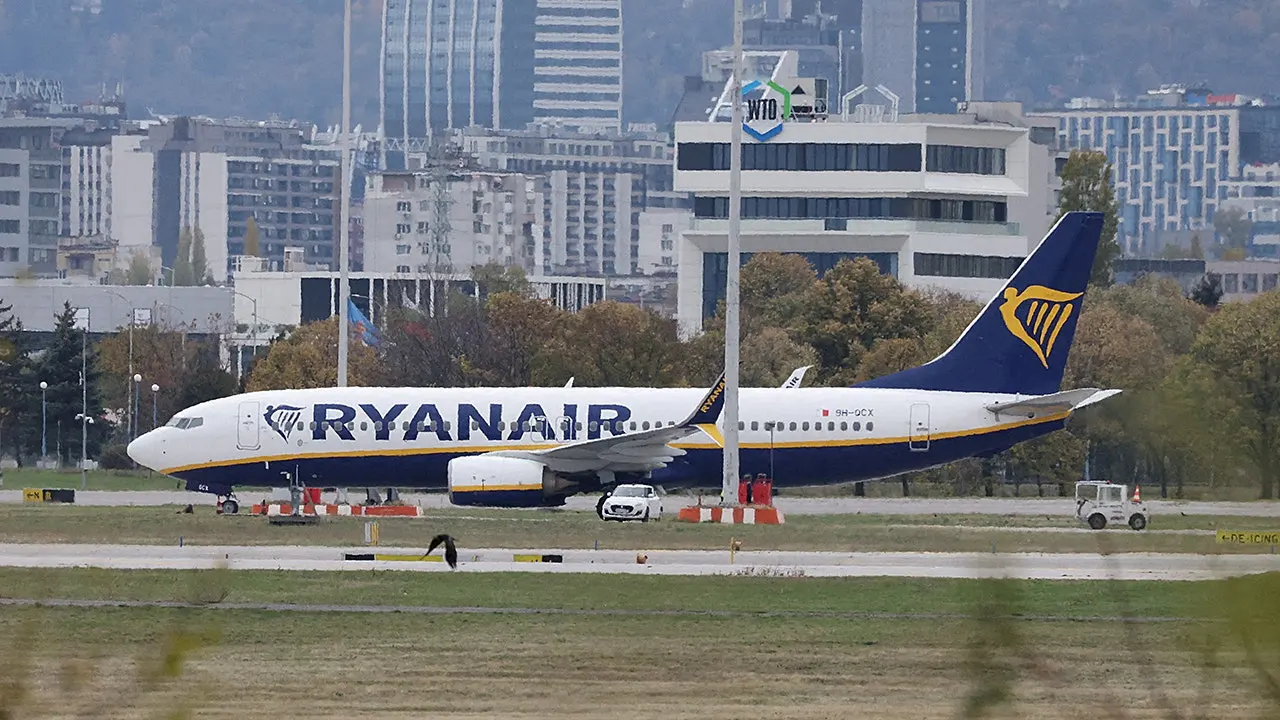
The most concentrated chaos unfolded in Bulgaria, where three Ryanair flights bound for the capital, Sofia, were all forced to make emergency landings because of bomb threats on board. Two of these flights—one originating in Copenhagen, Denmark, and the other in Madrid, Spain—landed safely at Sofia’s Vasil Levski Airport, where airport officials greeted them with the full apparatus of an emergency response. The third flight, which had departed from London’s Stansted Airport, was diverted to Plovdiv Airport, Bulgaria’s second-largest city, where it landed safely under the watchful eye of CEO Krassimir Peshev and his team. For the passengers aboard these aircraft, the experience was particularly harrowing, as they were likely aware that they were part of a broader pattern. The knowledge that other planes were receiving similar threats at the same time can be as unsettling as the threat itself. It creates a sense of being targeted, of being caught in something larger and more sinister than a random prank. When the inspections ultimately found nothing, the relief was palpable, but so was the anger. These were not just inconveniences; they were violations of personal safety, hours stolen from travelers’ lives, and a painful reminder that even the most mundane aspects of modern life can be weaponized by unseen adversaries.
The timing of these hoaxes adds a deeply troubling layer to the story. European officials have increasingly pointed fingers at Russia and Iran for what they describe as “hybrid attacks” and acts of sabotage aimed at destabilizing the continent. Both Moscow and Tehran deny these accusations, but the pattern of disruptions—cyberattacks, sabotage, and now waves of bomb hoaxes—has put European security services on high alert. Reuters reported that the recent threats are being viewed through this lens, with officials carefully weighing whether these incidents are merely the work of copycats or part of a more coordinated campaign to sow fear and erode public confidence. The phrase “shadow war” has entered the lexicon of European security, capturing a conflict that unfolds not on battlefields but in the vulnerabilities of everyday life: the electrical grid, the food supply chain, the air travel system. A bomb hoax is not just a nuisance; it is a stress test of society’s resilience. It forces governments to divert resources, airlines to absorb financial losses, and passengers to endure trauma, all while the perpetrators remain hidden, perhaps hundreds of miles away, watching their handiwork unfold on news websites and social media. The cost is not merely monetary; it is the slow, corrosive erosion of trust in the institutions that are supposed to keep us safe.
Yet for all the fear and disruption, Thursday also revealed something deeply human: the capacity to endure, adapt, and carry on. The passengers who stepped off those diverted planes did not collapse into despair. They pulled out their phones, called loved ones, and found ways to continue their journeys. The flight crews, airline staff, and airport personnel worked long hours under immense pressure to ensure that everyone was safe. The authorities, despite the overwhelming likelihood that the threats were hoaxes, performed their duties with diligence and patience. These incidents are a stark reminder that security is not merely a set of protocols; it is a shared act of vigilance and care. And while the perpetrators of these hoaxes may have succeeded in stealing hours and creating panic, they did not succeed in breaking the spirit of the travelers or the resolve of the people who serve them. As Europe grapples with the unsettling reality of hybrid warfare, the response to these bomb threats must go beyond inspections and all-clears. It must include a recognition of the psychological impact on passengers, a commitment to holding those responsible accountable, and a determination not to let fear dictate the rhythms of daily life. The bombs were imaginary, but the courage shown by ordinary people in the face of extraordinary anxiety was very real. And that, perhaps, is the most human response of all.