

Paragraph 1: The Dawn of a Delicate Hope
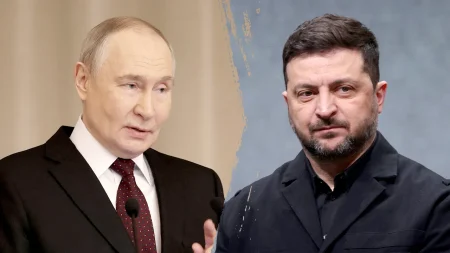
After nearly three years of relentless conflict that has reshaped the European continent and claimed tens of thousands of lives, the world has become accustomed to the grim rhythmic cycle of missile strikes, territorial disputes, and diplomatic stalemates. Yet, in the quiet corridors of international diplomacy, a palpable shift is occurring. The Trump administration, driven by a campaign promise to end the war, is making a calculated, high-stakes push to break the deadlock. The most tangible sign of this renewed momentum comes from Steve Witkoff, the U.S. Special Envoy, who has announced a new round of direct, working-level negotiations between Ukraine and Russia, slated to take place on November 10th and 11th in the opulent, neutral surroundings of Abu Dhabi, United Arab Emirates. This is not merely another bureaucratic meeting; it is a deliberate attempt to move from abstract posturing to concrete problem-solving. Witkoff framed the upcoming talks with a sense of profound gravity, stating that the discussions will focus on “post-war security arrangements, de-escalation, humanitarian efforts, and next steps toward peace,” all with the overarching goal of delivering “lasting security for generations to come.” This phrasing, while diplomatic in nature, carries the immense weight of a conflict that has seen entire cities pulverized, millions displaced, and the global order fundamentally challenged. The choice of Abu Dhabi is strategic, offering a venue that is politically distant from the fray yet acceptable to both belligerents, symbolizing a neutral ground where the ghosts of previous failed summits might be exorcised, and where pragmatic men might finally find a common language beyond the battlefield.
Paragraph 2: The Anatomy of the Abu Dhabi Agenda
The specific agenda outlined for the Abu Dhabi talks is revealing, as it shifts focus from tactical ceasefires to the more daunting, existential questions of how the two nations can coexist after the fighting stops. The term “post-war security arrangements” is the linchpin here, representing a minefield of thorny issues, including the future of Ukraine’s military capabilities, the sovereignty of occupied territories, and the demilitarized zones that could act as buffers. De-escalation is another critical pillar, acknowledging that a formal treaty is meaningless without a reduction in daily artillery exchanges and drone attacks that continue to hollow out communities along the front lines. Humanitarian efforts, often the quiet casualty of strategic discussions, are being elevated here, addressing the desperate need for prisoner exchanges—where families have spent months without word of loved ones—and the safe passage of aid to besieged civilians. Witkoff’s optimistic declaration that they are building on “progress made in Kyiv, Oslo, and St. Petersburg” suggests a roadmap has already been sketched, charting a course from earlier exploratory meetings to these working-level sessions. For the exhausted soldiers in the trenches and the civilians huddled in subway stations during air raid sirens, the concept of “next steps toward peace” is not an abstract policy abstract; it is the visceral hope of a future without the acrid smell of gunpowder and the sudden terror of incoming artillery. The tacit admission that talks are happening in St. Petersburg—the heart of Russia—indicates a willingness by Moscow to engage with Trump’s mediators directly, a step that had been unthinkable under the previous US administration, which sought to isolate Putin rather than negotiate with him.
Paragraph 3: The Brussels Pre-Orchestration of a Post-War Europe
Before any shuttle diplomacy occurs in the Arabian Gulf, the week leading up to the negotiations will see American negotiators convening in Brussels, a city that serves as the bureaucratic brain of Europe, to align their strategy with the continent’s most influential powers. Witkoff confirmed that these meetings will involve representatives from France, Germany, the United Kingdom, the European Union, and NATO. The stakes here are monumental, as these are the nations that will ultimately finance Ukraine’s reconstruction and guarantee its security in the absence of NATO membership—a red line for Moscow. The residents of Brussels will witness high-level discussions about “security guarantees,” a phrase that has to be carefully calibrated to offer Ukraine enough reassurance to consent to a truce without provoking Russia into an escalation. The broader question of “Europe’s post-war security architecture” carries geopolitical implications beyond the conflict zone, forcing European nations to reassess their own defense spending and strategic autonomy independent of the United States, especially if Trump’s political calculus shifts away from underwriting the continent’s defense. Simultaneously, the discussion of “economic opportunities to support Ukraine’s reconstruction” refers to the vast, multi-billion-dollar rebuilding effort that will be required to resurrect Ukraine’s shattered infrastructure—its grid, its railways, and its industrial heartland. This economic angle serves as both a reward for peace and a potential bonanza for Western companies who will bid for contracts to rebuild everything from apartment blocks to steel plants, creating a new political economy of peace that gives both investors and politicians a vested interest in ensuring the war does not reignite.
Paragraph 4: The Human Toll Behind the Diplomatic Ladders
To understand the magnitude of what these envoys are attempting, one must contextualize the stunning human catastrophe that has unfolded since February 2022, when Russia launched its full-scale invasion. The war has become a grim test of endurance, with recent months marked by grinding attrition along a static frontline and devastating high-casualty battles. President Trump has acknowledged this, remarking last month that the efforts to resolve the conflict were “maybe now the closest we’ve been,” a statement that implies both warring states are exhausted—Russia demoralized by staggering manpower losses and isolated by sanctions, and Ukraine facing a critical shortage of artillery shells and international donor fatigue. This weariness on the ground is the invisible pressure pushing both sides to the table in Abu Dhabi. The echoes of halting earlier negotiations in Kyiv—where Ukrainian resilience is etched into every bullet-riddled facade—and Oslo—a quiet, Nordic setting often used for mediation—have given Witkoff a glimpse into the complexities of Ukrainian defiance and Russian intransigence. The meeting in St. Petersburg, between Trump negotiators Witkoff and Kushner and Putin himself, was a stark reminder that the ultimate decision-maker in this conflict sits in the Kremlin, surrounded by hardliners who view the war as existential. Adding a fascinating new layer to this diplomatic web is the reported secretive role of first lady Melania Trump, whose backchannel diplomacy reportedly contributed to a ceasefire agreement, suggesting that quiet, informal connections are acting as a supportive arm to the official delegation. For the millions of Ukrainian refugees scattered across Europe, the issue of peace is painfully personal, tied to whether they will ever see their homes again or whether they must permanently abandon the graves of their grandparents.
Paragraph 5: A Web of Entanglements and the Race Against Time
While the mechanics of the talks are paramount, the political theater is equally important. The negotiations occur in the shadow of Trump’s shot at a Nobel Peace Prize and his failure to deliver on the promise of ending the war in a single day, a promise he made on the campaign trail. The pressure to produce a tangible result is immense, forcing the administration to use a carrot-and-stick approach, leveraging the threat of increased sanctions to cajole Moscow while offering lucrative reconstruction contracts as a sweetener for Kyiv. The involvement of the UAE as a mediator is also telling, positioning the Gulf state as a global peace broker, a role that transcends its historical energy policies, and offering a cooling-off venue away from the European pressure cookers. However, the road to peace is fraught with suspicion. Ukraine remains wary of a deal that freezes the front lines and cedes sovereign territory for the sake of an expedient cease-fire, a fear that is palpable in the hushed voices of Ukrainian officials who worry about the specter of a new Yalta Conference that carves up their nation over their heads. Conversely, Russia fears a NATO-backed Ukraine armed to the teeth, a security nightmare that has driven Putin’s paranoia and military adventurism since 2014. The upcoming working-level talks are designed to move past these existential anxieties by focusing on incremental, confidence-building measures—small swaps of prisoners, humanitarian corridors, and localized ceasefires that can build trust. It is a slow, plodding pace that frustrates spectators but often proves more durable than grand sweeping declarations, acknowledging that peace is not a single signature but a long journey of millimeters gained at a time.
Paragraph 6: The Cautious Path Toward a Generational Peace
As the world watches the calendars turn toward November 10th, the atmosphere is one of cautious, guarded optimism combined with acute awareness of past failures. The phrase “delivering lasting security for generations to come” is a lofty ambition that ignites the imagination, yet it serves as a stark reminder that previous ceasefires in the Donbas—the Minsk agreements—crumbled rapidly due to a lack of enforcement and good faith. However, there is a differing texture to these talks. They are occurring not in a vacuum but against the backdrop of a mutating global order where the specter of war fatigue is becoming a dominant political force in both the West and in Russia’s domestic sphere, where mothers of mobilized soldiers grow louder in their demands for their children’s return. The Brussels meetings will likely stress that any security guarantees for Ukraine must be financially and militarily sustainable, avoiding a scenario where the West is bogged down in an endless peacekeeping mission amid a volatile front. The coming days will test whether Witkoff’s optimism is grounded in reality or is the product of diplomatic spin. For now, ordinary citizens on all sides—the grandmother in Kyiv, the conscript in the Russian Far East, the Polish truck driver transporting grain—can only hold their breath. The upcoming negotiations in Abu Dhabi represent a fragile yet meaningful chance to turn the tide of a painful chapter in European history. They are a testament that despite the brutality of high explosives and the desolation of trench warfare, the silent mechanisms of diplomacy and human conversation might finally, cautiously, begin to pave the way toward a less bloody horizon, offering a sliver of light that the future may yet be defined not by missiles, but by reconstruction, reconciliation, and peace.