


1. A Shift in Focus: From El Salvador’s Streets to Haiti’s Crisis
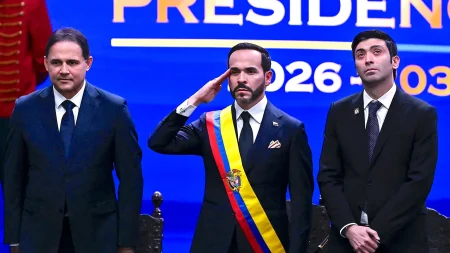
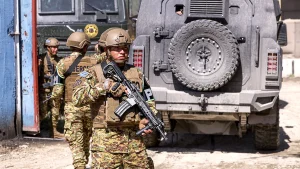
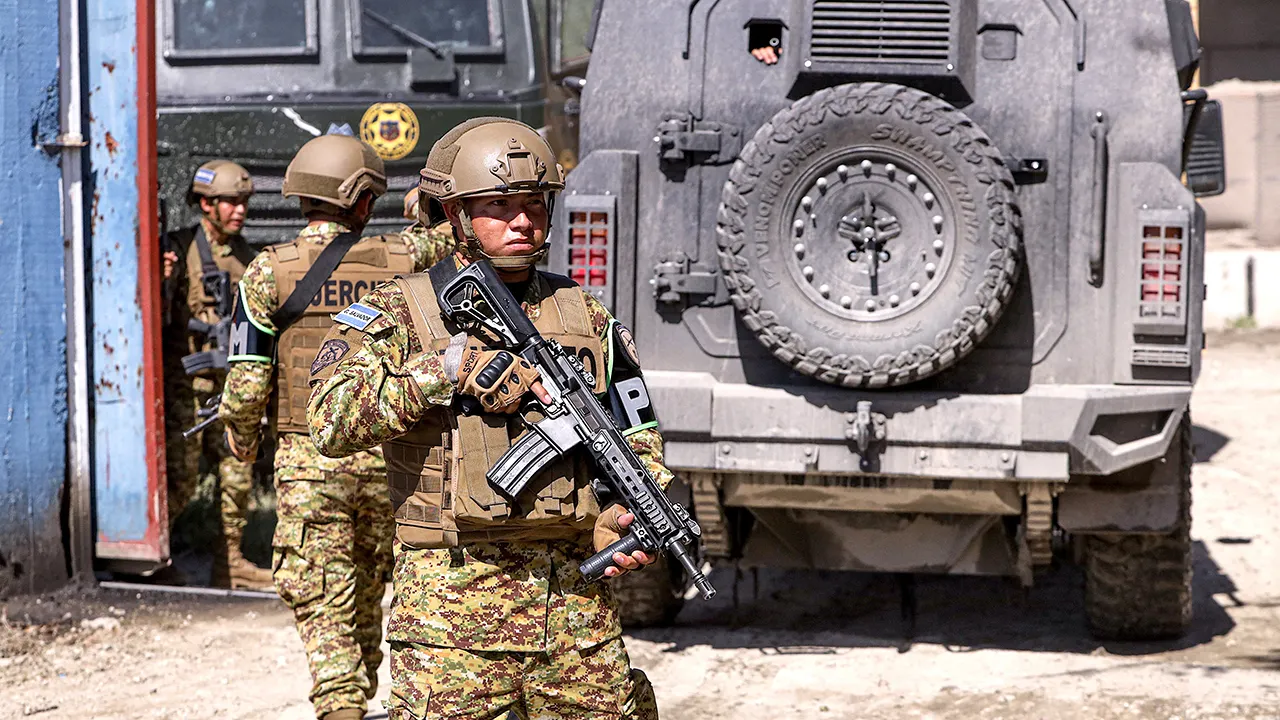
There is a certain kind of leader who measures success not by the quiet work of diplomacy, but by the loud, decisive moment of action. Nayib Bukele, the president of El Salvador, has become one of the most recognizable figures in the Western Hemisphere precisely because of that style. He took a country once strangled by the murderous grip of MS-13 and other gangs, and he broke them with an iron fist—or so his supporters claim. Now, with that battle declared won, Bukele has set his sights far beyond his own borders. The Caribbean nation of Haiti, fractured by years of political collapse and increasingly powerful armed groups, has become his next cause. In a move that stunned many, he deployed two thousand Salvadoran troops to the island nation. The official mission was not to conquer, not to occupy, but to find four missing Salvadoran aviation technicians. Those men had vanished after an ambush near Port-au-Prince on October 18. Their armored vehicle was later discovered as a charred shell in a neighborhood called Santo, with no trace of the four soldiers. For Bukele, this was not just a tragedy; it was a personal challenge. He has framed the disappearances as an attack on his country’s honor, and he made it abundantly clear that he would not let the gangs of Haiti treat Salvadoran lives as expendable. The deployment represents an extraordinary departure from the caution that typically defines foreign military missions. It is a raw, personal operation, driven by the will of one man who believes he has the right and the power to stand up to chaos wherever he finds it.
2. A Warning to Gangs, Wrapped in History and Threat
Bukele does not speak like a traditional diplomat. He speaks like a man who has already made up his mind, and his message to Haiti’s gangs was unmistakably direct. “We have already finished with the gangs in El Salvador, and we can finish with you too,” he wrote on X, the social media platform where he has built much of his political persona. It was a threat, but it was also a promise—a promise rooted in his belief that brutality requires an even stronger response, and that negotiations only reward the violent. He warned that if the four missing Salvadorans were not returned alive, El Salvador would use overwhelming force. This was not vague rhetoric. Bukele was speaking to men who have terrorized a city and made entire neighborhoods uninhabitable. He also reached into history to make his point, evoking the memory of Jean-Jacques Dessalines, the man who declared Haiti’s independence from France in 1804 and became a national hero, only to be betrayed and assassinated by his own allies in 1806. “Those traitors still exist in Haiti,” Bukele wrote in Haitian Creole, carefully addressing the Haitian people directly, bypassing their political leadership and speaking over their heads to the broader population. He posted video footage of Salvadoran helicopters engaging gang forces that had attacked soldiers from Chad serving alongside the United Nations-backed mission. His message was simple: when others run, El Salvador arrives. When others negotiate, El Salvador fights. And when others hesitate, El Salvador moves. It is a stirring narrative for those who feel abandoned by the international community, but it also carries the weight of a loaded gun, as critics fear that this tough talk will only pour fuel on an already uncontrollable fire.
3. Support at the Highest Levels: Trump and Haiti’s Own Leaders
Bukele’s bold move did not happen in a vacuum. He has powerful allies, most notably former President Donald Trump. When asked about the situation at his Mar-a-Lago residence on Halloween, Trump confirmed that he had spoken with Bukele about Haiti. “He said that he has a big problem with Haiti,” Trump told reporters. “They killed some of his people. I said, ‘You’re running your country. You have to do what you have to do.’” That statement is perhaps the clearest signal yet that the Biden administration’s more cautious, multilateral approach to Haiti is being overshadowed by a new, more aggressive model of intervention. Trump’s response effectively gave Bukele a green light, not in terms of legal authority, but in terms of political legitimacy. More surprisingly, Bukele’s deployment has also received support from Haiti’s transitional government. Prime Minister Didier Fils-Aimé, speaking publicly about the Salvadoran presence for the first time, insisted that the international force was not there to replace the state, but to support it. “He understands our fight,” Fils-Aimé said of Bukele. “He came to stand on the side of the Haitian people.” This is a striking development, because foreign military interventions in Haiti have often been met with suspicion and resentment, especially after years of United Nations peacekeeping missions that left behind sexual abuse scandals and cholera outbreaks. Yet here, a leader who has never shown much respect for international institutions has managed to do something that more established powers have failed to do: gain the trust of a desperate government. It is a fragile trust, but it is real, and it gives Bukele’s mission a veneer of consent that previous interventions lacked.
4. The Pushback: Human Rights Concerns and a Gang Leader’s Defiance
Not everyone is cheering for Bukele. Human rights advocates immediately raised red flags, pointing to El Salvador’s own record of mass arrests and widespread reports of torture and arbitrary detention under Bukele’s state of emergency. The United Nations, while acknowledging that the Salvadoran deployment is separate from the existing international mission, cautioned that El Salvador must follow international law. It also noted the grim reality of the gang crisis: at least five thousand seven hundred people have been killed or injured in Haiti since January, as gangs continue to expand their control over the capital and the surrounding countryside. The most defiant response, however, came not from diplomats or activists, but from one of the very gang leaders Bukele is threatening. Wilson Joseph, known as “Lanmò Sanjou,” commands the powerful 400 Mawozo gang and is wanted in the United States for his role in the 2021 kidnapping of seventeen missionaries, including sixteen Americans. In a message delivered through the Associated Press, Joseph claimed that the Salvadoran soldiers were dead, and he pointed a finger at a rival gang, Chen Mechan, as the ones responsible for the ambush. He also sent a letter to United Nations Secretary-General António Guterres, requesting mediation and warning that Bukele’s threats would lead to a cycle of reprisals, with the Haitian people paying the ultimate price. It is an interesting moral position for a man accused of hostage-taking and murder, but it shows how deeply entrenched these gangs have become. They do not see themselves as villains; they see themselves as part of the landscape, and they are not afraid to address the world on their own terms. Bukele, however, dismissed these appeals as desperate attempts by criminals to hide behind civilians and human rights rhetoric. He has never been a patient negotiator, and he seems convinced that only force can resolve Haiti’s disease.
5. The Salvadoran Model: Can It Be Exported?
The real question behind this entire operation is whether Bukele’s success in El Salvador can be replicated in Haiti. In El Salvador, Bukele launched a sweeping crackdown in 2022, calling a state of emergency that allowed authorities to make tens of thousands of arrests in a very short period. Over ninety thousand suspected gang members were eventually detained, and the homicide rate plummeted to historic lows. For many Salvadorans, life has never been safer. They can ride buses, walk their streets, and open businesses without paying extortion money to gangsters. The price of this peace is high, however. Entire jails are overflowing with men who were arrested on vague charges and held without proper legal process. Human rights organizations have documented cases of severe abuse, including beatings and death threats inside detention centers. Bukele’s approval ratings remain sky-high, but his methods have earned him condemnation from groups that believe even the worst gangsters deserve due process. Haiti is a very different battleground. The gangs there are not simply street criminals; they have become the de facto rulers of large parts of Port-au-Prince, controlling neighborhoods, roads, and even ports. The Haitian state has little authority outside of certain safe zones, and the international community has struggled for years to contain the violence. The current United Nations-backed Gang Suppression Force has faced severe manpower shortages and has not been able to maintain security in many areas. In other words, Haiti is a much deeper well, and throwing a few thousand soldiers into it may not be enough to bring about the kind of dramatic transformation that Bukele achieved at home. The conditions are more chaotic, the state is weaker, and the gangs have had years to entrench themselves.
6. A Radical Promise and the Future of International Intervention
Bukele, of course, does not think in terms of limits. His message to Haiti is one of shared struggle and liberation. “We can help you defeat them, but we are not your enemies,” he wrote. “We must stand up, take back control of our communities, and put under our control those who are making us endure all this pain, all this suffering. We are right there beside you… Haiti will be free.” These are stirring words, but they raise a deeper question about what “freedom” means when it is brought at the barrel of a Salvadoran machine gun. Bukele is positioning himself as a champion of the global fight against criminal power, a leader who is willing to step in where traditional powers have failed. His forces are already fighting alongside soldiers from other countries, and he has shown them to be aggressive and effective. But the long-term consequences of this intervention are unknown. Will the gangs simply melt away, as they did in El Salvador? Or will they adapt and find new ways to terrorize civilian life? And what happens to the four missing soldiers? Bukele has staked his credibility on bringing them home, and if he cannot, the entire operation may be seen as a failure. For the international community, this is an uncomfortable moment. A controversial leader is doing what many have called impossible, and he is doing it with a level of unilateral confidence that makes traditional diplomats uneasy. Bukele may be a brutal pragmatist, or he may be a dangerous authoritarian, but he is certainly not indifferent. He cares about Haiti, even if his version of caring involves helicopters and armed soldiers. In the end, perhaps the most humanizing thing about this story is not the politics, but the simple demand that lies at its core: four men went to work to help people, and they disappeared. Their president wants them back. Whether that desire leads to peace or to war is a question that neither Bukele nor the gangs can answer alone. Only the ground itself will tell, and the people who must live on it.