

In the warm glow of a Dubai evening, the city seemed to be performing its usual role as the Middle East’s most dazzling stage. Restaurant terraces spilled over with diners, tourists wandered through crowded streets, and families gathered around the famous fountain show as music shifted from Arabic ballads to Western pop. It was a scene of effortless normalcy, almost defiant in its beauty. But beneath that glittering surface, a more anxious rhythm was playing out. In an exclusive interview with Fox News Digital, Dr. Ali Rashid Al Nuaimi, chairman of the Defense, Interior and Foreign Affairs Committee of the UAE’s Federal National Council, offered a carefully measured message about the standoff between the United States and Iran. “We see some progress,” he said. “We hope that both sides will be able to reach a point where they will start building trust and engaging in a way to avoid the war, to find a political solution.” He paused, then added: “I am a little bit optimistic, but I don’t exclude the other option.” Those words captured the strange duality of life in the Gulf right now—hope and dread sharing the same sky. Days earlier, Reuters had reported that Iran submitted a new nuclear proposal to Washington through Qatari mediators, yet Tehran continued to insist on seven preconditions, including sanctions relief and an end to the American naval blockade. The proposal was a flicker of possibility, but no one in the Emirates was ready to call it a breakthrough. For a country that had already been hit by thousands of Iranian missiles and drones, optimism was not a feeling; it was a discipline, a choice made in the face of overwhelming evidence that war could return at any moment.
The UAE has paid for its proximity to the conflict in ways that are easy to forget when watching the fountain show or strolling through a luxury mall. More than 3,000 Iranian missiles and drones targeted the Emirates during the recent war, according to figures cited by The Associated Press. The attacks killed people, wounded others, and damaged civilian infrastructure. The scars may not be visible from the outside, but they are seared into the national memory. Al Nuaimi spoke about this with the calm of someone who has spent years preparing for the worst. “Every nation, when it is attacked, [has] the right to defend their people, their sovereignty, their nation,” he said. But he was quick to frame the UAE’s posture not as aggression but as readiness. “We plan for the worst. We hope for the best. We always make sure that we are ready to deal with all the challenges or the threats.” That combination of pragmatism and resilience was evident throughout Fox News Digital’s reporting trip across the Emirates. In Abu Dhabi, the capital, the mood was just as composed, even as the threat of renewed confrontation hung over the region. The UAE has invested heavily in its defensive capabilities, its intelligence networks, and its ability to absorb a shock without collapsing. But resilience, as the country has learned, is not just about intercepting missiles. It is about keeping the lights on, keeping the economy moving, and keeping the streets safe enough for people to enjoy a meal outdoors on a warm night. It is about refusing to let fear dictate the rhythm of daily life, even when the threat is real and the next attack could come without warning.
The diplomatic picture remains fragile, and Al Nuaimi was careful not to overstate the significance of the latest signals from Tehran. Iran’s leadership has continued to insist that the United States meet a list of demands before any serious negotiations can begin—sanctions relief, an end to the naval blockade, and other guarantees that Washington has so far been unwilling to offer. President Donald Trump has not ruled out further military operations, and Iran has threatened broader retaliation if fighting resumes. In this environment, every statement, every proposal, every rumor becomes a matter of life and death for the countries caught in the middle. Al Nuaimi, however, drew a sharp distinction between the Iranian regime and the Iranian people—a distinction that often gets lost in the language of confrontation. “The Iranian people deserve to be respected, accepted,” he said. “They have great values, great civilization, and they are our neighbor.” It was a striking moment of humanity from a senior official whose country has been directly attacked by Iran. He did not soften his criticism of the regime, nor did he pretend that the threat had disappeared. But he refused to reduce an entire nation to the actions of its leaders. That kind of nuance is rare in times of crisis, and it speaks to the UAE’s longer-term vision. The Gulf and Iran are bound together by geography, history, and economics. No matter how bitter the current conflict becomes, they will remain neighbors. Al Nuaimi seemed to be saying that the UAE is prepared to defend itself with overwhelming force if necessary, but it is also prepared to build bridges if the opportunity arises. That is not naivete; it is strategy.
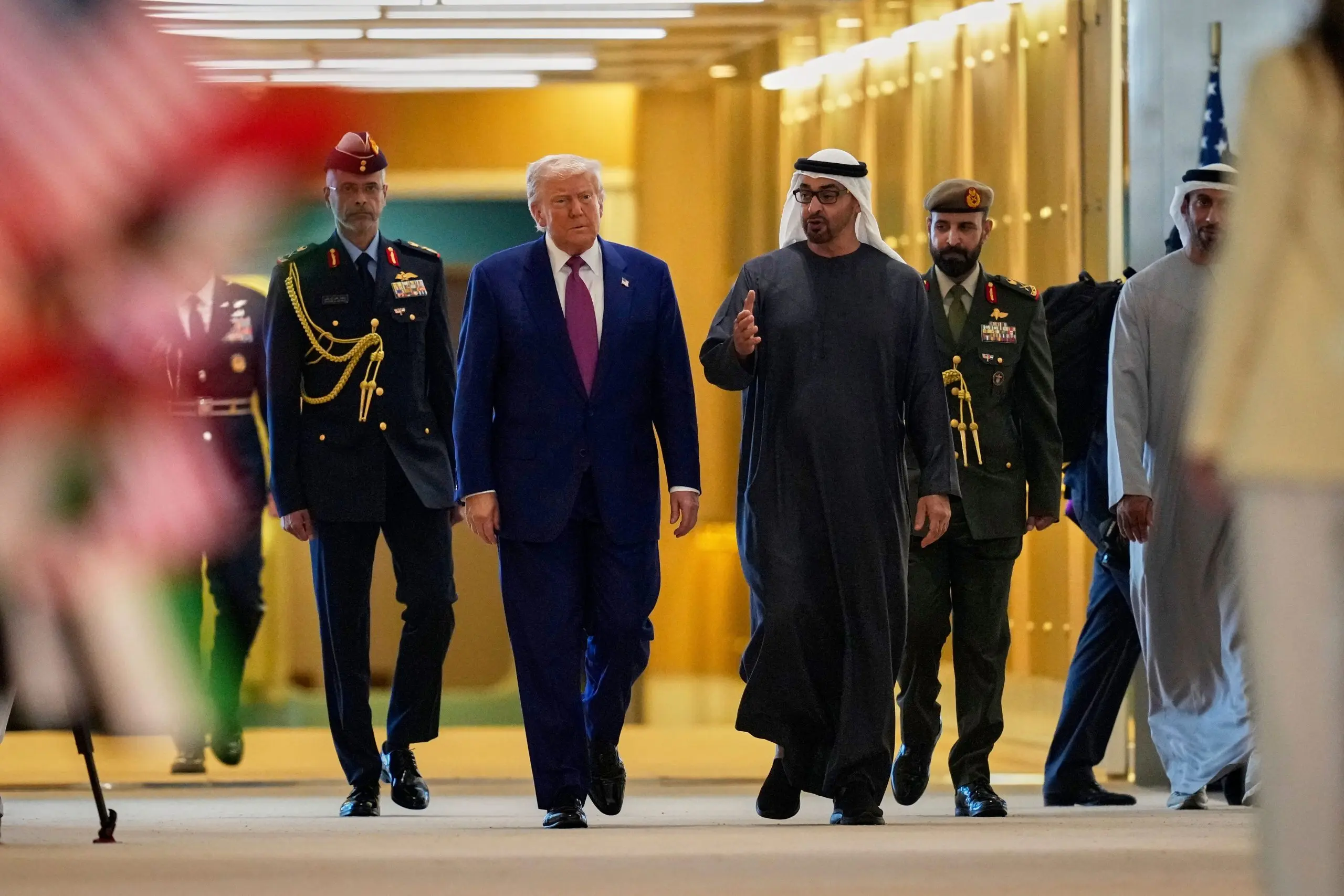
The UAE’s relationship with the United States, Al Nuaimi insisted, cannot be reduced to the current conflict or to any single administration in Washington. “We don’t see our relationship with the United States through these conflicts, through security and defense,” he said. “No, it’s a partnership. It’s a strategic partnership. It is a sustainable partnership. Our main partnership is with the United States as a nation, with the American people.” He emphasized that the ties extend far beyond missiles and military bases, into education, medicine, technology, energy, and investment. Emirati students study at American universities. American companies power the UAE’s digital economy. Medical teams from both countries have collaborated on research and public health. These connections, Al Nuaimi argued, are designed to survive political changes in Washington. “We don’t look at the United States through a certain administration,” he said. “Our engagement and partnership with the United States is with the nation. It’s with the people. We have the flexibility and the ability to [adapt] and engage with any administration.” That message was clearly aimed at audiences both at home and abroad. In Washington, administrations change, and with them, foreign policy priorities. But in Abu Dhabi, the relationship is built to outlast those shifts. The UAE wants to be seen as a reliable partner, not a fair-weather friend. That reliability has become even more important as Iran threatens regional infrastructure and international shipping, and as Gulf governments look to the United States for security guarantees. Al Nuaimi’s words were a reminder that the bond between the two countries is deeper than any single crisis—and that it will endure long after the current tensions have faded.
Nowhere was the UAE’s determination to keep moving forward more visible than at ADIPEC, one of the world’s largest energy conferences, held in Abu Dhabi against the backdrop of continuing tensions with Iran. Days before the event opened, Reuters reported that executives from ExxonMobil and Chevron had canceled their planned appearances because of security concerns. It was a sobering reminder that the threat was not abstract. Yet inside the exhibition halls, delegates from around the world gathered to discuss investment, announce partnerships, and explore technological solutions to the global energy crisis. The contrast was striking: outside, the Strait of Hormuz remained a flashpoint, and the risk of another war hung over the region; inside, the business of the future was proceeding as if the world were stable. At the opening ceremony, Dr. Sultan Al Jaber, the UAE’s minister of industry and advanced technology and chief executive of state-owned energy giant ADNOC, delivered a message that seemed designed to reassure both international investors and the Emirati public. “We did not write our resilience playbook during this disruption,” he said. “We wrote it years before.” The line drew applause, but it was more than rhetoric. The UAE has spent years diversifying its economy, building strategic reserves, and investing in infrastructure that can withstand shocks. It has positioned itself as a hub for trade, finance, and tourism, and it is determined not to let the threat of war undo that progress. The show went on, not out of denial, but out of discipline. The executives who stayed away may have been cautious, but the thousands who attended sent a different message: the UAE remains open for business, and it will not be cowed by the possibility of conflict.
In a separate exclusive interview in Dubai, Mohammed Baharoon, director general of the Emirati research center B’huth, offered a deeper analysis of what the confrontation with Iran has meant for the region. “Our resilience now becomes our deterrence,” he said. For Baharoon, national security is no longer just about military defense; it is about ensuring reliable energy supplies, food security, functioning infrastructure, and the ability to maintain international commerce during a crisis. He described the conflict as three interconnected wars: the initial American-Israeli campaign against Iran, Tehran’s subsequent attacks on Gulf states, and Iran’s disruption of international shipping through the Strait of Hormuz. “The second war was Iran’s attack on the GCC, because that attack was also unprovoked,” he said, referring to the Gulf Cooperation Council. The third war, he argued, was a confrontation with the global economy itself, with consequences reaching far beyond the Middle East. Yet despite his criticism of Tehran, Baharoon rejected the idea that Iran should be treated as a permanent enemy. Its population, economic potential, and geographical importance, he said, could make it an important contributor to regional prosperity if its leadership shifted away from confrontation. That vision may seem distant, but it reflects a deeper truth about the UAE’s approach to the crisis: the country is preparing for the worst while still leaving room for a better future. The crowded streets of Dubai and the busy exhibition halls of Abu Dhabi are a testament to that determination. Whether the latest negotiations lead to a breakthrough or another round of fighting, the Emirates is betting that its resilience will carry it through. The threat is real, the memories of war are fresh, and the possibility of more violence cannot be dismissed. But in the faces of the people walking through the city, there is a quiet refusal to let fear define their lives. They are building something they believe is worth protecting—and they are ready to protect it, whatever comes next.