

A City Square Transformed by Terror
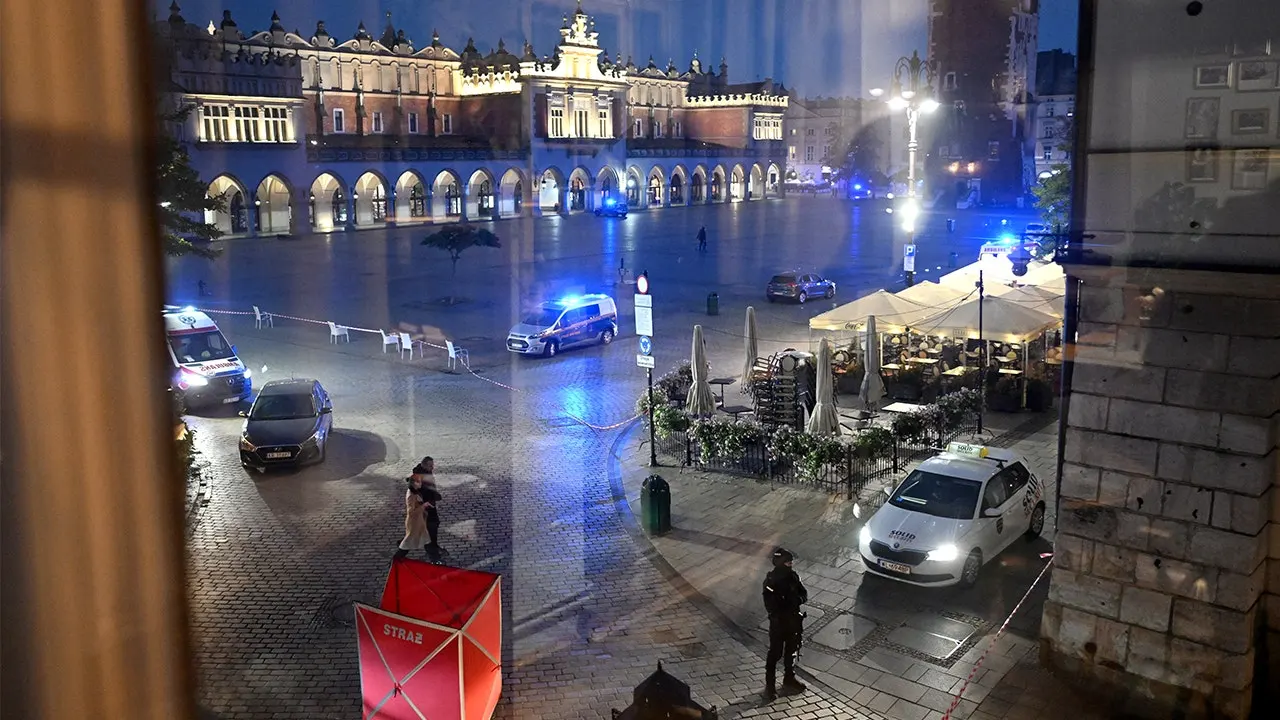
Kraków’s Main Square has always been a place of life. On a Saturday afternoon, it is normally a tapestry of tourists, street musicians, families with strollers, and friends sharing coffee under the shadow of St. Mary’s Basilica. It is a place where history feels warm, where the cobblestones have been worn smooth by centuries of footsteps, and where the rhythm of the day is unhurried and pleasant. But on that Saturday, that beautiful and familiar rhythm was shattered in an instant. The air, once filled with chatter and laughter, was torn by the sharp, violent crack of gunfire. Małopolska Police confirmed that a Polish gunman opened fire at this beloved tourist destination, turning a scene of everyday joy into one of panic and horror. When the shooting stopped, six people lay dead—four women and two men—and at least eleven more were wounded. The numbers are stark, but they cannot capture the true weight of the tragedy: the last scream of a mother, the desperate run of a father, the silent shock of a child who will never forget the sound of bullets. In a country where mass shootings are almost unheard of, this attack struck not just at people, but at the very sense of safety that makes a city square a gathering place for millions.
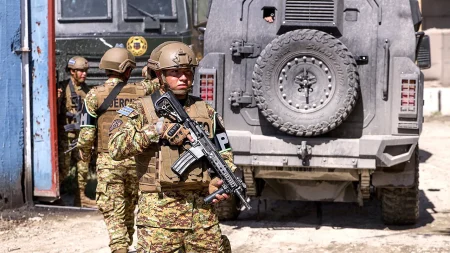
The attack unfolded with a cruelty that seemed almost unbelievable. Witnesses described a man firing from a moving vehicle, indiscriminately targeting anyone who crossed his path. There was no argument, no provocation, no political statement shouted into the crowd—just the cold, calculated randomness of violence. The gunman, identified only as a citizen of the Republic of Poland, was dressed in military-style fatigues and wielded a military-style rifle. Social media videos captured the chaos: people sprinting across the square, ducking behind benches and statues, their faces frozen in terror as gunshots rang out in rapid succession. The beauty of the ancient city became a nightmare labyrinth. The shooter did not discriminate between a local resident out for a stroll, a tourist from abroad checking off a bucket-list destination, or a police officer trying to stop the carnage. He wounded civilians and police alike, leaving a trail of blood and broken glass in his wake. Even before reaching the Main Square, he had fired at a train, shattering a driver’s window in a bizarre and chilling prelude. It was only when police engaged the gunman in a firefight and wounded him that the attack finally ended. Officers later found a cache of extra weapons and ammunition in his car, a chilling reminder of how much worse the tragedy could have been. The area was secured, and the suspect was taken into custody, but the damage had been done.
As the news spread, the response was swift and overwhelming. Police vehicles, ambulances, and a Polish Medical Air Rescue helicopter descended upon the Main Square, their flashing lights cutting through the afternoon haze. The historic square, usually filled with horse-drawn carriages and open-air cafes, was suddenly a staging ground for rescue crews rushing to save lives. Małopolska Police worked frantically to separate fact from rumor, releasing a statement to deny early reports that a police officer had died and that a second perpetrator was still at large. There was only one attacker, they insisted, and he was now in custody. Still, the scene was chaotic. Paramedics tended to the wounded on the cobblestones while officers cordoned off a windfall of evidence. National Police Commander Inspector General Marek Boroń announced he was heading directly to the scene, signaling the gravity of the situation. The human toll was impossible to ignore: families torn apart, friends waiting by phones for news, a city suddenly plunged into mourning. For every victim who lost their life, there are countless others who will carry the psychological scars. The heroes of the day were the first responders who risked their own lives to confront an active shooter, who ran toward the danger when every instinct told them to run away, and who gave the people of Kraków a chance to escape. Their courage does not erase the pain, but it reminds us that even in the darkest moments, there are those who fight for light.
Polish leaders reacted with a mixture of grief, anger, and resolve. Prime Minister Donald Tusk took to social media to express his deepest condolences to the families and loved ones of the victims, while praising the heroic police officers who had risked their lives to stop the madness. His words were measured but firm, and he included a heartfelt appeal that struck a chord across the political spectrum: do not exploit this tragedy. In an age where every disaster is quickly weaponized for political gain, Tusk’s plea was a reminder that some moments demand unity, not division. He assured the public that an investigation was already underway into the background and details of the attack, promising that the full truth would be established. President Karol Nawrocki, a figure from the opposition camp, also responded, describing himself as deeply concerned by the reports from central Kraków. He extended his thoughts to the victims, the injured, and their families, and revealed that the head of the National Security Bureau was on his way to the city to coordinate the response. Even from across the ocean, the United States Ambassador to Poland, Tom Rose, shared his sympathies, calling the attack a savage and murderous act that had shattered the peace of Poland. In a world that often feels fractured, these expressions of solidarity crossed party lines and national borders. But perhaps the most poignant response came from Ukrainian President Volodymyr Zelenskyy, a man who knows all too well the horror of violence. He described the shooting as shocking, offered his condolences, and affirmed that Ukraine stood in solidarity with Poland. There can be no justification for this attack, he said, and the perpetrator must face justice. In that moment, the shared humanity of two nations, bound together by history and hardship, was unmistakable.
To understand the weight of this tragedy, one must understand how rare gun violence is in Poland. The country consistently ranks among the lowest in the world for gun-related deaths, with statistics from researchers at the Medical University of Gdańsk placing the rate at just 0.2 to 0.4 deaths per 100,000 residents. For context, that is a fraction of the rate seen in many other nations. Polish society simply does not expect mass shootings. Guns are heavily regulated, and the culture around firearms is one of caution rather than glorification. When a tragedy like this occurs, it does not just make headlines—it tears a hole in the national psyche. People in Poland grew up believing that their streets were safe, that a crowded square in broad daylight was the last place on earth where a man with a rifle would open fire. That belief was shattered on Saturday. The shooting also comes at a moment of deep political tension in Poland. The country is in the midst of a constitutional crisis, with Prime Minister Tusk’s pro-European Union government locked in a bitter struggle with the national conservative opposition. President Nawrocki’s recent election victory from the opposition has thrown Parliament into a deadlock, with the executive using veto power to block appointments to the Constitutional Tribunal, leaving the nation’s highest legal institutions paralyzed. It is a moment when Poland is already divided, already anxious about the future. And now, this. The intersection of public grief and political instability is dangerous. Yet, in the face of such violence, there is also an opportunity for reflection—a chance to remember that the bonds of community are stronger than the forces that seek to tear them apart.
As the sun set over Kraków, the Main Square that had been a scene of terror fell into a stunned silence. The ambulances had left, the police tape remained, and the cobblestones bore the heartbreaking evidence of a tragedy that would never be forgotten. In the days and weeks ahead, the investigation will continue, the wounded will fight to heal, and the families of the dead will begin the long, painful process of mourning. But the story of this attack is not only one of violence. It is also a story of ordinary people doing extraordinary things: a police officer who exchanged fire with a gunman without hesitation, a stranger who pulled a wounded tourist to safety, a paramedic who worked through the night, a nation that refused to let fear define it. Poland has endured more than its share of suffering over the centuries, and again and again, it has found a way to rise. This will be no different. The grief is real, the anger is justified, and the questions are many. But so is the resilience. In the coming days, there will be calls for justice, for answers, for meaning. There will be political speeches and media coverage and countless memorials. And yet, the most important response will be the quiet one—the neighbor who checks on another neighbor, the friend who simply sits with someone in their sorrow, the city that refuses to let a single act of violence define its character. The shooter may have taken lives, but he cannot take the spirit of Kraków. That spirit, ancient and unbreakable, will heal slowly, but it will heal. And when the square fills again with laughter and music, it will be a statement—not of forgetting, but of hope. This is a developing story, and more details will emerge in the coming days. For now, all that remains is to honor the victims, support the survivors, and remember that even in the darkest hour, the human heart is capable of extraordinary courage.