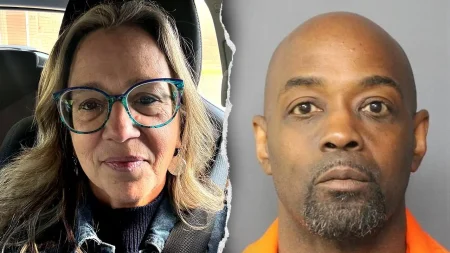



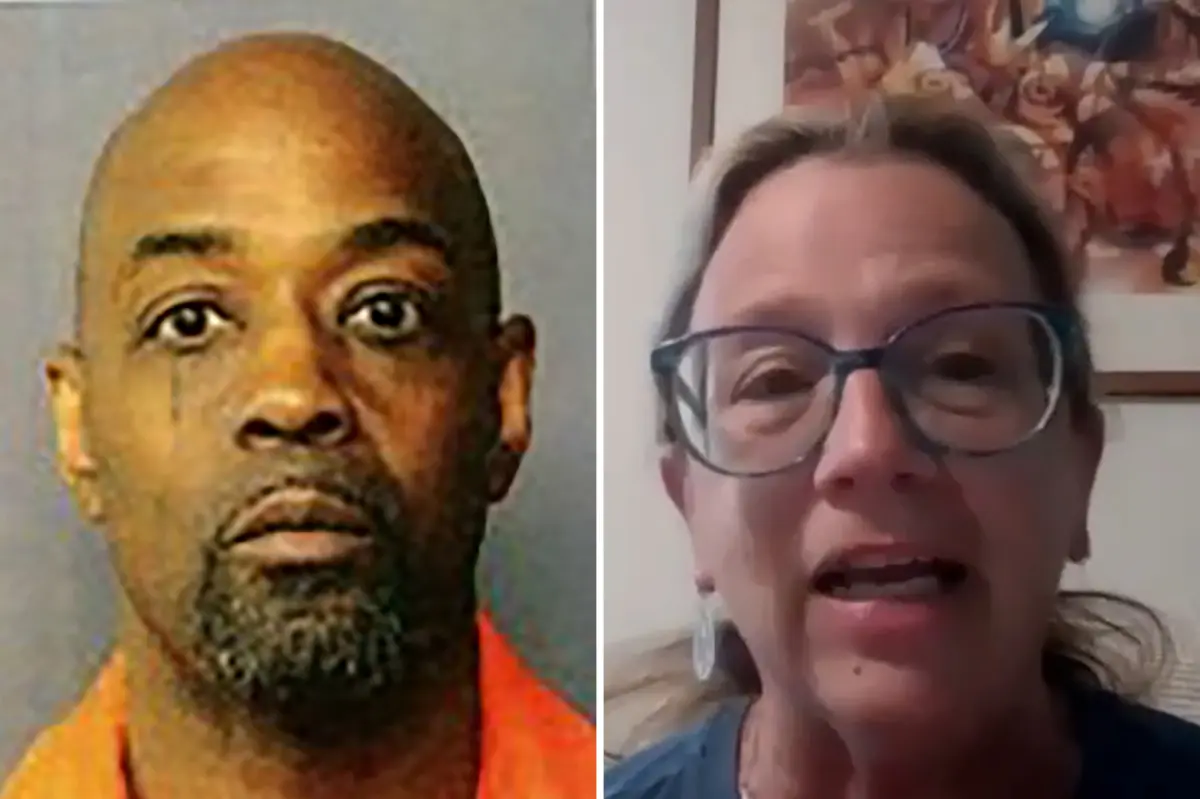
For 33 years, Amy has carried a wound that time never truly closed. On Valentine’s Day 1992, she was raped in her Norfolk, Virginia apartment by a man she did not know. Anthony Favors beat her and assaulted her for hours, leaving physical and psychological scars that would define the rest of her life. Amy was an active-duty Navy sailor at the time, and in the aftermath of the attack, she found the strength to report for duty on her ship, even as she tried to absorb what had just happened. The case went cold, and for more than three decades she lived with the weight of an unsolved horror, unsure whether the man who changed everything would ever face justice. Then, in 2024, a DNA match finally linked Favors to her case. Last September, Favors—now 57 years old—accepted a plea deal under which he would serve 24 years in prison for two counts of rape. Judge Everett A. Martin Jr. ordered the two 12-year sentences to run consecutively, and for Amy, it felt like the beginning of an ending she had waited decades to see. She had closure, or at least she thought she did. She began intensive trauma therapy, trying to reclaim the parts of herself that had been stolen. She dared to imagine a future not dictated by fear. But the fragile peace did not last. Months later, while going about her ordinary day, Amy received an automated VINE text notification—the kind of message sent to crime victims—informing her that Virginia’s parole board planned to review Favors’ case for possible release. The text threw her back into a nightmare. She had just watched her attacker be sentenced to more than two decades behind bars, and now the system seemed to be reopening the wound before it had even begun to heal. “I finally get some sort of closure and justice. And then I get a text,” Amy told Fox News Digital. “Nobody yet has told me how he’s even eligible for parole.” Her voice, raw and exhausted, captured the bewilderment of a survivor who had played by the rules for over three decades and still could not find safety.
The answer to Amy’s question lies in a tangle of bureaucratic timing and outdated sentencing laws. Norfolk Commonwealth’s Attorney Ramin Fatehi confirmed to Fox News Digital that Favors will likely have a “discretionary parole hearing” within the next few months. Fatehi explained that the hearing is not a sign that Favors deserves release, but rather an artifact of an overlapping parole review process. Favors was already serving a 60-year prison sentence for a separate March 1992 rape when the 2024 DNA hit linked him to Amy’s case. Because Favors committed his offenses before January 1, 1995, Virginia’s old sentencing laws authorize the Virginia Parole Board to consider him for release. In other words, a legal technicality—not Favors’ conduct, not his remorse, and not the severity of his crimes—has placed his case in front of a parole board for review. Fatehi was blunt about the likelihood of release, describing it as a “slim chance to zero.” But even the prospect of a hearing is enough to devastate a survivor. For Amy, the notification felt like a betrayal by the very system she had trusted to protect her. She used the word “disgusting” to describe her reaction, and she wondered aloud how this could be happening. “It’s wrong,” she said. “How can you do that? Where is my justice?” Those questions hang in the air, unresolved. The state of Virginia, through no single act of malice but through the slow grinding of regulations and statutes, had handed Amy a moment of peace and then quietly withdrawn it. The legal explanation provided by Fatehi did little to soothe her anger. It only deepened her sense that the justice system, which had finally acknowledged her pain, was now preparing to make her relive it in front of strangers who might decide to release the man who destroyed her life.
To understand Amy’s response, one must understand how thoroughly the 1992 attack reshaped her existence. The assault was not an isolated event that she could lock away and move on from; it rewired her mind and body. For decades, she has battled severe post-traumatic stress disorder, chronic sleep deprivation, and a hypervigilance that makes ordinary life feel dangerous. She checks her door locks over and over, unable to convince herself that she is safe. She has become two different people: the Amy who existed before the rape, and the Amy who emerged after it. “Some of the things that I did that I thought were normal, were not normal. And I still do,” she said. “Check the locks, recheck the locks, check the locks, recheck the locks. I’m not sleeping again because… it’s the unknown.” The “unknown” she refers to is not just the parole hearing itself, but the endless uncertainty that comes with it. Every notification from the justice system, every piece of paperwork, every hearing date threatens to drag her back into the darkest night of her life. She has worked hard in trauma therapy to build a semblance of stability, but the text message reminded her that stabilization is fragile. The possibility of Favors being released, even if remote, forces her to confront the idea that the man who took so much from her might one day walk free. That possibility, however unlikely, is unbearable. She has already given the state so much evidence, so many details, so many years. Now she must prepare to do it again, not because she wants to, but because she has to. “I now have to explain myself again as to why he shouldn’t get out,” she said. “It’s too much. But I gotta speak for me, and I gotta speak for these other victims who can’t speak for themselves. So, I gotta do it.”
Advocates for survivors say Amy’s experience reveals a profound flaw in how the justice system handles trauma. Heather Keeley, director of the nonprofit advocacy group Stand Tall, argued that survivors already carry the immense weight of their past assaults. When the system grants a parole hearing in a case like this, it actively expands that trauma by forcing victims to endlessly relive their worst moments. Keeley pointed out that Favors was sentenced to 24 years in prison—a sentence that should have given Amy decades of peace before any parole consideration. “He was sentenced to 24 years in prison, which wouldn’t even put him up for parole 12 years later,” she said. “And here it is less than six months later, and she’s calling us all that she just received a text message that he’s going before a parole board… how is that even possible?” Keeley’s frustration mirrors Amy’s own. A new hearing means Amy will have to detail her nightmare to the parole board, to justify her own safety in front of officials who may or may not understand the depth of her trauma. She will have to retell the story of being beaten and raped, to relive every detail, in the hope that the board decides to keep Favors locked up. It is a cruel paradox: the survivor must prove, again and again, that her suffering matters. Amy plans to ask the parole board for a three-year deferral, hoping to avoid being forced into an annual ritual of reliving the assault. She knows the request may fall on deaf ears, but she has to try. She has spent her life fighting for justice, and she will not stop now—not for herself, and not for the other victims who cannot speak. But the fight is exhausting, and the toll it takes on her body and mind is measurable. Every time she speaks her truth, she sacrifices a piece of her own healing.
Amy also worries that the parole board’s actions will have a chilling effect on other survivors. If the system appears to be releasing rapists early, she argues, why would anyone who has been sexually assaulted report the crime in the first place? “If you’re paroling these people, what incentives does that give somebody else?” she asked. “If they’ve been raped or sexually assaulted, what gives them the incentive to go and report it?” It is a devastating question, and it cuts to the heart of public trust in criminal justice. For years, advocates have worked to encourage survivors to come forward, to believe that the system will hear them and protect them. But cases like Amy’s threaten to undo that progress. When a convicted rapist who has already been linked to multiple assaults receives a parole hearing less than a year into a 24-year sentence, it sends a signal that no sentence is guaranteed, no closure is permanent, and no victim can feel safe. The Virginia Parole Board does not publicly list its full hearing schedule, which only adds to the sense of opacity. It posts monthly parole decisions on its official website, but for survivors like Amy, those decisions come too late—the notification arrives after the fear has already been awakened. Favors’ defense attorney did not respond to requests for comment, and Fox News Digital reached out to Governor Abigail Spanberger’s office, which did not provide an answer. For Amy, that silence is part of the problem. She is left alone with her questions, her memories, and her unrelenting vigilance. She checks her locks, rechecks them, and tries to sleep. The news cycle moves on, but she cannot.
There is no real ending to Amy’s story, only an ongoing struggle to hold onto the fragile sense of safety she has fought so hard to build. She is not asking for vengeance. She is asking for what should have been guaranteed: to be allowed to heal without wondering when the next text message will arrive. She is asking for a system that does not hand her a file and tell her to fight the same battle all over again. And she is asking for the people who make these decisions to remember that behind every parole docket, behind every legal technicality, there is a human being whose life was upended by violence. Amy has survived the rape, the cold case, the decades of silence, and the initial shock of learning that her attacker was found. Now she must survive the aftermath of a loophole that has put him back on the table for reconsideration. She has done nothing wrong. Favors, by contrast, is a convicted rapist with at least two victims, a man who inflicted unimaginable pain and was only brought to justice because DNA refused to forget what he did. Yet the system is treating him with the presumption of a chance at freedom, while Amy is treated as a witness to her own suffering. She has no choice but to keep speaking, to keep checking her locks, to keep reliving the worst night of her life in order to prevent it from happening to someone else. “The only word I can think of right now, honestly, is disgusting,” she said. “It’s wrong. How can you do that? Where is my justice?” That question may never get a satisfactory answer. But Amy’s voice, raw and unbroken, remains. She will appear before the parole board if she must. She will tell her story once more. She will fight for the deferred hearing, for other survivors, and for the simple, unglamorous right to sleep without fear. That is not justice. It is survival. And for now, it is all she has left.