

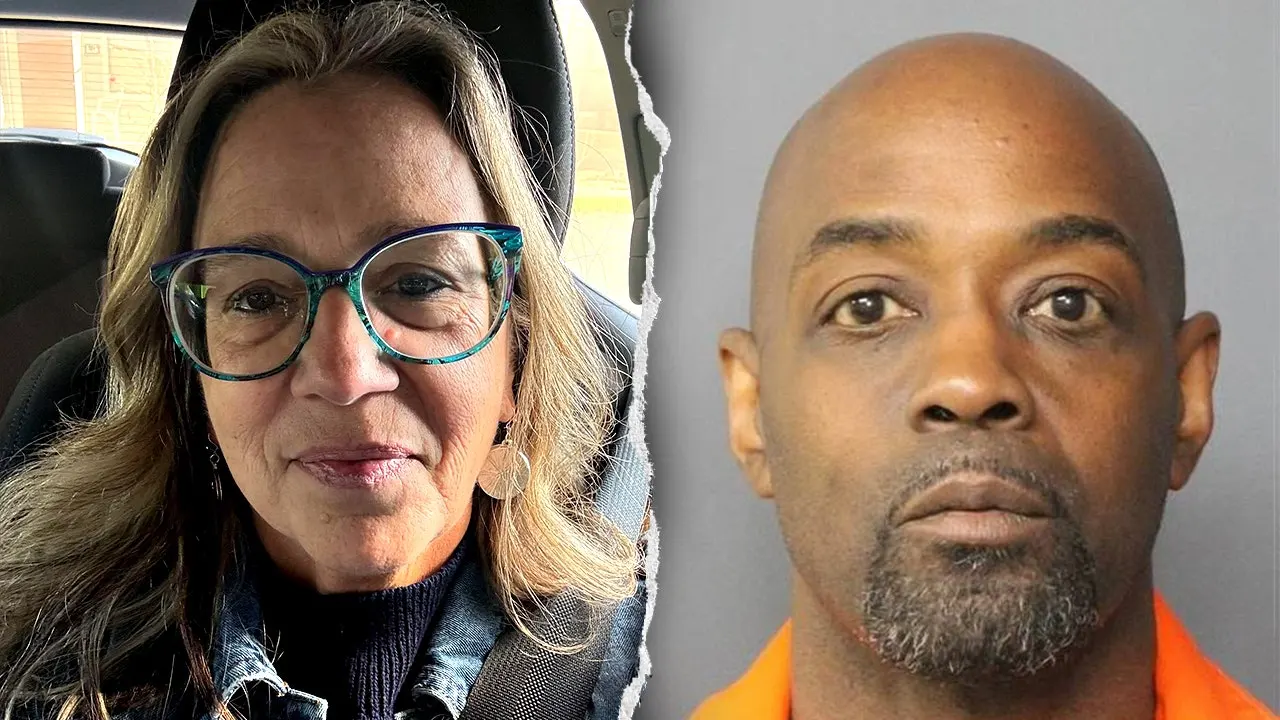
For more than three decades, Amy has lived with the ghost of a Valentine’s Day that was supposed to be filled with roses and promises, but instead became the dividing line between who she was and who she would become. On Feb. 14, 1992, in Norfolk, Virginia, a man broke into her apartment and spent hours beating and sexually assaulting her. She was an active-duty sailor in the U.S. Navy, trained to be strong, but nothing could prepare her for this kind of violation. The case went cold, and for 33 years she carried the weight of the unknown, not knowing if her attacker was walking the same streets, not knowing if she would ever see justice. Then, in 2024, DNA evidence finally linked the crime to Anthony Favors, a convicted rapist who was already serving a 60-year sentence for another rape committed the same year. In September 2025, Favors, now 57, took a plea deal rather than face trial on six indictments that included abduction and burglary. He pleaded guilty to two counts of rape, and Judge Everett A. Martin Jr. sentenced him to 24 years in prison, ordering 12 years for each count to run consecutively. For Amy, it was the moment she had been waiting for since she was a young woman. She allowed herself to exhale, to believe that the system had finally done its job. She had a name, a conviction, a sentence. But her relief was short-lived. Months later, an automated VINE text arrived on her phone, notifying her that Virginia’s parole board planned to review Favors’ case for possible release. “I finally get some sort of closure and justice. And then I get a text,” Amy said. “Nobody yet has told me how he’s even eligible for parole.” The notification did not explain, did not offer comfort, did not prepare her for the fear that came flooding back. It simply told her that the nightmare might not be over.
The legal path that led to this moment is tangled in the bureaucratic machinery of Virginia’s old parole system. Favors was not paroled from his earlier 60-year sentence for a March 1992 rape; he was simply old enough under the law to be considered. Norfolk Commonwealth’s Attorney Ramin Fatehi explained that the upcoming review is what he called a “discretionary parole hearing.” Because Favors committed his offenses before Jan. 1, 1995, Virginia’s old sentencing laws authorize the Virginia Parole Board to consider him for release. Fatehi was blunt about the odds: there is a “slim chance to zero” that Favors will actually be set free. But the possibility itself was enough to send Amy spiraling. For her, the hearing is not a formality. It is another chapter in a story she never wanted to tell. It is a reminder that even after a conviction, even after a sentence, the justice system can continue to reopen wounds. “The only word I can think of right now, honestly, is disgusting,” she said. “It’s wrong. How can you do that? Where is my justice?” The legal explanation does not ease the sting. Fatehi said the parole board previously considered Favors for release on his earlier rape conviction but never granted it, and that procedural history legally opened the door for this new review. The overlap is a technicality, but technicalities have human consequences. Amy is not a case file; she is a woman who has spent her life trying to rebuild herself after being shattered. And now, because of a loophole in sentencing laws written a generation ago, she has to prepare herself for the possibility of seeing her attacker considered for freedom. The word “discretionary” offers her no comfort. Neither does “theoretically eligible.” All she knows is that the man who raped her is being given a hearing, and that she has to decide whether to attend, whether to speak, whether to once again stand in front of strangers and describe the worst night of her life.
The attack did not end when Favors left her apartment. It followed Amy onto the Navy ship where she reported for duty immediately afterward, because she had been taught to push through, to be strong, to not let one bad thing define her. But trauma does not obey orders. Decades later, it still dictates her daily routines. She battles severe post-traumatic stress disorder, chronic sleep deprivation, and a hypervigilance that leaves her unable to trust the world around her. She checks her door locks over and over, knowing full well they are locked but unable to convince the part of her brain that still feels unsafe. “Some of the things that I did that I thought were normal, were not normal. And I still do,” Amy said. “Check the locks, recheck the locks, check the locks, recheck the locks. I’m not sleeping again because… it’s the unknown.” The unknown is the worst part. She knows Favors’ name now, but she doesn’t know what the parole board will decide. She doesn’t know whether she will have to relive that night in a hearing room, with his representatives listening and perhaps him watching. She doesn’t know if she will ever feel safe again. The psychological scars have reshaped her identity. “If you took the Amy before my rape and the Amy after my rape, I am two different people,” she said. That is the toll of sexual violence: it steals more than a moment or a night. It steals the feeling of being at home in your own body, the simple trust that the world is not a dangerous place. Amy has spent 33 years trying to reclaim that sense of safety, and each new turn in the legal process threatens to set her back. Therapy has helped, but no amount of therapy can fully erase the knowledge that her attacker was almost granted a parole review within months of receiving a 24-year sentence for raping her.
Heather Keeley, director of the nonprofit advocacy group Stand Tall, says the system is failing survivors in a way that is both predictable and preventable. Survivors already carry the weight of their past assaults, Keeley explained. They have to live with the memories, the flashbacks, the moments when something triggers a sudden rush of fear. When the justice system grants a parole hearing to a man who was just sentenced, it does more than fail to protect survivors; it actively expands their trauma by forcing them to endlessly relive the event. “He was sentenced to 24 years in prison, which wouldn’t even put him up for parole 12 years later,” Keeley told Fox News Digital. “And here it is less than six months later, and she’s calling us all that she just received a text message that he’s going before a parole board… how is that even possible?” Keeley’s frustration is rooted in a larger problem: the disconnect between what a sentence means to a victim and what it means to the legal system. To Amy, 24 years was a promise that she could have a decade or more of peace. To the parole board, it was a calculation that did not account for the emotional impact on the woman he raped. The notification itself, delivered by an automated text, was the opposite of human care. No one called Amy to explain the process, to offer support, to tell her what to expect. She was left to decipher the legal jargon and wait for the next blow. Advocacy groups like Stand Tall exist to fill that gap, but they cannot replace a system that lacks compassion. Keeley’s question is the one every survivor wants answered: how can a judge order consecutive sentences, sending a clear message that this man deserves to be locked away for decades, and then months later the same state considers setting him free? The contradiction is not just a legal puzzle; it is a moral one.
For Amy, the upcoming hearing means more than another court date. It means she will have to enter a room and explain to the parole board why her attacker should remain in prison, why her safety matters, why her life is worth more than his freedom. She will have to relive the night of Feb. 14, 1992, in graphic detail, for strangers who may or may not listen. She will have to justify her own value as a human being. This is an enormous burden, especially after months of intensive trauma therapy, which has helped her make progress but also made her more aware of how much the trauma still affects her. She is terrified that the hearing will undo all the work she has done, that the memories she has tried to box away will spill out and consume her again. She plans to ask the parole board for a three-year deferral, not because she wants Favors out sooner, but because she cannot face this annually. The state should not force her to relive the worst night of her life every year as part of a procedural checklist. “I now have to explain myself again as to why he shouldn’t get out,” she said. “It’s too much. But I gotta speak for me, and I gotta speak for these other victims who can’t speak for themselves. So, I gotta do it.” Her determination is inspiring, but it is also heartbreaking. She should not have to be the one fighting for justice while also fighting for her own survival. She should not have to choose between her mental health and her voice. Yet she will stand up anyway, because remaining silent would mean letting the system make the decision without her. She knows that her testimony might not matter, that the parole board might ignore her, but she also knows that staying silent would be a different kind of betrayal to the woman she used to be.
Beyond Amy’s personal pain, this case exposes a broader crisis in how the criminal justice system interacts with victims. Amy fears that if the public sees rapists being granted parole hearings months after receiving long sentences, trust in the system will erode beyond repair. “If you’re paroling these people, what incentives does that give somebody else?” she asked. “If they’ve been raped or sexually assaulted, what gives them the incentive to go and report it?” It is a devastating question. Victims already face harrowing obstacles when they come forward; they are often doubted, blamed, and put through a grueling process that can take years. If the system then tells them that a conviction and sentence offer no real guarantee of safety, why would anyone report? The Virginia Parole Board does not publicly list its full hearing schedule, which adds another layer of opacity to an already murky process. It posts monthly parole decisions on its official website, but that is little comfort to a survivor who receives an automated text with no context. Favors’ defense attorney did not respond to requests for comment, and Fox News Digital also reached out to Gov. Abigail Spanberger’s office for comment, but no response was available. The silence from those in power is telling. Amy is not asking for revenge. She is asking for consistency, for transparency, for a system that honors its own sentences. She is asking for the state to remember that behind every case number is a person who lives with the consequences. As she prepares to face the parole board, she carries not only her own pain but the weight of every victim who cannot speak. Her strength is remarkable, but it shouldn’t be required. The least the system can do is listen, and more importantly, change. Until it does, survivors like Amy will continue to feel like the justice they were promised is just out of reach, a door that keeps opening and slamming shut, again and again.