


1. A Coach’s Call for Compassion in the NIL Era
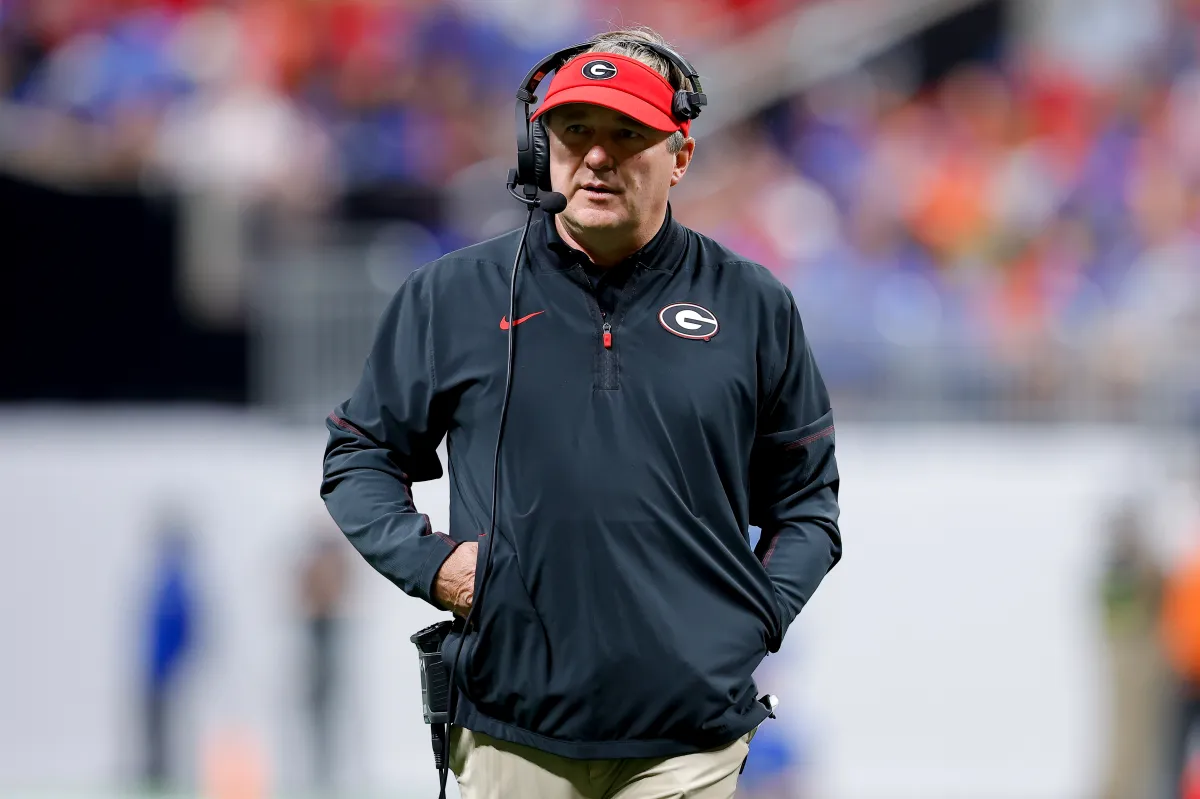
When Kirby Smart speaks, people listen—not just because he leads the Georgia Bulldogs, college football’s most dominant program, but because he speaks with the kind of blunt sincerity that cuts through the noise of the sport. On his radio show Thursday, Smart did something more meaningful than breaking down X’s and O’s or analyzing the College Football Playoff picture. He turned the spotlight inward, not on his players’ statistics or their championship pedigree, but on their emotional well-being. In an era where Name, Image, and Likeness (NIL) deals have transformed college athletics into a financial whirlwind, Smart urged schools across the country to do one crucial thing for the athletes who now carry that burden: provide more mental health support. His words were not abstract policy recommendations. They came from a place of genuine concern as he observed the young men in his locker room navigating a landscape that is far more complicated than blocking and tackling. The two-time national champion coach did not mince words, emphasizing that athletes are experiencing “an all-time high of mental stress.” For Smart, the issue is urgent. He sees it in the faces of his players, in the way they respond to pressure, and in the weight they carry long after practice ends. This is not the same college football world Smart inhabited as a player, and he knows it. The introduction of NIL money has changed everything, and while fans often celebrate the business side of the game, Smart is concerned about the human side. His plea is simple, yet profound: schools must do more to make sure these young athletes are not just physically prepared, but mentally supported, too.
2. The Invisible Weight of Sudden Wealth and Expectation
To understand Kirby Smart’s concern, you have to imagine what it feels like to be nineteen or twenty years old, suddenly holding a bank account balance that rivals the salary of a working adult—sometimes exceeding it by hundreds of thousands of dollars. For a college athlete, NIL money is life-changing, but it is also a magnet for chaos. Smart described a painful reality: when a young person begins earning substantial money, everyone suddenly wants a piece of them. Family members who once lived quietly in the background become vocal. Distant relatives, old acquaintances, and even strangers “come out of the woodworks,” as Smart put it, because they discover what these players make and want to tap into that newfound wealth. There is immense psychological weight in knowing that your value to others is now financial. The athlete is not just expected to perform on the field; they are expected to support people who may not have supported them before. Smart specifically highlighted the pressure to provide not only for immediate family, but for an “outside family”—aunts, uncles, cousins, childhood friends, people who suddenly see the player as a solution to their own problems. It is a burden that no kid should have to carry alone. And yet, many of them do carry it in silence. They smile for the cameras, they deliver on the field, they attend classes—but inside, they are struggling with the impossible task of managing everyone else’s expectations while trying to keep their own life together. Smart’s empathy is striking because it reminds us that these elite athletes are still young people, still figuring out who they are, still vulnerable to the very real emotional toll that comes with sudden financial success. The pressure is not just about performing; it is about surviving a social world that has become far more complicated than it ever was before.
3. A System That Has Yet to Catch Up
Kirby Smart’s central argument is not just that athletes feel stress; it’s that the system is failing them. He said plainly, “I don’t think anybody in the country does enough to support them mentally and just making sure that they’re where they need to be, in a good headspace.” In the old days, college athletes were primarily worried about academics, athletics, and the normal struggles of growing up. Now they are navigating contracts, taxes, brand deals, and the social dynamics that come with money—all while trying to maintain their athletic performance. Coaches and athletic departments have adapted to the recruiting side of NIL, using it to attract talent and compete for championships. But according to Smart, the industry has not kept pace when it comes to mental health resources. There are still not enough counselors, not enough open conversations about the emotional challenges of being a paid performer, and not enough time dedicated to simply checking in with these young men and women. Smart’s point is bigger than football. He is calling out an entire culture that celebrates the financial windfall of NIL without acknowledging the psychological costs. It is easy to talk about the money, but it is much harder to talk about the sleepless nights, the anxiety, the feeling of being exploited by people who claim to care about you, and the isolation that comes from being seen as a commodity rather than a person. The coach wants schools to be proactive, not reactive. He wants to create an environment where athletes can speak openly about their struggles without fear of being judged, benched, or seen as weak. It is a message that should resonate far beyond Georgia, because in every locker room in America, there are players quietly fighting battles that no stat sheet will ever capture. The athlete who is smiling on social media may be the same person who is struggling to sleep at night, and Smart is saying that it is time for the adults in the room to step up and help.
4. Real Dollars, Real Athletes, Real Pressure
Smart’s comments are not made in a vacuum. At Georgia, the stakes are extremely high, and the NIL values are enormous. The quarterback, Gunner Stockton, carries an NIL valuation of roughly two million dollars. Offensive lineman Earnest Greene and defensive lineman Elijah Griffin are each valued at around one million dollars. Those figures are not just numbers; they represent real expectations, real contracts, and real pressure to live up to the hype. For these players, every game is an audition, every season is a chance to prove they are worth the investment. But that pressure does not stay on the field. It follows them into their interactions with family, friends, and even strangers who view them as walking dollar signs. Imagine being twenty years old and knowing that your next decision—on the field or off of it—could affect millions of dollars in earning potential. Imagine receiving messages from people you have never met, all asking for a piece of what you have earned. That kind of pressure can be crushing, and it is exactly why Smart is speaking out. His Georgia team is currently ranked No. 2 in the College Football Playoff rankings, and the Bulldogs are chasing their third national title in six seasons. They are also the reigning back-to-back SEC champions. But while the program is excelling on the scoreboard, Smart understands that success is meaningless if his players are suffering inside. He wants them to have the tools to deal with the chaos that comes with being a top-tier athlete in the modern college sports landscape. He wants them to be in a “good headspace,” not just for their performance on Saturdays, but for their wellbeing for the rest of their lives. It is a mature, forward-thinking perspective that acknowledges the reality of the sport: these players are making money, they are being judged, and they are under constant scrutiny. What Smart is asking for is the support system to help them handle it. The absence of that support is not just an oversight; it is a failure to protect the very people who make the sport great.
5. The Broader Crisis in College Athletics
Kirby Smart’s plea is not just about Georgia; it is a reflection of a larger crisis unfolding across college athletics. Since the arrival of NIL, the landscape has changed in ways that no one could have fully anticipated. On one hand, athletes are finally able to profit from their hard work and talent, which is a positive and long-overdue development. On the other hand, the influx of money has created a culture in which athletes are treated like professionals without always being given the professional support they need. Professional sports organizations have sports psychologists, financial advisors, counselors, and an entire ecosystem designed to help players manage the pressures of their careers. College athletes, many of whom are even younger and less experienced, are often expected to handle everything on their own while also being full-time students and performers. That is not sustainable, and Smart knows it. He is one of the most influential coaches in the country, and when he speaks, athletic directors and university presidents listen. His hope is to spark a movement—not just a conversation—around mental health support for athletes. Schools need to invest in more than just facilities and recruiting budgets; they need to invest in people. They need to hire more mental health professionals, create confidential counseling opportunities, and foster a culture where seeking help is seen as a sign of strength, not weakness. They need to educate athletes about financial literacy, help them set boundaries with family and friends, and remind them that their worth is not determined by their bank account. Smart’s message humanizes the athlete experience in a way that is often lost in the noise of college football. These are not just players; they are young people who are navigating one of the most stressful transitions of their lives in front of millions of people. The least the institutions that profit from their labor can do is protect their mental health.
6. Looking Ahead with Hope, Not Just Hype
As Georgia continues its march toward another championship, Kirby Smart’s words should serve as a reminder that the game is bigger than trophies. Yes, the Bulldogs are elite. Yes, they are contenders. But Smart’s focus on mental health shows that his legacy will not be defined solely by wins and losses. It will also be defined by how he cared for the young people who trusted him with their futures. His radio show comments were not just a coach venting about a difficult problem; they were a call to action. It takes courage to admit that despite all the money and success, something is missing. It takes wisdom to recognize that supporting a player’s mind is just as important as developing their body. And it takes leadership to use your platform to advocate for change, even when it is not the most popular or convenient topic. Moving forward, the hope is that other coaches and administrators will follow Smart’s example and take a hard look at their own mental health programs. The NIL era is not going away, and the pressures that come with it are only going to grow. But if the college sports community can come together and prioritize the wellbeing of its athletes, the game will be better for everyone. For the players themselves, the message is clear: you are not alone. There are people watching, not to judge your performance, but to make sure you are okay. In a world that often views athletes as commodities, that simple truth is powerful. Kirby Smart may be a coach who demands excellence on the field, but this week, he showed that he cares about something even more important—the hearts and minds of the young men who wear the red and black. And that is a legacy worth more than any national championship.