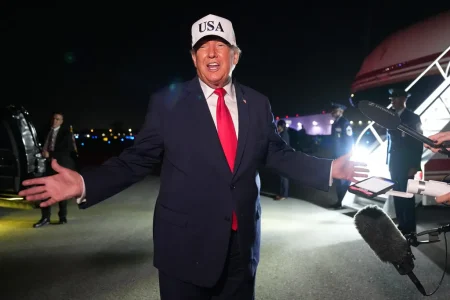


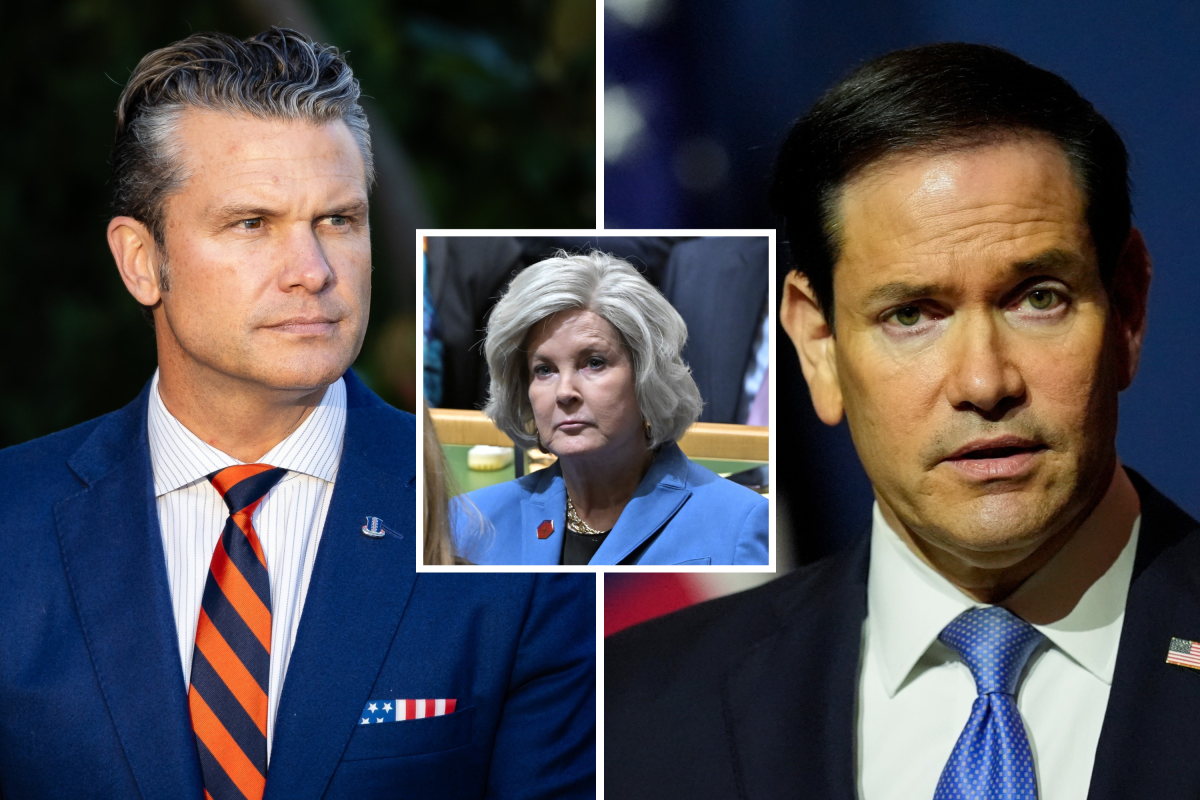
In the aftermath of a bruising midterm election that left Republicans reeling and Democrats poised to take control of both chambers of Congress, President Donald Trump has made his first major personnel decision — and it is a striking one. Susie Wiles, the chief of staff widely credited with helping steer Trump’s 2024 victory and bringing a measure of discipline to his famously chaotic orbit, is out. In her place steps Stephen Miller, the hard-line immigration architect and deputy chief of staff who has long been one of Trump’s most trusted ideological loyalists. Trump announced the change with characteristic brevity on Truth Social, praising Wiles for doing “an outstanding job” while confirming Miller would take over as chief of staff the following Monday. Wiles, he said, would move over to the “Trump Political Operation.” The timing was telling: just days after voters delivered a devastating rebuke to the administration, Trump framed the shift not as a firing but as a natural evolution. Yet the subtext was clear. After years of projecting strength and control, the president was making a move — and the questions rippling through Washington were no longer about whether he would shake things up, but about who might be next. Wiles herself acknowledged the transition gracefully, writing on X that her service had been “the honor of a lifetime” and insisting her commitment to Trump and the mission “never will” waver. But the larger message from the White House was less gracious, with spokeswoman Danielle Alvarez dismissing those who suggested senior officials were on their way out as “self-serving individuals peddling stories” — a statement that landed just hours before the very change it seemed to deny.
The significance of Wiles’ departure extends far beyond the title itself. As chief of staff, Wiles was not just a gatekeeper; she was the adult in the room for many observers, someone who brought a level of operational competence to a presidency that often thrived on chaos. Her political résumé was impeccable — she had helped engineer Trump’s 2024 comeback, managed his campaign with a steady hand, and earned a reputation as one of the few people who could tell the president no without losing her job. But in recent months, her position had become increasingly precarious. Trump’s approval ratings had slid, Republican candidates had suffered a series of special-election losses, and voter frustration over inflation, the economy, and above all the unpopular Iran war had turned the midterms into a referendum on the administration. Critics inside and outside the president’s orbit began openly calling for her resignation, with former Trump staffer Caroline Sunshine arguing on Fox News that Wiles deserved blame for the defeat just as she had deserved credit for the 2024 victory. Politico reported that Trump had received negative feedback about her from allies, though he publicly dismissed the story as “TOTAL FAKE NEWS.” Mick Mulvaney, a former chief of staff himself, predicted she might leave after the midterms, calling it a natural transition rather than a dismissal. In the end, the transition happened exactly as Mulvaney predicted, but the symbolism was impossible to ignore. Wiles was the steady hand; Miller is the ideological flame. Her move to Trump’s political operation means she retains influence, perhaps considerable influence, over the president’s political future. But the fact that Trump chose Miller — a figure synonymous with hardline immigration policies and unapologetic MAGA nationalism — as his new chief of staff signaled that the president’s instinct after defeat was not to moderate or broaden his appeal, but to double down on the core vision that defined his presidency.
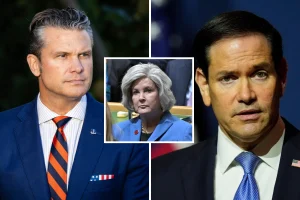
Now the spotlight turns to other senior figures whose futures have become suddenly uncertain. Defense Secretary Pete Hegseth is perhaps the most vulnerable. Hegseth has been under pressure for months over his management of the Pentagon — the dismissal of senior military officers, the Signal group-chat controversy, and questions about military operations near Venezuela. But the Iran war has transformed that pressure into a direct political threat. Voters cited the war as a major reason for the Republican defeat, and Trump has reportedly been asking advisers whether Hegseth should remain. The president told 60 Minutes on Friday that he had confidence in Hegseth, but that may not be enough to save him. Republican Congressman Thomas Massie has announced plans to introduce articles of impeachment against the defense secretary as soon as lawmakers return, and with Democrats taking control of Congress in January, Hegseth could face a punishing array of hearings and investigations. Kathryn Dunn Tenpas, a scholar of presidential staffing and turnover, noted that Trump might decide to remove Hegseth precisely to avoid that spectacle — to cut him loose before Democrats can use him as a symbol of the administration’s failures. Prediction markets have been fluctuating wildly, with Kalshi at one point putting the odds of Hegseth leaving at 62 percent, and Polymarket placing it around 60 percent. His departure would serve a convenient political purpose: it would allow Trump to signal that he hears the public’s anger without having to acknowledge that the underlying strategic decisions, many of which he made himself, were flawed. Hegseth would become the scapegoat for a war that has become the defining liability of the second Trump term. Whether Trump is willing to make that sacrifice remains to be seen, but the forces pushing for it are growing stronger by the day.
Beyond Hegseth, Secretary of State Marco Rubio occupies an entirely different category of speculation. Rubio is not seen as a potential scapegoat; he is seen as a potential presidential candidate. With the 2028 Republican primary beginning to take shape in whispers and strategy memos, Rubio’s position as secretary of state has become increasingly awkward. Staying in the Cabinet means defending an administration whose political standing has deteriorated dramatically, especially on the Iran war. Leaving would give him breathing room to establish a more independent identity and distance himself from decisions that could haunt him in a primary. A Washington insider and Rubio ally told The Independent that it “makes complete sense for him to step down” and that Rubio is “definitely ahead of Vance” as the leading candidate for the nomination. Rubio has publicly said he has no immediate plans to run, and administration officials have forcefully denied that he is preparing to resign. Dylan Johnson, an assistant secretary of state, dismissed the speculation as “complete and total fake news” and insisted Rubio would continue to serve “long after this fake news is revealed as yet another baseless hoax.” But the political incentives are shifting. Prediction markets have placed the probability of Rubio leaving the administration this year as high as 55 percent, and even higher odds of him leaving before 2027. Rubio’s fate may ultimately be chosen by Rubio himself, not by Trump. He has long been regarded as a serious contender for the presidency, and the approaching succession battle within the Republican Party is likely to be one of the defining dynamics of the next few years. If he decides to run, he cannot do so while serving as the nation’s top diplomat. Every week he remains in the administration is a week he remains tied to its unpopular decisions.
The broader personnel picture extends well beyond Wiles, Hegseth, and Rubio. Vice President JD Vance is perhaps the most consequential figure in the post-election conversation, not because he might leave, but because he has already begun to break with the president in subtle and not-so-subtle ways. In the aftermath of the election, Vance argued that Republicans needed an honest conversation about the Iran war, explicitly identifying it as the reason for the party’s losses. “Any honest conversation about where we go from here must start there,” he said. That is a remarkable statement from a sitting vice president, one that suggests he is already positioning himself for 2028 by demonstrating that he can offer a different direction while remaining loyal to Trump’s base. FBI Director Kash Patel is another figure under mounting scrutiny, with questions about his management of the bureau, personnel decisions, and the politicization of the agency. Prediction markets have placed roughly 24 percent odds on Patel being gone by the end of the year. Commerce Secretary Howard Lutnick faces pressure on a different front — the economy, inflation, and affordability were central to the Republican defeat, and if Trump decides he needs to show a change in direction, Lutnick could be exposed. There have also been early departures beyond the Cabinet: Harmeet Dhillon resigned as assistant attorney general overseeing the Civil Rights Division, and other Justice Department officials followed, with DNC Chairman Ken Martin gleefully declaring that Dhillon would be “the first of many” to resign in disgrace. Even if Trump does not intend a broad purge, the perception of instability is itself a political problem. The White House has insisted that Trump has a “strong, united team,” but the announcements keep coming, and each one feeds the narrative that the administration is in a state of flux.
Historically, presidents rarely emerge from major midterm defeats without some reassessment of their staff, but a full Cabinet purge is also not the norm. Tenpas noted that across administrations from Ronald Reagan onward, major Cabinet shake-ups following second-term midterm defeats have been relatively rare. Reagan asked Defense Secretary Caspar Weinberger to leave in the aftermath of Iran-Contra. George W. Bush ousted Donald Rumsfeld after the 2006 midterms amid Iraq War criticism. Barack Obama pushed out Defense Secretary Chuck Hagel in 2014. But in each case, it was a limited change, not a mass exodus. The closest comparison to Trump’s current situation may be his own 2018 experience, when Republicans lost the House and John Kelly departed as chief of staff, with Mick Mulvaney taking over and several other senior figures leaving around the same time. Tenpas also noted that political science research suggests firing aides does not necessarily boost presidential approval ratings. But that may not be the point. For a president facing a hostile Congress, investigations, and impeachment threats, personnel changes can serve a symbolic purpose — they show lawmakers and the public that the president is listening, that he is willing to make tough decisions, and that he understands the gravity of the moment. Whether Stephen Miller’s elevation helps or hurts Trump politically is an open question. Miller is beloved by the MAGA base but deeply polarizing to the broader electorate, and his appointment suggests Trump is more interested in ideological fidelity than in broadening his appeal. The next few weeks will reveal whether Wiles’ ouster is just the beginning of a larger restructuring or a targeted change in White House management. But one thing is certain: the era of the steady hand is over. Trump has chosen to double down, and the consequences of that choice will shape not only the rest of his presidency, but the future of the Republican Party as it hurtles toward 2028. Whether that path leads to redemption or ruin is a question only time — and the voters — can answer.