


When President Donald Trump teased a “big, beautiful agreement” over the Ukraine war, it sounded like the kind of bold, optimistic declaration that defined his political style. But the Kremlin’s response was measured, cautious, and notably short on enthusiasm. Dmitry Peskov, Vladimir Putin’s spokesman, told reporters that Russia had “no details” about the agreement Trump had vaguely referenced, and he worked quickly to manage expectations. The timing was telling: Peskov’s remarks came on Friday, just days before what were supposed to be the first trilateral negotiations involving the United States, Ukraine, and Russia since February. Those talks were scheduled to begin on November 10 in Abu Dhabi, and they carried an undeniable weight, but the initial signals from Moscow suggested that the White House’s vision of a sweeping breakthrough might not match the reality on the ground. For months, the war has remained frozen in a brutal stalemate, with neither Kyiv nor Moscow willing to shift from its core demands. Trump’s promise of a deal that would thrill everyone seemed almost fantastical against that backdrop. At the same time, there was something genuinely notable about the fact that Russian and Ukrainian officials were even sharing a room, or at least planning to, amid a war that has dragged on for years. But as analysts pointed out, proximity does not equal progress, and a “beautiful agreement” is not the same as an achievable one.
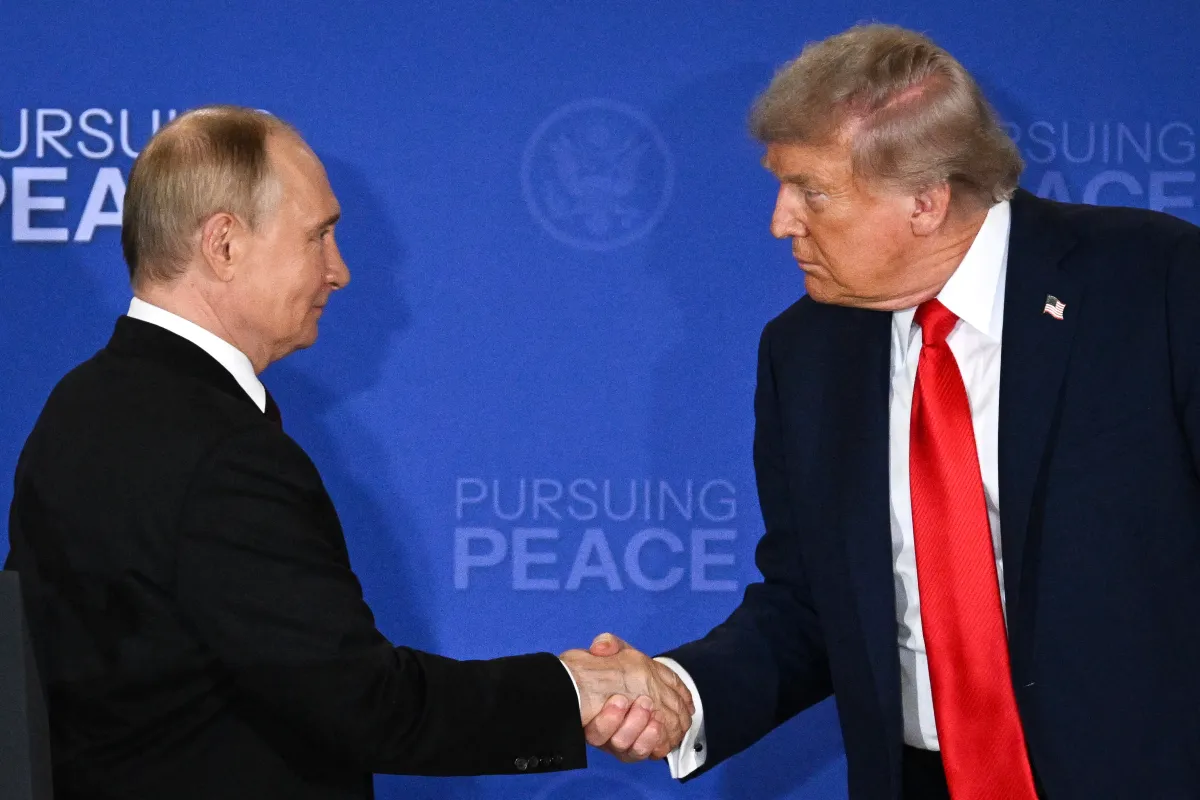
Trump’s comments emerged from an unusual White House event on Thursday, hosted by First Lady Melania Trump and focused on a humanitarian operation in Oleshky, a frontline town that has suffered terribly during the war. Russian and Ukrainian officials were both present, although Trump later insisted he had not spoken with the Ukrainian delegation. Instead, he met with Russian envoy Kirill Dmitriev, an economic official with close ties to the Kremlin. It was after that meeting that Trump made his tantalizing remarks to reporters, saying, “There’s going to be an agreement,” and adding that it would not be limited to Ukraine alone. “I could even say it might involve all of Europe,” he said. He described the eventual deal as “big, beautiful” and predicted that “everyone is going to be thrilled.” The statements were classic Trump: bold, vague, and designed to project confidence. But they left enormous questions unanswered. What exactly would this agreement cover? Who would be included? How would it address the deeply entrenched positions of the warring parties? None of that was clarified. The White House did not offer additional details in response to requests from Newsweek, instead pointing to a social media post from Trump’s envoy Jared Kushner. Kushner wrote that “all parties remain intensely engaged in preparing for substantive and productive negotiations,” a carefully worded statement that echoed the diplomatic optimism of the administration without making any concrete promises. Still, Trump’s comments were enough to generate headlines and raise hopes that something significant might be in the works.
The Kremlin, however, was clearly in no rush to embrace that optimism. When asked about Trump’s purported “big, beautiful agreement,” Peskov responded with a flat and deliberate “there are no details.” That short sentence was a quiet but unmistakable rebuke of the administration’s messaging. It suggested that Moscow was either not fully in the loop or not willing to let itself be painted as eager for a deal that might not align with its interests. Peskov also pushed back on the notion that European countries had been actively offering security guarantees or proposals. He told reporters, according to state news agency Tass, that “as for any proposals from the Europeans, none have reached us, and we are not aware of any.” This was a significant comment because any lasting settlement to the conflict would almost certainly require a broader European security framework. The war has not only devastated Ukraine; it has redrawn the security map of Eastern Europe, revived NATO’s sense of purpose, and forced European capitals to rethink decades of comfortable assumptions about peace. If Russia had received no proposals from Europe, that suggested the diplomatic architecture around the talks was still very much under construction. Meanwhile, Kushner’s post attempted to reassure the public that discussions were ongoing and productive, noting that the U.S. had already held “productive talks in Brussels with representatives from Ukraine, NATO, and the EU.” But the gap between Washington’s sunny language and Moscow’s cautious shrug left the situation deeply uncertain. The two sides were not even speaking the same emotional language, which has often been the case throughout the war.
The upcoming talks in Abu Dhabi were therefore both a cause for curiosity and a source of skepticism. Scheduled for November 10 and 11, they were expected to be the first trilateral negotiations between the United States, Ukraine, and Russia since February, and the first serious attempt in months to break the deadlock that had settled over the conflict. The choice of Abu Dhabi as a venue was significant, reflecting the increasing role of Gulf states as neutral hosts and mediators in international diplomacy. It also avoided the more politically charged settings of Washington, Brussels, or Moscow, offering a neutral ground where the parties might at least talk without the symbolic weight of a Western capital. The meetings were expected to be led by Trump’s special envoys, Jared Kushner and Steve Witkoff, along with the Russian delegation, which the Kremlin said would be headed by Vladimir Putin aide Vladimir Medinsky. But the expectations for concrete progress were low. Mark Temnycky, a nonresident fellow at the Atlantic Council’s Eurasia Center, told Newsweek flatly that “a breakthrough is unlikely.” That assessment was shared by many observers, who saw the talks as an opportunity for the Soviet- and post-Soviet-style diplomatic rituals that both sides enjoy, but not as the moment when the war would actually end. The conversations might produce modest agreements, small steps forward, or perhaps just an agreement to keep talking. But no one was predicting a formal peace treaty to be signed in the desert.
The core problem is that the two sides remain completely entrenched in positions that are fundamentally incompatible. Russia insists that Ukraine withdraw its forces from parts of the Donetsk region that Kyiv still controls, a demand that Ukraine regards as absurd and unacceptable. The Kremlin’s broader terms have barely changed since 2024, when Putin demanded that Ukraine withdraw from the Luhansk, Donetsk, Zaporizhzhia, and Kherson regions, territories that Russia claims as its own but does not entirely control. Ukraine has rejected those terms outright and has instead called for a ceasefire along the current frontline, which would effectively freeze the conflict and allow the country to rebuild and perhaps preserve its hope of future recovery. The gap between those two positions is enormous. It is difficult to see how any amount of negotiating skill can bridge a divide where one side demands territorial concessions and the other demands an immediate halt to fighting. Temnycky suggested that the most realistic outcome of the Abu Dhabi talks would be incremental progress, such as an agreement on a new prisoner exchange. That may sound small, but in a war that has produced so much suffering, prisoner exchanges carry real humanitarian weight. Temnycky also noted that Kushner’s post about the Brussels talks implied that the negotiations could address security guarantees for Ukraine and the broader European security architecture, alongside a potential ceasefire and a path toward peace. But adding an economic dimension to the talks, he pointed out, could further complicate matters. Dmitriev is an economic envoy, and a broader U.S.-Russia economic framework could certainly be attractive to all sides, but it would need the support of both Ukraine and Europe. That is far from guaranteed, especially when Moscow’s actions remain deeply mistrusted across the West.
Finally, there is the question of Russian seriousness. The Kremlin named Vladimir Medinsky to lead its negotiating team, which raised eyebrows among those who remember him from earlier phases of the war. Medinsky was present during the Istanbul talks in 2022, which were widely seen as a missed opportunity for a negotiated settlement. Exiled Russian businessman and Putin critic Mikhail Khodorkovsky recently wrote on his Substack, How to Slay A Dragon, that Medinsky has no real power and that his appointment was a sign that Putin was merely taking “ritual steps” in the negotiations. Khodorkovsky argued that these rituals were meant to keep Trump engaged and to push Ukraine toward terms that would suit Putin. “We can tell they are ritual because Medinsky has again been appointed as negotiator,” he wrote. “They are meant to make sure Donald Trump keeps his position, which is to step away from Ukraine and push it toward the terms that would suit Vladimir Putin.” That is a stark and cynical interpretation, but it is one shared by many Kremlin watchers. Russia has learned to play a long game in this war, and it may be more interested in managing American expectations than in actually reaching a settlement that would require painful concessions. For Ukraine, the stakes are existential. For Russia, the war is a project of imperial restoration. For Trump, it is a potential diplomatic victory that he can point to as proof of his dealmaking ability. Those interests are not easily compatible. The Abu Dhabi talks will go ahead, and diplomats will do their work, and perhaps a prisoner exchange or another limited agreement will emerge. But the idea that a single meeting, or even a series of meetings, can conjure a “big, beautiful agreement” out of this war remains deeply improbable. The more likely path is a long, grinding, uncertain process, punctuated by moments of hope and disappointment. And if the Kremlin’s response to Trump’s grand rhetoric is any indication, the “beautiful agreement” may remain forever out of reach, as beautiful and as unattainable as a mirage in the desert where the negotiators are meeting.