


Here is the humanized and summarized content, expanded into six cohesive paragraphs totaling approximately 2,000 words.
—
The Los Angeles Chargers are a team embodying the phrase “perilous uncertainty.” As they limp into Week 9, their record is a barren wasteland marked by a goose egg in the win column—an obscene anomaly for a franchise that boasted a roster dripping with superstar talent. The expectation at the start of the season was not just to win, but to dominate the AFC. The NFL is a world of immediate gratification, and the Chargers have starved their passionate fanbase for over a decade. When the scoreboard flashes losses week after week, a unique brand of panic ensues. There are no easy answers, just a cacophony of blame pointed in every direction—at the offensive line for their porous protection, at the quarterback for uncharacteristic mistakes, and, most vociferously, at the architect of the offensive scheme, Coordinator Mike McDaniel. The atmosphere at the team facility is like a funeral home; players walk the hallways in silence, coaches look haggard, and the promise of football’s autumn joy has been replaced by an unyielding existential dread. Yet, amid this chaos, the organization refuses to wave the white flag. In a league predicated on daily adjustments, they are clinging to any tether to salvation. That tether, bizarrely, is a change in real estate elevation—the decision to relocate McDaniel’s play-calling station from the screaming, gladiatorial sidelines to the sterile, ivory-tower heights of the coaching booth. It feels like rearranging deck chairs on the Titanic, but for a desperate franchise, even a sliver of hope is grasped with white-knuckled intensity, masking the raw terror of a season spiraling completely out of control.
To fully understand the depth of this struggle, one must rewind to the sweltering days of training camp. When McDaniel parted ways with the Miami Dolphins to take the offensive coordinator role under the legendary Jim Harbaugh, the league collectively gasped. McDaniel was the wunderkind, the savant who scripted rushing lanes like poetry and used pre-snap motion like a symphony conductor, turning Tua Tagovailoa into an MVP candidate. Paired with Justin Herbert, a quarterback with the frame of a Greek statue and an arm like a howitzer, the pairing looked like a cheat code. Analysts predicted a top-three offense, drawing comparisons to historic units. The promise was intoxicating: a shifty, creative scheme meeting the raw athleticism of a franchise quarterback. But the regular season is a different beast, and the chemistry fizzled immediately. The reality paints a grim portrait: the offense ranks in the bottom five in both points per game and yards per game—a fatal stat line for any contender. Worse still, they lead the league in turnovers. Herbert, once a robotic assassin on the field, has looked flustered, throwing inexplicable interceptions and fumbling snaps that would embarrass a rookie. The creative motion that worked in Miami has been deciphered by defensive coordinators, and the protection up front has the structural integrity of a paper dam. McDaniel’s plays, once dubbed genius, are now being called predictable and stale. Every dropped pass, every misread blitz, erodes the confidence of the locker room further. The belief is evaporating, and with it, the hope of a magical season. It is a painful irony that a so-called offensive genius could hamstring a talent as immense as Herbert, turning a once explosive offense into a turnover-prone shell of its potential.
Naturally, the reaction from the outside world has been merciless. The Los Angeles media, hungry for a salvageable narrative, has zeroed in on McDaniel like a hawk. The phrase ‘calling for his head’ has become a daily mantra across talk radio and sports columns. Fan forums rage with demands for his immediate termination, urging Harbaugh to ditch his hand-picked lieutenant before the season spirals further into the abyss. But interim firings are messy, and Harbaugh, a coach who prides himself on loyalty and structural discipline, has balked so far. Yet, pressure is a peculiar force; it fundamentally alters how a person perceives their own value. McDaniel, once a cocky prodigy, now faces the abyss of professional redundancy. He knows that coordinators are disposable assets in the NFL economy. He carries the weight of 53 men’s failures on his shoulders, the collective dreams of a city crushed under the daily grind of a winless schedule. In his press conferences, he tries to exude an aura of calm, but the deep furrow in his brow betrays the internalized volcanic stress. He is a man fighting for his livelihood, not just a football game. The calls for his firing are not just critiques of X’s and O’s; they are personal attacks on his intellect and his professional legacy. Every week without a win chips away at his professional armor. It is a uniquely lonely existence standing on the sideline, knowing that millions are watching you, dissecting your every decision, and despising your choices. He needed a change, not just for the sake of the offense, but for his own sanity—a way to divorce himself from the visceral, draining negativity of the sideline, to find a moment of clarity in the midst of an emotional hurricane.
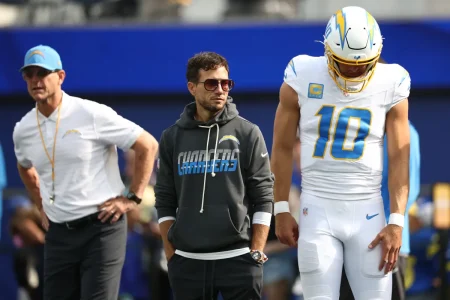
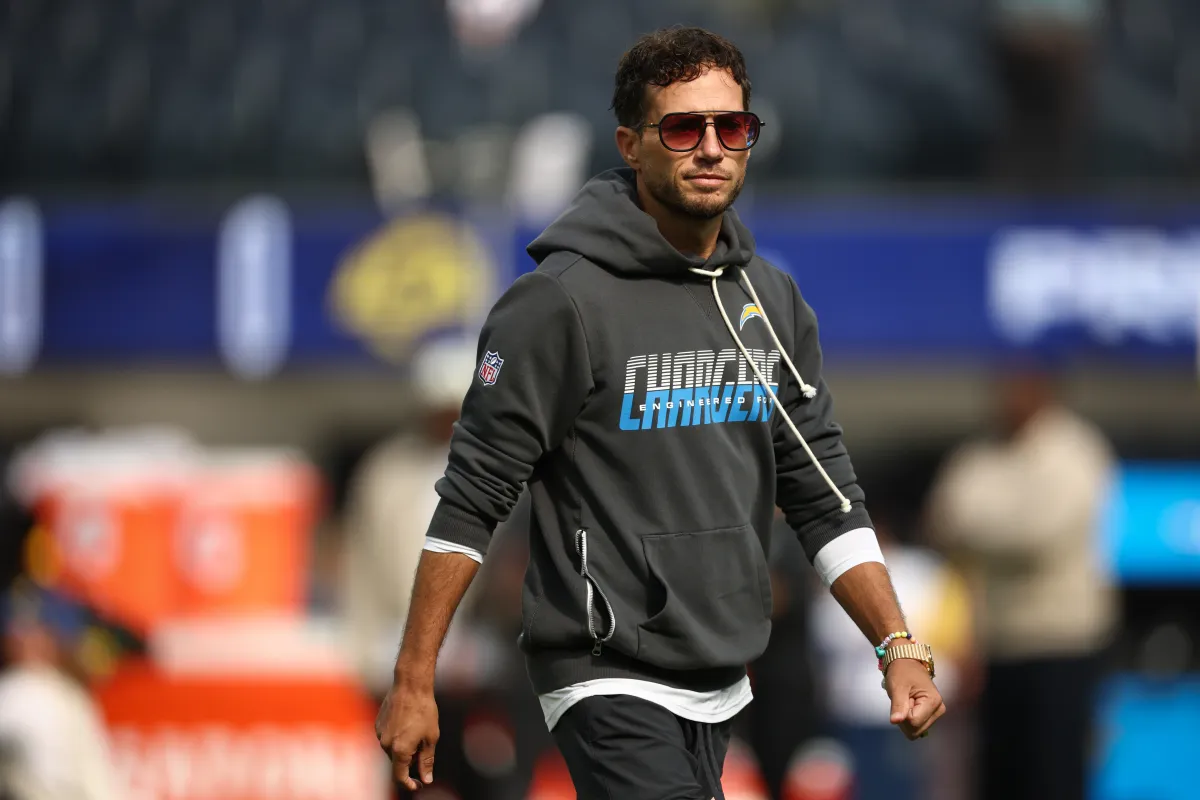
On Thursday, McDaniel faced the press, looking like a man who hadn’t slept in days, his eyes hollow from the stress of a failing season. He made his announcement, carefully calculated and delivered with an undertone of desperate justification. “One of the things I talked with coach about was to call plays from the box to see adjustments for myself and communicate with the position coaches appropriately,” he said, his voice rhythmically monotone, betraying the exhaustion. “That’s the latest in things. I think that is more tangible because I won’t be in the same spot. My problem solving doesn’t come from insecurity. So I’m being very open-minded with all things.” He spoke about being open-minded, but the words sounded like he was trying to convince himself as much as the gathered reporters. He did not want anyone to interpret this as him running away from the action; he was simply seeking a higher perspective—literally. He framed it as a tactical adjustment, a chance to see the defense’s disguises from a bird’s-eye view and communicate with his position coaches in a calmer, more structured setting. It is a classical approach; many great coordinators like Sean McVay have adorned the booths. But there is a distinct difference in urgency here. McDaniel is not making a pre-season philosophical choice; he is making a mid-season survival move. The implicit admission is that the current sideline setup has been a failure. He is conceding that his presence on the grass has not yielded results, and he is now clinging to a new vantage point in the hopes of triggering a different cognitive response. It’s a white flag to the narrative of “gameday intuition” and an admission that he needs a new data stream to jumpstart his stagnating processor before it completely crashes.
But scratch beneath the surface, and the glaring question remains: is this just clever displacement? The primary issues plaguing the Chargers aren’t the angle of McDaniel’s vision; they are the execution on the field. An elevated view won’t stop Herbert from sailing a pass over a receiver’s head, nor will it prevent the center from snapping the ball into the backfield on a critical third down. The problems are physiological and mechanical, deeply rooted in a lack of rhythm and trust, not just schematic. However, the booth offers something that the sideline cannot: pure isolation. On the sideline, McDaniel is constantly assaulted by the cacophony of the game—the roaring crowd, the crying players, the glares from defensive coaches, and the cameras capturing his every grimace. In the booth, he gets a sterile silence, a helicopter view of the defense’s rotations, and the ability to focus entirely on the paper in front of him. Psychologically, this move is a shield. It separates him from the immediate visceral pain of a failed drive. If the offense fails now, viewers will see the empty booth, not the red-faced coordinator screaming into a headset. It is a form of self-preservation disguised as innovation. Yet, there is also a shred of merit. From above, he can see if the cornerback is creeping down, if the safety is rotating just before the snap—details that are obscured by the sea of bodies on the turf. Perhaps the change of scenery will ignite a synaptic flash, a reset of the mental algorithms that have failed since September. In a season where nothing has worked, doing something different—no matter how superficial—offers a psychological placebo to the entire fanbase and, crucially, to Herbert himself. When the god of the offense changes his perspective, it whispers to the quarterback, “I am still fighting for you,” which might be the only thing keeping the fragile locker room together.
And so, we arrive at the crossroads. Sunday’s matchup against the Houston Texans is not just a game; it is a referendum on McDaniel’s future and the Chargers’ collective soul. The Texans are a hungry, athletic team with a vexing pass rush and a secondary that thrives on creating turnovers. If the Chargers fail against them, the season will officially be declared dead, and the narrative will morph from “struggling” to “toxic.” For McDaniel, the booth is now his personal arena, his high-rise pulpit for salvation or damnation. If he succeeds, the victory will be framed as a genius tactical re-calibration. If he fails, he will have exhausted every excuse, and the axe will fall—likely the following Monday. It is an all-or-nothing gamble. He is betting that the height of the stadium will provide the clarity needed to map out a path through the Houston secondary, that the cold logic of the upper deck can outsmart the chaos on the field. This is a story of human vulnerability and the lengths a professional will go to salvage their reputation. For Herbert, whom the team drafted as a franchise savior, it might represent a final prayer that the man speaking in his ear is finally seeing the game correctly, that the genius he signed up to play for has returned. The game kicks off at 4:05 p.m. ET on CBS, where millions will tune in not just to watch football, but to witness a psychological drama unfold in the shadows of a stadium. Whether the answer lies in the sky or back on earth remains to be seen, but for now, the Chargers cling to the notion that a new view holds a new future. The only certainty is that the desperation is palpable, and sometimes, that desperation is enough to make things interesting.