

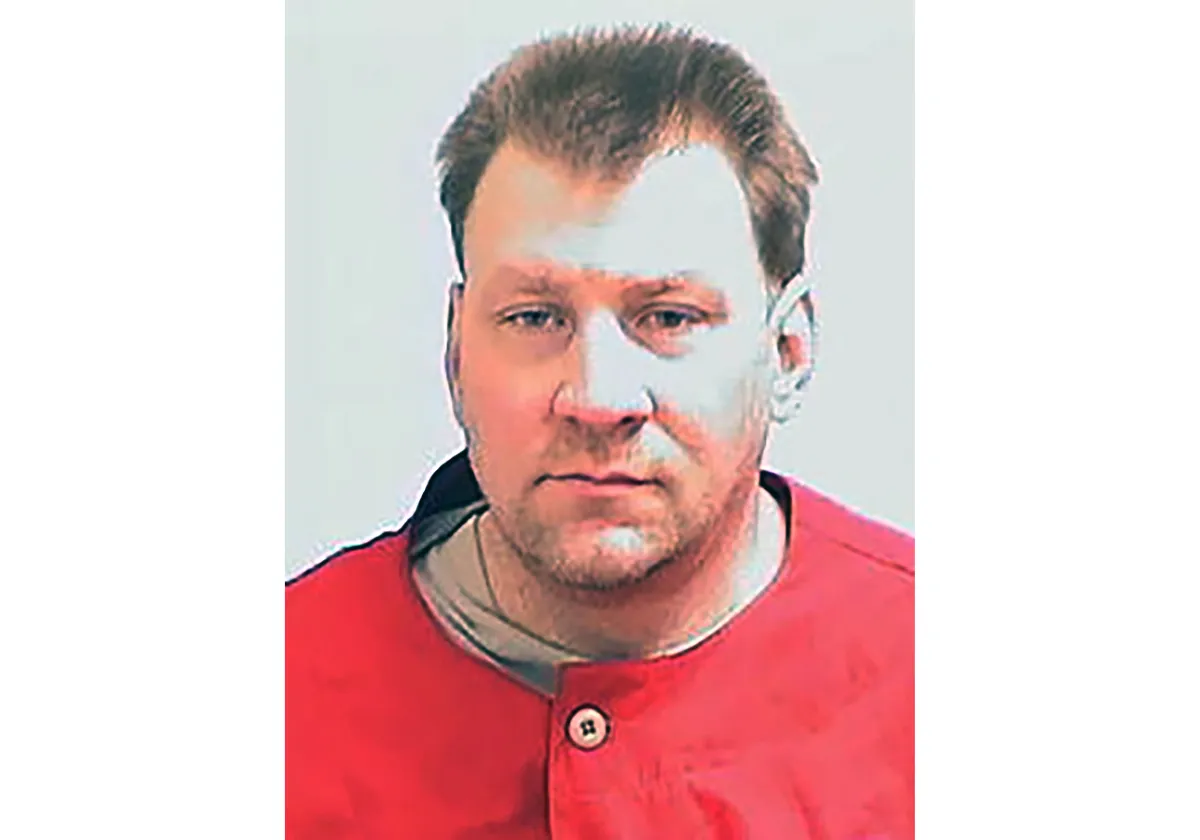
At just after midnight on Thursday, the state of Indiana carried out the death sentence of Jeffrey Weisheit, a 50-year-old man who had been convicted of one of the most heartbreaking crimes imaginable: killing his girlfriend’s two children. The children, eight-year-old Alyssa Lynch and five-year-old Caleb Lynch, died in a fire Weisheit set to their home near Evansville in 2010. They were small children, asleep and helpless, and their deaths left a permanent wound on their family and their community. Weisheit was sentenced to death in 2013, and for more than a decade, his case moved through state and federal courts. Every appeal failed. The Indiana Supreme Court, lower courts, and the State Parole Board all declined to stop the execution. In the final hours, however, the question was not whether Weisheit was guilty—few disputed that—but whether the state could carry out his execution in a way that did not betray the values it claimed to uphold. The execution began shortly after midnight, but witnesses did not see Weisheit until 12:34 a.m., when the blinds opened in the death chamber. He was already strapped to a gurney, his left arm extended, his spiritual adviser standing over him in prayer. He appeared motionless, eyes closed, and the state later reported that he had no final words. At 12:45 a.m., he was pronounced dead. The official account was calm and procedural, but behind that procedure lay a controversy that had followed Weisheit all the way to the gurney: the drugs used to end his life had been purchased from a pharmacy that was itself under investigation by the state, and his lawyers argued that the execution was not justice but a tainted act carried out by officials determined to display their power.
The controversy over the execution had been building for weeks, and it centered on a drug called pentobarbital, a powerful barbiturate used in lethal injections. Indiana law keeps secret the identities of companies that supply execution drugs, but Weisheit’s attorneys said they discovered the supplier through an invoice that was not properly redacted. The supplier was Pharmaneek Inc., a compounding pharmacy that was already in serious trouble. The Indiana Pharmacy Board had ordered Pharmaneek to show why its license should not be immediately suspended, and the state attorney general was investigating the pharmacy for alleged misconduct and safety violations. Inspections by the Indiana Professional Licensing Agency and the U.S. Food and Drug Administration had found shoddy procedures, including unlabeled bottles, expired drugs on pharmacy shelves, and inconsistent temperature logs in storage areas. Yet, according to Weisheit’s attorneys, the day after the board ordered the pharmacy to explain itself, the Indiana Department of Correction paid Pharmaneek $275,000 for execution drugs. The same drugs, when sold to a hospital as medicine, would have cost about $9,000. The state did not publicly confirm that Pharmaneek supplied the drugs, but it did confirm that it paid $275,000 for six 50-milliliter vials of pentobarbital in late October. For Weisheit’s legal team, the timing and the price were damning. “The executive branch—the governor, the attorney general, and the corrections department—chose in unison to debase themselves to carry out his execution in the face of facts,” his attorneys said. “Not allegations, but incontrovertible facts.”
Despite the controversy, the legal path to execution remained clear. Weisheit’s lawyers asked Governor Mike Braun to halt the execution and order an independent review of Indiana’s lethal injection procedures and its procurement of execution drugs. They filed an emergency stay request with the Indiana Supreme Court, but late Wednesday night the court rejected it by a 3-2 vote. Braun declined to intervene. After the execution, he issued a statement saying that Weisheit’s case had been “heard and reviewed numerous times by both state and federal courts, including the Indiana Supreme Court, since his conviction in 2013.” He also noted that the State Parole Board had unanimously recommended denying clemency. “Today, Weisheit’s sentence has been carried out as ordered by the court,” Braun said. Indiana Attorney General Todd Rokita echoed that sentiment, calling the execution “long-awaited justice for Alyssa Lynch and her brother Caleb, two innocent children whose lives were stolen in an act of unspeakable cruelty.” For the families of the victims, the execution closed a painful chapter. But for Weisheit’s attorneys and death penalty opponents, the refusal to pause was troubling. They pointed out that the pharmacy’s disciplinary hearing, originally scheduled for the Monday after the execution, had been postponed to December 14. That meant Pharmaneek could continue operating—and supplying medicine to the public—while the state simultaneously relied on it to supply drugs for an execution. The lawyers called it a “public display” of state power, and they warned that the public’s confidence in the death penalty was being sacrificed.
Indiana’s execution also came at a moment when lethal injection was already under intense scrutiny across the country. In September, Tennessee had botched the execution of Christa Pike, who survived two doses of pentobarbital before finally dying. That case reignited questions about whether lethal injection could ever be considered humane, especially as pharmaceutical companies moved aggressively to prevent their drugs from being used in executions. States have been forced to search for suppliers in less-regulated corners, often through opaque contracts and secretive arrangements. Courts, however, have continued to allow executions to proceed, rejecting arguments that the risk of suffering violates the Constitution. Abraham Bonowitz, executive director of Death Penalty Action, said Indiana was “risking a failed execution by using a drug provider that the state itself is investigating and may actually shut down.” Despite those warnings, the Indiana Department of Correction expressed confidence in its ability to “humanely carry out” the death sentence. The word “humane” struck many as difficult to reconcile with the facts. A man was going to be strapped to a gurney and injected with a lethal dose of a barbiturate purchased from a pharmacy that could not keep its own shelves clean. The state was not just executing Weisheit; it was doing so with chemicals that had been handled by an institution in crisis. For supporters of capital punishment, the end justified the means—Weisheit had earned his fate. For opponents, the execution was a grim reminder that the machinery of death in America had become unreliable, secretive, and ethically compromised.
The final minutes of Jeffrey Weisheit’s life were observed by a small group of witnesses, including representatives of the Indiana Capital Chronicle, the only media outlet present. According to reporter Casey Smith, witnesses arrived at the execution chamber building at about 12:30 a.m. and entered the witness room three minutes later. The blinds separating them from the death chamber remained closed until 12:34, although the execution process had begun shortly after midnight. When the blinds opened, Weisheit was already strapped to the gurney. His left arm was extended, his hand restrained. His spiritual adviser stood over him, appearing to pray. In the dim light, Weisheit did not appear to move or open his eyes. It was impossible to tell whether he was conscious, or even where the IV line had been inserted. The witnesses watched in silence for three minutes. Then the blinds closed at 12:37, shutting off the view of the man who was about to die. At 12:45, the prison pronounced him dead. The state reported that Weisheit had no final words—no apology, no statement, no cry of innocence. His last meal had been barbecue ribs from Texas Corral and Mountain Dew. Joe Perkovich, one of his attorneys, was among the witnesses. Standing in the prison parking lot afterward, he admitted that the limited view left him unsure of what he had seen. “I don’t know what I saw,” he said. It was a haunting phrase, one that captured the uncertainty surrounding the entire event. Even those closest to the process could not say with confidence that the execution had been clean, peaceful, or truly humane.
The execution of Jeffrey Weisheit will be remembered by some as justice finally delivered, and by others as a troubling exercise in state power. The children, Alyssa and Caleb, were innocent victims, and their deaths were caused by a man who was supposed to care for them. No amount of legal debate can erase the horror of what happened to them, or the grief of their mother and family. But the circumstances of Weisheit’s execution raise questions that do not go away simply because the sentence was carried out. Why did the state pay $275,000 for drugs that cost $9,000 when sold as medicine? Why did it rely on a pharmacy that was under investigation for expired drugs and shoddy procedures? Why did it fight so hard to keep the supplier’s identity secret? The state may argue that such details are necessary to protect the supply chain, but for many citizens, secrecy undermines trust. When a government takes a human life in the name of the people, it must be able to show that the process was fair, transparent, and reliable. On Thursday morning, with the blinds closed and the gurney empty, those assurances seemed hollow. The governor and attorney general called the execution justice, and perhaps it was. But the image of a motionless man, a praying chaplain, and a lawyer who admitted he did not know what he saw will linger. The death penalty is not an abstract policy debate; it is a concrete act, carried out by imperfect institutions, using drugs from imperfect sources, in the name of imperfect people. And when the state fails to be honest about that imperfection, everyone bears the cost.