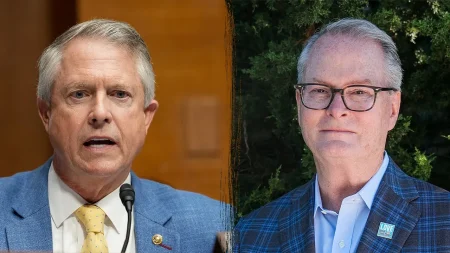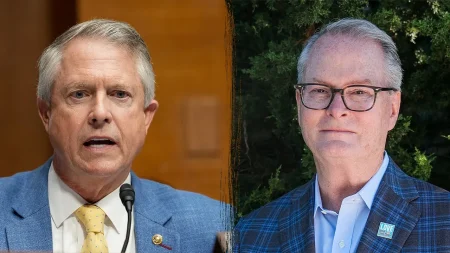



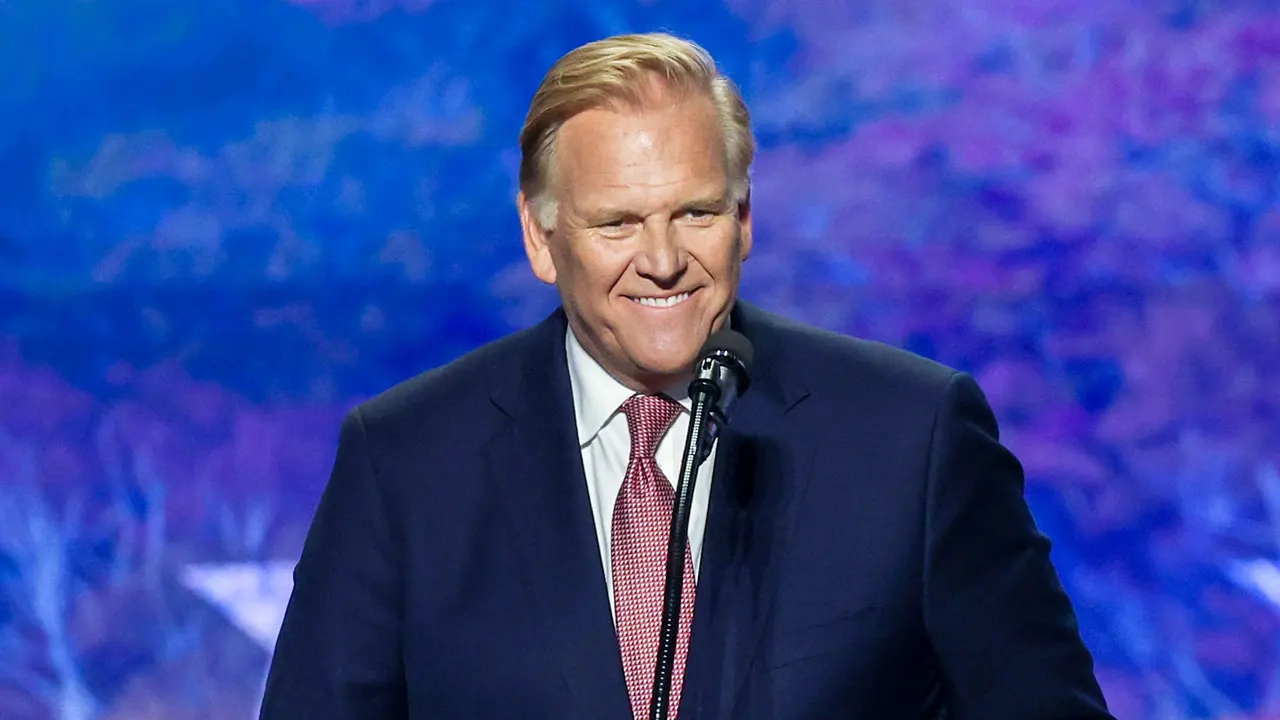
There’s a moment in every family’s life when the numbers on the grocery receipt just don’t match the story they used to tell. You push the cart, you fill the basket with the same staples you’ve bought for years, and somehow the total feels like a punch in the gut. That’s the reality former Republican Congressman Mike Rogers is tapping into as he campaigns for U.S. Senate in Michigan. In a direct, plain-spoken video shared on social media, Rogers didn’t lead with political talking points or attack ads. Instead, he looked into the camera and spoke about what so many Michigan families are feeling right now: the cost of everyday life has become too heavy. “Michigan families are struggling with the price of everyday life. Groceries cost too much. We have to bring prices down,” he said. But he didn’t stop there. He tied that kitchen-table anxiety to a global crisis, declaring that the war with Iran needs to end quickly because when it does, energy costs will plummet. Yet, as he noted with a sense of urgency that felt personal rather than partisan, Michigan families can’t afford to wait for peace to catch up with their bills. It was a rare moment of political messaging that tried to connect foreign policy to the price of a loaf of bread, and it resonated because it acknowledged something universal: people are tired of feeling squeezed from every direction, and they want leaders who understand that the world’s chaos eventually lands on their own doorstep.
Rogers’ message wasn’t just about sympathy, though. He offered concrete proposals, some familiar and some new, to ease the pain while the world sorts itself out. He reminded viewers that he had previously called for the suspension of both state and federal gas taxes, a combined 70 cents a gallon, to give drivers immediate relief. To put that in perspective, Michigan’s own motor fuel tax, which applies to both gasoline and diesel, is currently 52.4 cents per gallon. On top of that, federal taxes add 18.3 cents per gallon for gasoline and 24.3 cents per gallon for diesel, plus a small Leaking Underground Storage Tank fee of 0.1 cents per gallon on both fuels. For a family that fills up once or twice a week, those taxes are not abstract numbers on a government spreadsheet; they’re the difference between making it to payday and falling behind. Rogers’ argument is simple: when every penny counts, the government should not be taking so many pennies out of your pocket, especially during a crisis. And while he didn’t explicitly call for suspending the federal diesel tax in that same breath, he went further in a way that targeted the very backbone of the American economy—the trucks, tractors, and supply chains that bring food to store shelves and fuel to local stations. His proposal was a temporary embargo on American diesel exports until the war with Iran is over, a move designed to keep more diesel at home, lower prices, and protect the people who move the country forward.
The logic behind the diesel export embargo is rooted in how deeply connected fuel prices are to the cost of everything else. Diesel is the lifeblood of the American economy. It fuels the trucks that pull into grocery store parking lots before dawn, carrying fresh produce and packaged goods. It powers the tractors that plant and harvest the food we eat. It keeps the machinery running that stocks warehouses, builds homes, and delivers medicine. When diesel prices climb, the cost of growing, shipping, stocking, and buying just about everything climbs with it. Rogers made that connection explicit and personal, saying, “Diesel fuels the trucks that bring groceries to this store. It fuels the tractors that grow our food. And when diesel costs more, it costs more to grow it, ship it, stock it, and ultimately, buy it.” His call for a temporary embargo on American diesel exports until the conflict concludes is, in many ways, a plea to put American families first. It’s a recognition that in a globalized economy, energy policy is family policy. When a war halfway around the world sends diesel prices to record highs, it’s not just a headline; it’s a higher bill at the checkout counter. And for people living paycheck to paycheck, that’s not an abstract concept—it’s the difference between dinner and worry. Rogers’ proposal may be controversial, but it speaks to a deep frustration that many Americans feel: why should our fuel be shipped overseas while our own families struggle to afford it?
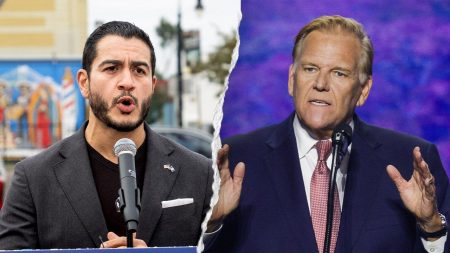
Unsurprisingly, Rogers’ video sparked immediate political fireworks, because in the rough-and-tumble world of a Michigan Senate race, no good deed goes unpunished. President Donald Trump has thrown his full support behind Rogers, posting a video on social media with the caption, “Mike Rogers has my Complete and Total Endorsement to be the next U.S. Senator from Michigan — HE WILL NEVER LET YOU DOWN!” That endorsement is a powerful force in a Republican primary, but it also puts a spotlight on every word Rogers says. His Democratic opponent, Abdul El-Sayed, responded with a blistering attack on X, writing, “You’ve spent your entire campaign supporting the war in Iran. Liar, coward, fraud.” It was a sharp, personal rebuke that highlighted the deep divisions over foreign policy and the difficulty of appearing like a peacemaker when you’ve built a career on a more hawkish stance. Even within his own party, Rogers faced skepticism. Former Congressman Justin Amash, who finished a distant second to Rogers in the GOP primary, took to X to mock the sudden shift in tone, writing, “When inveterate war hawk Mike Rogers suddenly declares, ‘The war in Iran needs to end—and end quickly,’ you know he’s losing—and losing badly.” That kind of criticism cuts to the heart of political authenticity, and it shows how hard it is for any candidate to navigate the gap between past positions and present promises. Rogers’ attempt to sound like a champion of working families was met with accusations of opportunism, but for many voters, the message itself still mattered more than the messenger’s history.
The broader context only adds to the urgency of Rogers’ words. According to AAA, the national average price for diesel hit a record high of $6.5276 per gallon as of September 22. That number is staggering on its own, but behind it are real people making real choices: a truck driver deciding whether to skip a meal to afford fuel, a farmer calculating whether it’s worth harvesting a field, a small business owner wondering if they can keep their delivery service running. When diesel costs that much, the ripple effects are felt in every corner of the economy, and the pressure on families intensifies. Rogers’ campaign reached out to Fox News Digital, and the White House was also contacted for comment, but the larger point remains: this is a moment of genuine economic anxiety, and politicians are scrambling to offer solutions that feel tangible. The war with Iran has created a volatile energy market, and the fear is that without intervention, prices will keep climbing. Rogers’ proposal to suspend gas taxes and embargo diesel exports is an attempt to do something, anything, to give families a break. Whether it’s the right policy or not, it reflects a growing demand for leaders who acknowledge that foreign conflicts have domestic consequences, and that the people who voted for them are struggling to keep their heads above water. In that sense, Rogers’ video was less a policy paper and more a cry of empathy, an attempt to say, “I see you, I hear you, and I’m trying to help.”
In the end, though, the political winds shifted. Despite Trump’s endorsement and Rogers’ efforts to position himself as the champion of Michigan’s struggling families, he lost the 2024 U.S. Senate general election to then-Representative Elissa Slotkin. It was a close race, but a loss nonetheless, and it raises a sobering question: can a message of economic pain and quick fixes survive the complexities of a modern campaign? Rogers’ video was human and relatable, but the political landscape is littered with good intentions and broken promises, and voters are often skeptical of sudden conversions. For every family that appreciated his call for lower prices, there was another that remembered his past support for military action and wondered if this was just another campaign tactic. The election result suggests that the answer was not enough. But the issues Rogers raised—the cost of groceries, the price of diesel, the need to end a war quickly, and the frustration of watching Washington do too little too late—are not going away. They are the quiet anxieties of everyday life, and they will continue to shape elections long after the campaign signs are taken down. In a way, Rogers’ message was a mirror held up to a country that is tired, worried, and looking for someone to make the world feel a little less expensive. And even though he won’t be the one going to the Senate, the feelings he spoke to remain, waiting for another leader to truly understand them.