


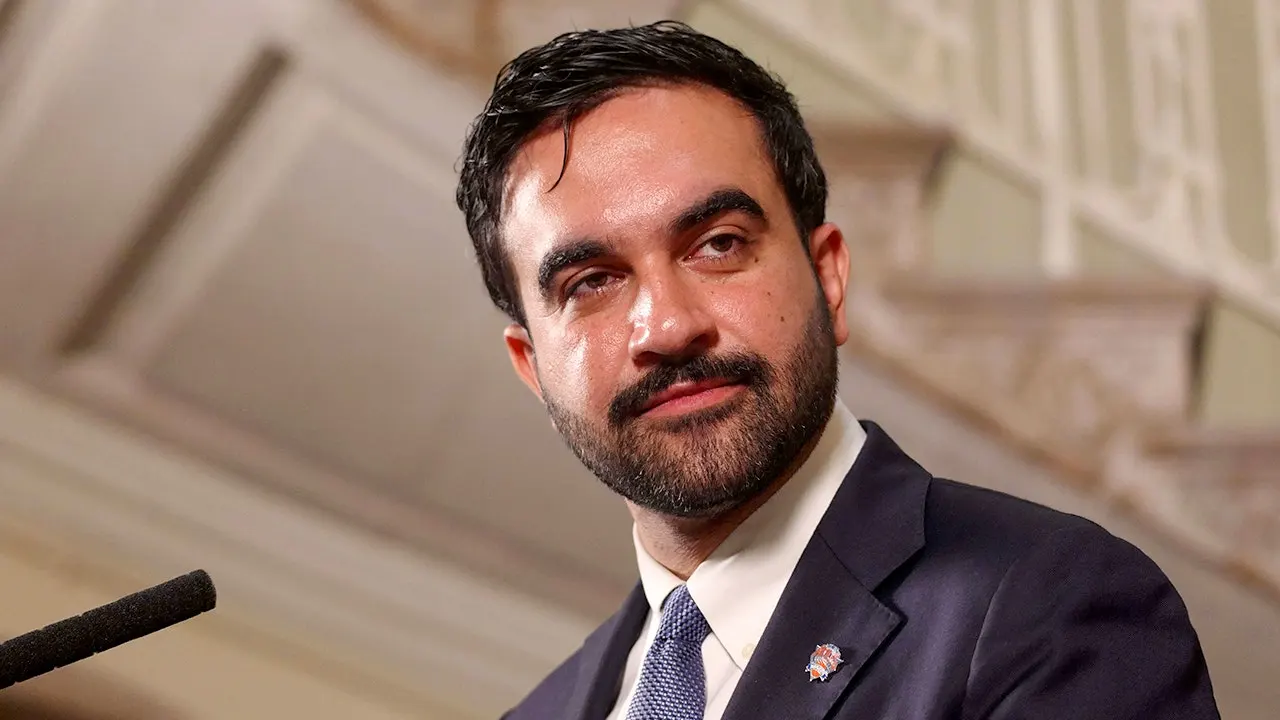
The balmy August evening on Staten Island was originally intended to be a celebratory display of community solidarity, a shared moment of relief and connection at the New York Police Department’s 43rd Patrol Borough National Night Out Against Crime. Families, local business owners, off-duty officers, and excited, laughing children had gathered under the summer sky, enjoying the festive atmosphere that typically defines this annual tradition, which is designed to strengthen the bonds of trust between law enforcement and the neighborhoods they serve. However, the warm, communal spirit of the event took a sharp, dramatic turn into the theater of raw political division when progressive democratic socialist politician Zohran Mamdani stepped onto the stage to address the crowd of approximately 3,500 residents. Almost immediately, the atmosphere curdled from celebratory to fiercely hostile, as a wave of collective indignation swept through the audience before Mamdani could even finish his opening remarks. Within seconds, a deafening chorus of boos, jeers, and mocking chants of “get out of here” and “nobody wants you” erupted from the crowd, completely drowning out his amplified microphone system and rendering his voice entirely inaudible. For less than a minute, Mamdani attempted to brave the storm, projecting a calm exterior against a wall of vocal fury, but the sheer volume of the rejection made it impossible for him to continue his speech. In a moment that was captured on video and distributed widely across the internet, Mamdani conceded to the overwhelming pressure, offering his characteristic hand-over-the-heart gesture, waving to the crowd, and walking off the stage with a steadfast smile plastered across his face. Even as he retreated, the crowd’s anger did not subside; instead, some attendees escalated their jeers to expletives, while others shook their fists in the air, leaving event organizers struggling in vain to restore order to a crowd that had just delivered an unmistakable, visceral message of rejection to one of the city’s most prominent progressive figures.
The immediate fallout on social media transformed this local Staten Island incident into a national flashpoint, perfectly illustrating the deep cultural and political polarization that continues to fracture the country. Within hours, footage of Mamdani being shouted off the stage circulated widely on platforms like X, serving as raw material for a fierce digital debate over the state of urban politics, public safety, and leadership in America’s largest metropolis. Conservative commentators and pundits quickly seized upon the video, framing the confrontation not merely as a hostile encounter, but as a symbolic victory for working-class citizens standing up against policies they believe have systematically eroded the quality of life in New York City. Figures like Eric Daugherty remarked that Mamdani walked away “in shame,” while political commentator Joey Mannarino delivered a blistering critique, labeling Mamdani a radical whose progressive allies have spent years vilifying the very police officers and blue-collar families who stood in the audience that night. Mannarino pointed out the irony of Mamdani standing on stage with a smile while the crowd chanted for his departure, suggesting that the residents of Staten Island—a famously conservative-leaning borough often affectionately dubbed “Staten Italy” for its tight-knit, traditional communities—saw right through his political posture. This sentiment was echoed by Sal Saverio, President of the Ronald Reagan Presidential Foundation & Institute, who celebrated the crowd’s defiant response as a proud moment of patriotic expression and community pride. For many observers, this icy reception was a clear sign of a growing disconnect between high-minded progressive rhetoric and the lived realities of voters who are increasingly concerned about rising crime rates and the perceived lack of institutional support for law enforcement, suggesting that the political winds in some of New York’s outer boroughs are blowing colder than ever for democratic socialist leaders who attempt to cross traditional ideological boundaries. The viral video became a rallying cry for those who feel that progressive policies have gone too far, turning a brief moment of civic tension into a symbol of a broader, national struggle over the future of law and order in urban environments.
To fully understand the intensity of the crowd’s reaction on Staten Island, one must examine the long and fraught history between Mamdani, his socialist political platform, and the law enforcement community. Ever since his emergence onto the New York political scene, Mamdani has championed a progressive agenda deeply rooted in the principles of the Democratic Socialists of America (DSA), a movement that gained significant momentum by advocating for systemic, sweeping reforms to the American criminal justice system, including the highly controversial push to “defund the police.” For the thousands of families on Staten Island whose lives and livelihoods are intimately connected to the NYPD, these policy positions are not merely abstract academic theories; they represent a direct threat to their personal safety, economic stability, and social order. Critics have long accused Mamdani of prioritizing activist demands over practical governance, pointing to his legislative efforts to reduce police budgets and his eventual capitulation to DSA pressure to walk back plans that would have increased the NYPD’s total active headcount by 5,000 officers. By actively lobbying against expanding the police force, Mamdani became a lightning rod for the frustrations of working-class New Yorkers who feel that the city’s leadership has abandoned them in favor of soft-on-crime policies that compromise public safety. This policy-driven alienation laid the groundwork for the confrontation at the National Night Out, turning what could have been a routine civic appearance into an explosive confrontation where years of built-up resentment, anxiety, and anger from the pro-police community finally boiled over in a public display of defiance. The disconnect is further highlighted by the fact that while progressive leaders view budget cuts as a necessary reallocation of resources toward social services, many communities view them as a dangerous retreat from the basic duty of maintaining public order, leaving residents feeling exposed and unrepresented by their own elected officials.
Beyond broad policy disputes, the crowd’s animosity was also fueled by specific, highly publicized incidents where Mamdani’s response to violence against law enforcement was perceived as dismissive and disrespectful. A primary catalyst for this lingering resentment is the infamous “Snowballgate” incident that occurred in February in the historic Washington Square Park, where a chaotic mob of roughly one hundred individuals pelted NYPD officers with snowballs packed with ice, resulting in physical injuries to two officers who were simply trying to perform their duties. In the wake of the assault, rather than standing in solidarity with the injured officers or condemning the lawlessness, Mamdani drew intense public ire by downplaying the severity of the attack, casually referring to the perpetrators as mere “kids” engaging in an innocent, seasonal snowball fight. This refusal to recognize the dangerous reality faced by police officers on the front lines deeply wounded the law enforcement community and their families, who viewed his comments as a green light for hostility and violence against police officers. Local crime experts, such as Manhattan Institute fellow Rafael Mangual, publicly criticized Mamdani for his failure to support the NYPD during the incident, pointing out that his refusal to call for the prosecution of the individuals involved showed a troubling disregard for the rule of law and the physical safety of officers. For the families gathered on Staten Island, many of whom have spouses, siblings, or children wearing the police uniform, these past controversies were not abstract political talking points; they were deeply personal offenses that directly impacted the safety of their loved ones on the streets. This lack of perceived empathy transformed their vocal protests from a mere political disagreement into a fiercely protective defense of their family members, making it impossible for them to welcome Mamdani to an event designed to honor and protect law enforcement.
The political friction surrounding Mamdani is not confined to matters of criminal justice; it also extends to a broader skepticism regarding his democratic socialist economic policies, which critics argue are detached from economic reality. Over the course of his political career, Mamdani has championed ambitious, government-run initiatives designed to bypass traditional free market business systems, such as proposals for state-managed grocery stores intended to combat food insecurity in underserved neighborhoods. While these ideas are presented as compassionate solutions to systemic inequality, they have met with fierce resistance from business-minded lawmakers and economic analysts who view them as costly, inefficient government overreaches destined for failure. Prominent critics, including grocer-turned-lawmaker figures, have openly questioned the viability of these programs, predicting that government-run stores lack the operational expertise to survive even a single year in New York’s highly competitive and unforgiving market. This economic skepticism mirrors the growing anxiety among everyday taxpayers who worry that progressive social experiments are being funded at the expense of fiscal responsibility and essential city services. For many working-class New Yorkers, the perceived failure of these idealistic policies—combined with rising costs of living and a sense of growing economic instability—has created a profound weariness toward socialist leadership. When voters look at the gap between sweeping campaign promises and the actual, expensive consequences of those policies, their tolerance for performative political appearances wears thin, resulting in the chilly, defensive receptions that are becoming increasingly common for progressive officials who venture outside their ideological bubbles. This widening chasm between theoretical economic justice and the practical, daily grind of paying bills and maintaining local communities has left many residents feeling that their leaders are more interested in chasing national political trends than addressing the grounded, pragmatic needs of the city’s diverse and hardworking neighborhoods.
Ultimately, the dramatic confrontation on Staten Island serves as a powerful microcosm of the profound cultural and political rift that currently divides New York City and the wider nation. The raw emotion displayed at the National Night Out highlights a fundamental disagreement over the very definitions of community safety, justice, and civic responsibility, leaving little room for compromise or even basic political dialogue. In an era where political discourse has largely migrated to the hyper-partisan echo chambers of modern social media, face-to-face encounters like the one experienced by Mamdani reveal the depth of the alienation felt by communities who believe their voices are being ignored by progressive urban leadership. For a city to thrive, there must be a shared foundation of mutual respect and a willingness to listen to dissenting perspectives, yet events like this suggest that the trust between public officials and the people they serve has been severely, perhaps irreparably, eroded and damaged. Moving forward, the challenge for leaders of all political persuasions will be to move past superficial gestures of unity and confront the genuine fears, anxieties, and grievances of their constituents with humility and empathy. Only by acknowledging the valid concerns of working-class families and the law enforcement officers who serve them can the city hope to bridge this deep divide and build a future where public safety and social progress are not viewed as mutually exclusive, but as interconnected pillars of a healthy, flourishing society. Without this critical shift toward active listening and practical compromise, the public square will likely continue to grow more hostile, transforming routine civic gatherings into arenas of political combat and leaving the promise of a unified, safe, and prosperous city just out of reach for all its citizens who simply wish to live in peace and mutual respect.