



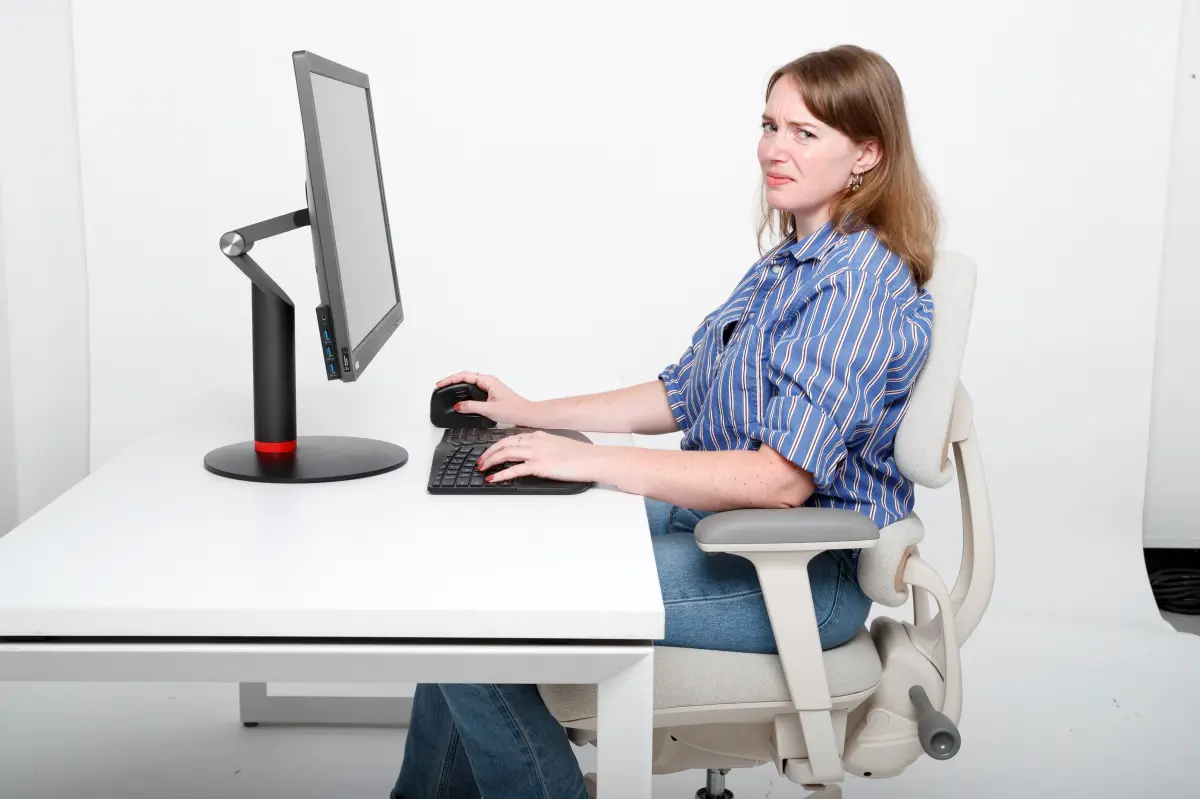
You’ve probably been there: that dull ache in your lower back after a long day of sitting, or the sharp twinge in your wrist that makes you wonder if you’ve finally ruined your body with years of typing. So you do what the internet tells you. You spend hours reading reviews, you measure your desk height, you order a standing desk converter, an ergonomic chair with lumbar support, a split keyboard, a vertical mouse, maybe even a footrest. You feel like you’re taking control. But a new study from the University of Technology Sydney suggests that all that gear might not be the lifesaver it’s cracked up to be. Researchers analyzed 20 trials involving more than 2,400 people who had work-related complaints of the arms, neck, and shoulders. They compared ergonomic interventions — things like specialized chairs, sit-stand desks, ergonomic keyboards, and computer mice — against doing nothing or receiving usual care like medical advice, discussion, or counseling. The results were surprisingly flat. The fancy equipment had little to no impact on pain, functionality, quality of life, or even sick leave. It’s a finding that cuts against decades of marketing, and it’s especially striking because ergonomic office furniture is a massive industry, valued at around $16.5 billion and projected to reach nearly $23 billion by 2031.
Let’s dig into what the researchers actually found, because it’s more nuanced than a simple “ergonomics don’t work” headline. The review combined 20 randomized trials with more than 2,400 participants, all of whom had real, documented work-related pain in their arms, necks, or shoulders. These weren’t people with occasional stiffness; these were workers whose daily tasks had literally worn down their bodies. The interventions were the kind of products you see in sleek office catalogs: contoured chairs, height-adjustable desks, split keyboards, ergonomic mice, wrist rests, monitor arms, and other specialized devices. The comparison group either received no treatment at all or got “usual care,” which could include medical advice, discussions with a healthcare provider, or counseling. When the researchers pooled all the data, they found that ergonomic interventions did not meaningfully reduce pain, improve physical function, enhance quality of life, or reduce the number of sick days workers took. That’s a significant blow to the idea that buying the right chair or desk setup is the solution to repetitive stress injuries. As lead author Dr. Poonam Mehta explained in a news release, “The certainty of that evidence ranges from low to moderate, so this is a clear signal that the case for these interventions is weaker than many people assume.” In other words, the burden of proof has always been on the equipment manufacturers, and right now, the science just isn’t backing them up.
Perhaps the most interesting finding is how ergonomic gear compared to something much simpler: exercise. The review found that posture-correcting exercises — things like strengthening your upper back, stretching your chest, mobilizing your neck and shoulders, and learning to move in ways that reduce strain — were actually more effective at treating pain and discomfort than ergonomic office setups. That’s a big deal, because it suggests that the problem isn’t just the chair you sit in or the angle of your keyboard. The problem is the body itself, and the body responds better to active intervention than to passive equipment. Now, this doesn’t mean ergonomic tools are completely useless. The review did find some evidence that combining ergonomic equipment with posture-correcting exercises could provide short-term relief. But if you have to choose between investing in a new standing desk and investing in a regular exercise routine, the exercise routine appears to be the smarter bet. And honestly, that makes sense from a biological perspective. Repetitive stress injuries aren’t caused solely by your environment. They develop because of cumulative load on muscles, tendons, and nerves, often made worse by static postures, mental stress, and a lack of movement. A sit-stand desk might change your posture, but it doesn’t make your muscles stronger. An ergonomic keyboard might align your wrists, but it doesn’t improve blood flow or reduce inflammation. Exercise does those things. It’s active, it’s dynamic, and it changes the actual tissue. It treats the root cause rather than just the surface symptoms.
Of course, there are important caveats. The review doesn’t say that ergonomic equipment is worthless for everyone, and it doesn’t say that poor ergonomics are harmless. For certain specific conditions, ergonomic interventions might actually help. For example, one study in the review suggested that ergonomic treatment could reduce functional disability better than mobilization, strength, and endurance training for people with rotator cuff injuries in the shoulder caused by repeated lifting. That makes sense: if you’ve injured a tendon through repetitive motion, giving the joint a more neutral position and reducing strain while you work could be genuinely therapeutic. But the story gets murkier when you look at other conditions. Studies involving people with carpal tunnel syndrome in the wrist — the classic repetitive stress injury from frequent mouse-clicking and typing — found no pain reduction from using ergonomic keyboards or computer mice. Some studies in the review did suggest that ergonomic office updates might improve quality of life, but the research team had limited confidence in those results because the findings were mixed and inconsistent. So the picture is messy, which is exactly the point. The human body is not one-size-fits-all. What works for a warehouse worker with a shoulder injury may not work for a data entry clerk with wrist pain. The key is to stop treating “ergonomic furniture” as a universal solution. It might be a useful tool for some people in some situations, but it’s not a cure-all for everyone.
For decades, the ergonomics industry has sold a simple and appealing story: your desk is hurting you, and the right equipment can save you. That message has been incredibly persuasive. Board-certified ergonomist Jonathan Puleio, global vice president of Humanscale Consulting, captured the conventional wisdom when he said, “The long-term cost of poor ergonomics far exceeds the upfront cost of proper design.” That logic has driven companies to spend enormous sums on ergonomic assessments, standing desks, specialized chairs, and all kinds of accessories, all in the name of protecting workers and boosting productivity. And it’s not crazy. There’s no doubt that sitting in a cramped, poorly designed workspace can make you uncomfortable. There’s no doubt that posture matters and that some workstations are better than others. But this new review challenges the assumption that expensive equipment is the most important factor in preventing or treating repetitive stress injuries. It suggests that the evidence for these interventions is weaker than the marketing suggests, and that employers may be spending billions of dollars on furniture while neglecting more effective approaches like exercise, movement breaks, workload management, and proper medical care. It also reminds us that the human body was not designed to hold any single position for hours on end, no matter how “ergonomically correct” that position might be. You can have the most expensive chair in the world and still develop pain if you sit in it for ten hours without moving.
So what should you actually do with this information? First, don’t panic and throw away your standing desk. If it makes you feel better, use it. If it helps you change positions throughout the day, that’s a good thing. But don’t expect it to solve all your problems, and don’t let the marketing convince you that you need to spend thousands of dollars to be healthy at work. If you’re an employer, the study is a reason to think more carefully about how you spend your health-and-safety budget. “Our findings suggest that, on current evidence, these measures alone shouldn’t be expected to reduce pain or sick leave in the short term,” Mehta said. “Employers may want to weigh that against the cost.” That doesn’t mean ergonomic furniture is a waste of money; it means it shouldn’t be the only tool in the toolbox. Consider investing in exercise programs, posture-correcting training, regular movement breaks, and a workplace culture that encourages people to get up, stretch, and take care of their bodies. And for individuals, the takeaway is actually empowering: your body is not a passive victim of your desk. You are not doomed to chronic pain just because you work in an office. You can build strength, improve your posture through exercise, and change your work habits. You can seek medical advice when pain persists, and you can advocate for a workspace that supports your needs without assuming that the furniture itself is the cure. The best ergonomic setup is not a chair or a desk. It’s a healthy, active, well-supported body — and that’s something no catalog can sell you.