


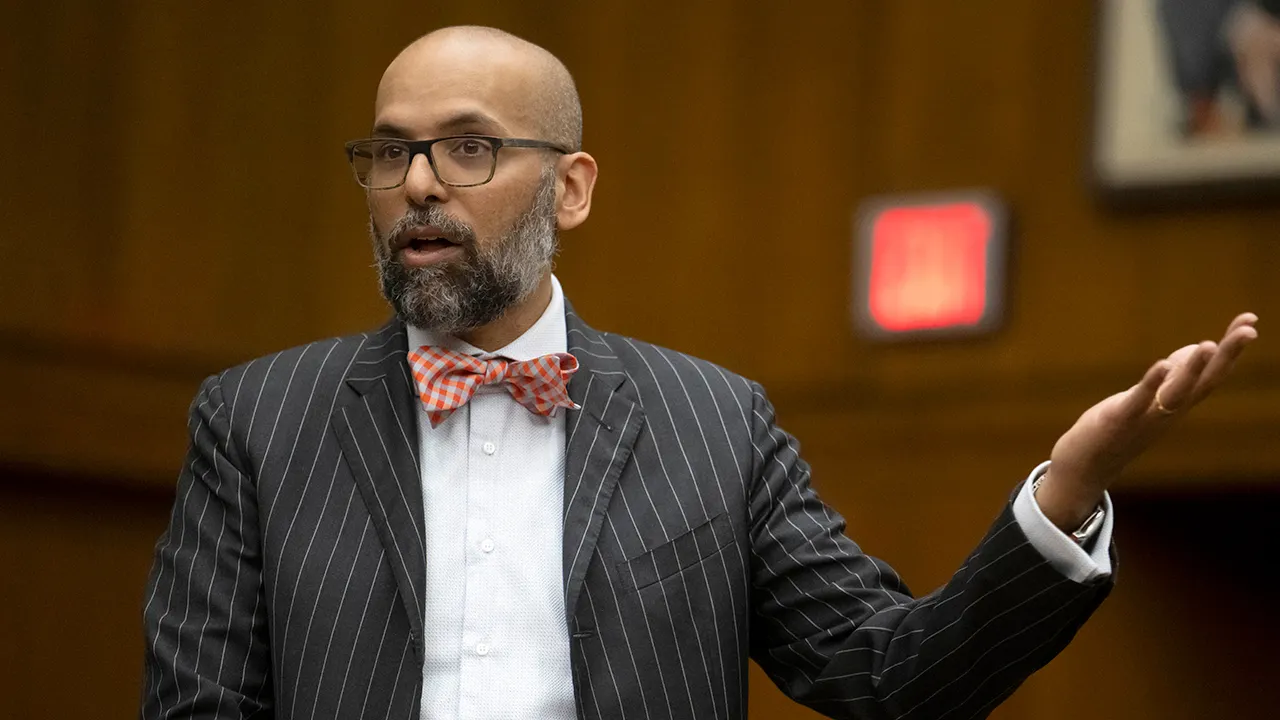
On the surface, the preliminary hearing was supposed to be a routine check on government power: prosecutors needed to convince a judge that probable cause existed to hold two former FBI officials on charges of lying to Congress. But in the predawn hours, the Justice Department had quietly rewritten the rules. Without asking a judge to sign off, without an oath, and without any form of judicial approval, the government filed a superseding criminal complaint against Nikki Floris and Bradley Benavides. The new filing added a serious felony obstruction charge, while simultaneously softening some of the language in the original complaint—arguably an attempt to fix perceived weaknesses before the defendants could challenge them. U.S. Magistrate Judge Zia M. Faruqui, who had been handed the document in the middle of the night, made his feelings known the moment court convened. “I think they should have filed nothing,” he said, according to reports from inside the courtroom. “They never had complaints filed on their record that are unsigned, waiting for a judge to make a probable cause finding. I think that it is inappropriate and harms the defendant. I’m frustrated that I got it in the middle of the night, but I’m much more concerned that it’s filed on the public record.” The judge’s words carried the weight of someone who had seen countless charging instruments come through his courtroom but had never encountered one quite like this. The unusual maneuver suggested, to him, that the government was attempting to bypass the most basic safeguard in the criminal justice system: an impartial judicial determination before new accusations are made public. Floris and Benavides, who had spent their careers enforcing the law as FBI officials, now found themselves on the other side of the table, watching prosecutors rewrite the factual narrative against them. For them, the filing was not just a legal curiosity. It meant more charges, more public humiliation, and more time under a cloud of suspicion. Faruqui’s refusal to accept it on the government’s terms offered them a moment of procedural relief, but the anxiety that had built overnight was palpable.
At the heart of the case was a question of what exactly these two former officials did in relation to Hunter Biden. The first criminal complaint painted a vivid picture. Benavides and Floris, prosecutors said, had been at the “center” of the Foreign Influence Task Force’s work concerning the former president’s son. Floris had participated in “scores of conversations” about the matter, according to the original filing. Those phrases were chosen carefully to suggest not just awareness, but active involvement in a politically charged investigation and a conscious decision to obscure that involvement from Congress. Yet when the government filed its superseding complaint in the dead of night, the most damning language disappeared. The pair were not “at the center” anymore; they were merely “involved in” the task force’s work. Floris’s “scores of conversations” became simply “conversations.” The new complaint did more than add a charge—it effectively conceded that the original wording had been too strong, too sweeping, or too vulnerable to challenge. For the defendants’ lawyers, that concession was a window into the weakness of the prosecution’s case. “What is going on at the D.C. U.S. Attorney’s Office?” Floris’s legal team asked in a statement. “In the middle of the night, the government filed an unsigned and unsworn complaint attempting to fix the issues with their original charge against Ms. Floris and adding a new charge just as meritless as the first one.” The statement continued: “In our combined decades of DOJ service, we have never seen or even heard of something like this being filed. That’s because the public lodging of criminal charges must be authorized by the grand jury, a judge, or the defendant herself.” The lawyers’ incredulity was understandable. These were people who had spent their careers inside the system; they knew that a prosecutor cannot simply file a new case without a neutral check. To see the government do exactly that—against their own former colleagues, no less—felt like an inversion of everything they had been taught about fairness. Meanwhile, the original allegations still hung in the air: two respected FBI veterans accused of lying to Congress in a matter involving the Biden family, in a city where every legal move is immediately interpreted as a political one.
Faruqui’s critique was not merely rhetorical. Under federal law, a criminal complaint can initiate proceedings, but it must be supported by sworn facts and typically must be reviewed by a judge. In the ordinary course, felony charges are brought either by a grand jury indictment or by a complaint that has been reviewed and endorsed by a judicial officer. The filing submitted to Faruqui was neither endorsed nor sworn. It was an unsigned document, dumped onto the public docket in the dark, with no one willing to put a name and an oath behind the new accusations. The judge pressed prosecutors to explain why this case merited such an extraordinary departure. “Why today on this one case have you changed the entire history of how you charge cases?” he asked. “What is it? It appears that—it makes it look like the United States is afraid of me trying to find probable cause.” John Borchert, the prosecutor from the U.S. Attorney’s Office in Washington, D.C., admitted it was the first time he had ever filed new charges against someone without going through judicial review. That admission only deepened the mystery of what the government hoped to accomplish. Faruqui, in response, did what the system required: he rejected the superseding complaint because it lacked judicial authorization. “If you want a superseding complaint, like every other case that’s happened in this district, we will have a judge make a probable cause finding,” he said. “Not send me something in the middle of the night and expect that it gets done.” He also drew a comparison to charging someone by information, a last-resort mechanism that still requires a defendant’s consent or a court’s blessing. The reference to James Comey, whose own recently unsealed charges had stirred a political storm, was impossible to miss. The judge’s insistence on process might seem technical, but it is exactly these technicalities that separate a functioning justice system from an arbitrary one. By forcing the government to start over with a properly vetted filing, Faruqui was not helping the defendants or hurting the prosecution. He was reminding both sides that the rule of law is built on procedures, not outcomes. In a climate where every charge is cheered by one side and condemned by the other, that reminder is precious.
Faruqui’s decision to stand up to the Justice Department was in keeping with a judicial philosophy that has made him a controversial figure. He was appointed by a court that critics have described as full of anti-Trump judges, and he has never attempted to hide his personal views. He has expressed support for diversity, equity and inclusion initiatives, criticized ICE, and taken positions on pretrial detention that lean toward protecting the rights of the accused. Those positions have made him a target of conservative commentators, who see him as an activist rather than a neutral magistrate. But his most stunning moment came in the case of Cole Allen, the man accused of attempting to assassinate President Donald Trump at the 2026 White House Correspondents’ Association Dinner. Rather than simply processing the charges, Faruqui chose to address the conditions of Allen’s confinement. “To me, it’s extremely disturbing that he was put in five-point restraints, a person with no criminal history,” the judge said. “It’s troubling. I never heard of one Jan. 6 defendant who was put in five-point restraints or in a safe cell. If the only way to keep him safe is the most punitive thing, that’s a problem.” He reportedly apologized to Allen, a gesture that infuriated Trump supporters but was celebrated by civil libertarians and defense lawyers. The episode revealed a judge who is willing to look past the charges and see the person in custody, and who is not afraid to call out the government when it goes too far. That is the same spirit that charged his courtroom on Tuesday, as he stared down prosecutors and demanded they play by the rules. Magistrate judges are often unseen figures, doing the unglamorous work of setting bail, reviewing warrants, and conducting preliminary hearings. They are not the judges whose names appear in landmark Supreme Court decisions. But for defendants, they are the first face of justice. Faruqui’s willingness to scrutinize the government’s methods is a reminder that even the lower federal courts have an obligation to enforce the Constitution. He does not preside over trials or write grand opinions. He does something more basic: he decides whether the government has enough evidence to justify holding someone, and whether the government’s conduct has been lawful. In the Floris and Benavides case, and in the Cole Allen case, he took that role seriously enough to question the people who hold power.
The broader questions raised by this episode are not going away. Why did the Justice Department choose to charge Floris and Benavides by criminal complaint instead of presenting evidence to a grand jury? The complaint is a tool that is typically used when law enforcement needs to arrest someone quickly, often because they may flee or pose a danger. In this case, the two former officials were not suspected of any imminent crime; they were accused of lying in past congressional testimony. Those charges could have been developed in secret before a grand jury, with witnesses, evidence, and a neutral body deciding whether probable cause existed. Instead, the government opted for a high-profile arrest, followed by a highly irregular superseding filing in the middle of the night. The timing was also conspicuous: the arrests blew up in the news just days before midterm elections, giving partisans on both sides fresh ammunition. Critics immediately accused the DOJ of trying to influence voters, while supporters of the charges insisted that the timing was coincidental. But Floris’s lawyers were not interested in coincidence. They described the government’s conduct as “a desperate attempt to delay our client’s right to challenge the charges in court and litigate this case in the media, rather than the courtroom.” Their statement highlighted the core issue: when a criminal justice process becomes a media operation, defendants are reduced to characters in a story. The procedural safeguards of indictment and judicial review are designed to prevent that, but they only work if prosecutors respect them. By filing an unsigned, unsworn complaint in the dead of night, the government invited the very skepticism that Faruqui expressed. For the public, the effect is corrosive. People watch these cases unfold and see not a neutral system but two powerful institutions—the FBI and the Justice Department—using the legal system to settle scores or generate headlines. The judge’s rebuke on Tuesday was a rare moment of clarity, a reminder that there are still people in the courthouse whose only allegiance is to the law. It may not change the outcome of the underlying case, but it changes the tone. It tells the defendants that they will not be forced to face an invisible accusation; it tells the public that someone is watching the government.
Ultimately, this is a story about small moments of courage and the quiet importance of process. Faruqui’s decision to reject the superseding complaint may not make national headlines the way the original arrests did, but it matters. It matters to Floris and Benavides, who woke up to find their reputations under attack by an unsworn document filed in the dark. It matters to the judges who will oversee this case in the months ahead, because it sets a tone of accountability. And it matters to the American public, which has grown increasingly cynical about a justice system that sometimes looks more like a political battleground than a temple of fairness. The judge’s words—“I think that it is inappropriate and harms the defendant”—were simple, but they cut through the noise. He was not endorsing the conduct of the former FBI officials, and he was not declaring them innocent. He was simply insisting that they be accused according to the law, through the proper channels, with the proper safeguards. That is not a radical idea. It is the foundation of every fair trial, every habeas corpus petition, every due process clause in the Constitution. Yet in the heat of a partisan moment, it can easily be forgotten. The Justice Department declined to comment, as did the lawyers for Floris and Benavides. But the courtroom itself spoke volumes. A federal judge, faced with a procedural overreach, stood his ground. He did not allow the government to rewrite the rules overnight. He did not let an unsigned piece of paper become the basis for a new felony charge. Instead, he sent the prosecutors back to the drawing board, reminding them that even the most powerful government in the world must answer to a judge before it can deprive a citizen of his liberty. In the end, that may be the real lesson of this peculiar hearing: no matter how high the stakes, no matter how loud the political noise, the law still holds the line.