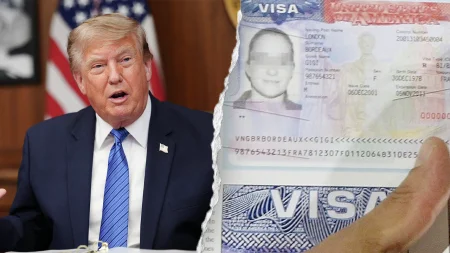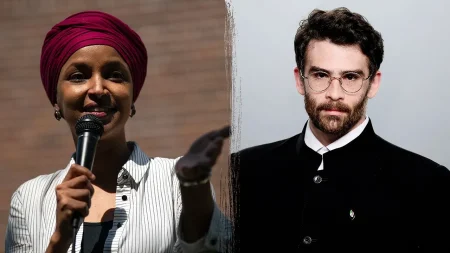



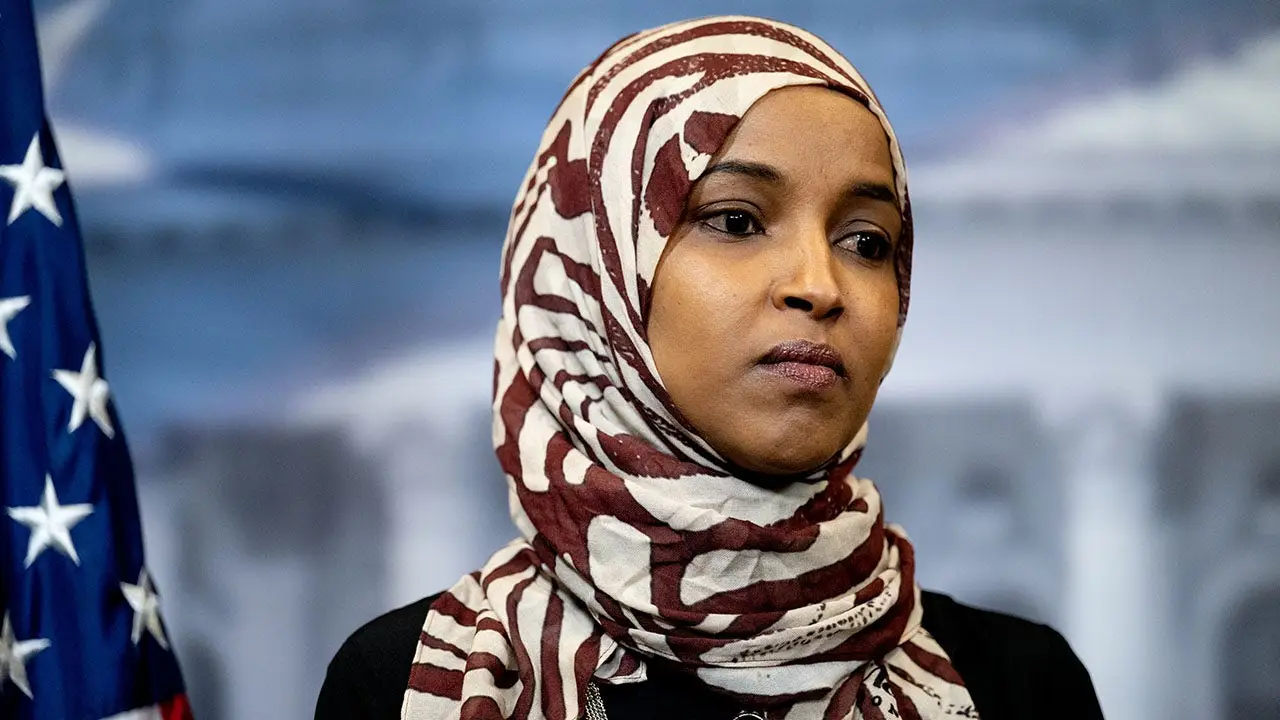
Let’s take a step back and look at what’s actually happening in the final stretch before Election Day. Republicans across the country are hoping that a wave of Democratic losses will shrink the majority and hand them back control of Congress. They’re out there telling voters to kick Democrats out, and there’s a lot of chatter about which incumbents are in trouble. But President Trump, as usual, has his own focus, and it’s not on the close races or the swing districts. He’s laser-focused on one Democrat who is almost certainly going to win re-election: Representative Ilhan Omar of Minnesota. Omar represents a safely blue district, and two years ago she won it with nearly 75 percent of the vote. She’s not in any real political danger from her constituents. But Trump doesn’t care about that. He’s raising questions about whether she’s even legally in the country, and whether she’s qualified to serve in Congress at all. He claims she used a fake name to be sworn in, called her a “little troublemaker,” and suggested that her real name isn’t “Ilhan Omar” at all. It’s a political fight that feels personal, messy, and deeply tangled in immigration politics, identity, and the strange rules of Washington. And at the center of it all is a simple but explosive question: Can the House actually do anything about her?
The name issue is where this gets even more complicated. The Department of Justice is investigating Omar for potential immigration fraud, and federal authorities recently raided her home in Washington, D.C. They took 17 items, including phones, notebooks, a camera, and even a Somali phrase book for her kids. That detail alone feels intrusive, almost absurd, but it’s part of a broader inquiry into who she really is. President Trump says her name isn’t “Ilhan Omar,” but something else — he spelled it out as “Ihan Nur Sayeed Elmi,” though he stumbled over the exact words. A federal filing in the inquiry lists her name as “Ilhan Nur Said Elmi, also known as Ilhan Abdullahi Omar.” Omar has consistently insisted her name is Ilhan Abdullahi Omar. When a Fox Digital reporter confronted her and asked directly whether her name was Ilhan Sayed, Ilhan Nur Sayed Alami, or Ilhan Abdullahi Omar, she didn’t flinch. She answered, “Ilhan Abdullahi Omar. You know it.” The reporter pressed her for clarification, and she repeated it calmly. The Clerk of the House of Representatives officially lists her as simply “Ilhan Omar” on 15 different financial disclosure reports dating back to 2018, even before she entered Congress. The same was true when she served in the Minnesota state legislature. So there’s a discrepancy, or at least an inconsistency, between what the government’s official records say and what federal investigators are looking into. For Trump, that’s enough to say she “must immediately resign from Congress.” For Omar, it’s just another attack from a president who has never liked her. But the legal reality is far more complicated than the political rhetoric suggests.
Here’s the thing: whether or not Omar’s name situation is a real problem, the Constitution doesn’t give the president the power to remove her from Congress. It’s not his call. Article I, Section 5 of the Constitution says that each house of Congress has the final authority over who gets seated and who gets expelled. That means the House of Representatives, not the White House, decides whether Omar can keep her seat. The qualifications to serve in the House are actually pretty simple: you have to be a citizen, you have to be a resident of the state you represent, and you have to be at least 25 years old. That’s basically it. You could be convicted of a crime and serving time in jail, and the Constitution doesn’t automatically disqualify you from serving. You could have a completely spotless record, and the House could still take action against you if it chooses. But the House rarely does that, and it has to follow strict rules when it does. There’s also a crucial legal protection called the “Speech or Debate Clause” in Article I, Section 6, which gives lawmakers certain privileges tied to their official duties. That creates a firewall between the legislative branch and the executive branch. In practical terms, it would be very difficult for federal prosecutors to get their hands on Omar’s official House communications or documents. And the idea that the executive branch could somehow deport a sitting member of Congress is a far cry from how the system is designed to work. The separation of powers exists precisely to prevent the president from unilaterally going after a political opponent in the legislative branch.
So what could Republicans actually do if they wanted to remove Omar? There are two main options, and neither is easy. The first is expulsion. The Constitution allows the House and Senate to expel a member, but it requires a two-thirds vote. That’s a very high bar. In the entire history of the United States, the House has only expelled six members. The most recent was George Santos in 2023, and that was after a mountain of evidence, criminal charges, and a scathing ethics report. Expelling Omar would be extraordinary, especially since she hasn’t been convicted of anything. Even if she were charged with a crime, there would be a long legal process before anything could be proven. And it’s hard to imagine two-thirds of the House voting to throw her out based on a name discrepancy and an ongoing investigation. Representative Morgan Griffith, a Republican from Virginia, acknowledged that the House has the prerogative to seat or not seat members, but he said there ought to be “good sound reasons” for it. He compared it to the Supreme Court’s famous definition of pornography: you know it when you see it. That’s not exactly a clear standard. It would be a massive political battle, and it’s unlikely to succeed. Expelling a member of Congress is supposed to be reserved for the most extreme circumstances, not for political disagreements or unresolved investigations. And the fact that the push is coming from the president makes it even more controversial. It would look like the executive branch trying to remove a member of the legislative branch, which is a dangerous precedent.
The second option is even more procedural and complicated. When the new Congress convenes in January, there could be an objection to seating Omar when the House is sworn in. This happened in 1968 with Representative Adam Clayton Powell, who was facing a criminal investigation. Speaker John McCormack refused to seat Powell, even though Powell met the basic qualifications to serve. The Supreme Court later ruled in Powell v. McCormack that the House can’t exclude a member if they meet the constitutional requirements of citizenship, residency, and age. That ruling makes it very hard to imagine a scenario where the House simply refuses to seat someone like Omar. But there’s another precedent, too. In 1985, the House didn’t immediately swear in Representative Frank McCloskey from Indiana while it investigated whether he had actually won his election. That meant he wasn’t seated for several months, even though he eventually was. So it’s possible that House Republicans could make a motion not to seat Omar, or even other progressive members-elect who have said controversial things about the U.S. or the Constitution. The process would start right after the Speaker is chosen, before the rest of the members are sworn in. The House could then vote on a motion to exclude her, table the motion, or refer it to a committee for investigation. But based on Powell v. McCormack, it would be very difficult to actually keep her out permanently. The House could seat her and then try to expel her, but that brings us back to the two-thirds vote problem. In the end, these procedural maneuvers would likely create a lot of drama and headlines, but they probably wouldn’t change the outcome.
So what’s in a name, especially for Ilhan Omar? Her political enemies can raise all the questions they want about what she’s called, where she came from, and whether her paperwork is in order. They can hold hearings, issue statements, and pressure the Department of Justice to keep investigating. But when it comes down to it, they probably can’t do much to remove her from Congress. The Constitution is on her side in many ways, and the history of the House shows that expulsion and exclusion are rare, extraordinary actions. Omar remains a controversial figure, and she’s certainly not everyone’s favorite politician. But she was elected by her constituents, and she has the same rights and protections as any other member of Congress. The fight over her name may be a useful political weapon for the president and his allies, but it’s not likely to end her career. At most, it’s a distraction, a way to keep attention on a familiar enemy. At worst, it’s a reminder of how easily identity and immigration can be weaponized in American politics. For Omar, this is just another chapter in a long history of attacks. For the rest of us, it’s a fascinating look at how the founders designed a system where no single branch can easily destroy its political opponents. The name might be debated, but her seat in Congress is probably safe — at least for now.