


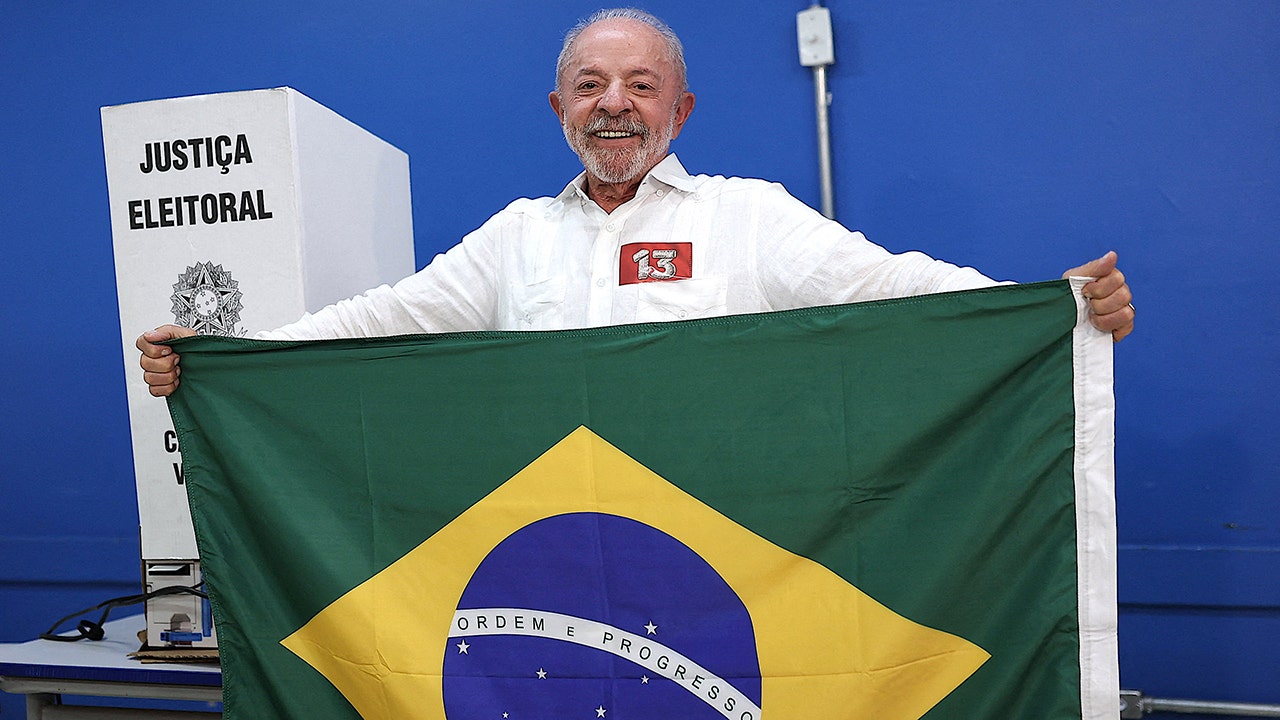
On a Monday morning that felt less like the start of the workweek and more like the final scene of a political thriller, Brazil’s presidential election finally delivered its verdict. Luiz Inácio Lula da Silva, the former metalworker and union leader who had become one of the most consequential figures in Latin American politics, had won the presidency once more. The news raced across borders and screens, and for progressives in the United States, it was more than a headline—it was a release, a vindication, a rare moment of political hope that seemed to shimmer with global meaning. Rep. Alexandria Ocasio-Cortez captured that feeling in a post on X, writing that Brazil had shown the world that “the will of the people is stronger than the authoritarians who try to suppress it.” She congratulated Lula and the people of Brazil, and her words were shared, liked, and repeated by thousands who saw the result as a rebuke to the politics of Donald Trump and his allies around the world. For the American left, this was not just an election in a faraway country. It was a sign that the tide of right-wing nationalism could be turned back. But joy and relief were not the only emotions in the air. The victory was tangled in a last-minute legal intervention that had extended voting hours at Lula’s request, casting a long shadow over the result. As celebrations broke out in one corner of the political world, fury was building in another. What looked like democracy blooming to some looked like democracy bending to others, and the arguments that began in the early morning show no sign of ending.
To understand that emotional whiplash, one has to remember what the two candidates represented. Lula was never just a politician to his followers. He was a symbol of the poor, a man who rose from poverty and carried the memory of millions of hungry Brazilians into the halls of power. His campaign pointed toward anti-poverty programs, minimum-wage increases, and expanded assistance for low-income families—a vision of the state as a safety net and a ladder. Bolsonaro, by contrast, had built his movement on a harder set of promises: more prisons, tougher policing, a leaner federal government, and a slash-and-burn approach to bureaucracy. He pledged to cut the number of government ministries by 25%, a move that many Democrats in the United States saw as a direct echo of Trump’s assault on the administrative state. In this sense, the election was never just a dispute between two ambitious men. It was a collision between two dreams. One dream said the government should protect the vulnerable. The other said the government should get out of the way and make streets safe. The fact that Lula won—however narrowly—felt to progressives like a validation that their vision could still win in a world increasingly drawn to authoritarian shortcuts. It gave them a narrative they had been hungry for: that ordinary people, in a major democracy, had chosen the left in defiance of the right’s dark warnings. That narrative was powerful, but it was also fragile, because the legal challenges unfolding around the vote meant the story was not yet finished.
Indeed, the controversy that accompanied the result was not a footnote; it was central. In the final hours of voting, Lula’s campaign had asked Brazil’s Supreme Court for an extra two hours to allow voters to reach polling stations, citing delayed buses and disrupted public transportation. With less than thirty minutes before the polls were scheduled to close, Justice Christiano Zanin—a judge who had once worked as Lula’s lawyer—granted the request nationwide. For Bolsonaro and his supporters, the decision was an outrage, an unprecedented intervention that changed the rules in the middle of the game. Bolsonaro himself called it “frankly unacceptable,” pointing out that a supreme court justice who had been Lula’s former legal partner had suddenly entered the battlefield at the most consequential moment. But critics of Bolsonaro were quick to note that his campaign had also requested an extension, citing heavy rain. The storm was real, and so were the long lines. Yet the optics were disastrous for those trying to defend the credibility of the outcome. Election experts in Brazil immediately began to discuss the possibility of a legal challenge, with one attorney arguing that floods in some states and public transportation failures in major cities like Salvador and São Paulo had harmed voters’ ability to cast ballots. Another expert conceded that annulment would be difficult to achieve but stressed that the Supreme Court’s intervention had contributed to an unsettling instability in the electoral process. “The election does not end today,” he warned. That line captured the lingering unease: the vote had been held, the results were being celebrated, but the battle over legitimacy had only begun.
On the American right, that sense of unease hardened into accusations of fraud and theft. Conservative voices watched the Brazilian election not as neutral observers but as participants in a larger ideological war. Martin De Luca, an attorney who has represented Donald Trump’s media companies, wrote that Brazil had shown the world that a losing candidate could simply call a former lawyer turned judge to give him a lift—and still be congratulated by those who shared his cause. Donald Trump Jr. amplified that message, insisting that if a conservative government had done such a thing in Brazil, the mainstream press in America would be losing its mind, but instead, he said, they were choosing to remain silent because it served their narrative. The rhetoric climbed higher from there. Joey Mannarino, co-founder of the Overton Institute, declared that Brazil had not held an election at all, but that the country had been stolen by a criminal band of corrupt hacks who belonged in jail. These were not measured reactions. They were cries of anger, shaped by the same sense of grievance that has defined American politics over the past several years. For many conservatives, Lula’s victory felt like a worldwide endorsement of everything they had fought against: big government, left-wing populism, and a willingness to bend institutions to partisan advantage. The fact that their own government had once celebrated election integrity elsewhere did not matter in the heat of the moment. What mattered was the belief that democracy itself had been weaponized against a conservative leader, and that the global left would cheer it all the way to the end.
On the other side of that argument, the celebrations were unstoppable. The Democratic Socialists of America issued a formal statement congratulating Lula and his running mate, Vice President Geraldo Alckmin, calling the victory a triumph for Brazilian democracy and praising the broad coalition of progressive and leftist forces that had fought together to defeat Bolsonaro. It was a victory not just of one man, they said, but of a movement. Sen. Bernie Sanders of Vermont joined in with a message as direct as his politics, noting that Lula had stood up for Brazilian workers and democracy and would continue to do so in the years ahead. Rep. Ro Khanna of California distilled the emotion into a single, resonant line: people across the world were fighting back against extremism, and with Lula’s victory, they had won. For these voices, the election was not about legal controversies or procedural complaints. It was about the human story of a country choosing hope over fear. Lula, in their telling, represented the possibility that a leader could care for the poor and still win elections; that democracy could survive the pressure of authoritarianism; that politics could be a source of healing rather than a weapon of division. They saw millions of Brazilian voters enduring long lines and stormy weather because they believed their votes mattered. That image—of ordinary people standing in the rain to defend their future—was worth more to them than any courtroom argument. It was a reminder that, for all the ugliness of modern politics, the desire for dignity and democratic participation remains alive.
At the center of it all were the Brazilian voters themselves, whose voices were almost lost amid the international noise. The country that woke up to Lula’s victory was not a single, unified nation. It was a land of deep divides, where cities and rural areas, rich and poor, young and old saw the world through completely different eyes. In the favelas where Lula is still a hero, the morning felt like a reunion with an old friend. In the agricultural heartlands where Bolsonaro is revered, the morning felt like a theft. The Supreme Court’s decision to extend voting hours may have been a small procedural matter in the eyes of some, but for ordinary Brazilians it was the kind of moment that gets argued about at family tables, in taxi cabs, and in church hallways for years. People who had stood in line for hours, soaked by rain and unsure whether they would make it before the gates closed, suddenly heard the rules had shifted. Some were grateful; others were furious. The election had not healed Brazil. It had only reset the boundaries of its ongoing political civil war. Neither side believes the other is merely wrong; each believes the other is dangerous. That is the human reality behind the headlines. Lula’s victory is a powerful story of personal comeback and global significance, but the deeper story is about how a divided people can live together in a democracy when they no longer trust the same facts, the same courts, or the same ballots. That question remains open, and no number of victory speeches or angry posts can answer it. In the end, the Brazilian people are still searching for a version of democracy they can all believe in—and that search, more than any election, will define the country’s future.