


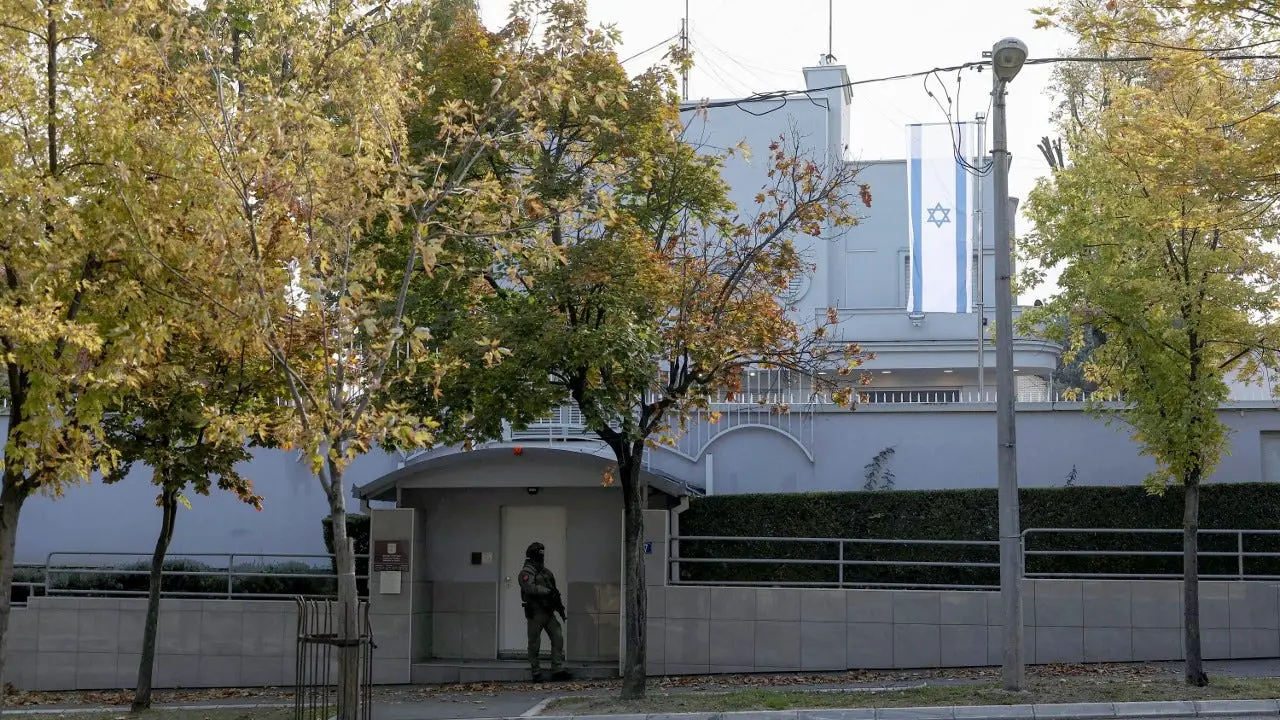
1. In the hours that followed midnight on Wednesday, the quiet streets around the Israeli Embassy in Belgrade became the backdrop for a sudden and violent confrontation. A uniformed member of Serbia’s elite Gendarmerie force was standing guard in a small security booth near the embassy entrance, a post that, until then, had likely felt like any other routine overnight assignment. Then, without warning, a figure emerged from the darkness. The assailant, later described by Serbian authorities as a minor, approached the booth and opened its door. In one swift motion, he produced a knife and launched an attack, reportedly shouting “Allahu Akbar,” the Arabic phrase meaning “God is great,” as he lunged at the officer. The blade caught the officer across the face, leaving a gash on his left cheek. It was a terrifying few seconds that could have ended far worse, but the gendarme, despite being wounded and undoubtedly startled, managed to react with the split-second decision-making that defines life-and-death moments in law enforcement. He drew his service weapon and fired multiple rounds, fatally wounding his attacker on the spot. The officer survived, his injuries described as minor, but the aftermath of that encounter left a stain of fear, grief, and unanswered questions outside one of the most heavily secured diplomatic missions in the Serbian capital.
2. As dawn broke over Belgrade, the pieces of the incident began to come together, and what emerged was a picture more chilling than an isolated act of violence. Serbia’s Interior Minister, Ivica Dacic, told reporters that authorities were treating the attack as a terrorist act, a classification that carries enormous weight in a country that has largely remained on the periphery of the violent extremism seen elsewhere in Europe. The assailant, Dacic explained, was not a random, mentally disturbed wanderer who happened to target an embassy. Instead, he appeared to be a radicalized young man whose online footprint had already drawn attention. The minister revealed that security services had been monitoring the attacker, and that his social media presence, particularly on Instagram, raised serious red flags. At some point, the assailant had displayed a black banner bearing the symbol of the Islamic State terror group, known as ISIS, signaling an alarming degree of sympathy for the jihadist cause. He was believed to be a Serbian citizen from the town of Šabac, a quiet municipality along the Sava River that now found itself connected to an international terrorism investigation. For investigators, the case raised difficult questions about how a young person from a modest Serbian town could become so consumed by extremist ideology that he would attempt to kill a police officer in the name of a foreign terrorist organization.
3. The international dimension of the attack was immediate and unmistakable. Israel’s Foreign Ministry confirmed that the incident was an attempted terrorist attack and noted that it was under investigation by the relevant authorities. Perhaps the most reassuring detail to emerge from the ministry’s statement was that no embassy personnel were injured. The mission had been closed at the time of the attack, a routine but fortunate circumstance given the late hour. The lone target was the Serbian police officer stationed outside, a reminder that even those who protect diplomats are not immune from the reach of extremism. Serbian authorities, for their part, did not downplay the seriousness of the threat. Interior Minister Dacic announced that the country had elevated its terrorism threat level to the highest stage, a rare and sobering move that signaled a heightened state of alert across the nation. In the wake of the attack, heavily armed police officers took up positions not only outside the Israeli Embassy but at sensitive sites and crowded public spaces throughout Serbia. The visible security presence was meant to reassure a public suddenly reminded that the country is not untouched by the global currents of political violence. For the Israeli Embassy in Belgrade, this was not the first time such a threat had emerged, and the heightened vigilance reflected a shared understanding between Serbian and Israeli officials that diplomatic missions can become symbolic targets in an age of asymmetric warfare.
4. The forensic reconstruction of the attack, offered by the Office of the Higher Public Prosecutor in Belgrade, painted a precise and startling timeline. At approximately 12:15 a.m. local time, an unidentified person dressed in black approached the security booth outside the embassy. Without hesitation, the individual opened the door and moved toward the officer, who was identified in court documents only by his initials, D.S. Rather than closing the distance, the attacker hurled one of his two knives in the direction of the officer. The blade struck D.S. in the left cheek, a wound that, while not life-threatening, would have been deeply painful and disorienting. Yet the officer, according to prosecutors, managed to retain his composure. He retrieved his service weapon and opened fire, discharging multiple rounds until the threat was neutralized. The assailant died at the scene, a stark and tragic end to a life that had apparently been consumed by radical ideology. Hours later, photographs from the crime scene showed a heavy police presence, with officers in tactical gear standing guard at the embassy entrance. Yellow evidence markers and crime-scene tape delineated the area where the attack occurred, a grim tableau of what had been an ordinary night seconds before chaos erupted. While the prosecutor’s office offered these clinical details, the underlying human drama was impossible to ignore: a young man, seemingly lost to extremism, lay dead on the street, and a police officer, forever changed by the encounter, was left to grapple with the trauma of having taken a life in the line of duty.
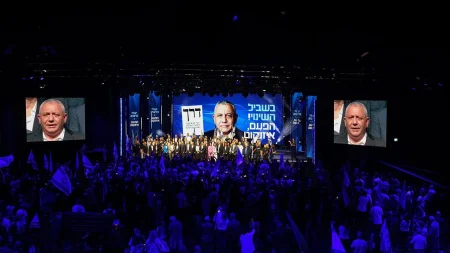
5. This attack did not occur in a vacuum. It was, in fact, the second time in less than a year that a Serbian police officer guarding the Israeli Embassy in Belgrade had come under attack. In June 2024, an assailant wielding a crossbow wounded another Serbian officer stationed at the same embassy before being shot and killed by the officer’s return fire. That incident, too, had been treated as a terrorist act, and it had sent shockwaves through the Serbian security establishment. The recurrence of such attacks at the same location suggests a disturbing pattern, perhaps indicating that the embassy is perceived as a high-value target by certain extremist elements. It also underscores the dangerous reality faced by the men and women assigned to diplomatic protection duties, who serve as the first line of defense against those who seek to harm foreign missions and their personnel. The timing of the latest attack added another layer of complexity. It came just a day after Israel held parliamentary elections, with exit polls pointing to no clear winner. While there is no immediate evidence linking the attack to the election results, the coincidence served as a reminder of how political events in Israel and the broader Middle East can reverberate far beyond the region, inspiring or provoking violence in unexpected places. For Serbian authorities, the challenge is not only to respond to the immediate threat but also to understand the factors that drive young people in the Balkans toward radicalization, and to find ways to disrupt that process before it reaches the point of violence.
6. In the end, the story of this attack is not merely a tale of security operations and official statements; it is a deeply human story with profound emotional resonance. For the wounded officer, a person whose name we may never know beyond the initials D.S., the night will likely replay in his mind for years to come. He will remember the face of his attacker, the flash of the blade, the sound of his own gunfire, and the silent aftermath. He will have to live with the knowledge that he killed someone, even if that death was justified in self-defense and in the defense of the institution he had sworn to protect. For his family, the relief of knowing he survived will be tempered by the understanding that his life was forever changed. For the family of the young attacker, there is an unimaginable grief, a sorrow made all the more painful by the knowledge that he died not as a soldier in a war, but as a lost teenager, radicalized by propaganda that preyed on his vulnerabilities and turned him into a weapon. And for the broader community, in Šabac and across Serbia, there is a lingering unease, a collective reckoning with the fact that the seeds of extremism can take root anywhere, even in ordinary towns where the most common concerns are schools, jobs, and daily life. The Serbian government’s decision to raise the terror threat to its highest level is a necessary precaution, but true security will require more than just an increased police presence. It will require vigilance, community engagement, and a willingness to confront the social, emotional, and ideological forces that push young people toward radicalization. As the Israeli Embassy in Belgrade returns to a semblance of normalcy, and as officers continue their watchful patrols, the memory of this violent night remains a powerful reminder that the world is interconnected in ways both beautiful and terrifying, and that peace is not a given, but a constant and often costly effort.