


1. The Night Everything Changed
For fourteen years, Aleksandar Vucic had been the fixed star of Serbian politics. From his perch as Prime Minister and then President, he had survived scandals, wars in neighboring lands, diplomatic storms, and domestic crises that would have toppled lesser men. But on a tense Sunday night in Belgrade, the silence in his campaign headquarters said everything that needed to be said. When Vucic finally appeared before the cameras, his face was heavy with the weight of an admission no leader wants to make. He stood in the dim light of the studio, adjusted his tie, and delivered the words that sent shockwaves through the Balkans and beyond: based on a stratified sample of the vote, it was clear that the governing Serbian Progressive Party had lost the election. The Student List, a coalition of young activists, academics, and ordinary citizens born out of street protests and tragedy, had won. The nation, he said, had spoken. There were no final results yet, but the mathematics were unforgiving. Serbia had changed, and the man who had shaped it for so long was now watching it move beyond his grasp. For the students and volunteers who had spent two exhausting years in the streets, the announcement was not just a political victory. It was the end of an era. It was proof that persistence, grief, and a simple demand for accountability could topple the old order without firing a single shot. In the cafes of Belgrade and the squares of Novi Sad, people hugged, wept, and whispered to one another as if afraid the night might still turn on them. The toppling of Yugoslav dictator Slobodan Milosevic in 2000 had been a seismic event in the Balkans, but many observers were now saying this election felt comparably historic—the biggest political upheaval in a generation, driven not by foreign powers or secret services, but by students who had simply watched a railway station roof collapse, and decided that enough was enough.
2. A Landslide on the Ballot
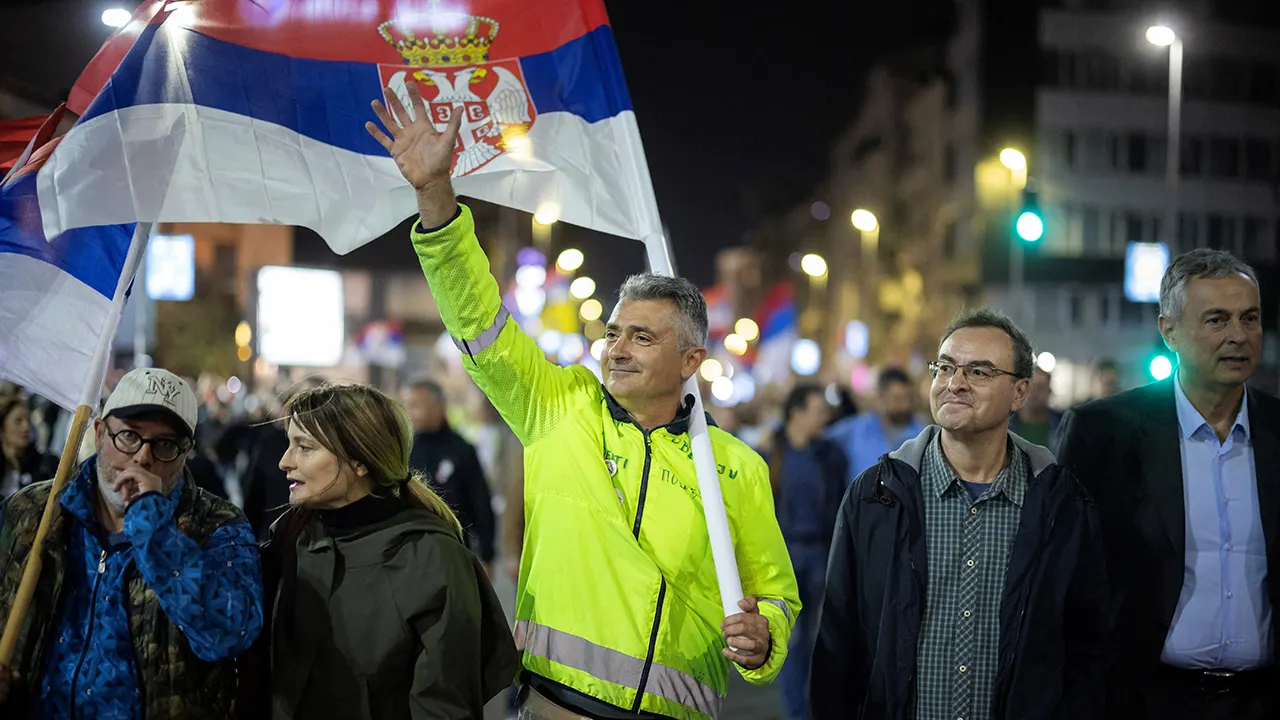
The numbers emerging from the election observation mission were staggering. Turnout had reached 69 percent, the highest of any election in the twenty-first century, with more than 4.4 million citizens voting. By the time the projections were finalized, the Student List had won 52.45 percent of the vote and was projected to control 138 of the 250 seats in the National Assembly—an absolute majority large enough to form a government entirely on its own. Vucic’s Serbian Progressive Party, which had dominated Serbian politics for more than a decade, was left with only 39.2 percent and roughly 103 seats. The result was not a narrow squeak; it was a decisive rebuke. The students and their allies had won by a margin that surprised even seasoned election analysts. Helena Ivanov, an associate fellow at the Henry Jackson Society, told Fox News Digital that while everyone expected the students to perform impressively, very few predicted a landslide of this magnitude. It was, she said, a historic victory and a surprise to many. Across the country, spontaneous celebrations erupted as the scale of the triumph became clear. In Belgrade, crowds gathered outside the parliament building, waving flags, singing, and chanting slogans that had become the heartbeat of the movement. In Kragujevac, Niš, and Novi Sad, people poured into the streets, not in protest, but in joy. Many of them admitted to reporters that they had worried about the possibility of violence as the polls closed. The country had lived with such fear for years—the grinding anxiety that the regime would never accept defeat peacefully. But almost two hours after the last ballot boxes were sealed, Vucic delivered his concession speech, congratulating the winners and promising a peaceful transfer of power. For a nation unaccustomed to smooth transitions, the very act of a sitting leader admitting defeat was a quiet miracle. The students had not only won the majority; they had won the right to govern. Now came the harder work: transforming a revolt born of frustration into a functioning government capable of delivering the justice, transparency, and institutional reform that millions of Serbs had gone to the polls to demand.
3. How an Autocrat’s Fall Was Written
Political scientists and Balkan experts were quick to search for lessons in the Student List’s astonishing ascent. Sinisa Vukovic, director of the Global Policy Program at the School of Advanced International Studies at Johns Hopkins University, described the election as a textbook case in how to dismantle an authoritarian grip on power when all the traditional levers are stacked against you. For two years, Vucic had tried everything—co-opting the movement’s leaders, mocking them, dismissing them, sending out proxies to discredit their motives, and attempting to fragment them with offers of compromise or threats of prosecution. Nothing worked. The students remained two steps ahead at every turn, their creative organization and impeccable messaging keeping them ahead of a regime that had controlled the media, abused state resources, and pressured voters and candidates alike. The CRTA Election Observation Mission documented a campaign in which the government broke rules with impunity: state funds funneled into party networks, pressure on workers and public employees to support the ruling party, independent observers attacked, and the media increasingly brought under total government control. But despite all the pressure, the students showed a kind of moral agility that confounded the party machine. They used humor, art, playful gestures, and viral moments to make their demands impossible to ignore. They did not promise heaven on earth; they simply demanded that Serbia’s institutions function in the interests of citizens, that corruption be punished, and that those responsible for the death of sixteen people in the Novi Sad railway station collapse be held accountable. The tragedy, a train station roof falling in November 2024, had been the spark. But the fire came from a deeper source—a slow-burning fury at decades of state capture, at leaders who enriched themselves while infrastructure crumbled, at an opposition that seemed weak and self-serving. When the students entered the political arena as relative outsiders, they carried with them the accumulated hope of the disillusioned. Their victory was not just the result of a campaign; it was the collapse of an entire political order, and the writing of a new chapter in Serbian civic life.
4. From Grief to Political Power
The roots of this extraordinary movement lie in tragedy. In November 2024, the roof of a railway station in the northern town of Novi Sad collapsed, killing sixteen people. Serbs watched in horror as the dead were pulled from the wreckage. The accident was immediately seen as a symptom of systemic rot—shoddy construction, cronyism, and a state so captured by corruption that it could not keep its public buildings safe. Angry citizens took to the streets, and among them were students. They did not come with elaborate platforms or seasoned political handlers. They came with candles, white gauze, and the determination to remember the dead. Over the following months, their demands expanded. They wanted justice for the victims and accountability for whoever had allowed such an atrocity to happen. They chanted against corruption, against state capture, against the creeping authoritarianism that had broken every promise of the post-Milosevic era. For nearly two years, the demonstrators marched through Serbian cities and towns, withstanding harassment, bad weather, and institutional obstruction. They formed blockades, organized teach-ins, and engaged with ordinary citizens at kitchen tables. By the time the election was announced, they had built a nationwide movement—not a traditional political party, but a network of pain and hope. The Student List that appeared on the ballot was in some ways a pragmatic adaptation of that movement, a way to translate protest energy into parliamentary power. Many Serbs embraced these newcomers precisely because they were not tied to the old opposition, which had come to be seen as ineffective and corrupt. Milos Jevtic, a 48-year-old professor at the University of Belgrade’s Faculty of Organizational Sciences, was among those who won a seat. He spoke to Fox News Digital about what motivated the campaign: an unshakeable commitment to values including expertise, professionalism, responsibility, solidarity, and unity. Jevtic insisted that the students had never compromised those principles, no matter how much pressure they faced. The victory, he explained, also reflected widespread public distrust in the current regime and in the traditional opposition parties alike—a hunger for someone new, someone who had not been fouled by the dirty game of power. What the Student List lacked in policy detail, they made up for in authenticity, and for millions of Serbian voters, authenticity was enough.
5. Building a New Serbia
Now the hard realities of government beckon, and the Student List’s vagueness is both a risk and a blessing. Milos Jevtic articulated the priorities he hoped would guide the new parliamentary majority: restoring economic stability, eliminating corruption, establishing the rule of law, and strengthening institutions so they act in the interests of all citizens. These were broad, human values rather than blueprints, and the new movement will have to work quickly to define its concrete program. The international community is watching closely, with a particular interest in whether Serbia will adjust its delicate balancing act between the European Union, Russia, China, and the United States. On foreign policy, many observers expect a measure of continuity with the Vucic administration—maintaining good relations with neighboring European countries and major global partners. Serbia has long walked a tightrope, preserving historic and religious ties with Russia while courting Western investment and waiting patiently on the threshold of EU accession. The Student List leaders have signaled that they want stability and pragmatism, not radical reversals. But with their anti-establishment base, there will inevitably be pressure to show a clean break from the old way of doing things. The country also remains entangled with the question of Kosovo—a deeply emotional and complicated issue that any government must confront, no matter how youthful or untested. The new prime minister will have to offer credible answers to questions that Vucic avoided for years: Is Serbia firmly pro-EU? Will it distance itself from Moscow? Will it deepen ties with Washington, which had become a priority under Vucic in recent years? These are not theoretical questions. They affect trade, security, migration, and the daily lives of Serbian citizens. The students’ willingness to confront these issues honestly will determine whether they can maintain the trust of the people who lifted them into office, or whether they will repeat the disappointments of every previous generation of reformers.
6. Warnings, Uncertainty, and the Future
Not everyone is celebrating. Ana Brnabic, vice president of the Serbian Progressive Party’s main board, offered a sharp warning about the consequences of the Student List victory. She told Fox News Digital that while it was understandable that people might want change after fourteen years of SNS rule, the country had now lost meaningful political pluralism. After thirty-five years of multiparty democracy, Serbia was effectively left with one established political party, while the rest of the political scene was dominated by movements without clear ideology or governing experience. She called it catastrophic for any parliamentary democracy. Brnabic also raised a series of unsettling questions: Would Serbia remain pro-EU? Would it preserve its relationship with Russia? Could it maintain and strengthen ties with the United States? Would economic policy lean left or right? Would the country embrace a liberal social agenda, or preserve traditional Orthodox Christian values? These questions, she argued, had no clear answers because the movement had offered no coherent platform. Her SNS, meanwhile, promised to be a strong but constructive opposition, calling on the Student List to end its campaign of intimidation and assume the responsibility voters had entrusted to it. Her tone was a mix of bitterness, concern, and grudging concession—a sign that the old regime is still struggling to accept the verdict of the ballot box. For ordinary Serbs, the early morning light after election day carried a feeling of both relief and unease. Their country had done something brave and unprecedented, toppling a powerful leader through sheer civic determination. The students who had marched for two years in memory of the dead had succeeded, but history is littered with movements that won the election and then lost the peace. Will they govern with the same creativity, humility, and discipline they showed on the streets? Will they listen to the millions who demanded change, or will they become the next generation of insiders? Serbia is standing at a crossroads, and for the first time in over a decade, no single hand holds the wheel. The world waits with bated breath to see what the students will do with a power they never sought, but which they have now been called upon to carry.