






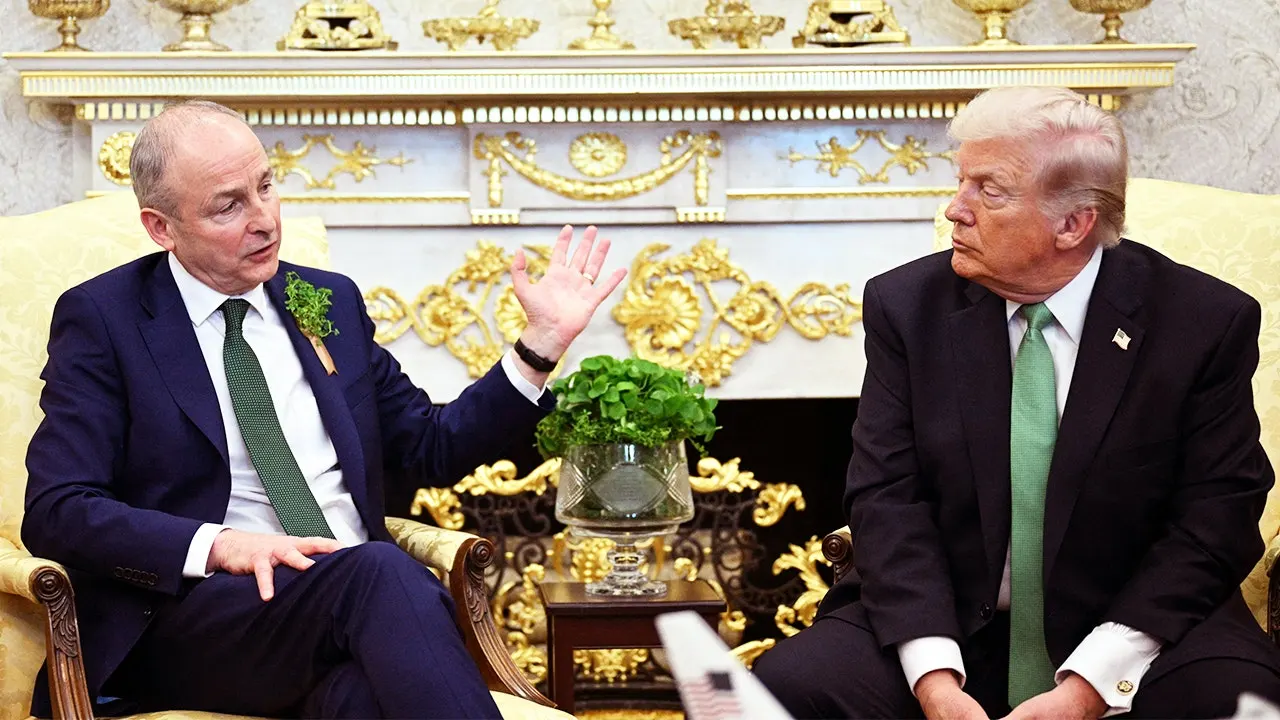
For Micheál Martin, the lessons of peace are never abstract. Standing in New York during the United Nations General Assembly, the Irish prime minister carried with him the weight of a small island that spent three decades tearing itself apart before finding a way to talk. Nearly thirty years after the Good Friday Agreement largely ended the sectarian violence known as “the Troubles,” Martin spoke with a mixture of hope and caution about Northern Ireland’s future, the possibility of a united Ireland, and the enduring role the United States might play in shaping what comes next. President Donald Trump had recently visited Ireland and said he would “love” to see the island unified, predicting it would eventually happen. Martin, whose Fianna Fáil party has long supported Irish unity, welcomed the sentiment but made clear that the dream of reunification cannot be rushed. The 1998 agreement, he explained, created a peaceful mechanism for deciding Northern Ireland’s constitutional future, but it did not erase the deep divide between the nationalist community, which largely wants unity with the Republic, and the unionist community, which wants to remain part of the United Kingdom. “I believe in unity and my party believes in unity, but we have to work on it,” Martin said. “We have to build reconciliation among the different traditions on the island of Ireland.” In that work, he suggested, the United States could again be a partner, just as it was in the peace process. “To a degree maybe, potentially, yeah,” he said when asked whether Washington could play a role in a future push for reunification.
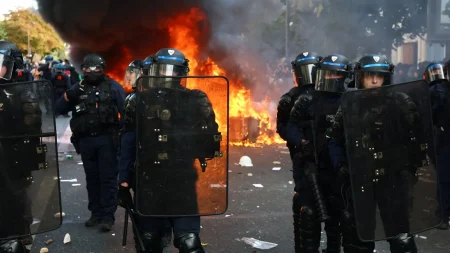
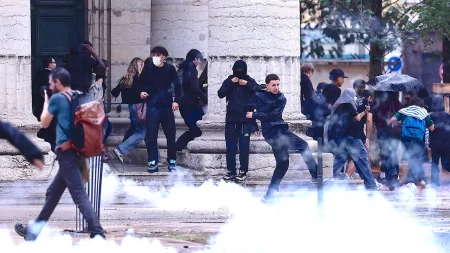
Martin’s caution was not merely diplomatic restraint. Days before the interview, one of Northern Ireland’s most bitter marching disputes had erupted once more in Portadown, along the Garvaghy Road. For the first time in twenty-eight years, the Parades Commission had approved a limited Orange Order march along the mainly nationalist road, and residents had responded by blocking the route. Police, fearing serious disorder, declined to force the parade through. The images were jarring, a reminder that even with a peace agreement celebrated around the world, the old fault lines remain close to the surface. The Orange Order is a Protestant organization whose members generally support Northern Ireland’s place in the United Kingdom, while many of the predominantly Catholic residents of the Garvaghy Road area favor a united Ireland. The standoff moved into the courts and into Stormont, where politicians from both sides scrambled to broker a compromise. For Martin, the episode illustrated exactly why any talk of a border poll or constitutional change must be handled with immense care. The Good Friday Agreement allows a referendum if it appears a majority in Northern Ireland would support reunification, but Martin argued that more important than the legal trigger is the groundwork that must come before it. He spoke of the need to define what a united Ireland would actually look like, how power and resources would be shared, and how the unionist community, which is currently a majority in the region, could be persuaded to feel at home in a new arrangement. Without that deeper engagement on both sides of the border, a referendum would risk reopening wounds rather than healing them.
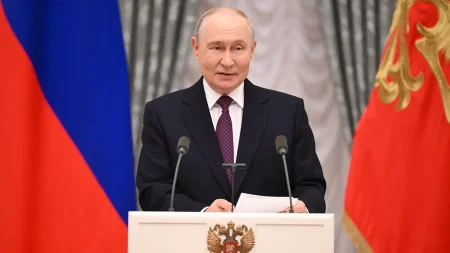
For Martin, however, Northern Ireland’s peace process has never been only about Northern Ireland. It is, in his view, a living example of how violent conflict can end through dialogue, persistence, and international support. That example shapes how Ireland approaches the world’s current crises, especially Russia’s war in Ukraine. On the eve of the interview, Martin had met with Ukrainian President Volodymyr Zelenskyy, and he came away with little optimism that Moscow was genuinely interested in peace. “We don’t get a sense that Russia is really interested at this particular stage,” he said. Yet he argued that continued channels between Washington and Moscow remain important, if only to keep the possibility of negotiation alive. When asked whether a realistic settlement would require Ukraine to surrender territory to Russia, Martin rejected the premise outright. “Ukraine can’t cede territory that Russia hasn’t even conquered, despite four years of war,” he said. Instead, he suggested that a ceasefire along existing battle lines could provide a starting point, with negotiations to follow and security guarantees for Kyiv to prevent Russia from attacking again. He welcomed Ukraine’s path toward European Union membership as an additional layer of security and acknowledged that the broader architecture between Europe and Russia would eventually need to be addressed. “From our perspective, no one has the right to go into another country and take its territory,” Martin said. In that sentence he captured the core belief that drives Ireland’s engagement with the war, a belief born from a history in which territory and identity were violently contested for generations.
Ireland’s support for Ukraine, however, has reignited a difficult question at home: what does neutrality actually mean in the twenty-first century? Ireland has committed more than $754 million in humanitarian assistance, military training, and other non-lethal support to Ukraine since Russia’s full-scale invasion in 2022, while stopping short of sending arms. It has also taken in enormous numbers of refugees, more than 120,000 at one point, with roughly 80,000 still living in the country during the interview. Martin defended this record as entirely consistent with Irish neutrality, because, as he put it, “we don’t give lethal aid, we haven’t given military weaponry, but we have given non-lethal assistance in terms of training and so on like that, and also humanitarian aid to Ukraine.” For him, welcoming people fleeing war is not taking sides; it is simply a humanitarian response. “That’s not taking sides, that’s taking a humanitarian response to a war,” he said, noting that many refugees are now working and contributing to the Irish economy. Yet neutrality is a fragile concept, and Ireland has long faced scrutiny over the use of Shannon Airport by the U.S. military. In August, NATO’s top military commander, General Alexus Grynkewich, described Shannon as a “very important logistics hub” for the United States and warned that withdrawing American military access would probably damage U.S.-Irish relations. Irish neutrality activists have protested the arrangement for years, insisting that allowing military personnel and aircraft to transit through a civilian airport undermines the country’s status. The debate is unlikely to fade, but Martin seemed untroubled. He described the U.S.-Ireland relationship in almost familial terms, pointing to the tradition of Irish leaders visiting the White House every St. Patrick’s Day and an Irish American diaspora he estimated at roughly thirty million people. “It’s just family, there’s kinship ties,” he said, as if the transatlantic bond required no further explanation.
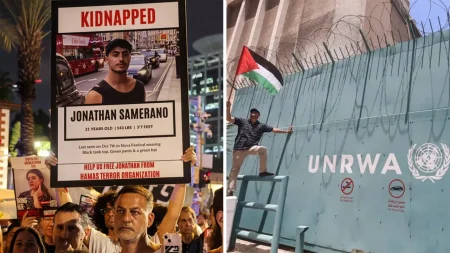
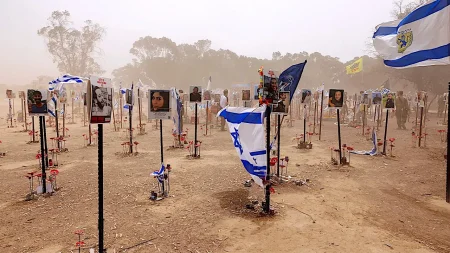
The same peace-process lens shapes Ireland’s approach to the Middle East, where Dublin has become one of Israel’s strongest critics in Europe. Martin condemned Hamas’s terrorist attack on October 7 and defended Israel’s right to exist in security, but he was blunt about the military campaign that followed in Gaza, calling it “absolutely disproportionate.” Ireland has long been a vocal supporter of a two-state solution, and Martin reiterated that belief with quiet conviction. “We believe that Israel, of course, has a right to exist in security and its people need to be guaranteed of security. But likewise, Palestinians should have a right to live in their homeland in a peaceful way,” he said. He acknowledged that Ireland’s outspokenness has drawn criticism, including accusations of antisemitism, but he rejected those concerns. Ireland’s position, he insisted, comes from a “sense of right and justice and fairness,” a phrase that echoes the language of the civil rights movement that inspired Northern Ireland’s Catholic community in the 1960s. That community’s grievances were central to the Troubles, and the long road to peace taught Irish leaders that injustice, left unaddressed, grows into something far more dangerous. Martin did not offer a detailed plan for the Middle East, but his message was clear: if Northern Ireland could find a way out of violence through negotiation and compromise, then perhaps other places could too. He did not say it easily, and he did not say it lightly. He said it as someone who knows that peace processes are slow, painful, and fragile, and that the world is always one careless provocation away from sliding back into chaos.
As Martin looked out at a world he described as a global “crossroad,” with war in Ukraine, conflict across the Middle East, negotiations over Iran and the Strait of Hormuz, and Europe facing its most dangerous security environment in decades, he returned again and again to the idea that Ireland’s own journey offers something worth sharing. Ireland currently holds the rotating presidency of the Council of the European Union, placing Martin at the center of decisions that will shape the continent’s future. He spoke of a growing realization across Europe that collective defense needs strengthening, particularly because of the war in Ukraine, and noted the existential fear felt by Baltic and Nordic countries with memories of Soviet domination. Europe is also tightening its approach to immigration, a trend Martin acknowledged, saying asylum applications had fallen in Ireland and that governments across the continent were responding to political pressure. Yet beneath all the policy talk, his message was simpler and more personal. The world, he suggested, needs to turn a page toward peaceful coexistence, just as Ireland eventually did. He did not pretend that peace was easy or that unity was inevitable. He spoke instead as a leader who knows that progress is measured not in grand declarations but in the slow, patient work of building trust across bitter divides. For Martin, the struggle of Northern Ireland, the plight of Ukraine, the suffering of Gaza, and the uncertainties of Europe are all connected by a single thread: the belief that reconciliation is possible if people are willing to talk, listen, and compromise. It is a belief born of hard experience, and it is perhaps the greatest gift Ireland has to offer a troubled world.