





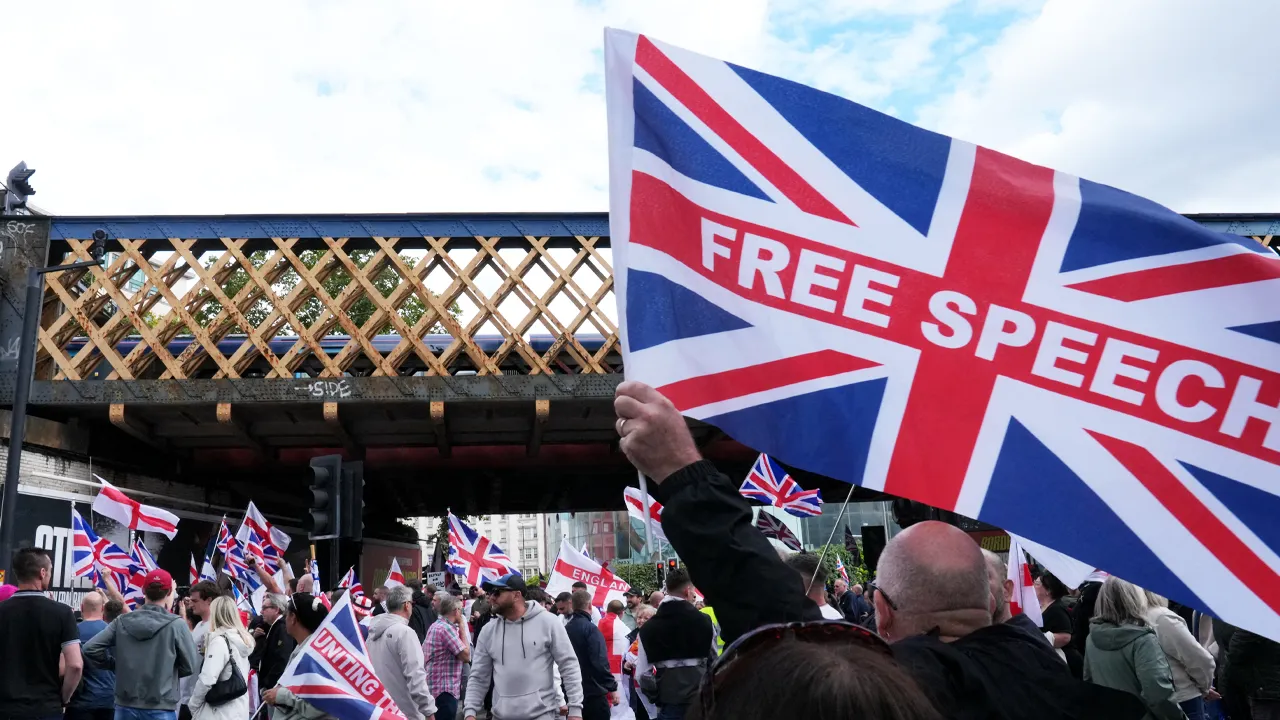
It is a story of transatlantic tension, a clash of values wrapped in the shadow of a British pub. The American Embassy in London has ignited a firestorm of controversy by offering grants of up to half a million dollars to support shared US-UK values. The catch, in the eyes of some Britons, is that the specific values being funded—like absolute freedom of speech, due process, and limited government—feel more like an import from the conservative heartland of America than a shared heritage. To its supporters, this is a lifeline to reinforce the very foundations of liberty that the United Kingdom is in danger of losing. To its critics, however, the initiative reads as an unwelcome intrusion into domestic affairs. The clash represents a fundamental disagreement about whether the United Kingdom is currently a land of free expression under siege, or a nation struggling to adapt its oldest traditions to the complex realities of the twenty-first century.
The immediate flashpoint centers on the reaction from Liberal Democrat MP Lisa Smart, who did not mince words when describing the funding. She branded it “MAGA money meddling in democracy,” a soundbite that quickly captured the attention of the British press and transatlantic political observers alike. Smart pointed to her country’s “proud tradition of liberty and freedom of speech” as a reason why such external funding seemed unnecessary and even patronizing. Yet, proponents of the grant argue that this sense of pride represents a state of blissful ignorance. They point to a United Kingdom where the very rights Smart claims to cherish are being systematically eroded by a combination of well-meaning legislation and a cultural shift away from open debate. The defense of the initiative frames it not as an act of aggression, but as an act of necessity. The funds, according to this view, are a practical tool to support the voices that are being silenced by an increasingly restrictive and ideological state apparatus, regardless of the political party wielding the power.
At the heart of the debate lies a litany of recent British legislation, most notably the 2023 Online Safety Act. While framed by its architects as a necessary step to protect the public from online harms, figures like Greg Lukianoff, president of the Foundation for Individual Rights and Expression (FIRE), see it as a tool for censorship. The Act gives regulators the power to impose crippling fines on technology platforms that fail to adhere to strict speech codes, effectively compelling these private companies to police the thoughts and words of their users. This legislation, along with a broader cultural shift, has led to a situation that Lukianoff describes as a “true free speech disaster in the UK.” He argues that the British people “don’t even seem to know what’s happening” as the pressure towards conformist thinking intensifies. This stark assessment suggests that the land that gave the world the Magna Carta is now sleepwalking into a new era of restriction, and that foreign intervention is the only thing that might be able to wake it up.
The scale of this perceived suppression is where the numbers become truly alarming. Drawing a stark parallel with the American “Red Scare” of the 1920s, Lukianoff has highlighted the discrepancy between the roughly two thousand people arrested annually in the US during that period and the more than twelve thousand individuals arrested in the UK in a single year. This staggering figure, driven by laws that criminalize certain types of “grossly offensive” or “threatening” communications, paints a picture of a police state far removed from the American vision. While the United States and the United Kingdom both permit the prosecution of direct threats of violence, the UK’s criminalization of online expression has no comparable equivalent. The chilling effect is tangible; it suggests that the right to speak one’s mind is becoming contingent on the permission of the state, a dangerous deviation from the principles of a free society that both nations have historically claimed to defend.
A particularly contentious aspect of the British system, and a cornerstone of Lukianoff’s critique, is the police’s use of “non-crime hate incidents,” or NCHIs. The government defines these as alleged incidents perceived to be motivated by hostility or prejudice against a person’s protected characteristics. In practice, FIRE notes, this leads to the creation of registries tracking citizens who have been reported for participating in perfectly legal speech. Lukianoff argues that this is “censorship with extra steps,” a way to silence unpopular opinions without the need for a criminal charge. For example, someone advocating for stricter immigration controls based on social science data could find themselves on a police list simply because a third party found their views offensive. This system deters people from expressing controversial views on important public policy issues, thereby suppressing the very debate that a healthy democracy depends upon for survival. It effectively outsources the role of the thought police to the general public, encouraging them to report their neighbors and colleagues for holding “unacceptable” views.
Ultimately, the controversy over the American grant money forces a deeper question: can you negotiate over the First Amendment equivalent, and can a nation be saved from itself? The American position, as articulated by FIRE, is that some truths are self-evident and universal. They argue that if the UK cannot see its own crisis, then it is the responsibility of its allies to hold up a mirror. The United Kingdom, for its part, may bristle at this unsolicited lecture, viewing it as a projection of American political culture wars onto foreign soil. Yet, the underlying question of how to draw a line between free expression and hate is one that plagues the West. The response from the American Embassy, which notes it has halted Biden-era funding for “divisive ideological projects,” makes it clear that the United States is now in the game of nation-building its own allies. Whether this is helpful friendship or harmful meddling depends entirely on whether one views the UK as a patient in need of a cure, or a healthy country being force-fed medicine for a politically motivated illness. The transatlantic relationship has always involved a tug-of-war of ideas, but it has rarely been this personal — or this pivotal.