





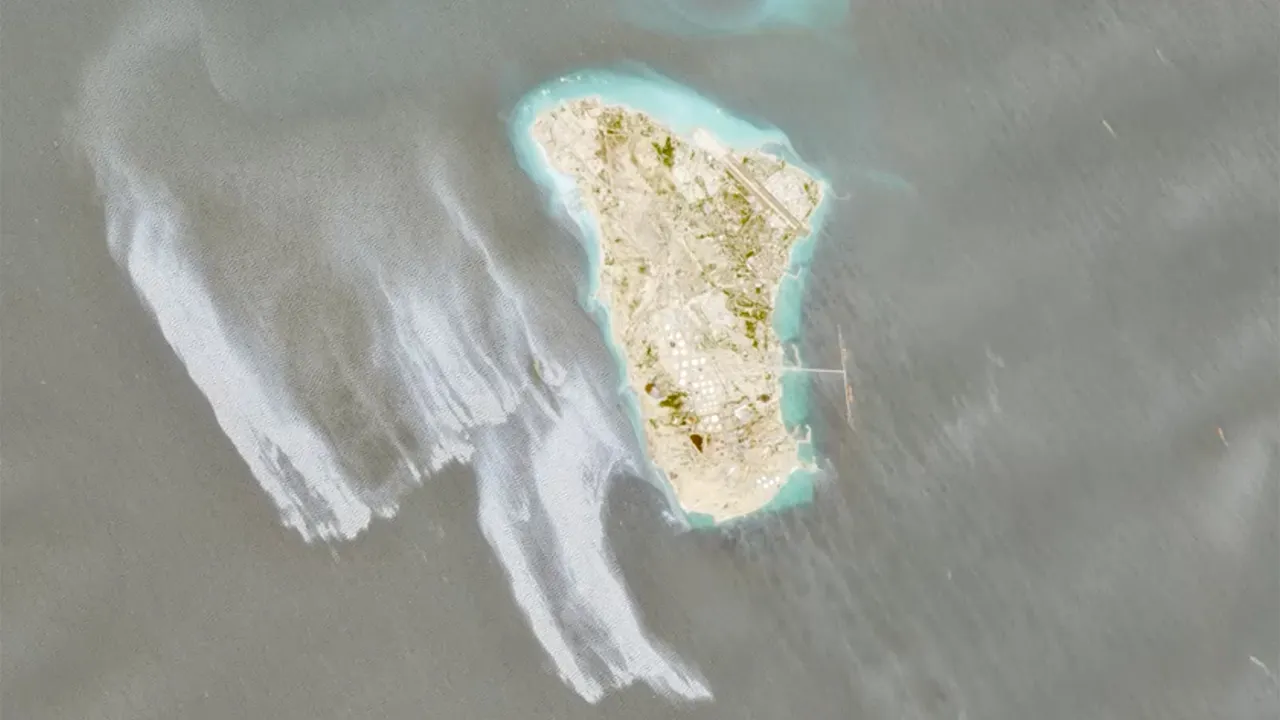
In the swirling waters off Iran’s Kharg Island, the heart of its oil empire, satellite images have captured something unsettling—a massive oil slick spreading like a dark shadow, whispering of a deeper crisis beneath the surface. This Gulf hotspot, where 90% of Iran’s crude lifeline flows, now faces an environmental and economic tempest fueled by relentless U.S. pressure. Picture this: the world’s eyes fixed on a plume of grey and white, about 45 square kilometers wide, spotted between Wednesday and Friday. Experts aren’t mincing words; they say it’s visually consistent with oil, possibly the biggest spill since the U.S.-Israel conflict ignited 70 days ago. As the slick creeps southeast at a leisurely two kilometers per hour, alarm bells are ringing about its potential drift into Qatar’s waters within days, or even the UAE’s in weeks. It’s not just a stain on the sea—it’s a symptom of Iran’s oil infrastructure creaking under the weight of Trump’s “Economic Fury” campaign, where sanctions and naval might aim to strangle exports and starve Tehran of cash.
Diving into the drama, analysts like Miad Maleki from the Foundation for Defense of Democracies paint a picture of two likely culprits, each tied to Iran’s desperate dance with disaster. One scenario is operational overkill: Iran cranked up production expecting tankers to slip through U.S. blockades, but when deliveries overwhelmed the system’s limits, the excess crude ended up dumped overboard rather than left stranded on shore. Think of it like a factory churning out goods faster than trucks can haul them away, forcing a painful choice. The other possibility? Rust-bucket tankers, those aging hulks dragged into service as floating warehouses or sanction-evaders, springing leaks from neglect. “Over-delivery into the export system,” Maleki explains, leaves more oil at terminals than can be loaded, with the Gulf paying the environmental toll. It’s a stark reminder that Iran’s once-robust export machine, shipping 1.5 million barrels daily pre-conflict mostly to China, is now grinding to a halt, haunted by threats to shipping firms and finances.
This spill isn’t floating in isolation; it’s part of a broader narrative of tension and leverage as the Trump administration ramps up its maritime campaign. By positioning naval forces around the Strait of Hormuz, the U.S. is tightening the noose on Kharg Island, Iran’s jugular vein for revenue in this ongoing war. What’s unfolding feels like a high-stakes chess game, where Washington’s chokehold risks forcing Tehran into corners that could crack its very foundations. If exports dry up and storage caps out, imagine the fallout: wells shutting down in a bid to preserve long-term reserves, or crude disposed of recklessly, spewing pollution into the Gulf. Maleki warns that Iran’s onshore storage might only hold out for about 13 days before cuts are mandatory. And the human cost? The Gulf’s desalination plants, lifelines for millions in Qatar, UAE, and beyond, dangle vulnerably over this oily precipice.
The environmental ripples are already casting long shadows, echoing the conflict’s disruption to global energy flows. This isn’t just a spill; it’s a harbinger of potential disasters in a region already scarred by trapped vessels and supply chain snarls. As the slick meanders, it underscores how America’s strategy is evolving from economic pressure to what could be seen as a siege, compelling Iran to weigh risky gambits against controlling production. You can almost hear the frustration in Tehran’s silence—Iranian authorities have stayed mum, no comments from their UN mission either—while the world watches a nation that once dominated oil markets now scrambling. It’s a clash of wills, with Trump’s push for “Energy Dominance” Doctrine potentially revealing cracks in Iran’s armor, as leaks from legacy ships or storage overflows force environmental sacrifices.
Shifting gears, this incident breathes life into Trump’s bold assertions that Iran is “starving for cash” and “collapsing financially” amid an extended ceasefire. The slick’s emergence as the ceasefire drags on adds layers to the story, suggesting that even pauses in hostilities can’t stem the tide of economic erosion. For oil watchers, it’s a window into how sanctions have weaponized the sea lanes, creating bottlenecks that amplify every leak or storage snag. The Gulf, a cradle of civilization and wealth, now hosts this unfolding disaster, where aging infrastructure meets unchecked output, polluting waters vital for drinking and industry. It’s poignant, really—the same seas that connect nations are now dividing them, with Qatar, Israel, the UAE, and Iran all in the crossfire of consequences far beyond war.
Finally, as Fox News dives into this story, it’s worth noting the innovation at hand: you can now listen to articles like this, turning headlines into auditory journeys that bring the Gulf’s turmoil closer to home. The spill at Kharg encapsulates a human story of pressure points and pivotal decisions, where oil’s black gold stains more than just water—it exposes vulnerabilities in global power plays. Iran’s future production hangs in the balance, with environmental alarms from firms like Windward amplifying the urgency. As the Government Dragons and other voices dissect this, it humanizes the geopolitics: real people, real livelihoods tethered to this island outpost, facing the music of a blockade that might rewrite oil’s fate in the Middle East. In the end, the Gulf’s mirror reflects not just ripples, but ripples that could capsize economies and ecosystems alike, urging a closer listen to the warnings unfolding in whispers and spills. One thing’s clear—this isn’t fading fast; it’s a chapter in a saga that’s far from over, demanding eyes and ears on the horizon. And as tensions simmer, the question lingers: how much farther will this slick go before the world steps in? Reporting like this keeps us informed, blending expert analysis with the grit of on-the-ground realities, ensuring we don’t just read the news—we feel its weight.