





In the historic neighborhoods of Paris, once heralded as vibrant sanctuaries of European Jewish life, a quiet, protective silence has settled over the doorways and kitchen tables of the continent’s largest Jewish community. Today, the simple act of living openly as a Jew in France has transformed from a matter of routine civic identity into an ongoing exercise in calculated risk. Across the country, family names are being quietly erased from entryway intercom buzzers, digital profiles on ride-sharing and food-delivery applications are being sanitized with protective pseudonyms, and the sacred mezuzahs that once proudly adorned wooden doorframes are being systematically taken down. This creeping retreat into invisibility is not born of paranoia, but of survival, fueled by a stark, undeniable reality: France recorded a staggering 1,320 documented antisemitic incidents in 2025 alone—a chilling threefold increase from the 436 acts recorded just three years prior in 2022. This exponential surge in hostility has fundamentally altered the psychological landscape of the community, turning ordinary daily movements, such as a child walking to school or a family dining at a local neighborhood bistro, into moments fraught with underlying tension. Yet, beneath this heavy veil of caution lies a deep, stubborn undercurrent of resilience. Community leaders and ordinary citizens alike are grappling with a painful dual reality: they refuse to let their heritage be completely driven into the shadows, even as the threat of violence forces them to constantly scan their surroundings. The streets of Paris, once symbolic of cosmopolitan freedom, have suddenly become a battle ground where the simple, human right to exist without fear is being tested on a daily basis.
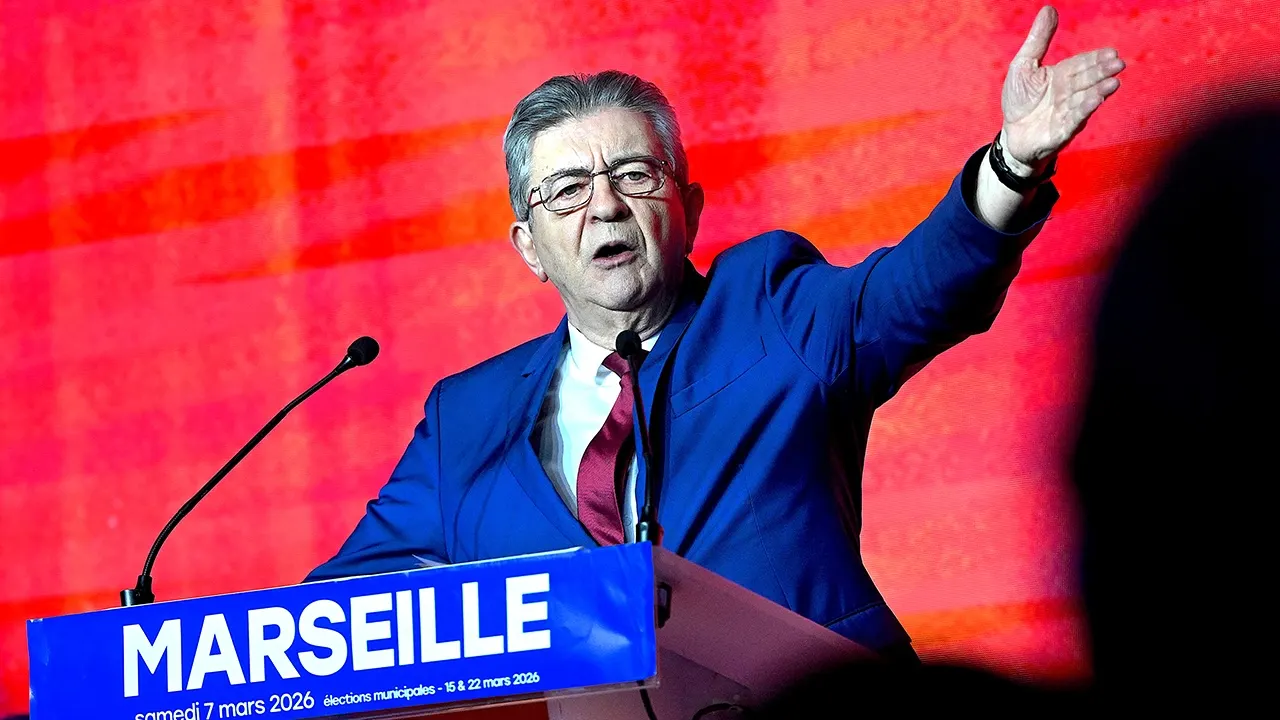
For those living through this crisis, the pain is not only physical but deeply ideological, exacerbated by a political climate where human safety is increasingly traded for electoral gain. Israeli Ambassador to France, Joshua Zarka, has pointed a finger directly at the toxic rhetoric emanating from the highest corridors of French power, drawing a historic and chilling parallel between the public addresses of far-left leader Jean-Luc Mélenchon and the demographic scapegoating of Adolf Hitler. According to Zarka, Mélenchon—the firebrand leader of the La France Insoumise (LFI) party—has masterfully manipulated geopolitical grief to unite a fragmented electorate against a single, painted enemy, using anti-Israel sentiment as a flag under which to rally votes. This weaponization of rhetoric is not abstract; it manifests in public acts of cruelty, such as Mélenchon’s widely criticized mockery of the pronunciation of traditional Jewish names, including that of prominent European Parliament member Raphaël Glucksmann. It is further compounded by the politician’s dismissive characterizations of modern Jew-hatred, including his blog posts arguing that antisemitism remains merely “residual” in France—a claim that landed as a devastating betrayal for a community still reeling from the horrific trauma of the October 7 massacre in Israel. This domestic hostility, Zarka warns, does not exist in a vacuum but is actively fed from the outside by a coalition of foreign orchestrators—namely Iran, Russia, Turkey, and Qatar—who utilize digital propaganda and targeted funding to fan the flames of societal division from afar. Ultimately, this leaves French Jews caught in a vice between calculated foreign interference and local political opportunism, transforming their daily safety into a political bargaining chip and leaving their communities to wonder if any corner of the republic remains truly safe from systemic prejudice.
In this climate of existential anxiety, the traditional political compass of French Jewry is undergoing an astonishing and deeply complex transformation. For decades, the far-right National Rally—historically led by the notorious Jean-Marie Le Pen—was viewed by the community as an absolute red line, an ideological pariah synonymous with Holocaust denial and xenophobia. Yet, as the modern far-left has intensified its anti-Zionist rhetoric, a profound and agonizing paradigm shift has taken root. Ambassador Zarka observed that over the past three years, a growing segment of the Jewish community has begun to view the party, now steered by Marine Le Pen and Jordan Bardella, with a completely different lens. This intellectual recalibration was cemented when Bardella traveled to Israel and stood within the somber, hushed halls of the Yad Vashem Holocaust Memorial, making a formal, public commitment to wage war against antisemitism regardless of whether it stemmed from the left or the right. For many French Jews, who feel increasingly alienated and abandoned by the mainstream left that once championed human rights, this gesture represented a significant, stabilizing anchor in a stormy sea of uncertainty. It is a fragile and bittersweet dynamic: a community historically targeted by the far-right now finds itself listening closely to its promises of protection, driven by the immediate, visceral fear of the hostility they encounter daily on the streets and in the classrooms. This political realignment illustrates the sheer depth of their desperation, highlighting how the search for basic physical security can fundamentally redefine long-held historical memories and force communities to seek shelter in the most unexpected and highly controversial political harbors.
Behind the heavy statistics and political maneuvers lie real human lives, shattered by sudden and terrifying violence that strikes at the heart of ordinary neighborhoods. In Lyon, a young tree planted to honor the memory of Ilan Halimi—a young Jewish telephone salesman who was brutally kidnapped, tortured, and murdered in 2006—was found vandalized and partially sawed down, a cruel desecration that reopened deep, unhealed wounds within the national consciousness. But the violence is far from historical; it is terrifyingly current, as seen when a young boy wearing a traditional kippah was cornered by a group of five individuals, one of whom held a cold, terrifying knife to his throat. Only weeks later, a kosher restaurant in Paris was targeted when acid was sprayed directly into its dining rooms, transforming a space of community warmth and shared meals into a toxic crime scene. Two brothers were even intercepted by counter-terrorism officers, carrying a semi-automatic weapon, hydrochloric acid, and an Islamic State flag, in what was described as a deadly antisemitic conspiracy. Amidst this storm is Rabbi Elie Lemmel, a man who lived his entire life in peace before suddenly becoming a target twice in a matter of weeks: once punched in the gut in Deauville, and later struck over the head with a chair at a sidewalk cafe in Neuilly-sur-Seine by a Gazan assailant. Yet, Rabbi Lemmel refuses to yield to the terror, continuing to wear his kippah proudly in public, declaring that to hide would be the ultimate victory for those who wish them harm. This sentiment is fiercely echoed by Yonathan Arfi, president of the Representative Council of Jewish Institutions in France (CRIF), who insists that the true trophy of hatred is a community’s surrender to fear; while he understands the instinct to hide, he argues that the vibrant pulse of Jewish life—from packed synagogues to bustling kosher cafes—must continue openly to deny bigots their victory.
Despite this resilient public stance, the quiet conversation around many Jewish dinner tables in France has increasingly turned toward emigration—a painful, reluctant packing of bags known as Aliyah. Historically, the flow of French Jews moving to Israel averaged a modest 1,500 to 2,000 people per year, but those numbers have begun to climb dramatically once more, rising to 3,500 in 2025 with projections estimating that over 4,000 will depart in 2026. This mass departure is a sobering bellwether of national anxiety, signaling that a growing number of citizens no longer see a viable or safe future for their children in the land of their birth. President Emmanuel Macron has spoken out against this crisis with historical gravity, publicly denouncing the “antisemitic hydra” that has insidiously wound its way into the cracks of French society, often aided by a silent pact of cowardice from those who refuse to speak out. In a moving tribute to the memory of Ilan Halimi, Macon took aim not only at the violent, Islamist-driven antisemitism that manifested in the wake of the October 7 massacre, but also at the rising tide of far-left antisemitism, which he warned has weaponized the language of anti-Zionism to masquerade as legitimate political critique while advancing the oldest hatred in the book. French authorities have indeed worked tirelessly, deploying police forces, judges, and teachers to protect Jewish institutions, leading Ambassador Zarka to acknowledge that France remains a relatively safe haven compared to other European nations like Spain or Belgium where antisemitism is allowed to flourish unchecked. Yet, for a family packing their heirlooms into cardboard boxes, the state’s official assurances can feel devastatingly distant when compared to the tangible, day-to-day vulnerability they experience on the metro or in the schoolyard.
This internal social conflict is mirrored on the international stage, where the diplomatic relationship between France and Israel remains deeply complex and frequently strained. Even as French domestic authorities commit significant resources to safeguard their Jewish citizens at home, the French government has simultaneously made geopolitical decisions that have deeply wounded Israeli officials, such as refusing to grant overflight permissions for American military transport planes carrying crucial defensive weapons to Israel during its direct military confrontation with Iran. Ambassador Zarka noted with historical sobriety that this refusal marked only the second time in history that France had blocked such a humanitarian and military air bridge, directly echoing their controversial decision during the desperate days of the 1973 Yom Kippur War. This diplomatic friction creates a profound, agonizing paradox for French Jews: they live in a republic that officially deploys soldiers to guard their synagogues, yet pivots away from the Jewish state during moments of existential geopolitical peril. It is a dual reality that leaves the community feeling intellectually and emotionally fractured, caught in the middle of a shifting global order where national allegiance and cultural survival are constantly in tension. As they navigate this high-wire act of identity, French Jews are left to wonder if the protective embrace of their beloved homeland will hold fast, or if the rising tide of global and local hostility will eventually erode the foundations of the secular, inclusive republic they have called home for generations.