





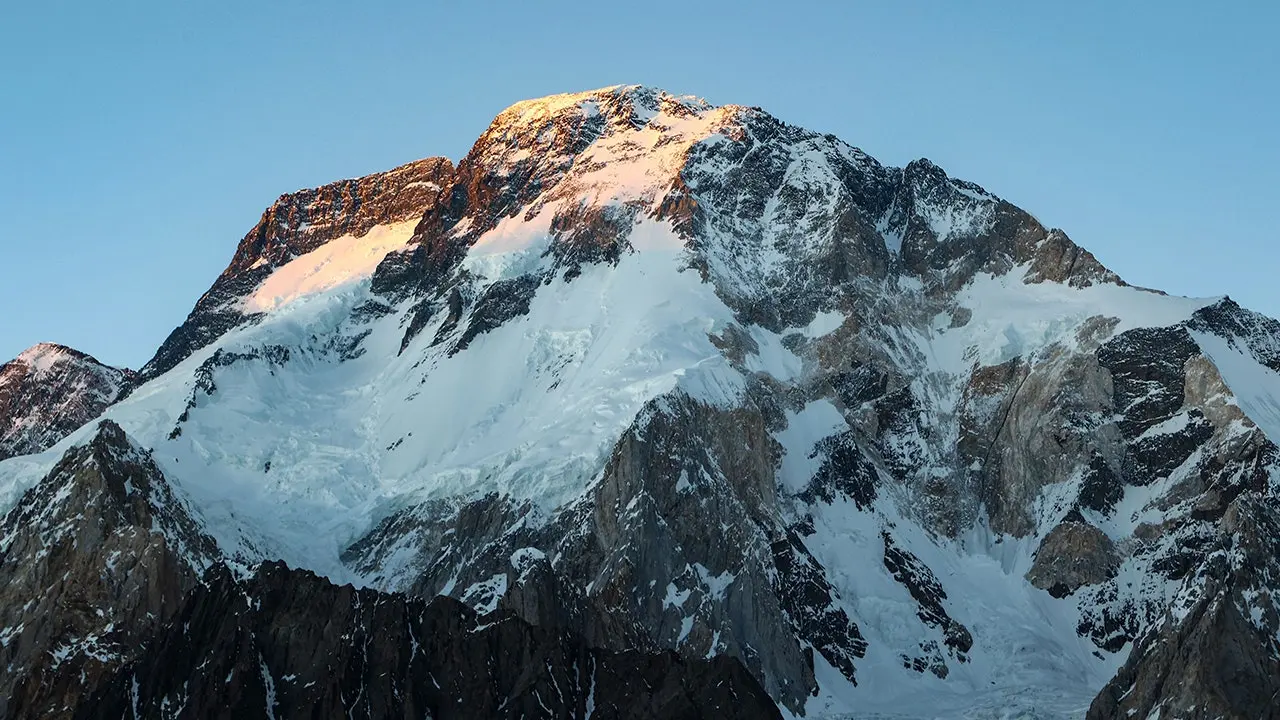
The Karakoram mountain range of northern Pakistan is a place of mythic beauty and staggering scale, home to some of the most dramatic, vertical topography on Earth. Within this formidable wilderness of ice, rock, and sky stands Broad Peak, the world’s twelfth-highest mountain, rising to an immense elevation of 26,414 feet. Known historically as K3, Broad Peak features a summit ridge that spans over a mile, presenting a deceptive and exhausting final approach for climbers. It was on the slopes of this towering giant that a vibrant, international expedition of at least ten mountaineers met with sudden and catastrophic disaster. On a fateful Thursday, as the climbers navigated the treacherous high-altitude terrain, a massive avalanche swept down the mountain, instantly transforming an ambitious journey of human triumph into a heart-wrenching survival crisis. For those who choose to venture into the “death zone” above 8,000 meters, the attraction is deeply personal, often described as a spiritual quest to test the limits of human endurance against the absolute grandeur of the natural world. Yet, this extreme altitude offers no mercy and leaves absolutely no margin for error, as shifting snowpacks can turn deadly in a matter of seconds. When the wall of snow and ice came hurtling down, it shattered the hopes of the expedition and triggered an immediate, desperate race against time to locate survivors. Among those caught in the devastating slide was Sarah Mallory Geis, an American climber whose profound passion for the high peaks had drawn her to this remote corner of Pakistan, only for her journey to end in unimaginable tragedy. As the news of the avalanche rippled outward, it left families around the world suspended in an agonizing state of dread and anticipation, waiting for any sliver of information to emerge from the silent, frozen heights of the Karakoram. This harrowing incident serves as a stark reminder of the sheer, unpredictable power of nature, which can instantly dismantle even the most meticulously planned mountaineering expeditions.
On Friday, the grim reality of the disaster began to materialize as a dedicated rescue team, battling extreme wind chill and treacherous conditions, managed to locate and recover the remains of three climbers, including Sarah Mallory Geis. Geis, a dedicated mountaineer whose passion for the outdoors was well-known among her friends and family in the United States, had spent months preparing for the physical and mental demands of this expedition, viewing it as the culmination of her climbing career. Alongside the American climber, rescuers recovered the bodies of Nadhira Ahmed Abdullah Al Harthy of Oman and Pur Bahadur Gurung of Nepal, two seasoned mountaineers who possessed a deep, lifelong connection to the high-altitude world. Nadhira Al Harthy was a pioneering figure in Omani mountaineering, celebrated for her courage and determination as she broke societal barriers to become the first woman from her country to scale Mount Everest, inspiring countless women across the Middle East to pursue their own ambitious dreams. Pur Bahadur Gurung of Nepal represented the very soul of the mountaineering community—an incredibly strong and humble climber whose expertise, resilience, and quiet dedication made these extraordinary expeditions possible for climbers from all over the world. The recovery of their bodies brought a somber, devastating closure to their families, while casting a heavy shadow of profound grief over the global climbing community. Each of these individuals left behind grieving families, stories of remarkable perseverance, and a legacy of bravery that will forever be etched into the icy slopes of Broad Peak. Their tragic deaths serve as a sobering, painful reminder of the immense human cost associated with exploring the edge of the world, where the breathtaking beauty of the landscape is inextricably linked with its mortal peril. The tragic loss of Geis, Al Harthy, and Gurung leaves a profound void not only in their immediate families but within the broader global community of climbers who understand the shared risks of the high altitudes.
While the recovery of these three climbers brought a tragic certainty, the fate of the remaining members of the expedition remained shrouded in terrifying uncertainty. The missing climbers hailed from a diverse array of nations, including Nepal, Pakistan, China, and the United Kingdom, reflecting the truly global fellowship that defines modern high-altitude mountaineering. Among the most shocking names on the list of the missing was Nirmal “Nims” Purja, a 43-year-old British mountaineer of Nepalese origin who had achieved legendary status in the climbing world. Purja, a former member of the elite British Special Boat Service, famously captured the world’s imagination in the Netflix documentary “14 Peaks: Nothing Is Impossible,” which detailed his mind-boggling achievement of climbing all fourteen of the world’s 8,000-meter peaks in just over six months—shattering the previous record of seven years. His boundless optimism, immense physical strength, and infectious philosophy that any obstacle can be overcome had inspired millions of people around the globe to redefine their own limits. The anxiety surrounding his disappearance has been compounded by his vast social media following, where millions of people have been left waiting in breathless suspense, praying for a miracle that would match his famous slogan of defying the impossible. To hear that a climber of Purja’s legendary skill, experience, and resilience was among those lost in the avalanche sent shockwaves of disbelief through the global climbing community. This stark reality illustrated with terrifying clarity that at 26,000 feet, the mountain makes no distinctions between novices and legends, and even the most accomplished human beings are ultimately at the mercy of the unpredictable forces of nature. The mountaineering community continues to hold onto hope, sharing messages of strength and solidarity across social media platforms, as they refuse to give up on the possibility of a miraculous survival story for Purja and his companions.
The search and rescue operation mobilized in the wake of the avalanche has been nothing short of heroic, conducted under the most grueling, hazardous, and physically exhausting conditions imaginable. Sajid Hussain, the deputy director of the tourism department in Gilgit-Baltistan, described the disaster area as incredibly “remote and difficult,” a vertical wilderness of unstable snow, hidden crevasses, and sheer rock faces where even a minor misstep could prove fatal for the rescuers. Under the leadership of Irfan Arshad, the president of the Alpine Club of Pakistan, rescue teams consisting of highly skilled local high-altitude porters and specialized mountain rescue personnel have pushed themselves to their absolute physical limits. To aid in the search, rescuers deployed advanced drone technology to scan the vast, white expanses of the avalanche path from a safe distance, capturing chilling footage that indicated the presence of several more bodies buried beneath the heavy snow. The use of these unmanned aerial vehicles has become a critical asset in modern mountain rescue, allowing searchers to examine treacherous debris fields and avalanche chutes that are far too unstable for human foot traffic. The Gilgit-Baltistan police emphasized in a public statement that the rescue operations were being conducted with the “utmost caution,” as the extremely rugged terrain and volatile weather presented a constant threat of secondary avalanches that could easily claim the lives of the rescuers. Despite these immense dangers, these brave individuals have continued to put their own lives on the line, driven by a profound sense of duty and a determination to bring every missing climber home, whether they are survivors clinging to life or souls to be returned to their grieving families. The bravery of these local Pakistani high-altitude porters cannot be overstated, as they regularly risk their own lives to save foreign climbers, demonstrating an extraordinary level of heroism and selflessness on the slopes of the world’s highest mountains.
The Karakoram range is notorious among mountaineers for being significantly more unpredictable and dangerous than the Himalayas of Nepal, characterized by steeper angles, colder temperatures, and highly volatile weather patterns that can change in an instant. Broad Peak, situated near the legendary and deadly K2, presents intense physical challenges, particularly in the afternoon when rising temperatures can destabilize the snowpack and trigger catastrophic slides. This volatile environment has been made even more complex in recent years by the undeniable impacts of global climate change, which have caused glaciers to recede and snow bridges to weaken, leading to an increase in sudden, unpredictable avalanches during the peak climbing season. The psychological toll on the families of the missing during such a crisis is almost unbearable, as they are forced to wait for updates from a region where communication is sporadic at best and weather conditions can halt operations at a moment’s notice. This agonizing reality was fully realized on Friday night when deteriorating weather conditions and plummeting temperatures forced search teams to temporarily halt both aerial and ground operations. In these quiet, freezing hours of suspension, the mountain reclaimed its silence, leaving the rescue teams to wait anxiously at base camp for the storm to pass so they could resume their grim but necessary task. This delicate, agonizing dance between hope and despair is a familiar one in the high-altitude climbing world, where the line between a triumphant return and a quiet, icy grave is often as thin as a single gust of wind or the sudden shift of a snow bridge underfoot. For the families waiting in distant countries, the silence from the mountain is a heavy, physical weight, punctuated only by occasional satellite phone updates and the persistent hope that the next transmission will bring positive news.
As the world watches and waits for further news from Gilgit-Baltistan, this tragedy prompts a deeper, more profound reflection on the human spirit and the irresistible allure of the world’s highest places. Why do human beings continue to journey to these extreme heights, knowing that they may pay the ultimate price? The answer lies in the unique, transformative experience of standing above the clouds, a place where the trivialities of daily life fade away, leaving only the raw, majestic essence of existence and a profound connection to the sublime. Those who lost their lives on Broad Peak, and those who remain missing, were not merely thrill-seekers; they were dreamers and pioneers who sought to touch the sky and discover the true boundaries of their own potential. Though their journeys were cut short by the devastating force of the avalanche, their courage, passion, and indomitable spirit remain a lasting inspiration to all who dare to dream greatly. The ongoing efforts of the rescue teams, standing ready to return to the mountain’s upper reaches as soon as the weather permits, embody the very best of humanity—selflessness, bravery, and an unwavering commitment to one another in the face of nature’s greatest trials. In the end, the story of Broad Peak is not just one of tragedy, but of the enduring human bond that unites people across borders, cultures, and languages in their shared pursuit of the extraordinary. Whether the coming days bring stories of miraculous survival or further sorrow, the legacy of these climbers will endure, forever preserved in the silent, majestic, and eternal peaks of the Karakoram. Their memories will be honored by future generations of climbers who will look up at Broad Peak not just with awe for its immense height, but with deep respect for the brave souls who dared to challenge its formidable slopes.