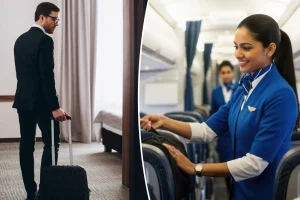





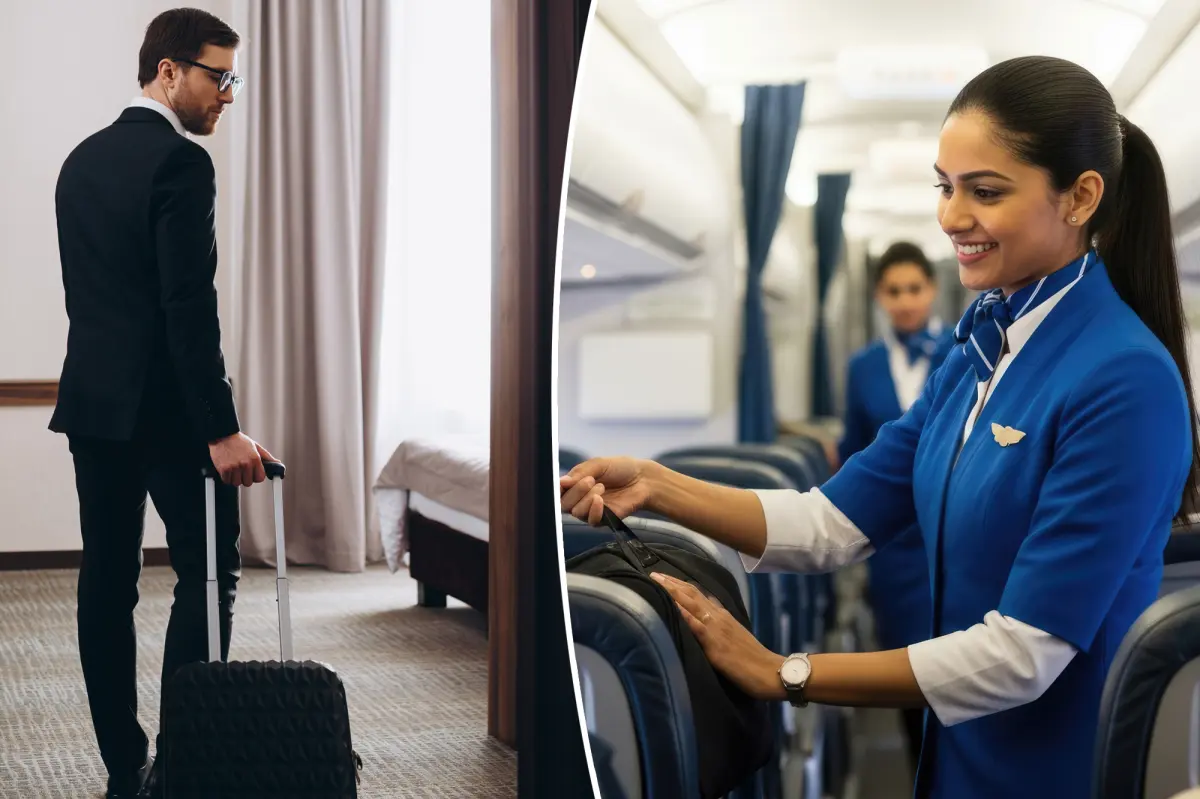
Before they even set down their suitcase, many flight attendants run through what they call a “hotel room autopsy.” It sounds dramatic, but it’s really just a quick, practical safety ritual—six simple steps that help them feel grounded and secure before they unpack and settle into another anonymous hotel room. For airline crew members who spend hundreds of nights a year in hotels across the world, this routine is second nature. It’s not born from fear or paranoia, but from experience. As a recent post from CabinCrew24, an online community for flight attendants and aviation professionals, put it: “This is not a nervous habit. It comes from years of sleeping in strange rooms, in different countries, under different fire rules and different levels of hotel security.” Think about it: after a long flight, you land in a city you may have visited a dozen times, walk into a room that looks like every other hotel room you’ve ever seen, and the last thing you want is to worry about whether the door is locked or whether you’d know where to go in an emergency. Flight attendants have learned that spending two minutes checking these things in advance saves them hours of restless anxiety later. Their approach is so sensible that much of it aligns with official advice from the U.S. State Department on hotel safety, which is reassuring for anyone who travels. It’s not about expecting something bad to happen; it’s about giving yourself license to relax fully once the door is closed. In a way, it’s like checking that your seatbelt is fastened before you start driving—a small habit that quietly makes everything else feel more normal, more manageable, and more yours. The real beauty of the hotel room autopsy is that it turns a strange environment into a familiar one, one small check at a time.
The first step in this routine is simply scanning the room. Flight attendants keep the door propped open while they do a quick visual sweep, partly to make sure no one is still inside and partly to confirm that housekeeping has finished cleaning. They look around at the space the way you might glance around a rental car before pulling out of the lot—not because you expect it to be damaged, but because you want to know what you’re working with. Bathroom, shower, bathtub, closets, and behind the curtains are all common hiding spots, and they get a quick check too. Aura Martinez, a New York-based flight attendant with nineteen years of experience, told Fox News Digital that she just wants to familiarize herself with the space and make sure everything looks as it should. She added, “It doesn’t need to become a 20-minute inspection.” That’s the key point: this is not an obsessive search for danger. It’s a casual but deliberate awareness, the kind of thing you do without really thinking about it once it becomes a habit. Many travelers already do a version of this without calling it anything. They walk into a hotel room, glance around, peek at the bathroom, check the view, and maybe look behind the curtain before letting the door click shut behind them. The difference for flight attendants is that they have turned this instinct into a consistent practice—a reliable little checklist that helps them feel oriented and at home no matter where in the world they are. It’s a way of saying to themselves, “I’ve checked the space, I’ve seen it all, and now I can let my guard down and actually enjoy being here.” That sense of orientation is invaluable, especially for people who wake up in a different bed almost every morning and need to know, at a glance, exactly where they are.
Next comes knowing the emergency exit’s location. Frequent travelers make a point of checking the nearest stairwell and reviewing the evacuation map printed on the back of the hotel room door. In a real emergency, you don’t want to be studying that map for the first time while your adrenaline is pumping and the hallways are filling with smoke. Brian Rooney, a Texas-based travel advisor and founder of GetCruiseInfo.com, put it plainly: “In an actual emergency, that’s not when you want to be figuring out the floor plan for the first time.” Martinez takes this advice even further, recommending that you know whether you turn left or right when you leave your room, approximately how far the stairwell is, and, if possible, how many doors you would pass before reaching it. That kind of concrete detail matters because when emergencies happen, people don’t think clearly. Your brain narrows, your senses flood, and you fall back on whatever you already know. If you’ve memorized the path to the exit before you even hang up your coat, you don’t have to think—you just move. It’s the same logic behind pointing out emergency exits when you board an airplane, as flight attendants do before every single takeoff. On a plane, passengers often tune out that little speech, but after years of hearing it, crew members know exactly why it matters. You may never need that information, but if you do need it, there is no time to learn it. A minute of attention up front can make the difference between drifting through an unfamiliar building and walking through it with quiet confidence. For flight attendants, knowing their escape route is not just a safety precaution; it’s a mental anchor that lets them sleep peacefully in a place they’ve never seen before, in a city they may never visit again.
The next two steps in the hotel room autopsy focus on the basics of security: locks and communication. Flight attendants check the door locks, the deadbolt, the security latch, and the windows to make sure everything closes and stays closed the way it should. This is the kind of thing most travelers take for granted, but it’s worth a moment of active attention. A lock that sticks, a window that rattles, or a latch that doesn’t quite catch is not something you want to discover at midnight when you’re already half-asleep. Along with the locks, crew members also take a moment to check that the room phone works. In an age when everyone relies on cell phones, this easy step is often overlooked. But sometimes your phone dies, there’s no charger handy, or you’re in an area with no signal. A working room phone is a simple, reliable lifeline to the front desk or emergency services, and it only takes a second to test. Brian Rooney also offers another crucial piece of advice: if someone unexpectedly knocks on the door claiming to be hotel staff, call the front desk and verify before opening it. “You can be courteous and still be cautious,” Martinez added, and that balance is exactly what this whole ritual is about. You’re not treating the hotel staff like suspects; you’re just making sure that the person at your door is exactly who they say they are. That kind of calm, polite verification is something anyone can do. It’s the difference between leaving your door politely closed and awkwardly peering through the peephole hoping no one notices. Flight attendants have learned that a few small checks make them feel less vulnerable, not more. The goal is not to imagine every worst-case scenario, but to quietly cover the basics of everyday safety, so that when the door is closed, you can truly relax.
The final step is the one that feels most like a pro tip: placing a portable door alarm or a door wedge at the base of the door before you settle in for the night. These little devices are cheap, lightweight, and invaluable if you want an extra layer of reassurance, especially when you’re traveling alone. They don’t replace the hotel’s own locks, but they do provide a small audible signal if someone tries to enter while you’re sleeping. Rooney called these tools “an additional layer of reassurance,” but he was quick to point out that they shouldn’t replace checking that the hotel’s own locks work correctly. This is a tiny action that makes a big difference psychologically: once that wedge is in place, your brain knows that the door is not just closed, but secure. Martinez also swears by packing a small flashlight, which she calls “incredibly underrated.” In a power outage, in a dark hallway, or just when you need to find your phone at 3 a.m., a flashlight is a quiet little companion that makes unfamiliar spaces feel less intimidating. These portable comforts are the kind of details that frequent travelers accumulate over time. They’re not about expecting disaster; they’re about feeling capable and in control. A door alarm won’t make you a nervous wreck—it will do the opposite. It gives you permission to sleep deeply because you know that if anything moved, you would hear it. It turns a hotel room into a kind of cocoon, a place where you can let your guard down because you’ve already done the small things that matter. Flight attendants understand this better than almost anyone. They don’t travel with a suitcase full of fear; they travel with a toolkit of calm, and the door wedge is simply one more tool in that kit.
At the heart of the hotel room autopsy is not a grim view of the world, but a refreshingly practical one. Rooney summed it up beautifully: “A minute or two spent checking the room, the lock and the emergency exit lets you get on with enjoying the trip.” That’s the whole point. The routine is designed to free you from worry, not to create more of it. Martinez echoed that sentiment when she said, “The purpose is to be prepared, not frightened.” In that spirit, this little six-step ritual isn’t just for flight attendants. It’s for anyone who has ever lain in an unfamiliar bed, listening to strange sounds, wondering whether the door is actually locked or where the stairs are. It’s for solo travelers who want to feel grounded, couples who want to relax after a long flight, and families who want to know their hotel room is safe before the kids jump on the beds. You don’t need to turn it into a ceremony or a checklist that consumes your attention. The beauty is in the lightness of it: a quick look around, a glance at the map, a test of the lock and phone, a small wedge under the door. Once those tiny things are done, your mind is free to shift back to what actually matters—the rest, the adventure, the new city waiting outside your window. Flight attendants have mastered this philosophy because they do it so often, but it’s something we can all borrow. The hotel room autopsy is less about searching for danger and more about creating comfort. It’s a small way of saying to yourself: I am safe here, I know where I am, and I can fully enjoy this trip. And that quiet confidence is the best travel companion you can carry.