




The Face of Fatherhood: Why We See Wider Faces as Better Parents
There’s a moment we’ve all experienced—meeting someone for the first time and feeling an instant, almost instinctive sense of who they are. Perhaps it’s the man with the strong jawline who seems reliable before he’s said a word, or the woman with the warm expression who feels trustworthy from the very first glance. We like to believe we’re not superficial, that we judge people on the content of their character rather than the contours of their face. But science increasingly suggests otherwise, and a fascinating new study has taken this idea into surprisingly domestic territory. Researchers have discovered that men with wider faces are perceived as more capable parents—more likely to protect and nurture their children—than men with more narrow, oblong features. It’s a finding that touches on everything from workplace dynamics to dating apps, from courtroom decisions to the ancient evolutionary pressures that shaped human social perception. The broad generalization that emerges is both uncomfortable and intriguing: our faces, it seems, may be telling stories about us that we never intended to share.
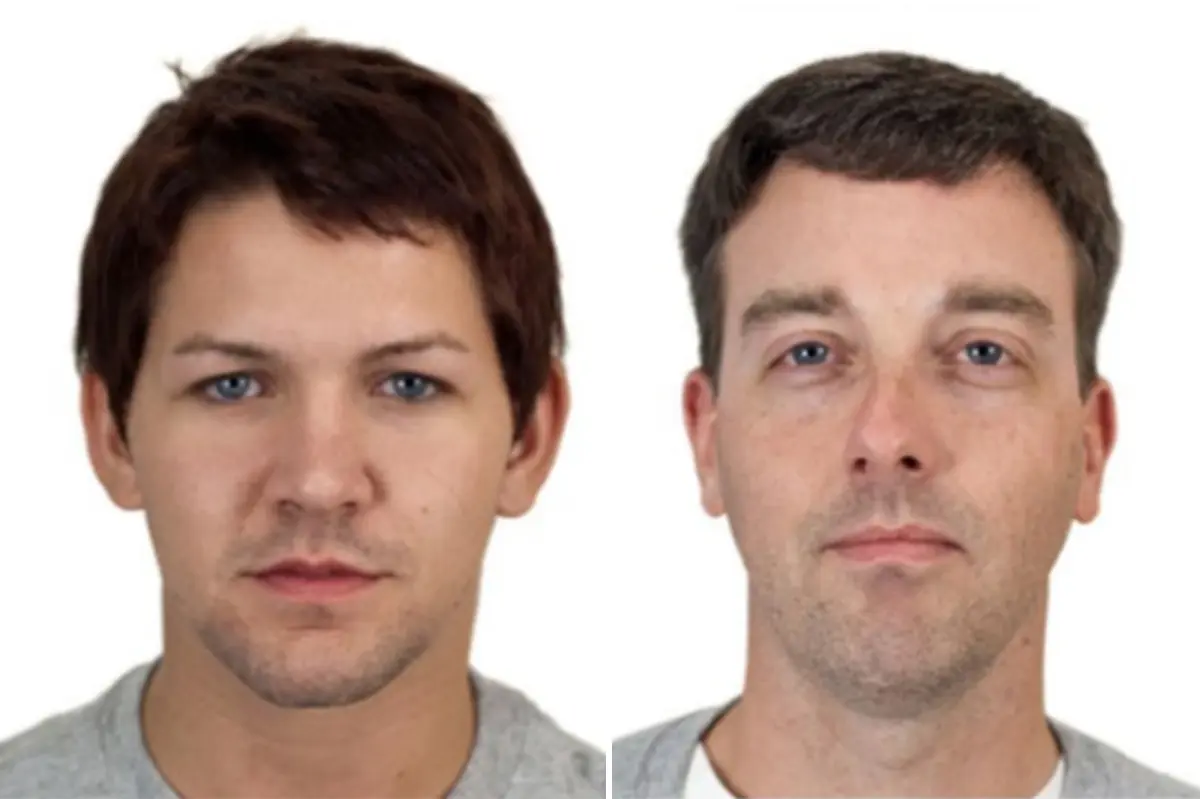
The study, published in the journal Evolutionary Psychological Science, centers on something researchers call facial width-to-height ratio, or fWHR for short. This is a measurable feature of human faces: the width of the face compared to its height, from the upper lip to the top of the brow. People with high fWHR have faces that are relatively wide and squatter, like a rugby ball viewed head-on. Those with low fWHR have faces that are more elongated, like an oval or a stretched rectangle. Previous research had already hinted that this dimension of facial structure carries social significance. Studies had found that wider male faces were associated with perceived physical strength, with readiness for aggressive confrontation, and with suitability for roles as protectors—the kind of men you might imagine standing guard at the entrance of a village in our ancestral past. But this new work, led by Mitch Brown, a teaching assistant professor in the Department of Psychological Science at the University of Arkansas, wanted to explore a different angle entirely. The logical next step, Brown explained, was to probe what he called the “tradeoff between protection and nurturance”—the balance between being strong enough to defend a family and being gentle enough to care for one.
To find out whether these face-based assumptions actually hold up—or perhaps, to discover whether our instincts are pointing us toward the kinds of fathers we should wish for—the research team designed a deceptively simple experiment. They recruited 101 graduate students and showed them photographs of male faces, asking each participant to rate how well they believed the men in the images could protect and nurture their own future children. Half of the faces displayed high width-to-height ratios—those broad, squatter features—while the other half featured the opposite, more elongated facial proportions. The results were striking, and the pattern was unmistakable. When it came to selecting men who seemed best suited for fatherhood, the participants preferred the wider-faced candidates by a substantial margin, choosing on average 2.78 men with high facial width-to-height ratios compared to just 1.15 men with more narrow features. This wasn’t a subtle tilt; it was a landslide. The implications extend beyond simple preference—they suggest that when we look at a man’s face, we’re unconsciously making decisions about his fitness as a parent, even before we know anything else about him.
But the researchers didn’t stop there. They wanted to ensure the effect was robust, so they conducted a second study with a different approach. This time, 101 participants were tasked with assembling a team of five men who would be best at protecting offspring, again based solely on photographs of faces. The results mirrored the first experiment almost exactly. The ideal guardians, according to the participants, were overwhelmingly those with broader faces. Once again, the average selection was 2.78 men with high facial width-to-height ratios versus just 1.15 men with low ratios. The consistency of these numbers is remarkable, suggesting that the perception of wide-faced men as capable fathers is deeply entrenched in human psychology. Additionally, the squatter-faced men were also associated with higher levels of aggression and physical prowess—which, intriguingly, may cut both ways. On one hand, a man who can be aggressive might be well-suited to defending his children from threats. On the other hand, there’s a potential tension between the capacity for violence and the gentleness that nurturing requires. Yet the study participants seem to have reconciled this tension in favor of the wide-faced men, perhaps seeing their aggression as a protective resource rather than a liability when it comes to parenting. This preference might reflect an ancient calculus in human psychology: strength is valuable in a father, even if it comes with an edge.
At first glance, this research might seem to reinforce the idea that humans are hopelessly shallow, judging people by their appearance like the villainous stepmother in a fairy tale. But Brown and his colleagues argue that this apparent superficiality may actually be a brilliantly efficient adaptation. The effects in this study are fairly large, Brown noted, which “may reflect an apparently loud signal value in the faces.” In other words, the width of a man’s face may have historically provided genuine, honest information about his capabilities and temperament—the kind of information that could matter profoundly for survival in uncertain environments. “Ancestral conditions likely saw individuals having to infer information relatively quickly without having the chance for fuller interactions,” he explained, “which may lead to an advantage in forming stereotypes with minimal information.” This makes a kind of evolutionary sense: if you’re a mother in a small foraging group, choosing a mate who can both defend your children from predators and protect you from hostile outsiders is not a trivial decision. Those early humans who could read a face at a glance and make quick judgments about a potential mate had a survival advantage over those who deliberated too long. Over thousands of generations, that instinct became hardwired into our psyche, shaping the way we still respond to faces today in contexts far removed from savannah survival.
However, as with any intriguing finding in psychology, this study comes with important caveats, and it would be wise to avoid drawing overly broad conclusions from it. Critics and the researchers themselves have noted that the study failed to account for several potentially significant variables. Most notably, the research didn’t factor in the men’s body mass—broader faces often come with broader bodies, and it’s possible that participants were responding to perceptions of overall size rather than face shape specifically. There’s also a deeper question that the study can’t answer: do these facial dimensions actually correspond to real parenting behaviors? That is, are wider-faced men truly better fathers, or is this simply a persistent illusion—a stereotype that our minds cling to even when it doesn’t reflect reality? The study measured perceptions, not actual parenting styles, temperaments, or physical abilities. It’s entirely possible that a man with a narrow face might be an extraordinarily nurturing and protective father, while a broad-faced man might struggle with intimate caregiving. Brown himself acknowledges this gap, noting that “having more information about a person beyond initial impressions would be informative in broader perceptions.” In other words, while our instincts may be useful starting points, they are not the whole story, and we should resist the temptation to let them override what we can learn about people through actual interaction and experience.
Looking forward, the implications of this research extend far beyond academic curiosity, and Brown has his sights set on some intriguing next steps. “My next steps are to apply these ideas into legal domains,” he said, suggesting that the way we perceive faces could influence everything from witness testimony to jury decisions to judgments about character in courtroom settings. If humans are unconsciously biased toward seeing wider-faced men as more protective and nurturing, might that bias extend to decisions about parental custody, criminal sentencing, or assessments of credibility? Brown cautions that even if these perceptions have their roots in ancestral conditions and might contain, as he puts it, “kernels of truth,” it would nonetheless be “inappropriate for perceivers to rely on visual information as the basis of legal decision-making without concomitant evidence.” This is a crucial reminder for a society that increasingly values fairness and evidence-based reasoning. Our evolved instincts, while remarkable, were shaped for a world very different from the one we live in today. In modern life, we have the luxury—and the responsibility—to look beyond the initial signal and gather more information before making judgments that matter. The face may be a window into human nature, but it’s only one window among many. As we navigate a world populated with faces of every width and height, perhaps the most humanizing lesson we can take from this research is not that our instincts are useless, but that they’re incomplete—and that the best kind of understanding, whether of a potential parent, a colleague, or a stranger, still requires us to look deeper, to listen fully, and to resist the seductive ease of deciding who someone is at a single glance.