







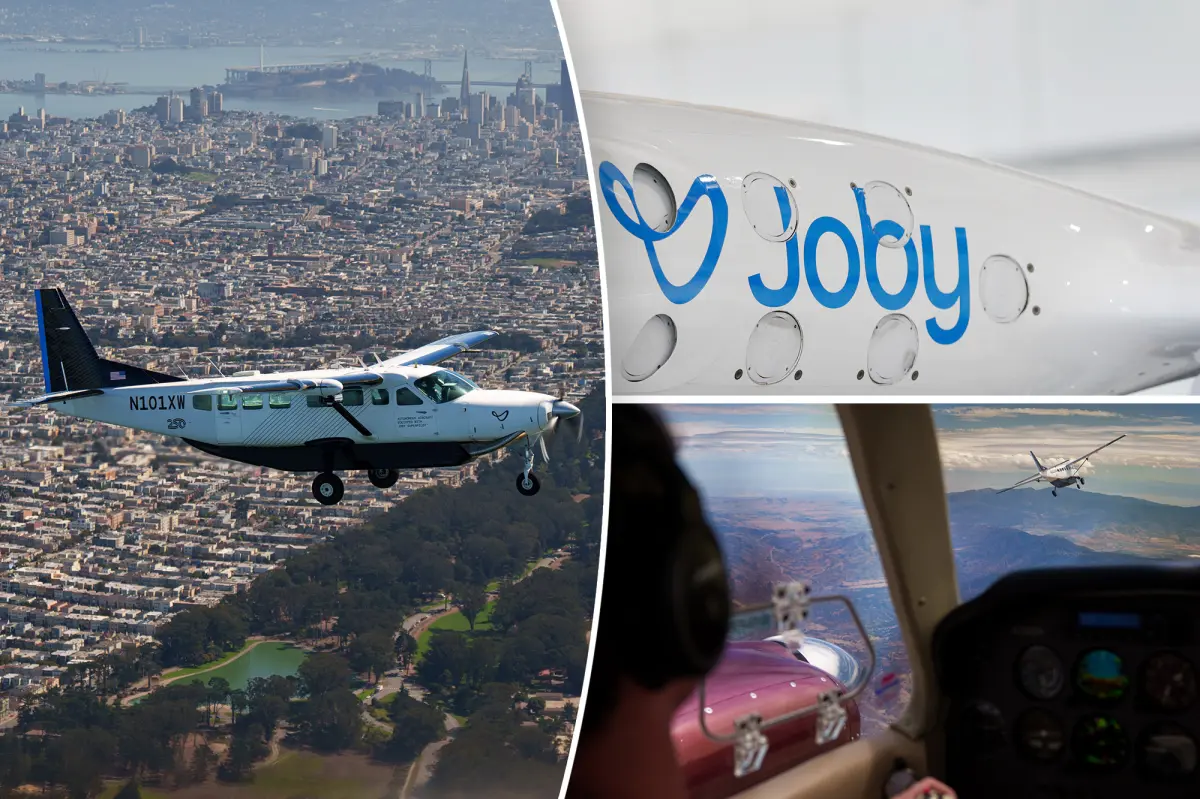
It began on a quiet September morning in Concord, California, with a single-engine Cessna Caravan sitting on the tarmac. The familiar shape of the propeller-driven workhorse, the kind of aircraft that has ferried passengers over remote terrain for decades, looked as it always had. But inside the cockpit, there was no pilot in the left seat. No one was gripping the yoke, checking the fuel gauges, or running through a pre-flight checklist. The only presence guiding the aircraft was a set of algorithms, sensors, and autonomous software. When the plane lifted off on September 7, it wasn’t just another flight. It was the start of a journey that would put it in the record books: the first fully autonomous airplane to cross the United States. Over the next week, that unassuming Cessna would cover more than 3,000 miles of airspace, battle storms, navigate some of the busiest airports in America, and land safely on the other side of the continent. It was a quiet, mechanical declaration that the age of autonomous aviation had arrived, not with a roar of a jet or a dramatic launch, but with the steady hum of a propeller and the patient logic of software. JoeBen Bevirt, founder and CEO of Joby Aviation, the company behind the project, put it simply: “This journey across America offers a glimpse into a new era of aviation.” For anyone watching the plane’s progress, it was impossible not to feel a little awe at how ordinary it looked, and how extraordinary it truly was.
The flight itself was not a simple, straight shot from coast to coast. In fact, the route was deliberately complex, designed to prove that autonomous systems could handle the messy, unpredictable realities of real-world aviation. After leaving California, the Cessna set down at Alliance Airport in Fort Worth, Texas, and later touched down at Shaw Air Force Base in South Carolina. It wasn’t just the distance that mattered; it was the obstacles along the way. The aircraft had to navigate thunderstorms, adjust to shifting winds, and share airspace with other planes, all without human hands on the controls. Perhaps most tellingly, the autonomous system flew into and out of Phoenix Deer Valley Airport, one of the busiest general aviation airports in the country. For a human pilot, that would be a test of nerves: radio chatter, unpredictable traffic, last-minute instructions from air traffic control. For the autonomous Cessna, it was another set of inputs to process, another set of decisions to make with calm efficiency. The plane handled everything with what can only be described as flying colors. It taxied, took off, cruised, made approach after approach, and landed without a single human intervention. The journey took about a week, from September 7 to September 14, covering 3,199 miles. Along the way, the aircraft did more than just prove a technical capability; it demonstrated a kind of trust. Trust that software can make split-second decisions. Trust that algorithms can understand weather. Trust that machines, at least in this case, can be every bit as reliable as a seasoned aviator, and perhaps even more so in some ways.
When the Cessna finally came to rest on the other side of the country, the moment was carefully chosen. The aircraft performed a symbolic flyover of the Flight Monument in Kitty Hawk, North Carolina, a place deep with meaning in the history of aviation. It was there, in 1903, that Orville and Wilbur Wright made the first powered flight, a fragile, 12-second hop that changed the world forever. Now, more than a century later, an airplane with no pilot aboard circled above that sacred ground, paying tribute to the dreamers who started it all. It was a moment that connected two eras: the day humans first conquered gravity with fabric, wood, and daring, and the day machines began to conquer the skies on their own. The flyover was more than a publicity stunt; it was a statement about lineage. Autonomous flight didn’t come out of nowhere. It is the next chapter in a story that began with the Wright brothers, a continuation of their spirit, if not their methods. After the ceremony in the air, the Cessna prepared for a return journey to California, this time with scheduled stops in Washington, D.C., Kentucky, Kansas, Oklahoma, Utah, and Oregon. That route, too, would test the aircraft in different airspace, different weather systems, and different terrains. But by then, the point had already been made. The plane had crossed the continent once, and it was doing it again, almost casually, as if to say that the record wasn’t a fluke. It was a new normal.
For Joby Aviation, this flight was never just about setting records or impressing aviation enthusiasts. It was about laying the groundwork for a future where autonomous flight serves real human needs. Bevirt spoke directly to that vision in his statement, saying that autonomous aviation will help “connect remote communities, deliver critical supplies, respond faster to disasters, support military operations, and keep pilots out of harm’s way.” That last phrase is especially meaningful. It reframes the whole conversation around drones and self-flying planes. Too often, autonomy is talked about as if it will replace human pilots, coldly pushing people out of jobs. But Bevirt’s framing suggests something different: a future where machines take on the dangerous missions, the long hauls, the repetitive flights, and the life-threatening tasks, so that human pilots can be reserved for the moments that truly require human judgment, human empathy, and human courage. Imagine a medical supply plane flying through a storm to reach a remote clinic that would otherwise be cut off for days. Imagine a firefighting aircraft being sent into a wall of smoke and ash while the human crew stays safely on the ground. Imagine a military cargo plane flying through hostile territory without putting a pilot in the line of fire. These are not abstract possibilities; they are situations that will become increasingly practical as autonomous technology continues to prove itself. The Cessna Caravan’s cross-country flight was a demonstration of that enabling capability. It showed that autonomy can handle not just the perfect conditions, but the real, messy, unpredictable world.
Joby Aviation, however, is not just focused on autonomous versions of traditional aircraft. The company is also working to change the very shape of everyday air travel, with a project that feels like it was pulled straight out of a mid-century sci-fi cartoon. In April, Joby’s electric air taxi completed its first test flight in New York City, a quiet, futuristic machine that carried passengers between JFK Airport and Midtown Manhattan in just 15 minutes. The aircraft, which looks like a sleek egg with multiple rotors, took off and landed vertically, avoiding the need for long runways. It touched down at a Hudson Yards heliport operated by Blade, an urban transportation company that also offers rides in more traditional gas-powered helicopters. The contrast between the two experiences is striking. A conventional helicopter roars overhead, vibrating and loud, burning fuel and demanding constant attention from a pilot. Joby’s electric version, by contrast, hums quietly, emits no tailpipe pollution, and is designed to one day fly itself. Blade’s CEO, Rob Wiesenthal, watched the test and captured the moment with the kind of optimism that tends to accompany technological breakthroughs. “You’re watching the dawn of a new era of air mobility, urban air mobility,” he said. It is easy to dismiss such comments as hype, especially from a CEO at the unveiling of a new product. But the combination of the cross-country Cessna flight and the Manhattan air taxi suggests something real is happening. The aviation industry is not just inching forward; it is making leaps. And those leaps are being made not only in far-off test ranges, but in the crowded skies above one of the busiest cities in the world.
Taken together, these two achievements paint a vivid picture of what the future of flight might look like. It is a future where autonomy is not a science fiction fantasy, but a practical tool. A future where a Cessna can fly itself across the United States, docking easily at busy airports, while an electric air taxi shuttles passengers between Manhattan and JFK without a pilot at the controls. But with all the excitement, it is also worth remembering that the road to that future is still long. The Cessna’s record-breaking flight was a milestone, not a finish line. The aircraft was likely followed at every step by a ground crew, its systems monitored, its decisions reviewed. Air traffic control and regulators will need to establish new rules, new standards, and new forms of public trust before autonomous passenger flights become commonplace. People will understandably want to know: What if something goes wrong? Who is responsible? How can I trust a machine with my life? These are not unreasonable fears. They are the same fears that accompanied the first cars, the first commercial jets, and the first computers. And just as those technologies eventually won people over through demonstrations of safety and reliability, autonomous aviation will need to do the same. The Cessna Caravan that crossed the country without a pilot is more than a record-breaker. It is an ambassador for a new way of thinking. It has already shown that a machine can handle the thunderstorm, the crowded airport, the long flight across mountains and plains. What remains is for the rest of us to catch up, to accept that the skies are big enough for both human pilots and autonomous ones. The Wright brothers once pushed back against the impossible. Now, a century later, a plane without a pilot flew over their monument and paid its respects. That in itself is a testament to how far we have come, and a hint of how much further we might go.