




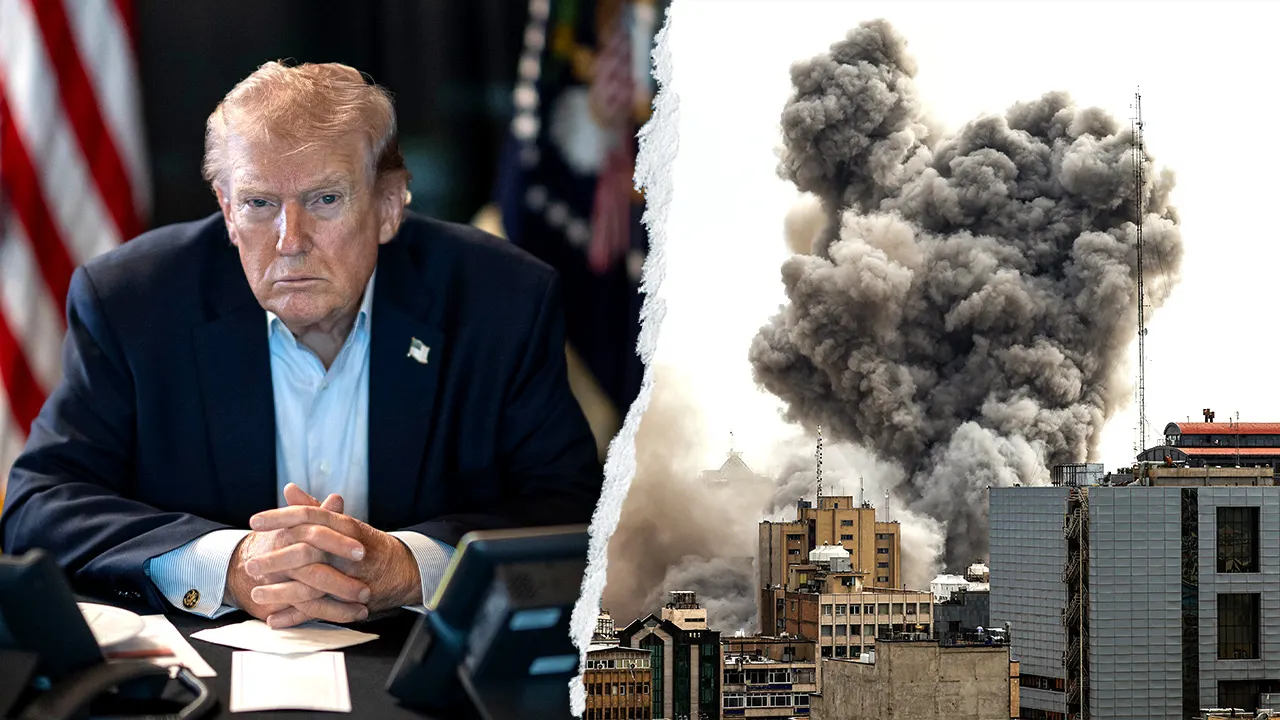
The fragile hope of diplomacy, which had briefly quieted the skies over the Middle East during a tense thirteen-day lull, shattered on Wednesday night as the United States resumed direct airstrikes inside Iranian territory. For those stationed on remote military outposts and the families waiting anxiously back home, the resumption of hostilities was a sobering reminder of how quickly a delicate peace can evaporate. The strikes, launched by U.S. Central Command, came as a swift response to a surprise ballistic missile assault directed at American service members, an escalatory move by Tehran that effectively ended President Donald Trump’s brief pause on offensive operations. This pause had been designed to give international negotiators a window to de-escalate the situation, but the sudden roar of rocket engines and defensive sirens instead signaled a violent return to direct combat between Washington and Tehran. For the men and women deployed in the region, the night was defined not by strategic calculations, but by the immediate, visceral reality of seeking cover under fire and the stark realization that the cycle of violence had restarted with renewed intensity. As U.S. bombers took to the air to deliver a retaliatory punch, the broader international community watched with growing dread, recognizing that this sudden shift represented a dangerous new phase in a conflict that threatens to consume the entire region. By striking targets directly within sovereign Iranian borders, Washington has demonstrated that the previous rules of engagement have been discarded in favor of a much more aggressive, forward-leaning posture. For the young soldiers huddled in bunkers, listening to the thunderous echoes of interceptions, the geopolitical arguments made in distant capitals are secondary to the immediate, terrifying struggle for survival. The administration’s decision to strike deep inside Iran represents a profound shift in deterrence strategy, signaling that proxy conflicts have officially given way to direct state-on-state confrontation.
To understand why Tehran chose this moment to launch such a brazen, unprovoked attack, one must look beyond conventional military capabilities and examine the psychological shifts driving the regime’s leadership. According to Behnam Ben Taleblu, a senior director and noted Iran expert at the Foundation for Defense of Democracies, the Islamic Republic is exhibiting a dangerous paradox: it is militarily weakened, yet increasingly confident and tolerant of risk. This paradox manifests as a willingness to test American resolve directly, matching aggressive rhetoric with equally aggressive deeds on the ground. For decades, the regime operated primarily through shadow networks and proxy forces, keeping Washington at arm’s length to avoid direct retaliation. However, this latest surprise ballistic missile attack indicates a fundamental evolution in their strategy, revealing a leadership that no longer fears the immediate consequences of a head-on collision with a global superpower. This shift creates an incredibly volatile environment where a strategic miscalculation could easily push both nations into an uncontrollable all-out war. The danger is that Tehran’s decision-makers may view American restraint not as an opportunity for peaceful dialogue, but as a sign of weakness or hesitation to be exploited. Consequently, the human cost of this strategic posturing is borne by the service members who must defend these remote outposts against an adversary that is increasingly willing to gamble with human lives to assert its regional dominance. For the ruling clerics and military commanders in Tehran, the physical deterioration of their conventional military hardware seems to be offset by a fervent ideological commitment to driving Western influence out of the Middle East. When a state becomes willing to absorb immense physical damage to prove a political point, conventional models of military deterrence begin to break down, leaving commanders on the ground facing an unpredictable and highly explosive threat landscape.
The specific details of Tuesday’s assault highlight the terrifying speed of modern warfare and the thin line between survival and catastrophe for those on the ground. At approximately 5:45 p.m. Eastern Time, the Islamic Revolutionary Guard Corps fired a barrage of ballistic missiles from launchpads within Iran, aimed directly at U.S. forces stationed in the region. Although defensive technology performed flawlessly—intercepting every single incoming projectile and preventing any immediate casualties or structural damage—experts warn against drawing a false sense of security from these technical successes. President Trump reacted to the close call with characteristic intensity, promising to “beat the f—ing s— out of them” and warning that Iran would face an unprecedented physical beating for its actions. While such fierce rhetoric is intended to project strength and reassure a worried public, analysts argue that relying on advanced missile defense systems to mitigate the threat is a dangerous political illusion. Viewing successful interceptions as a license to tolerate ongoing attacks ignores the persistent human trauma and political instability left in their wake. Every missile fired is a roll of the dice; eventually, technology will fail, a warhead will slip through the defensive net, and the human cost will be catastrophic. Therefore, the United States cannot afford to treat these intercepted attacks as harmless near-misses; they must be understood as highly lethal acts of war that demand a permanent, politically viable resolution rather than a temporary technological band-aid. The young men and women who must scramble into dark, concrete bunkers whenever the sirens wail bear an immense psychological burden. They know that their lives depend entirely on automated defensive algorithms and interceptor batteries that have mere seconds to track, target, and destroy incoming threats traveling at hypersonic speeds. This state of constant, high-alert dread is not sustainable, and treating these incidents as minor because “no casualties were reported” ignores the invisible wounds of chronic combat stress.
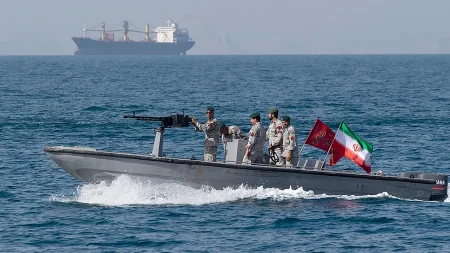
The current escalation is not happening in a vacuum; rather, it is the latest explosion in a sprawling, multi-front regional conflict that has been steadily expanding for nearly five months. Just weeks earlier in July, the human toll of this shadow war became painfully concrete when an Iranian drone strike targeted a housing unit at the Muwaffaq Salti Air Base in Jordan, killing two American service members and wounding several others. The names and faces of those fallen soldiers served as a grim reminder of the stakes involved, transforming abstract geopolitical discussions into a deeply personal tragedy for families across America. In response to this compounding violence, the geopolitical alliances of the region are shifting in dramatic and unprecedented ways. For the first time, Saudi Arabia has stepped out of the shadows to publicly align itself with the United States, participating in joint military operations targeting Iran-backed armed groups in Iraq following devastating drone strikes on Saudi oil facilities. This public partnership marks a critical turning point, drawing new battle lines across the desert and signaling to Tehran that its aggressive tactics have united its regional adversaries. At the same time, the waters surrounding the Arabian Peninsula have turned into a highly perilous war zone, with commercial tankers in the vital Strait of Hormuz finding themselves in the crosshairs of Iranian forces, disrupting global supply chains and threatening the lives of merchant sailors who have no part in this international duel. These merchant mariners, navigating giant container ships loaded with the world’s energy supply, find themselves acting as unwilling shields in a high-stakes standoff. The sudden involvement of Saudi forces in active combat operations alongside American pilots underscores just how desperate the situation has become, as regional powers realize that passive containment is no longer a viable strategy for preserving local stability.
As military assets clash in the skies and on the seas, the diplomatic avenues that might offer an exit ramp from this cycle of destruction are rapidly narrowing. At the heart of this diplomatic gridlock is the Strait of Hormuz, an incredibly narrow and vital maritime chokepoint through which a significant portion of the world’s daily petroleum supply must pass. Recognizing the catastrophic economic fallout that an all-out war in these waters would provoke, neighboring Oman recently proposed a plan for the joint, cooperative management of the shipping lanes to ensure safe passage for all commercial vessels. However, Iran flatly rejected this diplomatic olive branch, choosing instead to demand near-total sovereign control over the shipping routes, effectively holding the global economy hostage to its political whims. This rejection represents a devastating setback for those who believed that economic self-interest and rational diplomacy might prevail over ideological obstinacy. It also places a heavy burden on the international shipping community, which must now navigate these waters under the constant threat of seizure, harassment, or direct military attack. The failure to secure a cooperative agreement means that the Strait remains a highly volatile trigger point, where a single misunderstood maneuver by a naval destroyer or a commercial vessel could instantly ignite a wider global conflict, rendering the tireless efforts of diplomats moot in the face of uncompromising, hardline demands from Tehran. For the global community, this deadlock is not just a matter of macroeconomic statistics or rising oil prices; it represents a direct threat to the livelihoods of millions of people worldwide who depend on stable energy markets to heat their homes and power their businesses. The sheer stubbornness of the Iranian regime in refusing to share oversight of this international highway reveals a calculated strategy to maintain a permanent state of tension, keeping its adversaries off-balance even at the cost of its own economic isolation.
Breaking this toxic cycle of action and reaction requires a fundamental reassessment of how the United States conceptualizes military deterrence in the region. As Behnam Ben Taleblu warns, the greatest danger facing American policymakers is the temptation to allow Iran to dictate the pace and conclusion of these violent exchanges. In past confrontations, Tehran has successfully established a pattern where it launches an attack, absorbs a U.S. counterstrike, and then declares the “round” closed, effectively choosing when the shooting stops until it decides to strike again. If Washington continues to accept this dynamic, it inadvertently teaches the Iranian regime that the costs of aggression are entirely manageable and predictable, thereby undermining the very concept of deterrence. President Trump’s raw, uncompromising language signals a desire to break this pattern through overwhelming physical force, but a military response alone is insufficient if it is not accompanied by a robust, long-term political strategy. To truly protect American service members and restore stability to the Middle East, the United States must prepare for the inevitable counter-responses, showing the resilience and political will to sustain its posture until Tehran realizes that its aggressive campaigns are entirely self-destructive. Only by refusing to let the regime set the terms of engagement can Washington hope to break the endless loop of violence, ensuring that the sacrifices of those serving on the front lines are not lost to a perpetual cycle of short-term reactions, but are instead the foundation for a lasting, secure peace. This requires a shift from a reactive mindset to a proactive strategy that addresses the core ideological motivations of the Iranian leadership. It means recognizing that every military action must serve a clear political end, ensuring that our brave service members are not merely actors in an endless theater of geopolitical chess, but are protected by a national strategy that places their safety and long-term security above all else.