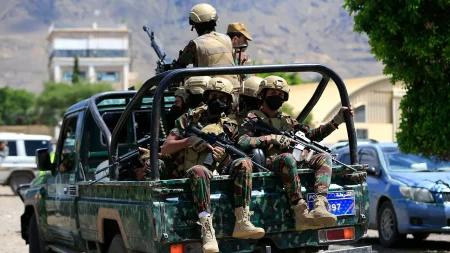





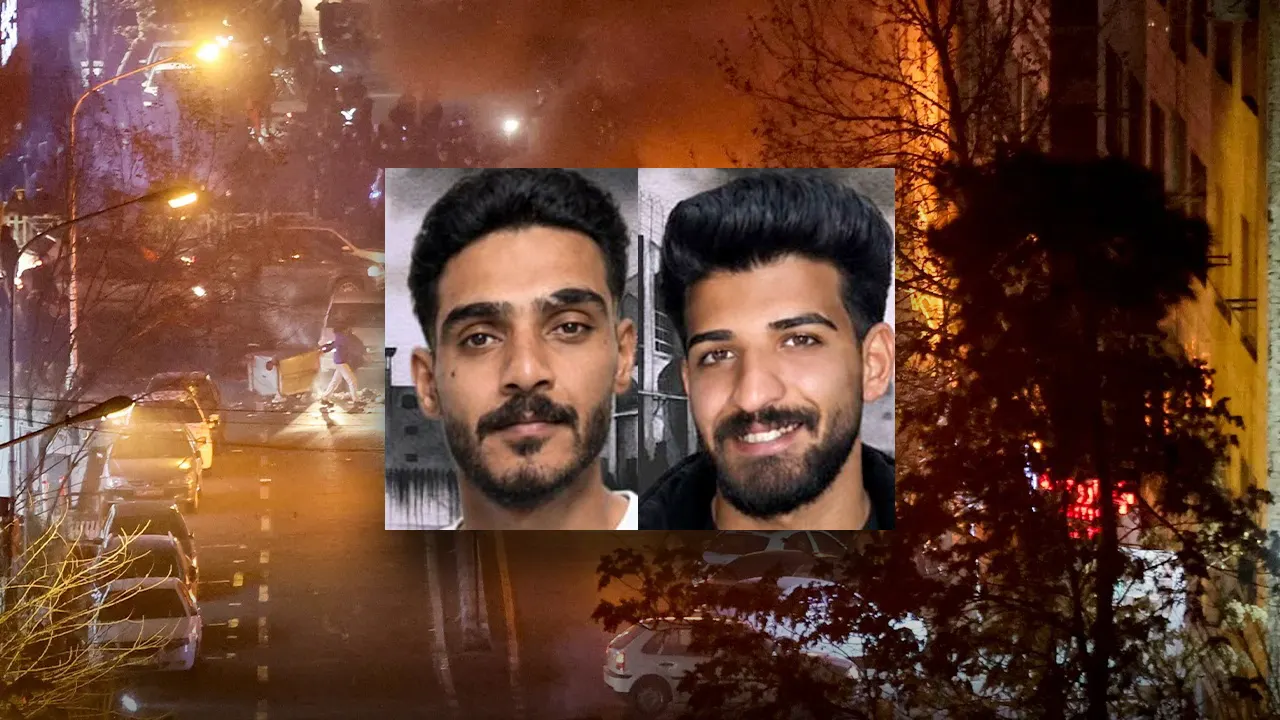
The dawn in Isfahan’s Shahid Alikhani Square did not bring the quiet promise of a new day, but rather the chilling chill of state-sanctioned violence as two young men, Abolfazl Sepahi Badjani and Amirhossein Safari Hosseinabadi, were led to the public gallows. They were hanged in the very streets where they had previously marched to demand basic human rights and economic dignity during the nationwide anti-government protests of January. The atmosphere was thick with tension, not just from the heavy, suffocating presence of paramilitary forces stationed on the surrounding rooftops and lining the streets, but from the raw, defiant grief of the citizens who gathered to watch. Risking their own lives and freedom, the crowd refused to remain silent in the face of this brutality, their voices rising in a desperate, unified chorus of “Dishonorable, dishonorable!” to condemn the executioners. In response, security forces fired tear gas into the crowd, seeking to choke out the voices of dissent and disperse the weeping onlookers. This grim scene, reported by both state-run media and the exiled opposition group National Council of Resistance of Iran (NCRI), serves as a painful reminder of the human cost paid by Iranian youth who dare to dream of a different future, transforming public squares from places of community into stages of terror.
These two lives were tragically snuffed out as part of a larger, systemic campaign of retribution known as the “Alikhani Square case,” which targets twelve young men whose only crime was wanting a life free from oppression. Just weeks earlier, on July 19, two other young souls, Erfan Esfandiari and Gol Mohammad Mohammadi, met the same horrific fate, bringing the death toll in this single case to four, while eight others now languish in dark cells, waiting for the knock on the door that signifies their own final walk to the gallows. These are not hardened criminals; they are sons, brothers, and friends, mostly in their late teens and early twenties, whose lives were filled with the normal aspirations of youth before they were swept into a nightmare of arbitrary arrests, enforced disappearances, and physical torment. The United Nations and human rights monitors have sounded frantic alarms, warning that the remaining defendants in this case face an imminent risk of execution under a system that treats human life as barter for political survival. For the families of these young men, the agony is unimaginable—forced to watch their children being systematically erased by a state that refuses to allow them even the dignity of a fair trial or a peaceful farewell.
The judicial proceedings that led to these executions are a profound mockery of justice, characterized by a complete denial of due process and a reliance on confessions extracted through intimidation and physical coercion. Both Abolfazl and Amirhossein were convicted under the broad, nebulous charges of moharebeh—which translates to “enmity against God”—and efsad-fil-arz, or “corruption on Earth,” archaic terms utilized by the judiciary to sanitize what human rights organizations call state-sponsored murder. The NCRI revealed that the defendants were stripped of their fundamental right to choose their own legal counsel, and even the court-appointed lawyers assigned to represent them were barred from reviewing the actual case files. In a single, closed-door sham hearing, their fates were sealed without any presentation of clear, individual evidence, violating every international standard of a fair trial. While the state’s official media channels attempted to paint a picture of a legitimate legal process complete with witness testimonies and crime scene reconstructions, those who know the inner workings of Iran’s judiciary recognize these claims as a thin veneer of legality designed to mask a ruthless apparatus of political retribution.
By returning to the medieval practice of public hangings, the Islamic Republic is not merely searching for justice; it is desperately attempting to orchestrate a culture of absolute fear to paralyze any future longing for reform. Human Rights Watch reports that at least fifty individuals have been executed over the past four months alone on similarly vague, fabricated national security charges, showcasing a dramatic escalation in state violence as the regime struggles to maintain its grip on power. Mahmood Amiry-Moghaddam, the director of Iran Human Rights, rightly categorized these public hangings as a cruel, performative form of state terror designed to send a chilling warning to every citizen that any voice raised against the government will be brutally and publicly silenced. Yet, the fact that the authorities felt compelled to deploy snipers on rooftops and heavily guard the execution site reveals a deep, underlying paranoia within the regime itself. It demonstrates that the authorities are fully aware of the volcanic undercurrent of public anger that simmered just beneath the surface of the crowd, revealing that the government’s display of absolute power is actually born out of a profound fear of its own citizens.
The international community has responded with statements of deep concern, yet many Iranian activists and human rights defenders feel that the global reaction remains tragically inadequate compared to the scale of the atrocities being committed daily. United Nations experts have issued stark warnings about the unfairness of the trials and the psychological torture inflicted upon the families, but these diplomatic condemnations often feel like empty words to those waiting in the shadow of the gallows. Maryam Rajavi, the President-elect of the NCRI, has urged the global community to move beyond passive observation and take concrete steps to hold the Iranian leadership accountable for what she describes as crimes against humanity. For the youth of Iran, who risk everything when they step onto the streets to protest against economic ruin and social strangulation, the silence of the outside world can feel like a betrayal. They are fighting a lonely battle against a heavily armed internal security apparatus, wishing for a global solidarity that transcends political rhetoric and actively pressures the regime to dismantle its machinery of death.
Ultimately, the tragic events in Isfahan reveal that while the regime can take the lives of brave young men like Abolfazl and Amirhossein, it cannot choke out the flame of resistance that inspired their protests in the first place. The courageous chants of the onlookers who braved tear gas to scream “Dishonorable!” at the security forces demonstrate that the psychological barrier of fear has been permanently broken in the hearts of many ordinary Iranians. The protests, which originally sparked over a collapsing economy and systemic corruption, have evolved into a deeply emotional struggle for basic human dignity, bodily autonomy, and freedom from a theological dictatorship. The memory of those who have been hanged in the public squares of Iran does not disappear with their final breath; instead, their stories are woven into the collective memory of a nation yearning for a dawn free from tyranny. As long as the regime continues to answer the socio-economic grievances of its people with the gallows and tear gas, the cycle of mourning and defiance will continue, ensuring that the names of the fallen remain a rally cry for the inevitable day of reckoning.