





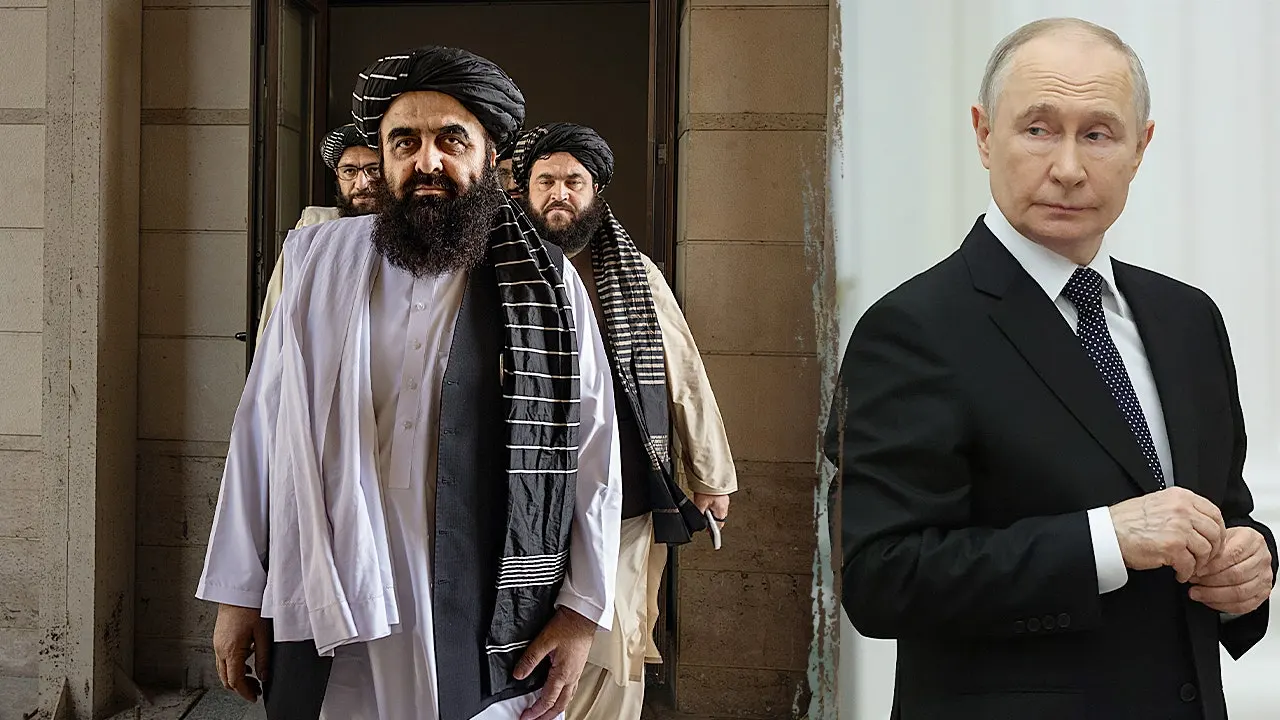
In the high-security corridors of Moscow’s grand international security forum, a handshake transpired that would have seemed entirely unimaginable just a decade ago, signaling a profound shift in the tectonic plates of global diplomacy. Sergei Shoigu, the Secretary of the Russian Security Council and former defense minister, stood shoulder-to-shoulder with Mohammad Yaqoob, the defense minister of Afghanistan’s ruling Taliban government. This visual and diplomatic encapsulation of a rapidly shifting world order was formalized through a newly minted military cooperation pact, cementing an alliance that significantly deepens Russia’s geopolitical footprint in Central Asia. For Yaqoob, the trip was both a major diplomatic triumph and a deeply symbolic personal journey. As the former military chief of the Taliban and the eldest son of its enigmatic, late founder, Mullah Mohammad Omar, his presence in Moscow carried the heavy, undeniable weight of modern history. Dressed in the traditional, dark turban and flowing garments of his homeland, Yaqoob addressed the Russian forum not as an insurgent commander hiding in the rugged mountain passes of the Hindu Kush, but as a recognized state actor negotiating on equal footing with one of the world’s primary nuclear powers. He spoke warmly of the “long and historical relations” between Kabul and Moscow, expressing a mutual, forward-looking desire to expand bilateral relations. Yet, beneath the diplomatic pleasantries and strategic smiles, neither side was willing to publicly disclose the finer, operational details of this new military agreement, leaving the global community to speculate on the true depth of their joint calculations. This meeting was not merely a routine diplomatic encounter; it was a profound, calculated step toward rewriting the security architecture of a region that has known little but conflict for nearly half a century, demonstrating how rapidly old rivalries can melt away in the pursuit of mutual survival.
To truly comprehend the profound human and historical irony of this newly forged alliance, one must trace the blood-soaked lineage that brought these two nations back to the negotiating table. Forty years ago, the skies of Afghanistan were filled with Soviet Mi-24 helicopter gunships raining fire down upon the Mujahideen—the holy warriors among whom Mullah Mohammad Omar first fought as a young man, losing his right eye to shrapnel in his defense of his homeland against the Soviet occupation. Decades later, the very same Mullah Omar founded the Taliban movement, ultimately offering an unshakeable safe haven to Osama bin Laden and al-Qaeda, from which the catastrophic terrorist attacks of September 11, 2001, were planned and executed, triggering a grueling, twenty-year-long American-led military intervention. Today, the very son of that revolutionary founder is welcomed in the heart of Moscow with the full honors and protections of statecraft. This generational transition speaks volumes about the pragmatic, often cold-blooded nature of international relations, where yesterday’s mortal enemies are refashioned into today’s vital strategic partners. For the ordinary citizens of both nations, who have inherited the collective trauma of these ideological and physical wars, the sight of a Russian defense apparatus aligning with the Taliban is a dizzying, emotional reminder of how quickly the moral justifications of war can dissolve in the face of shifting geopolitical realities. The pact signals that the ghosts of the past, no matter how painful, costly, or laden with blood, have been firmly set aside by the elites in pursuit of a shared, contemporary objective: survival and influence in an increasingly fractured global landscape.
From the perspective of the Kremlin, this sudden embrace of the Taliban is driven not by sentimentality, but by acute regional anxieties and cold strategic calculus. Since the chaotic withdrawal of American troops in August 2021 and the subsequent collapse of President Ashraf Ghani’s Western-backed government, Russia has watched the vacuum in Central Asia with growing alarm. The primary source of this anxiety is the rise of rival Islamist militant groups, most notably Islamic State-Khorasan (ISIS-K), which have utilized the lawless border regions to launch devastating attacks, threatening to destabilize Russia’s former Soviet neighbors like Tajikistan and Uzbekistan, and even launching attacks within Russia itself. In a stunning rhetorical pivot, Russian President Vladimir Putin—who only years prior strictly classified the Taliban as a terrorist organization—now openly refers to them as “allies in the fight against terrorism.” By positioning the Taliban as a buffer against more radical, trans-nationally ambitious terrorist organizations, Moscow hopes to outsource the security of its southern flank to the very fighters it once condemned. This strategy was validated by Nikita Smagin, an expert with the Carnegie Endowment for International Peace, who noted that Russia’s official recognition of the Taliban—making it the first major global power to take such a step—was a highly symbolic masterstroke. When Taliban militants entered Kabul in August 2021, Russia immediately secured its diplomatic mission, and Russian Ambassador Dmitry Zhirnov became the first foreign diplomat to meet with the new rulers. This move was designed to restore Russia’s image as an influential power capable of taking decisive, independent initiatives on the world stage, establishing its leading role in regional security dialogues while Western influence waned.
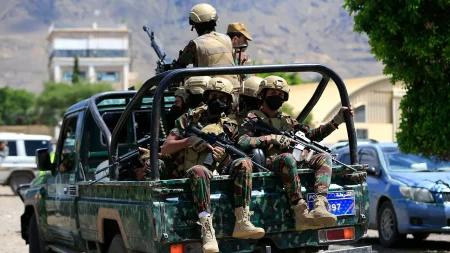
Yet, as these high-level negotiations unfold in the warmth of Moscow’s opulent security halls, the human reality on the dusty streets of Kabul, Herat, and Kandahar remains agonizingly bleak. For the average Afghan citizen, the geopolitical maneuvering of their rulers offers cold comfort in the face of an ongoing, catastrophic humanitarian crisis. The return of the Taliban brought an immediate halt to international aid, which had previously funded up to eighty percent of the country’s public spending, plunging the economy into freefall. Today, millions of ordinary Afghans face severe food insecurity, economic collapse, and a harsh struggle for daily survival, a situation that former interpreters and local staff left behind by Western forces describe as a desperate journey “back to where we started in 2001.” Women and girls have been systematically stripped of their fundamental rights, barred from education and public spaces, with only rare exceptions like the temporary resumption of a women-led radio station offering a fleeting glimmer of self-expression. The stark contrast between the luxury of elite diplomatic banquets and the desperation of families selling their meager belongings to buy flour is the true, tragic backdrop of this military pact. In this context, the alliance with Russia is seen by many locals less as a promise of peace, and more as a desperate survival mechanism for a ruling regime that is willing to trade regional security guarantees for its own political preservation, even as its people starve.
Crucial to this diplomatic dance is the weaponization of economic aid and international legitimacy, a theme that Sergei Shoigu seized upon during the forum. In a pointed challenge to the United States and its European allies, Shoigu publicly demanded that Western nations unfreeze billions of dollars in blocked Afghan state assets, which have been locked in foreign bank accounts since the Taliban’s takeover. He argued passionately that the West must bear the full moral and financial responsibility for its twenty-year military occupation, carrying the bulk of the economic burden for Afghanistan’s post-conflict reconstruction rather than leaving the war-torn nation to fend for itself. This rhetoric is a calculated attempt by Moscow to paint the West as hypocritical and heartless, while positioning Russia as a champion of sovereign rights and pragmatic humanitarianism. By breaking established global norms to forge formal diplomatic ties with the Taliban, Russia is actively attempting to set a precedent for other nations in the region—such as China, Iran, and Pakistan—encouraging them to bypass Western-led sanctions and integrate Kabul into a new, parallel network of trade and security. This strategy serves a dual purpose: it bypasses the diplomatic isolation the West has sought to impose on Russia following its invasion of Ukraine, while simultaneously creating a coalition of nations bound together by a shared rejection of Western hegemony and economic dominance.
Ultimately, this newfound alliance between Russia and the Taliban is a sobering testament to the cyclical, unforgiving nature of history in the graveyard of empires. Afghanistan, a nation that has spent generations caught in the grinding gears of foreign executioners and local zealots, now finds its destiny linked to a Russian state seeking to reclaim its global stature. The military pact finalized in Moscow may bring tactical advantages to both the Taliban, as they seek to legitimize their rule, and the Kremlin, as they secure their southern borders, but it leaves the fundamental questions of long-term stability and human dignity unanswered. As the world watches these new alliances solidify, it becomes increasingly clear that the future of Central Asian security will not be written in Washington or Brussels, but in the pragmatic, transactional corridors of Moscow, Beijing, and Kabul. For the millions of Afghans who must live with the daily consequences of these decisions, the hope for a truly peaceful, inclusive, and prosperous society remains a distant mirage, overshadowed once again by the grand strategies of powerful men. Their resilience, forged in the crucible of endless conflict, remains the only true constant in a land where empires come and go, but the struggle to survive endures, forever adapted to the latest demands of global power politics.