




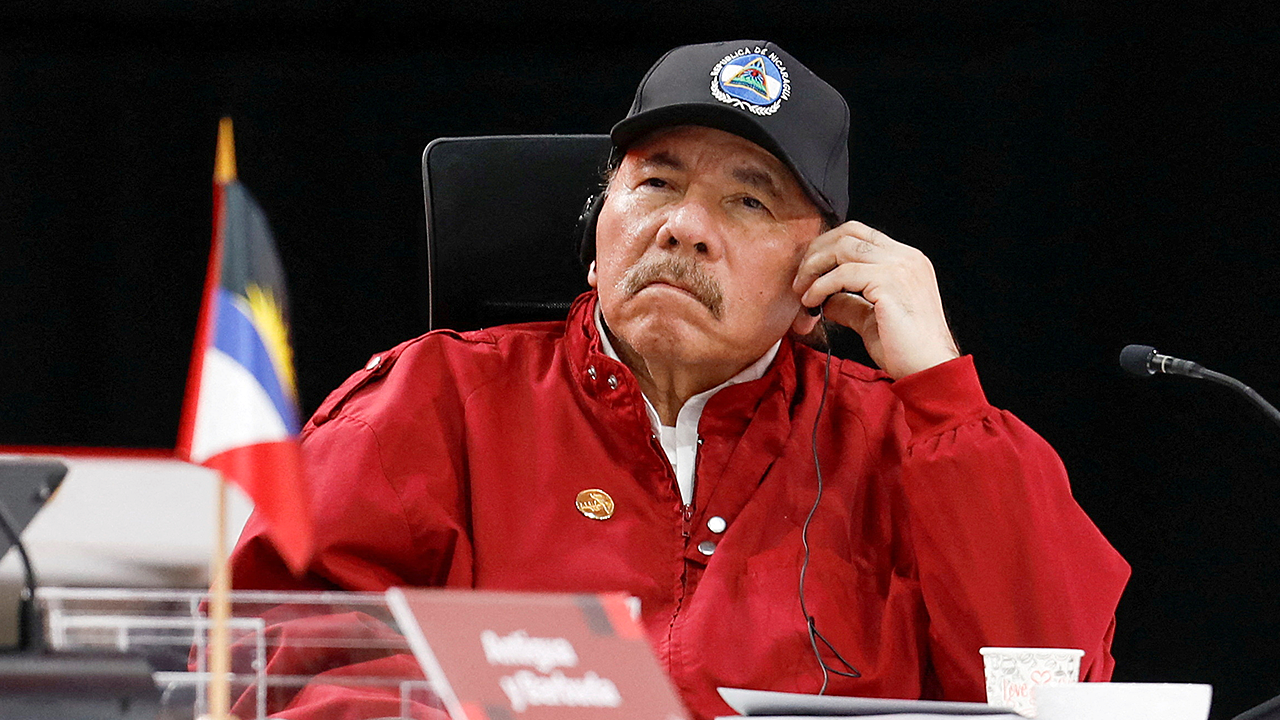
The formal declaration by Nicaraguan President Daniel Ortega that his country will no longer host democratic elections represents the final, chilling snap of a lock on a nation’s freedom. Standing before his supporters to commemorate the 1979 Sandinista revolution, Ortega delivered a message that was less of a political statement and more of an institutional death sentence: “There won’t be any more elections here for them to try to seize the government and seize power.” For millions of ordinary Nicaraguans, this pronouncement did not arrive as a sudden shock, but rather as the cold validation of a tragedy they had been forced to watch unfold in slow motion for nearly two decades. By explicitly shutting the door on any future electoral challenges, Ortega, alongside his wife and designated “co-president” Rosario Murillo, has officially transformed what was once a vibrant republic into a closed family fiefdom. The immediate human impact of this decree is a profound sense of political bereavement; the ballot box, which for generations served as a fragile vessel for the hopes, grievances, and peaceful aspirations of the populace, has been broken beyond repair, leaving a nation to grapple with the suffocating reality of permanent dynastic rule.
To understand the deep, agonizing irony of this moment, one must look back to the very history Ortega claims to defend. In 1979, Ortega was celebrated globally as a romantic, idealistic guerrilla leader who helped lead the Sandinista National Liberation Front to overthrow the brutal, U.S.-backed dictatorship of Anastasio Somoza. He was the face of a new dawn for Nicaragua, promising a future built on social justice, literacy, and genuine democratic self-determination. Yet, over the decades, the hero of the revolution slowly mutated into the caricature of the tyrant he fought to depose. Today, older Nicaraguans who risked their lives in their youth to defeat the Somoza dynasty are forced to watch their former comandante build an identical temple of absolute power, complete with nepotism, systemic corruption, and the violent suppression of all dissent. By declaring that the days of opposition parties are over “never again,” Ortega has hijacked the collective memory of a revolution that belonged to the entire nation, weaponizing the blood of fallen martyrs to shield himself and his family from the judgment of the very people they claim to represent.
This transition to absolute dictatorship has been systematically engineered through a series of cold, administrative maneuvers designed to dismantle any remaining semblance of democratic institutions. Under sweeping constitutional changes that took effect in 2025, Ortega and Murillo codified their absolute dominance by extending the presidential term from five to six years and officially elevating Murillo from vice president to “co-president”—a title that highlights the deeply personal and dynastic nature of their governance. This consolidation of power has effectively absorbed the legislative, judicial, and electoral branches of the state directly into the executive office, rendering the concept of checks and balances completely obsolete. For the average Nicaraguan citizen, this means that the state is no longer an impartial administrator of law but a weaponized extension of the ruling family. The police, the armed forces, and the courts do not serve to protect the public; rather, they exist to police thoughts, monitor speech, and enforce absolute loyalty to El Carmen, the heavily fortified presidential compound in Managua where the ruling couple resides in isolated paranoia.
The human cost of this total control is written in the blood, tears, and forced exile of hundreds of thousands of Nicaraguan citizens. Since 2018, when peaceful, citizen-led protests against social security reforms were met with lethal state violence, the regime has maintained a relentless campaign of terror against its own population. More than 300 young people were killed during that initial crackdown, and the years since have seen an aggressive criminalization of dissent. Ahead of the disputed 2021 presidential election, which the international community widely condemned as a farce, the regime arrested presidential candidates, independent journalists, business leaders, and human rights defenders. The cruelty reached a theatrical peak when the government began stripping prominent opposition figures and intellectuals of their Nicaraguan citizenship, rendering them stateless and confiscating their properties. Today, a quiet fear hangs over the country’s colorful streets; neighbors speak in hushed whispers, Catholic priests are routinely harassed and imprisoned, and the vibrant civil society that once defined Nicaragua has been thoroughly hollowed out, forcing a generation of young, educated minds to flee across borders simply to breathe free air.
On the international stage, this overt descent into autocracy has placed Nicaragua in deep geopolitical isolation, drawing fierce condemnation and punitive actions from democratic nations. The United States has been particularly active in its response, with successive administrations branding the Ortega-Murillo government a corrupt dictatorship. Over the years, the U.S. State Department has implemented sweeping visa restrictions against more than 2,350 Nicaraguan officials and their family members, while leveling heavy financial sanctions aimed at disrupting the regime’s economic lifelines. Prominent American leaders, including Secretary of State Marco Rubio, have consistently voiced solidarity with the Nicaraguan people, emphasizing their enduring aspirations for a free and democratic homeland. Yet, Ortega and Murillo have skillfully integrated this foreign pressure into their defensive narrative, using U.S. sanctions to stoke nationalistic defiance and brand any internal critic as a traitorous puppet of “Yankee imperialism.” As a result, Nicaragua has drifted deeper into the geopolitical orbits of global autocracies, exchanging sovereign independence for survival and turning the country into a strategic outpost of anti-Western sentiment in Central America.
Despite the bleakness of the current landscape, the story of Nicaragua is not one of absolute defeat, but rather of quiet, enduring resilience. Though Daniel Ortega may have officially canceled elections, he has not succeeded in canceling the internal desire for dignity, liberty, and justice that defines the Nicaraguan character. The spirit of resistance has not died; it has simply migrated, finding refuge in the vast, vibrant diaspora in Costa Rica, Spain, and the United States, where exiled journalists continue to broadcast the truth and human rights defenders compile lists of the regime’s abuses for a future day of reckoning. Inside the country, beneath the forced silence, the memory of democratic possibility remains a potent, latent force. Dictatorships throughout history have often declared their reigns to be eternal, only to eventually succumb to the slow, relentless erosion of their own legitimacy. The Nicaraguan people, who have survived earthquakes, civil wars, and multiple dictatorships, carry a profound historical awareness that tyrants are ultimately temporary, and that the long, winding road toward true self-determination cannot be permanently blocked by the decrees of an aging autocrat.