





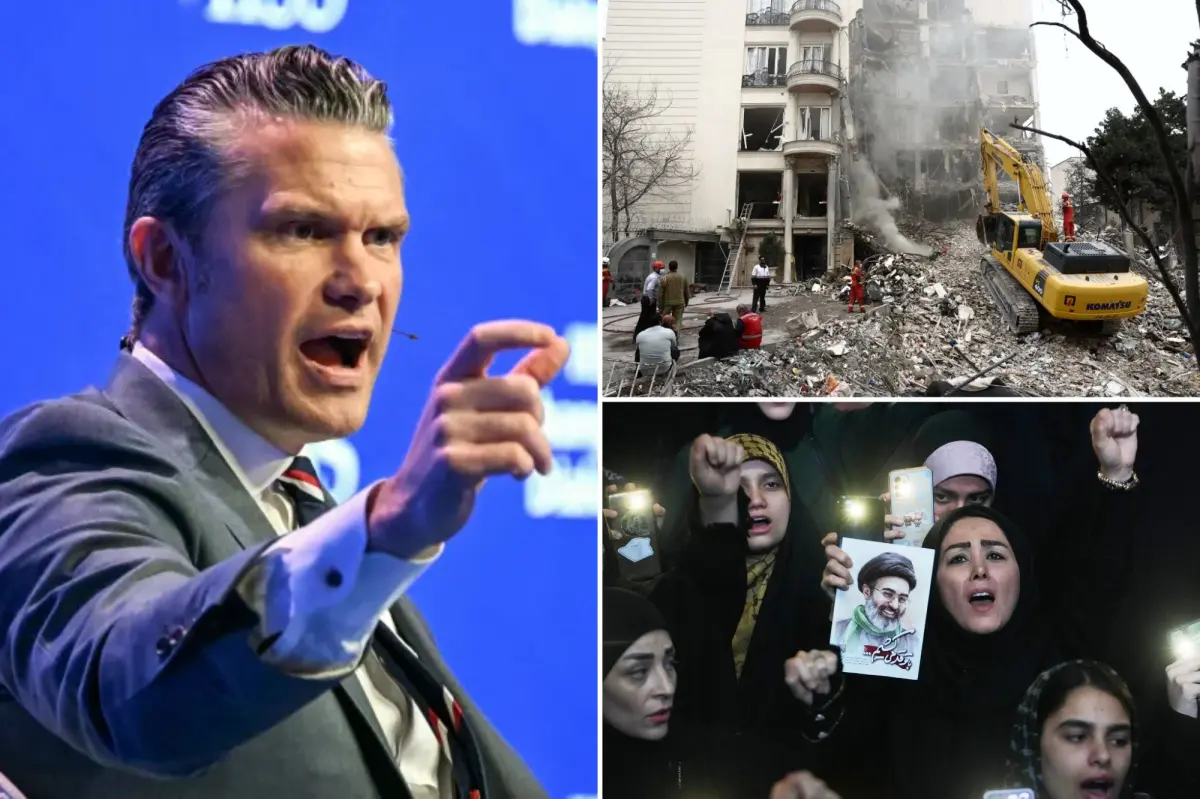
The grand, air-conditioned halls of the Shangri-La Hotel in Singapore, usually a forum for polite diplomatic posturing, bilateral handshakes, and strategic networking among Asia’s defense elite, recently became the setting for a chilling reminder of how quickly the world can slide back into catastrophic warfare. There, US Defense Secretary Pete Hegseth delivered a stark, uncompromising message designed to reverberate from the trading floors of Southeast Asia directly to the fortified halls of power in Tehran. With critical, high-stakes negotiations currently underway in deep secrecy between American and Iranian officials, Hegseth made it undeniably clear that the United States is fully prepared to unleash its military might once more if a comprehensive, permanent diplomatic breakthrough remains out of reach. Standing before an audience of international diplomats, military commanders, and global strategists, the Pentagon chief did not mince words, affirming that Washington possesses both the sheer logistical capability and the strategic resolve to instantly transition from peace talks back to devastating combat operations. Stripping away the sterile, clinical language of military strategy, the human weight of his words was absolutely staggering: the fragile peace currently holding the region together could disintegrate at a single command. Hegseth confidently reassured nervous allies and warned defiant adversaries that America’s global stockpiles of advanced weaponry are not only fully replenished but are strategically positioned across multiple continents to facilitate an immediate resumption of air strikes and offensive pressure. To those residing in the targeted regions—families who have only recently enjoyed a brief, temporary reprieve from skies filled with drones, rockets, and interceptors—Hegseth’s cold assertion that the United States is in a “very good place” militarily serves as a sobering, painful reminder of how easily geopolitical brinkmanship can disrupt innocent civilian lives, reducing their physical safety to a mere variable in a high-stakes imperial chess game.
One of the most persistent anxieties among international observers has been whether the United States, by engaging in a highly destructive and resource-intensive conflict in the Middle East, has inadvertently left its traditional allies in the Asia-Pacific region vulnerable to external aggression. Hegseth sought to dismantle this widespread narrative directly during his remarks in Singapore, insisting that Washington is more than capable of managing multiple global flashpoints simultaneously without skipping a beat or compromising its ancestral regional commitments. He painted a vivid, intimidating picture of a nation possessing an almost limitless capacity for domestic industrial mobilization, describing a massive, systemic overhaul intended to “super-charge” the American defense industrial base so that it can rapidly scale its output of lethal munitions by double, triple, or even quadruple its current baseline within a very short timeframe. While this bold rhetoric of absolute industrial dominance is strategically designed to project overwhelming strength and reassure nervous Pacific allies who face their own localized security threats, it also highlights a deeply unsettling systemic reality for humanity: a world rushing to convert its vast economic, technological, and intellectual resources into the production of increasingly sophisticated instruments of mass destruction. From the working-class factory floors in America’s rust belt, where assembly lines are being rapidly retooled to work around the clock in endless shifts, to the military command centers monitoring shipping lanes in the South China Sea, the drive to build up massive munition reserves signifies a global landscape that is permanently adjusting to a state of perpetual readiness for war. This relentless push for manufacturing expansion showcases a superpower unwilling to allow its geopolitical priorities to be divided or diluted by conflict, highlighting an aggressive operational ethos that views global stability not as a cooperative effort in gradual demilitarization, but as a direct byproduct of maintaining an overwhelming, unchallenged stockpile of raw American firepower.
Behind the dry, strategic calculations of defense ministers and military diplomats lies a devastating human tragedy that has unfolded with terrifying speed since the current conflict was officially launched by the United States and Israel on February 28. In a matter of mere months, the relentless military campaign has claimed thousands of precious lives, tearing apart families, erasing entire ancestral lineages, and reducing vibrant community neighborhoods to mountains of hollow, smoking ruins, with the heaviest and most painful toll falling squarely on innocent civilian populations in both Iran and Lebanon. The clinical, detached terminology of “surgical strikes” and “collateral damage” does absolutely nothing to capture the lived horror of those surviving under the constant, agonizing threat of aerial bombardment—the sudden, earth-shaking destruction of concrete apartment blocks, the frantic scratching of bare, bleeding fingernails against concrete rubble to rescue buried children, and the profound, long-term psychological trauma of forced displacement that has compelled millions of innocent people to flee their ancestral homes with nothing but their memories. Beyond the immediate, localized horrors of the regional theater, the war has acted as a chaotic economic shockwave that has rippled across the entire globe, directly disrupting the daily lives of ordinary, working-class citizens thousands of miles away who have no direct stake in the geopolitical dispute. When Iran reacted to the initial military assault by effectively shuttering the Strait of Hormuz—the vital, narrow choke point for global oil transport—it triggered an immediate and highly volatile spike in global energy prices. For families struggling to survive, this blockade translated directly to unaffordable heating bills, painful rises in gasoline costs, and heavily inflated prices for basic household goods, showing that modern war is never truly isolated to the battlefield but is a systemic plague that inflicts hardship on the entire global community.
Positioned at the absolute epicenter of this volatile geopolitical storm sits President Donald Trump, whose signature approach to international diplomacy uniquely fuses aggressive, high-stakes unilateral pressure with an idiosyncratic desire to broker historic, legacy-defining international agreements on his own terms. According to Defense Secretary Pete Hegseth, the President is currently exhibiting a calculated and highly strategic level of “patience” in his dealings with Tehran, maintaining a delicate and incredibly tense balance between the looming threat of devastating military action and the quiet, behind-the-scenes promise of high-level negotiations. Trump’s ultimate objective in these tense and precarious proceedings remains entirely clear and completely compromise-free: the engineering of what he repeatedly characterizes as a “great deal” that permanently and verifiably strips Iran of any technical capability to develop, acquire, or deploy a nuclear weapon under any circumstances. For Trump, international relations are frequently viewed through the transactional, hard-nosed prism of corporate dealmaking, where devastating military threats and crippling economic warfare are actively utilized as raw leverage to force historical adversaries to the negotiating table on terms highly favorable to Washington’s interests. However, this high-wire strategy of maximum pressure—constantly backed by the very real and immediate threat of total military destruction—carries an immense, terrifying risk for global stability, as it leaves extremely narrow margins for diplomatic error, administrative miscalculations, or mutual face-saving compromises. To the foreign policy experts and regional diplomats currently huddled in secure conference rooms, the challenge is not merely technical but deeply psychological; they must somehow satisfy Trump’s specific demand for an absolute, highly visible foreign policy victory while simultaneously addressing Iran’s fundamental, non-negotiable demands for sovereign dignity, national security, and immediate relief from the crippling economic sanctions that have devastated its domestic economy, halted its trade, and severely impoverished its civilian population.
The immediate future of this devastating conflict now hinges on a critical, high-stakes meeting scheduled to take place within the maximum-security, highly restricted confines of the White House. President Trump has publicly signaled his firm intention to convene with his top military advisors, intelligence chiefs, and national security officials in a secure situation room to make a “final determination” regarding a highly sensitive, complex diplomatic proposal aimed at temporarily freezing the active violence. This proposed agreement seeks to extend a fragile, highly precarious truce that was originally brokered back in early April, pushing the pause in active military operations for an additional sixty days. For the negotiators and diplomats tirelessly working behind closed doors under immense physical and emotional pressure, this sixty-day extension is far more than a simple bureaucratic delay; it represents a vital, life-saving window of opportunity to bridge the massive, deeply entrenched ideological and political disagreements that have so far blocked a permanent and sustainable resolution to the destructive war. The atmosphere in Washington is reportedly thick with political tension, as military commanders argue for maintaining strong deterrent postures while diplomatic strategists plead for the time required to draft a lasting peace treaty to present to a president who has frequently shown a willingness to bypass conventional foreign policy consensus in favor of his own instinctual, transactional decisions. In the battered cities and overcrowded refugee camps of Iran and Lebanon, where the early-April truce has provided a desperate, daily lifeline for highly traumatized and exhausted civilians, the outcome of this White House deliberation is a matter of literal life and death. Failing to secure this temporary extension would signal an immediate return to hostilities, with airstrikes again devastating civilian infrastructure, while a successful agreement would grant the peace talks the precious oxygen they desperately need to build lasting regional stability.
As the international community watches these high-stakes geopolitical maneuvers unfold with bated breath, the stark and jarring contrast between Defense Secretary Hegseth’s overt displays of military readiness in Singapore and the delicate diplomatic efforts occurring behind closed doors in Washington highlights the immense complexity of modern international relations. The path forward remains fraught with extreme danger, balanced precariously on a literal knife’s edge between the catastrophic, widespread destruction of continued warfare and the difficult, exhausting, and often unrewarding path of diplomatic compromise. It is incredibly easy to lose sight of the individual human lives caught in the crossfire when news of the conflict is framed entirely through the clinical lens of munition stockpile capabilities, industrial manufacturing capacity, and geopolitical leverage. Yet, the true cost of this ongoing war is measured not in the sheer volume of advanced missiles produced by a super-charged industrial base or the percentage increase in global heating costs, but in the deeply shattered lives of the innocent civilians who bear the agonizing physical and emotional scars of a violent confrontation they did absolutely nothing to create. The ongoing negotiations represent a rare, incredibly fragile opportunity for world leaders to choose an entirely different path—one that moves away from the devastating, self-perpetuating cycles of state-sponsored violence and toward a future where patient, respectful diplomatic dialogue can finally replace the blunt instrument of military aggression. Whether the senior leadership of the United States, Israel, and Iran possess the deep moral courage and strategic foresight required to step back from the brink of a catastrophic regional escalation remains to be seen. What is certain, however, is that regional stability and the survival of thousands depend entirely on the choices made in these coming days. The world can no longer treat war as an acceptable tool of foreign policy; instead, we must recognize that lasting peace built on shared humanity is the only victory worth pursuing.