




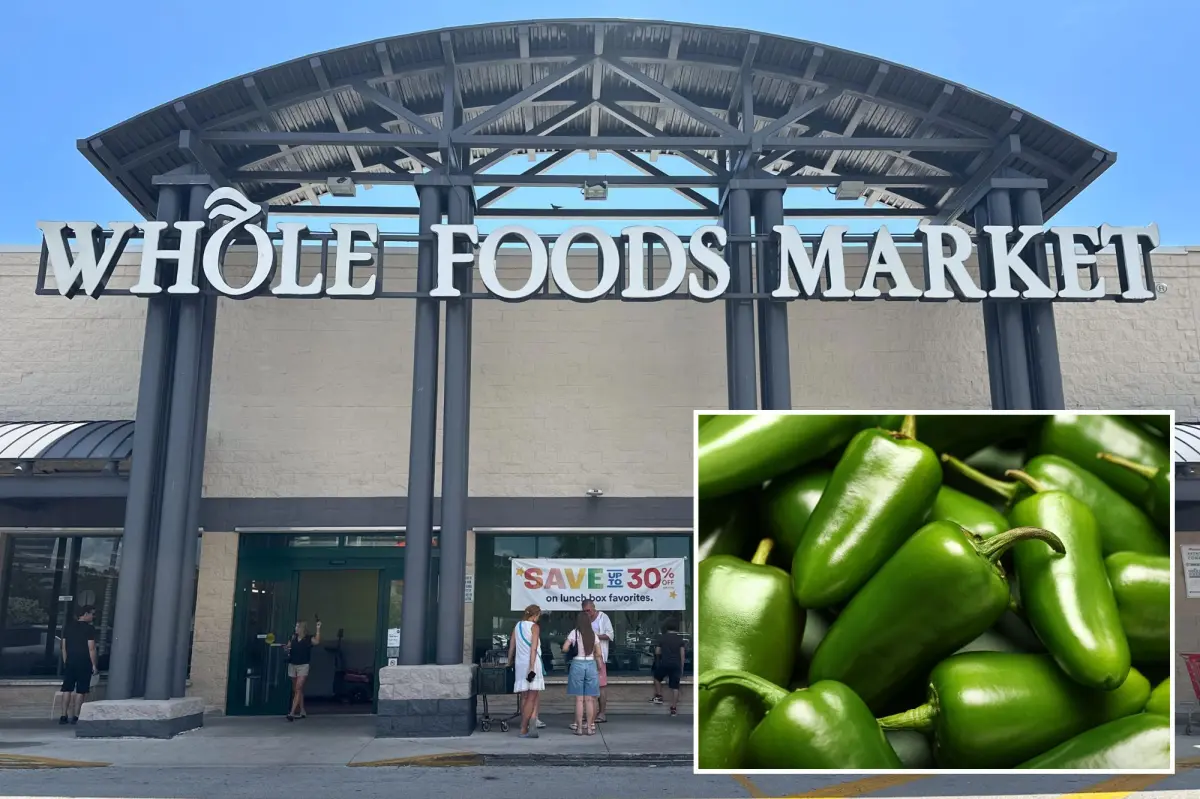
It starts with a generic notification on a Wednesday afternoon—an email alert, a headline, or a text from a friend. For most of us, it’s a fleeting moment of annoyance, a scroll-past. But for the thousands of families who recently stocked up on fresh salsa, guacamole, or a pre-made dinner from Whole Foods, that notification carries a specific, unsettling weight. The grocery chain announced a recall of select products from its produce and prepared foods departments, specifically those containing jalapenos sourced from a distributor known as Coast Citrus Distributors. The reason? Potential contamination with salmonella. In that instant, the vibrant colors of a pico de gallo or the creamy green of a party dip transform into a source of suspicion. You find yourself staring into the refrigerator, mentally retracing your steps, trying to remember if you bought that particular container. The recall isn’t just a logistical inconvenience; it’s a breach of the unspoken contract we have with our food—the belief that what we bring into our kitchens is safe to nourish our families. Whole Foods stated that no illnesses have been reported specifically in connection with these exact products, which is a small mercy, but the shadow of a much larger, more serious outbreak looms over the entire situation. The very mention of salmonella triggers a visceral reaction, a memory of the last time a stomach bug laid you low, and the fear multiplies when you consider the young, the elderly, and the immunocompromised who might have already taken a bite.
While the Whole Foods recall is isolated in its scope, it is deeply tethered to a sprawling, active investigation that has gripped the nation’s public health agencies. The FDA and CDC, alongside state and local partners, are currently tracking a multistate salmonella outbreak that has already sickened 345 people across 27 states, with 36 individuals requiring hospitalization. These are not just statistics; they represent 345 separate stories of sudden chills, agonizing cramps, and frantic calls to doctors. Imagine the chaos of a family vacation derailed by a sudden fever, or an elderly grandmother fighting a severe dehydration battle in a sterile hospital room. The investigation has traced the likely source back to a grower in Sinaloa, Mexico, which supplies to Coast Citrus Distributors—the very link in the chain that connects to Whole Foods. This geographic distance underscores the complex, globalized nature of our food supply; a jalapeno picked in a Mexican field can travel thousands of miles to sit in a deli case in Ohio. The fact that the specific products recalled haven’t caused illnesses yet is a testament to the rapidity of modern food safety surveillance—a proactive withdrawal meant to prevent the outbreak from expanding. Yet, it also highlights the sheer scale of the problem. When hundreds of people are falling ill, the food system feels less like a source of sustenance and more like a minefield, where every bite carries a calculated risk that we cannot see, smell, or taste.
To make matters even more tangled and anxiety-inducing for consumers, this jalapeno recall is not occurring in a vacuum. It is happening alongside another major food safety crisis that has already shattered the public’s confidence in fresh produce. Taylor Farms, a massive supplier that has been at the center of a separate, devastating outbreak linked to fresh produce, announced its own recall on Monday. This specific action involved prepared foods containing jalapenos—think salsas and guacamole—sold at major retailers including Walmart and Whole Foods across several states. But the real kicker is that Taylor Farms had just recalled iceberg lettuce due to a cyclospora outbreak, an event already being described as one of the largest foodborne illness outbreaks in recent American history. This creates a perfect storm of consumer dread. The lettuce on your sandwich is suspect. The jalapenos in your dip are suspect. The pre-made salad bowl you grabbed for a quick lunch is suspect. A Whole Foods spokesperson clarified that their recall was purely an extension of the Taylor Farms weekend recall, noting that they had pulled all affected products from their shelves immediately. This transparency is appreciated, but it doesn’t alleviate the psychological toll. Shoppers are now navigating a grocery store like a detective, scrutinizing every label, avoiding entire aisles, and wondering if the “easy” convenience of pre-cut produce is worth the inherent gamble. The sanctuary of the salad bar has become a symbol of risk.
When a recall like this hits, the focus often shifts to the logistics—the refunds, the removal from shelves, and the regulatory compliance. But the human cost is far more profound. Consider the parent who, after a long workday, reaches for a container of prepared guacamole to serve with dinner, only to read the recall notice on their phone. The immediate reaction isn’t just disappointment; it’s a flare of anger and fear. They have to interrupt their evening, pull the food from the fridge, inspect the packaging, and likely throw it away—a tangible waste of money and time. The promised refund from Whole Foods is a small consolation, but it doesn’t compensate for the erosion of trust. It doesn’t pay for the anxiety of watching a toddler for signs of a fever. It doesn’t restore the sense of security that makes a family meal a joyful occasion rather than a source of worry. This is the “silent” cost of foodborne illness outbreaks. We talk about the 345 sickened, but we rarely talk about the millions of others who are suddenly paranoid. The act of eating becomes a defensive maneuver. We scrub vegetables with renewed vigor, we wash our hands until they are raw, and we second-guess every purchase. The refrigerator, once a symbol of abundance and comfort, becomes a repository of potential threats. The human spirit is resilient, but constant exposure to these alerts breeds a chronic, low-grade stress that impacts our relationship with food and our trust in the institutions that are supposed to protect us.
To understand the gravity of this recall, we must look at the villain itself: Salmonella. It is a bacterium that thrives in the intestinal tracts of animals and humans, and it can easily contaminate produce through irrigation water, soil, or improper handling. When ingested, it triggers a brutal chain reaction within 12 to 72 hours—diarrhea, fever, and stomach cramps that can leave even the healthiest adult incapacitated for days. For young children, whose immune systems are still developing, for older adults who may have underlying health conditions, and for those who are immunocompromised, a salmonella infection is not merely a bad weekend; it can be a life-threatening emergency requiring hospitalization and intravenous fluids. The FDA, reacting to this cascade of outbreaks, issued a series of recommendations on Tuesday for producers and suppliers of fresh produce. These include rigorous sanitation control, meticulous supplier verification, and strict temperature management through the cold chain. On paper, these measures are sound. They represent a robust regulatory framework designed to trace contamination back to its source. But from a human perspective, they highlight a troubling reality: our system is often reactive rather than proactive. These recommendations come after hundreds have fallen ill and after millions of dollars of food has been discarded. We are playing whack-a-mole with microscopic pathogens, and the anxiety this creates is a direct consequence of a food system industrialized to such a scale that a single bad batch can affect dozens of states. The science is meant to protect us, but it often feels like we are perpetually one harvest away from the next scare.
So, where does this leave the average consumer? We cannot simply stop eating. We cannot retreat into a bunker of canned goods, though the allure of that hermetic existence has never been stronger. The recall serves as a stark reminder that perfect safety is an illusion, but it doesn’t mean we are powerless. For those who purchased these specific jalapeno products from Whole Foods, the immediate action is clear: throw them away immediately, do not taste them to “check,” and contact the store for a refund. Beyond that, we must cultivate a new kind of vigilance—checking recall notices as routinely as we check the weather, washing all produce thoroughly, and maintaining proper refrigeration. But the deeper human need here is for systemic accountability. We deserve a food supply chain that prioritizes safety over speed, where the profit margin of a distributor doesn’t overshadow the health of a child. As we navigate this “new normal” of food anxiety, we must channel our frustration into demanding better. We must hold companies like Taylor Farms and the growers in Sinaloa to the highest standards. We must support policies that fund public health surveillance and rapid response. And in our own homes, we must find a balance between necessary caution and the joy of a shared meal. We shouldn’t have to feel like we’re playing Russian roulette with our dinner plates. But until the industry catches up, the most human act of defiance is to stay informed, to stay vigilant, and to keep cooking—because the table is where we gather, and we cannot let the fear of a bacterium rob us of that fundamental connection. The recall will fade from the headlines, but the lesson—and the hope for a safer, more transparent system—must remain.