





The quiet, sun-drenched afternoon in Central Texas was shattered without warning on Wednesday, transforming a sprawling, golden field south of Salado into a scene of chaos and profound tragedy. The silence of the rural landscape, typically broken only by the rustle of wind through dry grass or the distant lowing of cattle, was violently interrupted at precisely 1:34 p.m. when a massive military attack helicopter slammed into the earth. The impact was so forceful that it was described as “violent” by local authorities, immediately carving a scar into the terrain and sending a thick, ominous pillar of smoke spiraling into the clear blue sky. Within moments, the first calls flooded into emergency dispatch, and the tranquil countryside became the focal point of a massive, heart-wrenching response effort. The initial confusion of the scene—debris scattered across the field, flames licking at the dry vegetation—soon gave way to the grim reality that two lives had been extinguished in an instant, turning a routine training flight into a catastrophic loss that would ripple through the tight-knit military community and beyond.
The aircraft involved was quickly identified as an AH-64 Apache, a fearsome and sophisticated twin-engine attack helicopter known for its agility and devastating firepower, permanently based at the sprawling Fort Hood installation roughly thirty minutes away. Bell County Sheriff’s Office spokesman Cliff Coleman confirmed the devastating news that two people aboard the helicopter were killed, their identities withheld pending notification of next of kin—a formality that does little to ease the anguish of the families waiting in agonizing suspense. The initial report from the sheriff’s office, which arrived at 1:34 p.m., pointed to a location off Dove Hollow Lane, a winding, remote road that offered no escape from the violent end these aviators met. The crash site itself was a maelstrom of twisted metal, scorched earth, and burning vegetation, presenting a grim tableau for the first responders who arrived to find not survivors, but a recovery operation. While the military deferred to local authorities for the initial identification of the aircraft type, Fort Hood later confirmed the loss of the Apache, acknowledging that the installation’s worst fears had been realized as they began the painful process of accounting for their fallen soldiers.
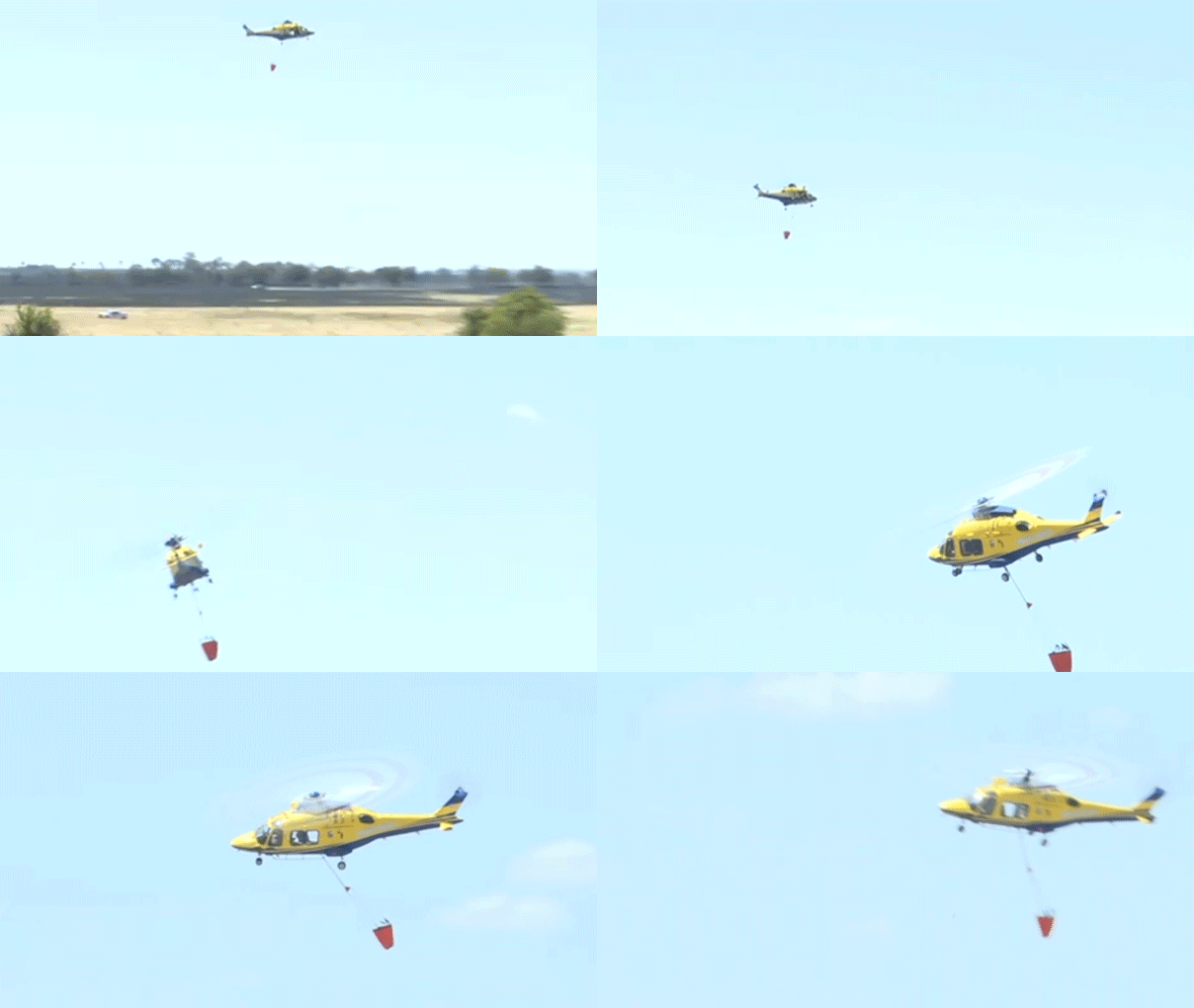
As if the crash itself were not enough of a catastrophe, the intense heat and sparks from the impact rapidly ignited a massive wildfire that fanned out across the parched Central Texas grassland, turning a tragedy into a brewing environmental and public safety crisis. The fire raged uncontrolled for hours, forcing a cadre of local emergency services, including Salado Fire and Bell County ESD #1, to divert their attention from the crash site to battle a rapidly spreading blaze. The roar of the flames was punctuated by the wail of sirens as fire crews, brush trucks, and water tenders converged on the area, fighting a desperate battle against the elements to protect nearby homes and structures. A mandatory evacuation was issued for residents in the immediate vicinity, forcing families to grab their loved ones and pets and flee their homes as the acrid smell of smoke permeated the air. Farm-to-Market Road 2843 was completely shut down, with authorities declaring it impassable and pleading with the public to seek alternative routes to keep the way clear for emergency vehicles. The local fire department issued urgent public safety alerts, emphasizing the grave danger posed by the flames and the need for civilians to stay far away from the unfolding disaster, effectively turning the entire area into an exclusion zone.
Fort Hood, a massive and storied military installation that serves as home to tens of thousands of soldiers and their families, was thrown into a state of solemn mourning and high-alert crisis management. In an official statement, Brig. Gen. Ethan Diven, the acting commanding general, conveyed the somber tone of the moment, stating, “Our immediate priority is securing the site and supporting the initial response efforts. Our thoughts are with the crew and their families as we await further information.” His words, while formal, carried the weight of a commander who knows the inherent dangers of military aviation and the profound cost that can come with service. The crash occurred during what was likely a routine training mission, a sobering reminder that risk never truly disappears in the profession of arms. The base immediately activated its emergency response protocols, deploying military police, fire crews, and aviation safety officers to the scene to assist local authorities and secure the sensitive wreckage. The loss of an Apache and its two crew members is a significant blow to the unit’s operational readiness and morale, but the immediate focus remained on the human cost—the families, teammates, and the tight-knit aviation community that now grieves for their own.
Beyond the official statements and the logistical response, the human element of this tragedy looms large over the community. In the hours following the crash, a profound sense of grief and uncertainty settled over both the military families and the civilian residents of Salado and Bell County. For the families of the two aviators, the wait for official confirmation and details is a cruel purgatory of anxiety, while for their fellow soldiers at Fort Hood, the loss is a stark reminder of their own mortality and the sacrifices demanded by their duty. The connection between the base and the surrounding towns is deeply entrenched, with countless soldiers living off-post and participating in the local community, so the news of the crash spread quickly through word of mouth, social media, and anxious phone calls. The emotional impact was also felt by the first responders—the firefighters battling the blaze, the deputies securing the perimeter, and the medics who arrived prepared for the worst—all of whom witnessed the brutal finality of the accident. A glimmer of community spirit emerged through the tragedy, as local leaders and elected officials, including Republican congressional candidate Abhiram Garapati, offered their prayers and support, publicly acknowledging the bravery of the crew and the tireless efforts of those working the scene. The collective grief was palpable, a shared burden carried by a population that understands the cost of freedom more intimately than most.
The official investigation into the crash has been handed over to Fort Hood, which will lead a comprehensive, multi-faceted probe to determine the cause of the accident, a process that could take months. Military aviation mishap investigations are notoriously meticulous, combing through every piece of wreckage, analyzing flight data recorders, interviewing witnesses, and examining maintenance logs to ascertain whether the crash was due to pilot error, mechanical failure, weather conditions, or a combination of factors. The wreckage will likely be recovered and transported to a secure facility for detailed analysis, where engineers and accident investigators will painstakingly piece together the final moments of the flight. While the cause remains unknown, the incident adds to a sobering ledger of military aviation accidents that have plagued the armed forces in recent years, prompting renewed scrutiny on training safety and aircraft readiness. As the sun sets over the scorched field south of Salado, the community is left to mourn. The immediate danger has passed—the fire is being contained, evacuation orders lifted—but the scars, both physical and emotional, will remain for a long time. The names of the fallen will eventually be released, and memorial services will be held, honoring two soldiers who lost their lives doing what they trained to do. For now, the focus is on healing, remembering the lives lost, and supporting the families and friends who now face an unimaginable future without their loved ones.