




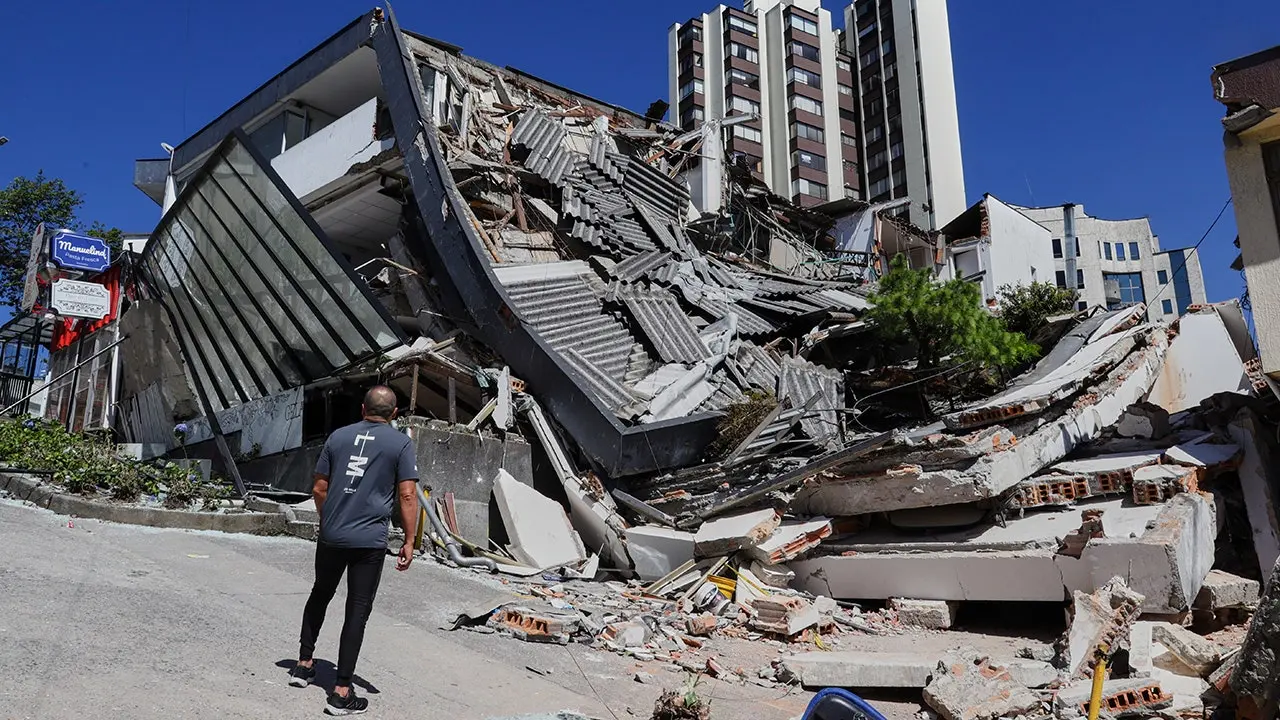
In a terrifying, heart-stopping instant, the earth violently shook beneath western Colombia, shattering the fragile peace of a quiet Monday and transforming bustling neighborhoods into chaotic landscapes of dust, debris, and sheer panic. The massive 7.4-magnitude earthquake, which scientists located deep near the remote municipality of San José del Palmar in the dense, Pacific-adjacent Chocó region, sent violent shockwaves rippling across the nation, swaying high-rises and collapsing residential structures in major urban centers like Cali, Pereira, and Manizales. Witnesses described a deafening, low-frequency roar rising from the depths of the earth, followed immediately by the sickening sound of snapping concrete, crumbling brick, and shattering glass as buildings buckled under the strain. For millions of Colombians, those few minutes of violent trembling felt like an eternity, forcing terrified parents to grab their children and flee blindly into the streets as power grids failed and dark plumes of dust swallowed the afternoon sky. In the immediate aftermath, as the choking dust slowly began to settle, the raw, heartbreaking reality of the disaster set in: a landscape of once-vibrant communities reduced to mounds of gray rubble, where the frantic cries of survivors searching for their loved ones replaced the familiar sounds of daily life, marking the beginning of a profound national tragedy.
Behind the cold, analytical statistics of the catastrophe lies an agonizing humanitarian crisis characterized by profound grief, desperation, and a relentless race against time. Currently, more than 3,000 individuals remain unaccounted for, leaving thousands of families suspended in a torturous state of limbo as they wait in the ruins for any news of their missing mothers, fathers, and children. The official death toll remains fluid and deeply troubling, reflecting the chaos of a disaster zone in the hours following the impact; while the federal government’s initial estimates placed the casualties at 111, local leaders on the ground—including mayors and governors struggling to manage the crisis in Cali, Pereira, Chocó, and Manizales—have reported that at least 179 lives have already been tragically cut short. Across the affected regions, search-and-rescue teams, accompanied by highly trained search dogs and heavy machinery, are working tirelessly through the night to sift through the remnants of some 1,600 damaged or totally collapsed buildings. Neighbors have joined hands with professional first responders, using their bare hands to claw through shattered brick and twisted rebar, driven by the thin but powerful hope of hearing a faint voice or a tapping sound beneath the ruins of what were, just hours prior, warm and safe family homes.
For Colombia’s newly inaugurated President, Abelardo De la Espriella, this devastating natural disaster represents a sudden and monumental baptism by fire, occurring just days after he took the oath of office to lead the country. Understanding the gravity of the situation and the urgent need for a visible, compassionate executive presence, De la Espriella flew directly into Chocó’s capital, Quibdó, on Monday night to oversee the emergency response firsthand and comfort the victims. In an emotional address to a grieving crowd, the president made a solemn vow to the residents of the hard-hit region, declaring that Chocó would never again be “the land of the forgotten”—a powerful reference to the historic economic neglect and social isolation that has long plagued this Pacific coastal department. To back his words with immediate, decisive action, the president announced the mobilization of the nation’s entire military and police apparatus, deploying specialized combat engineers, emergency medical personnel, and rescue units to the disaster zone, while coordinating a massive logistical airlift to transfer critically injured victims to high-capacity hospitals in Medellín to receive life-saving medical attention.
As the scale of the destruction became apparent to the international community, global allies moved swiftly to offer both diplomatic solidarity and concrete financial assistance to the battered South American nation. In Washington, the United States State Department expressed its deep condolences and support, stating that the American people are united in prayer with the people of Colombia and stand fully prepared to support President De la Espriella’s administration as they assess the immense, evolving needs on the ground. Demonstrating this commitment to humanitarian aid, the Trump administration pledged an immediate $15.5 million in emergency relief funding, earmarked for critical supplies such as temporary shelters, clean water, food distribution, protection services, and comprehensive seismic assessments to prevent further tragedy. This rapid financial and material injection is crucial for a country whose local emergency services are stretched to their absolute limits, providing a lifeline of basic human necessities to thousands of displaced families who have suddenly found themselves homeless and vulnerable in the blink of an eye.
The earthquake has laid bare the deep-seated vulnerabilities of the Chocó region, an area characterized by its breathtaking natural beauty and dense rainforests, but also by persistent poverty, lack of resources, and fragile infrastructure. In remote towns like San José del Palmar, the epicenter of the quake, the challenges of rescue and recovery are compounded by mountainous terrain and roads that have been blocked or completely washed away by major landslides triggered by the seismic activity. For the more than 1,400 families directly affected by the disaster, the loss of their homes means facing the elements in temporary outdoor encampments, vulnerable to the heavy tropical rains that frequently sweep across the region and threaten to worsen their living conditions. The destruction of basic infrastructure, including water treatment facilities and localized power grids, has raised immediate concerns about sanitation, clean drinking water access, and the spread of waterborne diseases, turning the post-earthquake recovery into a complex, multi-layered race against time to prevent further loss of life.
While the road to physical and emotional recovery for Colombia will undoubtedly be long and fraught with challenges, the tragedy has also highlighted the remarkable resilience and unbreakable spirit of its people. In the face of unimaginable loss, a powerful sense of community and solidarity has emerged across the nation, with everyday citizens organizing donation drives, sharing scarce food and water, and opening their doors to offer shelter to those left homeless by the disaster. Rebuilding the 1,600 damaged structures and restoring the physical infrastructure of Chocó and its surrounding departments will require years of sustained government effort, financial investment, and international cooperation. Yet, as volunteers and soldiers continue to dig through the rubble in search of the missing, the collective spirit of the Colombian people remains unbroken, serving as a powerful testament to human endurance, empathy, and the determination to rebuild their lives and communities from the ashes of this historic tragedy.