





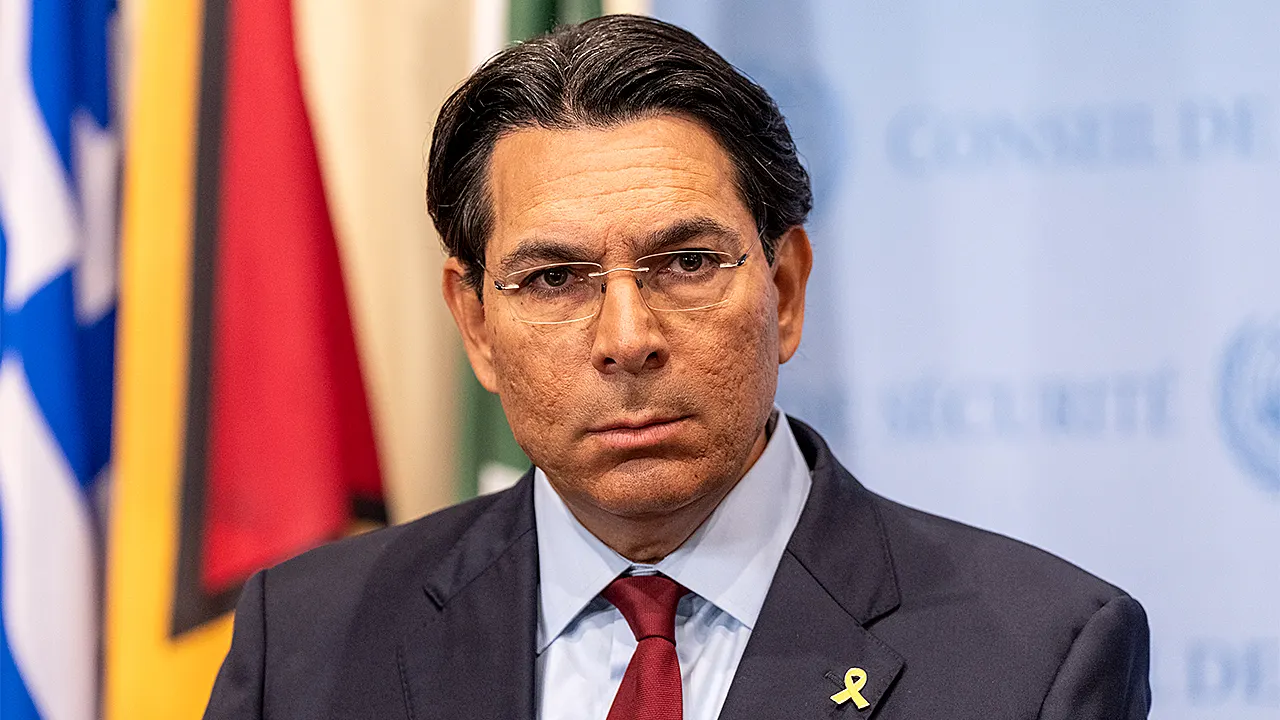
In the devastating theater of modern warfare, the battle of narratives is often fought with the same ferocity as the physical conflict on the ground, leaving deep psychological and emotional scars on both sides of the divide. For Israel, one of the most agonizing accusations leveled against its military campaign in Gaza was the allegation of deliberate starvation of civilian populations—a claim that resonated deeply and painfully across the global stage, invoking historically sensitive themes of deprivation and collective punishment. Israeli Ambassador to the United Nations, Danny Danon, recently addressed these severe charges head-on, labeling them as a modern-day “blood libel” engineered to demonize the Jewish state. Throughout the grueling conflict, international headlines were dominated by dire warnings of widespread famine, drawing intense moral condemnation from global leaders, human rights organizations, and various United Nations officials. However, Danon asserts that these explosive claims were fundamentally detached from reality, built instead upon unverified and fabricated data systematically fed to international bodies by Hamas operatives. By weaponizing the specter of hunger, Hamas allegedly manipulated global empathy to turn international public opinion against Israel while deflecting attention from its own operational choices. Danon’s emotional and pointed defense emphasizes the profound human danger of allowing a terrorist organization to control the flow of humanitarian information. He argues that by blindly accepting these unverified reports, the international community inadvertently participated in a sophisticated propaganda campaign, ignoring Israel’s ongoing efforts to balance its vital security needs with the moral imperative of keeping innocent civilians fed and stable during an unprecedented crisis.
At the heart of this statistical dispute lies the newly published Gaza SMART nutrition survey, a comprehensive, U.N.-backed study coordinated by the UNICEF-led Nutrition Cluster and presented by the State of Palestine Nutrition Cluster in July 2026. This extensive scientific evaluation assessed the nutritional health of 1,335 children under the age of five, spanning regions that house approximately 83 percent of Gaza’s total population, even amidst ongoing security and operational constraints that restricted access to the remaining 17 percent. The empirical findings of the survey revealed acute malnutrition rates ranging from a mere 0.2% to 0.8% using weight-for-height measurements, and 1.3% using mid-upper-arm circumference metrics, which are standard diagnostic tools used globally to assess wasting in vulnerable children. These statistics are not only remarkably low but are actually comparable to, or even lower than, the malnutrition levels recorded in Gaza prior to the outbreak of the war, and they stand in stark contrast to the far higher malnutrition rates found in several neighboring countries. Evaluators concluded that there was no evidence of widespread, population-level acute malnutrition, though they did note ongoing, non-emergency challenges such as poor dietary diversity, illness, and childhood stunting. These clinical findings directly challenge previous high-profile assertions made by global figures, such as former U.N. Undersecretary-General Tom Fletcher, who had warned in a widely circulated broadcast that 14,000 infants were at risk of imminent death due to starvation. Danon pointed to this retracted projection as a prime example of sensationalized rhetoric designed to spark outrage rather than reflect the complex reality on the ground, emphasizing that utilizing vulnerable infants to manufacture false narratives is a deep moral failing.
To understand how these stable nutritional levels were maintained amidst active warfare, one must look at the immense, often overlooked logistical operation coordinated at Israel’s border checkpoints. Danon explained that Israel meticulously documented every single shipment of food, water, and medical supplies that crossed into the enclave, maintaining a transparent, verifiable, and rigorous record of aid distribution. Throughout the conflict, Israeli authorities managed the complex task of securing border crossings, scanning thousands of supply trucks, and ensuring that adequate provisions were consistently funneled to the civilian population. This logistical effort was born out of a dual commitment: the absolute necessity of dismantling Hamas’s military infrastructure and the deep ethical obligation to prevent a humanitarian catastrophe in Israel’s own backyard. For the soldiers and coordinators working at these checkpoints, the mission was fraught with tension, as they had to verify that shipments did not contain smuggled weaponry or dual-use materials while simultaneously expediting the flow of life-saving goods. Danon emphasized that this rigorous data-gathering process provided Israel with undeniable proof of their humanitarian efforts, contradicting the narrative of a calculated blockade. He expressed a sense of relief that the empirical data now vindicates these efforts, reiterating that Israel has never desired to see starvation or suffering among its neighbors and has actively worked to ensure that the civilian population of Gaza had access to the basic necessities of life.
However, the flow of aid across the border was only half the battle; the true tragedy unfolded within the streets of Gaza, where the distribution of goods was violently disrupted by internal exploitation. According to Israeli intelligence and local reports, Hamas systematically hijacked humanitarian convoys, seizing control of food and medical supplies to sustain their own fighters and enrich their operations. Instead of distributing this freely donated global aid to the starving families who needed it most, Hamas operatives allegedly stockpiled the goods and sold them back to the desperate public at exorbitant, highly inflated black-market prices. This calculated monetization of human suffering created an artificial scarcity on the ground, leaving impoverished families unable to afford basic nourishment while the terrorist group generated massive profits to fund its ongoing insurgency. Danon highlighted this grim reality to illustrate that any localized food insecurity was the direct result of Hamas’s parasitic relationship with its own civilian population rather than a lack of supply. In response to this systemic corruption, Israel has actively sought to bypass Hamas-controlled networks by partnering with independent, non-infiltrated non-governmental organizations. The goal is to establish a secure, direct pipeline of aid that reaches the hands of innocent Palestinian mothers and children without being intercepted by armed militants who view humanitarian relief as merely another resource of war.
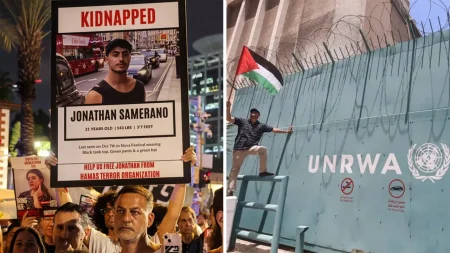
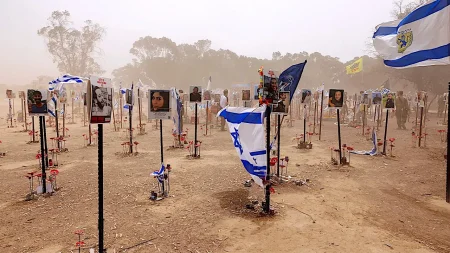
This complex humanitarian struggle is deeply intertwined with the broader, painful history of the region and the halting steps toward a lasting peace. The current conflict erupted on October 7, 2023, when Hamas launched a devastating, unprecedented terrorist assault on southern Israel, slaughtering civilians, taking hostages, and triggering a fierce military response that lasted for two intense years. Although a fragile ceasefire agreement was finally brokered on October 10, 2025, the region remains trapped in a volatile limbo, punctuated by sporadic military strikes and deep-seated political gridlock. Diplomatic efforts to secure a permanent resolution have stalled, primarily due to disagreements over a comprehensive 15-point peace and disarmament plan proposed by the United States. Israeli Prime Minister Benjamin Netanyahu has firmly rejected any proposal that allows Hamas to retain its military capabilities, insisting that Israeli forces will not withdraw from Gaza until the terrorist organization is completely disarmed and dismantled. This stance is rooted in a determination to prevent a recurrence of the October 7 horrors, ensuring that Gaza can never again be used as a launching pad for violence against Israeli citizens. For the residents of both Israel and Gaza, this political stalemate means that true stability remains frustratingly out of reach, leaving communities on both sides of the border longing for a future defined by security rather than survival.
As the region gingerly navigates this uneasy post-ceasefire era, there are tangible signs of economic recovery and stabilization on the ground that offer a glimmer of hope for the future. One of the clearest indicators of this positive shift is the dramatic drop in food prices across Gaza’s local markets, a direct consequence of the consistent influx of aid and the gradual weakening of Hamas’s monopolistic control over distribution networks. Danon pointed to this economic correction as definitive proof that the threat of famine has receded, demonstrating that when aid is allowed to circulate freely without militant interference, market forces naturally stabilize and relieve the burden on ordinary families. Moving forward, Israel’s long-term vision remains centered on security rather than permanent occupation; the nation has no desire to govern the daily lives of Gazans or manage their civic institutions, a stance proven by its complete military and civilian withdrawal from the territory back in 2005. However, for any meaningful progress, reconstruction, or peaceful coexistence to occur, the underlying threat of terrorism must be permanently extinguished through the total disarmament of Hamas. By ensuring that humanitarian aid goes toward feeding children rather than funding rocket launchpads, and by fostering partnerships with reliable international actors who prioritize human welfare over geopolitical conflict, there is a path forward where both Israelis and Palestinians can coexist in peace, free from the shadow of starvation, exploitation, and war.