





Two years ago, the Chicago White Sox weren’t just a bad baseball team. They were a cultural punchline, a cautionary tale, the kind of franchise that made even the most optimistic fan wonder why they ever cared. They lost a modern-day record 121 games in a single season. Then, just to make sure everyone understood it wasn’t a fluke, they lost 100 more last year—their third straight season of triple-digit defeats. They were rebuilding, sure, but rebuilding implies there’s a plan, and for a while it looked like the plan was just to collect losses until something changed. But something did change. And now, two games into the American League Division Series, the White Sox are one win away from the American League Championship Series for the first time since they shocked the baseball world and won the World Series in 2005. On Monday night, they beat the Cleveland Guardians 4-3 in a game that had no right to be as dramatic, nerve-wracking, and flawed as it was. There were defensive miscues, bullpen collapses, a blown early lead, and enough redemptive moments to fill a sports movie. The White Sox won it with a two-run double from a rookie, an insurance RBI single from a 25-year-old, and a tense final inning that left everyone in the ballpark holding their breath. It wasn’t beautiful. It wasn’t clean. It was, in so many ways, the opposite of what championship teams are supposed to look like. And yet, the White Sox are leaving Cleveland with a 2-0 lead, heading home where they’ll have two chances to close out this series and complete one of the most improbable turnarounds in recent baseball history. The Guardians, meanwhile, are suddenly staring at the end of a season that once felt destined for something more. All it took was two days of October chaos to flip the script. For a franchise that has known only losing, this sudden whiff of glory is intoxicating; for a Cleveland team that prides itself on grinding, it’s a cold slap of reality. But that’s baseball, and the mask of certainty has already come off.
For the Cleveland Guardians, Game 2 was supposed to be the safety net. After dropping the series opener, despite a strong start from their Rookie of the Year and Cy Young contender Parker Messick, they had every reason to feel good about handing the ball to Gavin Williams. Williams is a burly, intimidating right-hander who led the American League in strikeouts this season. He is the kind of pitcher October teams dream about: high-octane, fearless, and fully capable of making an opposing lineup look helpless. And for most of Monday night, he was all of that and more. He struck out 11 White Sox batters, a postseason performance that tied for the second-most strikeouts ever by a Guardians pitcher in a playoff game, trailing only Charles Nagy’s 12 in the 1996 ALDS. He pumped 99-mph fastballs past hitters who knew they were coming. He made a Chicago lineup that had suddenly found its confidence look like it was swinging underwater. He left after 98 pitches in the sixth inning, following a leadoff single by Miguel Vargas, with the lead in hand and the bullpen ready. Williams, after all, had thrown 99 pitches or more in 10 starts this season, but Vogt had seen enough. Manager Stephen Vogt made a logical, even responsible decision: trust the unit that had been Cleveland’s greatest strength all season, a bullpen that ranked third in the American League in ERA and first in strikeout rate. It was the kind of move that wouldn’t have been questioned if the bullpen had done its job. But it didn’t. After Williams departed, Chicago’s hitters seemed to breathe a sigh of relief, and then the chaos began. Erik Sabrowski, who had already coughed up an RBI double to Colson Montgomery in Game 1, came on and quickly turned the game inside out. A groundout. A walk. A wild pitch. A flyout. And then Braden Montgomery, a 23-year-old rookie who refuses to act like one, laced a go-ahead, two-run double into the gap. Hunter Gaddis entered next and immediately surrendered an RBI single to Chase Meidroth, giving the White Sox an extra run that would prove vital. Williams, watching from the dugout, could only stand there as his brilliant performance evaporated. “We couldn’t have asked anything more from Gavin tonight,” Vogt said later. “He did his job and then some.” He did. But the rest of the plan fell apart. It was the kind of collapse that leaves scars on a team’s psyche, especially in October, and suddenly the Guardians were the ones searching for answers.
The bottom of the first inning was a perfect little slice of “Guards Ball,” the brand of baseball Cleveland has used to win a division three years running without any real power. It’s baseball built on singles, walks, stolen bases, and the willingness to make the other team beat itself. It can look ugly. It can look lucky. But it works—until it doesn’t. In Game 2, it looked like it was going to work again. Anthony Kay, Chicago’s starter, allowed two of the first three Guardians batters to reach base—one on a seeing-eye single from Steven Kwan, another on a free pass. Sean Newcomb entered, fell behind Jo Adell, and then intentionally walked him to load the bases. Nathaniel Lowe stepped in, and the ball did exactly what Cleveland wanted it to do: it chopped in front of the plate, slowing down, hanging in the air, forcing Newcomb to charge off the mound. He grabbed it, spun, and then threw so wildly down the first-base line that Munetaka Murakami didn’t even bother stretching. The ball sailed into right field, two runs scored, and the Cleveland crowd unleashed a roar that had been waiting all series. It was exactly the start the Guardians needed. It was also the end of their good fortune. Sean Burke, the bulk man in yet another White Sox bullpen game, settled in with a calm that seemed almost inappropriate for the moment. He allowed just one run over 5.1 innings, and at one point retired 13 consecutive hitters. The early lead became a memory. Then Grant Taylor, who had thrown 42 pitches in four shutout innings in Game 1, came back for more on Monday. He gave up an RBI triple to Jo Adell in the eighth inning, which made the final few outs uncomfortable, but he slammed the door after that, recording the final four outs and finishing off the Guardians. Cleveland’s offense managed just three runs and seven hits across two games. For a team that needs chaos and baserunners to function, that’s not just a slump—it’s an identity crisis. It leaves no margin for error, no room for bullpen implosions, no way to win games when the other side scores four.
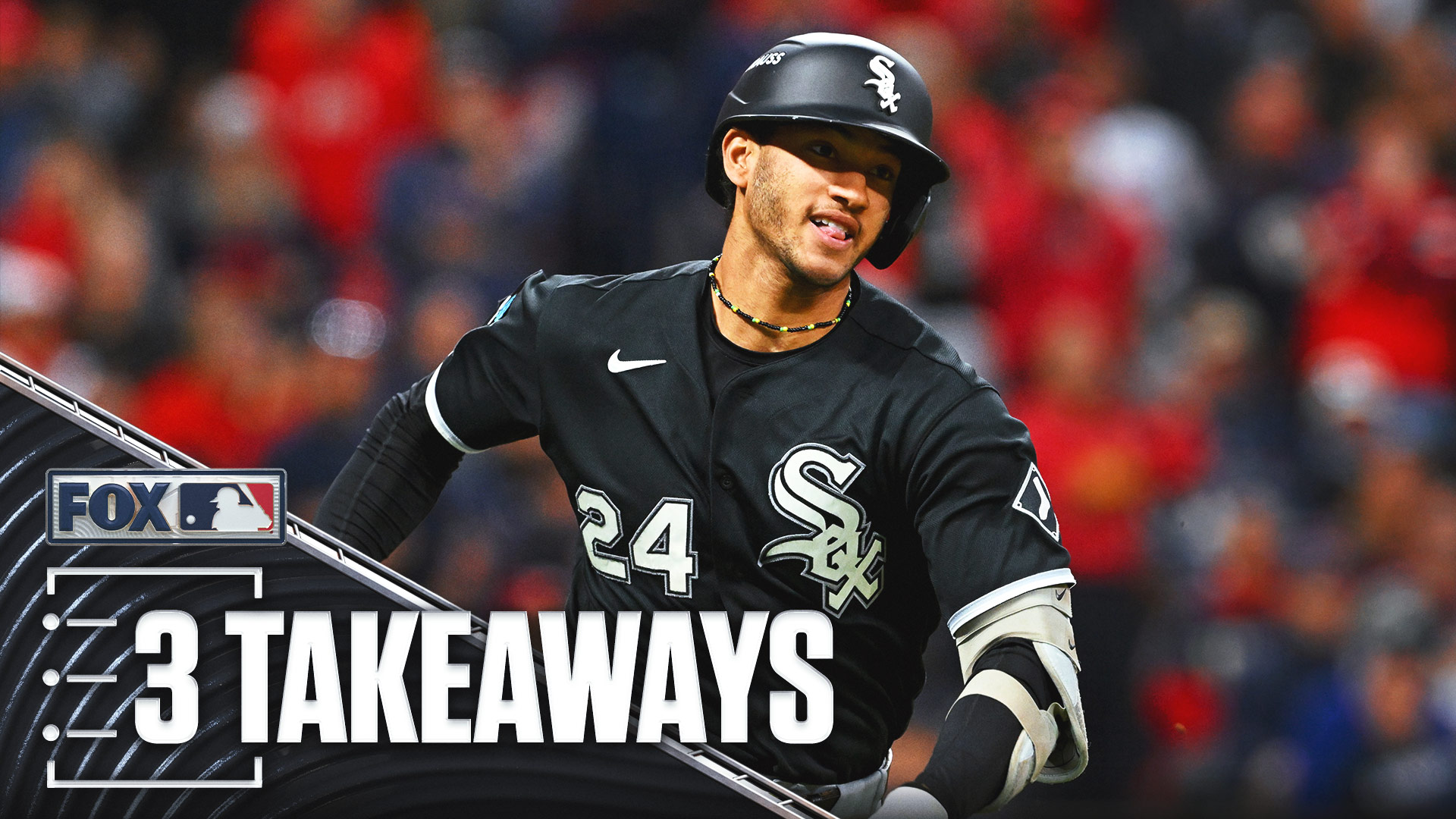
If the White Sox have learned anything over these past three miserable years, it’s that hope is a fragile thing. But hope is also contagious, and this lineup has started passing it around like a clubhouse secret. Munetaka Murakami, the 26-year-old former NPB star, set the tone in Game 1, hitting the two hardest balls of the day. The first was a single that seemed to travel at the speed of sound. The second was a 440-foot, two-run home run off Parker Messick—the kind of blast that makes scouts rethink every projection they’ve ever made. In Game 2, Murakami wasted no time reminding everyone he’s here. He turned on a 99.5 mph fastball from Gavin Williams and sent a 106.4 mph rocket into right field for an RBI single, cutting Cleveland’s lead in half and giving Chicago a pulse. It was his third game in four playoff appearances with at least one RBI. But the supporting cast is making the headline possible. Chase Meidroth, 25, is hitting .400 with five RBI in the postseason, looking less like a kid making his first October appearance than a veteran who’s been here his whole life. Colson Montgomery, 24, has a home run and a double, emerging as the patient, powerful presence Chicago dreamed about when they drafted him. Braden Montgomery, the 23-year-old rookie, delivered the biggest swing of Game 2—a go-ahead, two-run double that turned the sixth inning into the moment the series shifted. And Miguel Vargas, 26, an All-Star this season, has reached base six times in the ALDS, setting the table for everyone behind him. This isn’t a fluke. It’s an identity. These kids believe in each other, and more importantly, they believe they belong. After three years of losing that would have broken most organizations, the White Sox are playing with the kind of swagger that comes from having been through the fire and somehow come out the other side. They don’t need a perfect game. They just need one more hit, one more big swing, one more chance to prove this isn’t a dream. And with the way they’re swinging the bats right now, that chance seems more real every day.
For the Guardians, the reality is hard to swallow, but here it is: they are down 2-0, and the season is slipping away. Cleveland came into this series with the American League’s best story—three straight division titles, a bullpen that looked unstoppable, and every reason to believe this would be their year. Instead, they lost Game 1 despite a strong start from Messick, who had allowed just three home runs over his final eight regular-season starts. Then they lost Game 2 despite Williams doing something only one other Guardians pitcher had ever done in the playoffs. You don’t expect to lose games when your starters execute like that. But baseball doesn’t care about expectations. Now the Guardians have to scrape themselves off the mat and find a way to win three straight—starting with two games in Chicago, where the White Sox will have the crowd, the confidence, and the chance to close this thing out. The pitching plan for Game 3 is murky. Tanner Bibee is the obvious candidate, but the Guardians could also turn to Foster Griffin, the deadline addition who looked sharp in Washington (3.06 ERA) but struggled in Cleveland (5.19 ERA). Or maybe Vogt decides to mix and match with bullpen arms and hope nobody has to face the same hitter twice. But the pitching plan will not matter if the offense doesn’t wake up. The Guardians have put up just three runs and seven hits in two ALDS games. They have not been able to sustain anything against a White Sox bullpen that was supposed to be overmatched. They struck out 11 times in Game 2. They swung at pitches that were out of the zone. They scored on an error in the first inning and an RBI triple in the eighth, but in between, there was nothing. Vogt, to his credit, isn’t hiding from the moment. “Backs against the wall, this is where this team thrives,” he said. “You don’t want to be in this position. I’m not going to sugarcoat it. We’ve backed ourselves into a corner. We know that. If there’s anything I know about this group of guys, it’s that we love challenges like this. We are going to embrace it.” It’s a noble sentiment. But in the cold, unforgiving math of October, the Guardians need more than love for a challenge. They need hits. They need runs. And they need them fast.
For the White Sox, the journey from 121 losses to the doorstep of an ALCS is about as improbable as anything baseball has produced in years. It’s a story about patient rebuilding, about names like Murakami and Meidroth and Montgomery becoming household words in a way no one could have predicted. It’s also a reminder that in this sport, the difference between a laughingstock and a contender can be much smaller than it seems. Two years ago, this franchise was the best argument for burning everything down. Now they are one win away from a championship series, with a home crowd behind them and a young team that doesn’t know or care about the weight of history. They’ll have a chance to close out the Guardians in Chicago on their next attempt, and if they do, the celebration will be loud enough to erase a decade of suffering—at least for a night. For the Guardians, this is the cruel, unrelenting side of October. There is no moral victory in a 2-0 hole. There is no comfort in knowing your pitchers did enough to win. The bullpen that was supposed to be a weapon instead became the unit that unraveled. The offense that scratched out a living all summer was suddenly toothless. They can still come back—stranger things have happened in October—but the path is narrow, and every game now is a season-ending possibility. The good news for fans of baseball, at least, is that this series has already delivered everything the sport promises: drama, heartbreak, redemption, and the certainty that no lead is safe. The White Sox are laughing now. The Guardians are gasping. And the only thing anyone can do is watch what happens next. No one should be surprised, though. This is the same White Sox team that turned suffering into steel, that kept showing up after 121 losses, that allowed a new generation to find its voice in the wreckage. They were supposed to be years away. They were supposed to be patient. But baseball has never respected timetables, and these players have no interest in waiting their turn. The stage is theirs now. The series is theirs to lose. And after everything they’ve been through, they don’t seem interested in letting it go.