




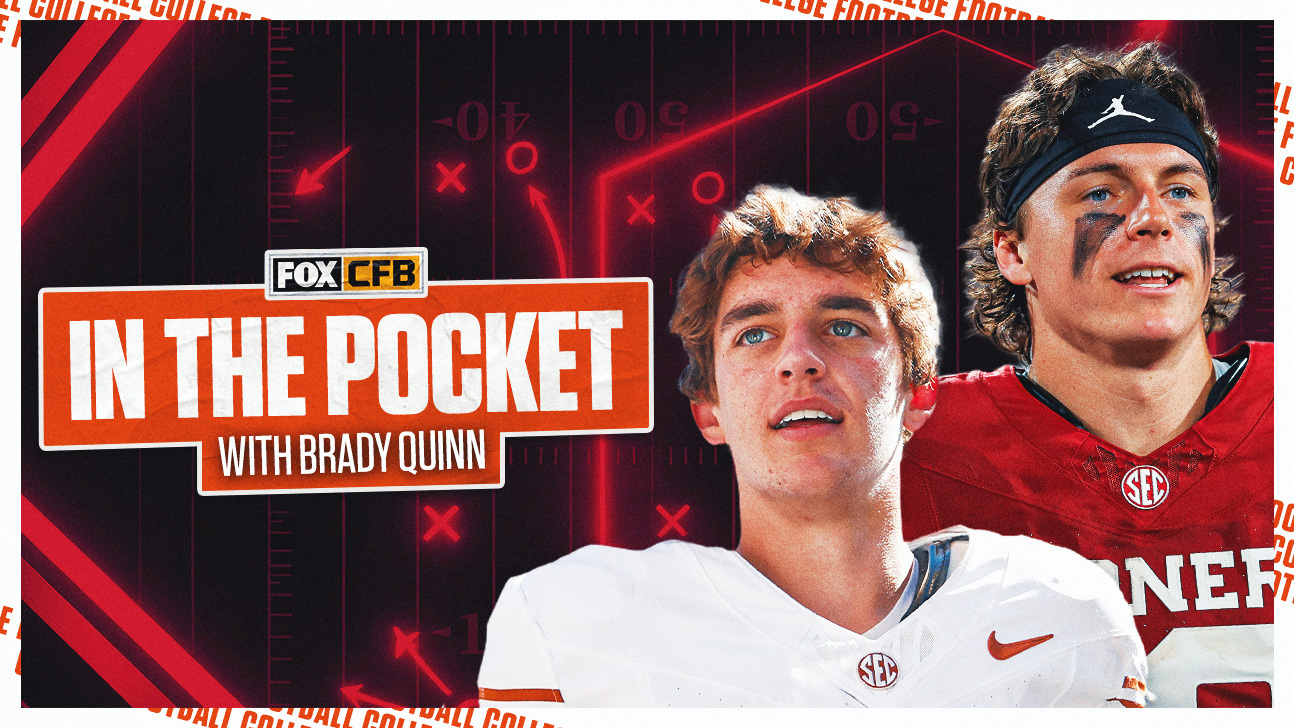
There’s just something about a college football rivalry that hits differently, isn’t there? It’s not merely another game on the schedule. It’s a collision of history, pride, and raw emotion, where legacies get cemented and bragging rights last an entire year. The pageantry, the tension, the sheer unpredictability—it’s why so many of us believe college football is the greatest sport in the world. And this week, the Red River Rivalry gives us another chapter, another chance for chaos and heroics. The stakes are already enormous: No. 1 Texas rolls into the Cotton Bowl with an undefeated record and national title aspirations, while Oklahoma is still searching for an offensive identity after a frustrating start. On paper, it feels like a mismatch, but rivalry games have a way of ignoring paper. The spotlight will shine brightest on the quarterbacks, and what a fascinating contrast we have. On one sideline stands Arch Manning, carrying perhaps the most famous last name in football history, an early-season Heisman contender who has led the Longhorns to the top of the mountain. On the other sideline is John Mateer, a transfer signal-caller trying to steady a Sooners ship that has been rocked by inconsistency and missed opportunities. The narratives couldn’t be more different, yet here’s the twist that makes this matchup so compelling: if you actually dig into the numbers, Manning and Mateer aren’t as far apart as the hype might suggest. But numbers can be deceptive, and the way these two quarterbacks have arrived at their respective stat lines tells two very different stories—one about a quarterback betrayed by his supporting cast, and another about a quarterback still trying to trust what he sees.
Let’s start with Manning, because the perception around him is fascinating. He’s undefeated, he’s the face of college football’s No. 1 team, and he’s been handed the keys to a Ferrari of an offense. But if you’ve watched Texas closely this season, you know Manning hasn’t been perfect—and some of that isn’t his fault. The Longhorns have been plagued by costly drops at the worst possible moments, and those drops have directly impacted how we talk about Manning’s season. Texas has had seven passes dropped this year, nearly twice as many as Oklahoma, and a couple of those have been absolute killers. Junior wide receiver Ryan Wingo leads the team with three drops, and one of them should have been an easy touchdown against Ohio State after he found himself wide open downfield. In that same game, transfer receiver Cam Coleman was also wide open, but what should have been a spectacular diving catch somehow turned into a circus interception for the Buckeyes. Think about that for a second. A quarterback puts the ball exactly where it needs to be, his receiver gets open, and the play falls apart through no fault of the passer. Those two plays alone could have completely changed the outcome of that game and the entire narrative surrounding Manning’s first season as the starter. When a quarterback throws a perfect ball and his guy makes the play, it builds trust and rhythm. When the ball bounces off hands and turns into turnovers, it creates doubt and frustration. Manning has handled it with poise, but the reality is that his stats don’t tell the full story of how well he’s actually played. On the other side, Mateer’s struggles are of a different nature. He hasn’t been betrayed by drops as much as he’s been trapped in his own uncertainty. He’s struggling to anticipate throws, to find a consistent rhythm with his receivers, and to trust that the guy will be where he’s supposed to be when he’s supposed to be there. The most telling moment came on his longest touchdown pass of the season, a 53-yard strike to Isaiah Sategna III in Oklahoma’s 14-6 win over New Mexico. After the game, Mateer admitted he didn’t even realize Sategna was wide open until he heard the crowd react. That’s a quarterback playing on instinct and hope, not on preparation and anticipation. So yes, statistically Manning and Mateer look close, but the journey to those numbers is night and day. And that’s the story Oklahoma has to hope it has solved during its bye week if the Sooners want to bring the Golden Hat back to Norman.
So what can Oklahoma actually do to get Mateer back on track? This is where the conversation has to move beyond the quarterback and onto the coaching staff, because the blame can’t rest solely on Mateer’s shoulders. This is Year 4 for Mateer in Ben Arbuckle’s offense, and at this point, he should be able to run this system in his sleep. The fact that he’s struggling to play from the pocket and anticipate throws is concerning, but it’s also a reflection of a larger issue: Oklahoma’s wide receivers simply aren’t getting open. According to Pro Football Focus, Oklahoma has the fewest targets with separation in the entire SEC, and that shows up on film in a painful way. You can’t ask a quarterback to anticipate throws when there’s no clear window to throw into. You can’t ask him to trust his progressions when every route looks like a crowded intersection. The solution has to start with scheme. Arbuckle needs to be more creative in manufacturing separation. That means incorporating more bunches, stacks, pre-snap shifts, and motion to create leverage for the intended targets. It means giving Mateer a pre-snap coverage indicator by displacing a running back or tight end outside the formation. That simple adjustment forces the defense to show its hand: are they playing man or zone? Getting that answer before the snap is half the battle. If it’s man coverage, you know you have the matchup you want or a concept designed to create an opening. If it’s zone, you know exactly which progression to read and which routes should be available based on the leverage of the defenders. These coverage indicators can transform a hesitant quarterback into a confident, decisive one. For Mateer, that might be exactly what the doctor ordered. He doesn’t need to be Superman; he needs to be a quarterback who knows where he’s going with the football before the ball is snapped. The arm talent is there, the athleticism is there, but the mental clarity has been missing. A better scheme can fix that, and it has to start this Saturday in the biggest game of Oklahoma’s season.
While Oklahoma is searching for answers, Texas might already have a cheat code it hasn’t fully utilized yet, especially in the red zone. That cheat code is Cam Coleman, the 6-foot-3 transfer receiver who has become a nightmare matchup for opposing defenses. Coleman’s size and length make him a quarterback’s best friend inside the 20-yard line, and the numbers back that up: three of his four receiving touchdowns this season have come from inside the red zone. It’s easy to see why. Coleman has the ability to stop on a dime, adjust to the football, and high-point it at the moment of truth. For a quarterback like Manning, that’s a huge advantage because you don’t have to be perfect with your ball placement. You just have to give your guy a chance to make a play, and Coleman will do the rest. I had the privilege of playing with two big-bodied wide receivers at Notre Dame in Maurice Stovall and Jeff Samardzija, and the goal was always the same: once we got into the red zone, find a way to isolate one of them and give him a catchable ball so he could use his size and adjust to it. It didn’t always have to be pretty, but it had to be catchable. Their size advantage typically led to one of three outcomes: a touchdown, defensive pass interference, or at worst, an incompletion. That’s the exact predicament Coleman creates for a defense. Do you bracket him and try to eliminate him? Do you roll coverage his way and leave yourself vulnerable elsewhere? Or do you leave him one-on-one, knowing you also have to account for Texas’ run game and the possibility of Manning pulling the ball down and running? It’s a pick-your-poison scenario, and defenses have yet to find a good answer. This weekend, all eyes should be on the matchup between Coleman and Oklahoma cornerback Eli Bowen. Bowen is listed at 5-foot-9, which gives Coleman a massive size advantage on the perimeter. Don’t be surprised if Texas looks for that matchup early and often once it crosses into the red zone. It’s the kind of advantage that wins football games, and it’s the kind of weapon that makes a quarterback’s job so much easier when the field shrinks and every throw becomes a contested battle.
Shifting gears away from the Red River Rivalry, there’s another quarterback story brewing down in the Bluegrass State that’s worth your attention. Kentucky has always been known for horse racing, bourbon, and basketball, but this year, there’s a new signal-caller turning heads in Lexington. His name is Kenny Minchey, and his journey to this moment is a testament to patience and perseverance. Minchey began his college career at Notre Dame, where waiting became a way of life. He redshirted, then watched two transfer quarterbacks leapfrog him on the depth chart and claim the starting job. When his chance to compete finally came ahead of the 2025 season, he battled CJ Carr for the position, but ultimately lost the competition and settled into a backup role. He finished the season with just 26 pass attempts, completing 20 of them, before deciding it was time to find a place where he could actually be the guy. The transfer portal opened on Jan. 4, and Minchey immediately committed to Nebraska. But just 24 hours later, he flipped his commitment following a phone call with new Kentucky head coach Will Stein. The reason was simple: former Kentucky starting quarterback Cutter Boley had entered the transfer portal, creating a clear path for Minchey to become QB1. Since then, Minchey hasn’t looked back. The Wildcats are 4-1, with impressive road wins over Texas A&M and South Carolina, including a dramatic overtime victory against the Gamecocks. Minchey has quickly established himself as one of the SEC’s top quarterbacks, throwing for 11 touchdowns with just one interception this season. He’s been accurate, composed, and clutch, and he’s given Kentucky fans a reason to believe in something they don’t often get to believe in: a legitimate quarterback. The national media is starting to take notice, but there’s still hesitation. Kentucky received the most AP votes of any team outside this week’s Top 25, yet voters seem reluctant to fully buy in. That skepticism is understandable after the Wildcats’ second-half collapse in a blowout loss to Alabama in Week 2. But a win over LSU this weekend could change that narrative entirely. If Minchey keeps playing the way he has, those whispers will turn into shouts, and Kentucky might just become the surprise story of the season.
Finally, let’s talk about the biggest game in the Big Ten this weekend, because I’ll be in Lincoln as part of Big Noon Kickoff, and the atmosphere is going to be electric. Nebraska is searching for its first win over a ranked opponent in 30 games, and the Cornhuskers have a chance to make a statement against Indiana, the defending national champion. Indiana comes into this game 5-0, having beaten six ranked opponents during its perfect 16-0 run last year, but this season’s schedule hasn’t been particularly challenging. Nebraska is also 5-0, and neither team has faced a truly daunting test yet, which makes this matchup all the more intriguing. Both teams are led by transfer quarterbacks who have been perfect fits for their respective systems. Josh Hoover, the former TCU signal-caller, arrived in Bloomington with more experience and production than just about any quarterback in college football. That experience has shown up in his quick decision-making and timing, and he’s erased any concerns about turnovers by throwing 15 touchdowns with zero interceptions. Indiana head coach Curt Cignetti and offensive coordinator Mike Shanahan have done it again, finding another quarterback who fits their system like a glove. On the other side, Nebraska wanted an experienced quarterback with more dual-threat ability after parting ways with former five-star Dylan Raiola, and they found exactly that in Anthony Colandrea. After stops at Virginia and UNLV, Colandrea has settled in at Nebraska, throwing for more than 1,100 yards while ranking second among Big Ten quarterbacks in rushing. He possesses the dual-threat ability that gives opposing defenses fits, and he’s brought a spark to the Cornhuskers’ offense that’s been missing for years. A win on Saturday would give Nebraska coach Matt Rhule the statement victory he’s been searching for in Lincoln, and it would announce the Cornhuskers as legitimate contenders in the Big Ten. This is the kind of game that defines a season, the kind of game where legacies are made and memories are created. And really, isn’t that what college football is all about? Whether it’s the Red River Rivalry, a quarterback finding redemption in Kentucky, or two undefeated teams colliding in Lincoln, this sport never fails to give us stories worth telling. So sit back, soak it all in, and enjoy the chaos. It’s why we love this game.