





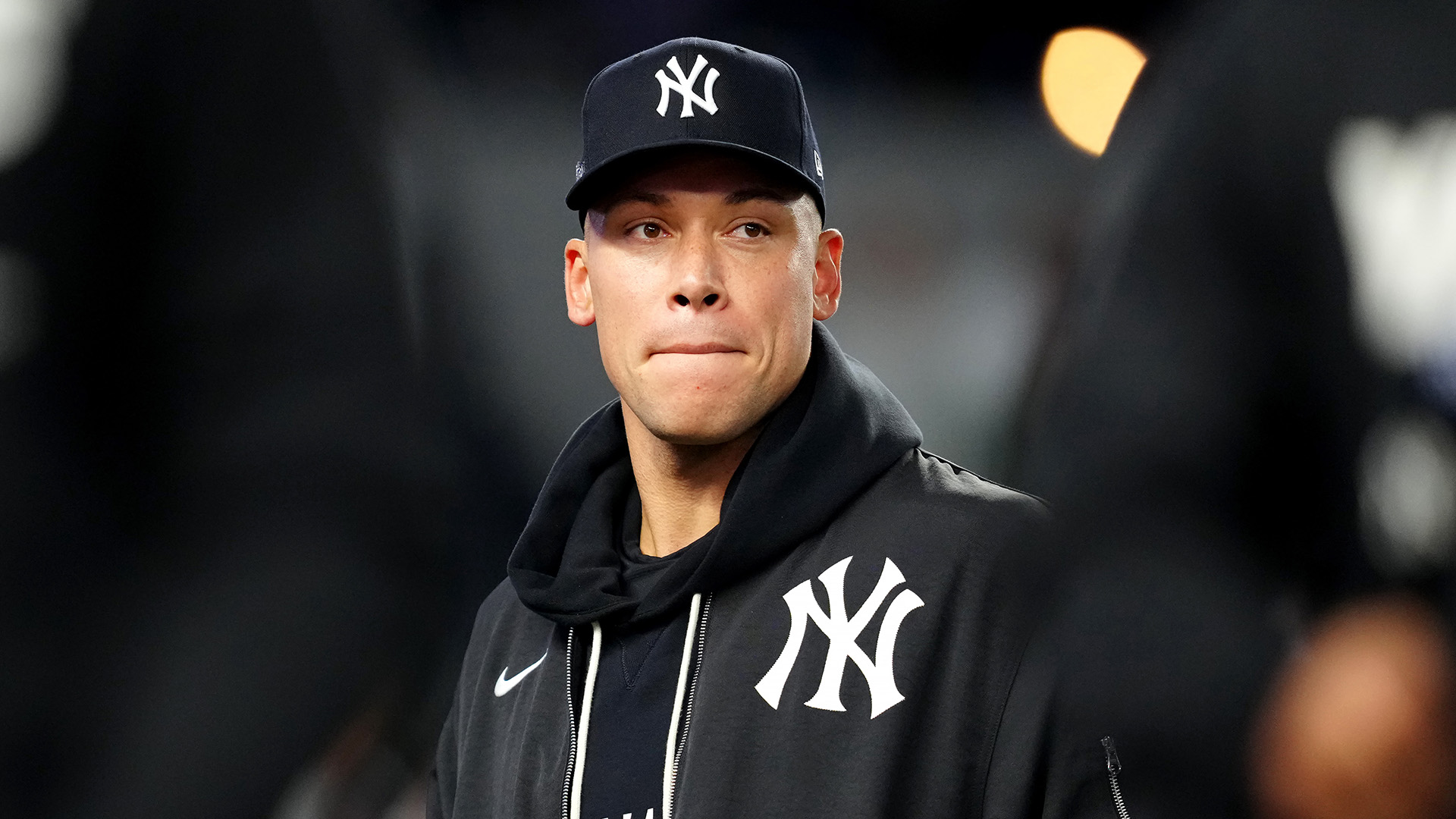
The electric energy of October baseball pulsed through the Bronx this week as the New York Yankees surged past their archrivals, the Boston Red Sox, with a resounding two-game sweep in the American League Division Series. It was a statement of intent, a declaration that this storied franchise is hungry for its 28th World Series title. The victory was sweet, decisive, and a testament to the team’s depth and resilience. Yet, as the players celebrated and the fans roared their approval, a palpable sense of anticipation hung in the air, a question mark looming over the clubhouse like a shadow in the late afternoon sun. That question, of course, revolves around the towering figure of Aaron Judge, the team’s captain and offensive cornerstone, who has been conspicuously absent from the lineup. His team has thrived without him, but the true test against the Tampa Bay Rays is on the horizon, and the uncertainty surrounding his health and availability has transformed a triumphant moment into a period of careful, anxious waiting. The sweep was a joyful sprint, but the marathon of the postseason demands more, and all eyes are now fixed on whether their biggest star will be able to join the race.
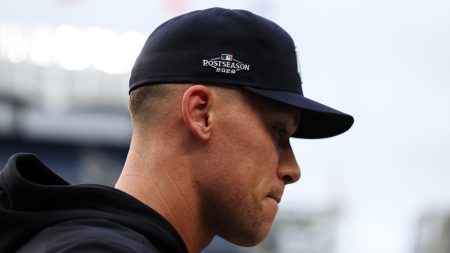
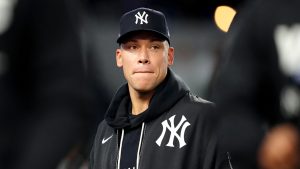
Judge’s absence is not a matter of a minor tweak or a precautionary rest day; it is a calf strain, a notoriously tricky injury for a man of his imposing stature. The injury occurred on September 19, forcing the Yankees to place him on the 10-day injured list, a move that was initially seen as a short-term setback but has now stretched into a prolonged period of rehabilitation and uncertainty. For a player who generates immense power from his lower half—legs that are thick as tree trunks and drive his majestic home runs into the stratosphere—a calf injury is a significant concern. It is not simply about being able to swing the bat; it is about the explosive push-off, the abrupt stops, the desperate sprints down the first-base line, and the lateral movement required to patrol the vast outfield of Yankee Stadium. Every facet of his game is rooted in the health of his legs. Watching him during the Boston series from the dugout, his face a mask of concentration and barely contained frustration, was a reminder of how much this means to him personally, a bitter pill to swallow knowing his team is fighting for a championship without his bat in the middle of the order.
Now, the clock is ticking with an almost audible urgency. The Yankees have until Saturday morning to submit their final 26-man roster, a decision that carries enormous weight and strategic consequence, ahead of Game 1 at 6:30 p.m. in St. Petersburg, Florida. If Judge is added to that roster, it would mark his first appearance in this postseason run, a moment that could shift the psychological dynamic of the entire series with the Rays. But adding him to the roster is not a simple gesture of faith; it is a calculated gamble. Doing so means committing a precious roster spot to a player who may be physically limited, who might not be able to play the outfield, who might only be available as a pinch-hitter, or who might not be ready at all. If he is declared active, the Yankees are essentially betting that even a fraction of Aaron Judge is better than any other option they have. Conversely, leaving him off the roster means risking the possibility that he recovers just in time to be a difference-maker, watching from home while his teammates battle their most formidable division foe.
Manager Aaron Boone, ever the voice of cautious optimism, addressed the media with the careful, measured tone of a man navigating a minefield. He did not offer definitive answers, instead providing a status update that was heavy on nuance and light on guarantees. “The trainers will obviously play a big part in this,” Boone explained, his voice carrying the weight of the decision. “As the day unfolds, we’ll see where we’re at and what it potentially looks like for the series.” These are not the words of a manager who has a clear plan; they are the words of a man waiting for the medical staff to give him sign. Boone’s hesitancy is understandable. The tantalizing prospect of a healthy Judge is a game-changer, but pushing him too quickly could result in a catastrophic setback, an injury that could end his offseason and cast a pall over the entire campaign. The manager spoke of evaluating Judge’s status as both a hitter and a fielder, acknowledging that while Judge has been participating in live batting practice, the more demanding test is his ability to move on the field—to run, to cut, to throw—without favoring his leg.
The internal debate within the Yankees’ front office is a fascinating study of risk and reward, of hope versus practicality. Judge has been taking live batting practice, which suggests his swing is intact and his timing is not completely lost. Hitting a baseball is a complex motor skill, but it can be managed in a controlled environment. The true uncertainty lies in the chaotic, unpredictable nature of game action. A pinch-hitting appearance would be a limited exposure, a single at-bat where he could step to the plate, dig in, and unleash his powerful swing, but the fear is that a sudden, explosive movement could re-aggravate the strain. Boone’s comments about weighing whether Judge could be “available at some point in this series, potentially, as a player” suggest that the team is thinking strategically, perhaps envisioning him as a weapon to be deployed in specific high-leverage situations rather than a full-time starter. This approach would be a compromise, a way to harness his power while managing his workload, but it also presents its own set of challenges, disrupting team chemistry and forcing other players to adjust to a shifting lineup on a game-by-game basis.
As the hours dwindle towards the roster deadline, the stakes could not be higher. The Tampa Bay Rays are not the Boston Red Sox; they are a disciplined, aggressive, and deeply talented squad that pushed the Yankees all season long. Their pitching staff, a deep and creative group of arms, knows exactly how to attack the New York lineup, and the absence of Judge’s menacing presence in the batter’s box would significantly alter their approach. The Yankees have proven they can win without him, showing heart and grit against Boston, but the Rays represent a more methodical and unforgiving challenge. The human element of this story is impossible to ignore. Judge is more than just a statistic; he is the heart and soul of this team, a leader who commands respect in the clubhouse and adoration in the stands. His teammates want him on the field, not just for his bat, but for the emotional lift his presence provides. For Judge, sitting on the bench, watching his brothers in arms fight without him, is an agony no player wants to endure. He wants to contribute, to be in the trenches with his team, to write his name into the lore of the postseason. In the end, the decision will come down to a leap of faith, a judgment call on whether the risk is worth the reward, and as Saturday morning approaches, the entire baseball world waits with bated breath to see if the towering slugger will once again take the field, ready to carry his team on a championship quest.