






Paragraph 1: The Blow That No Yankees Fan Wanted to Hear
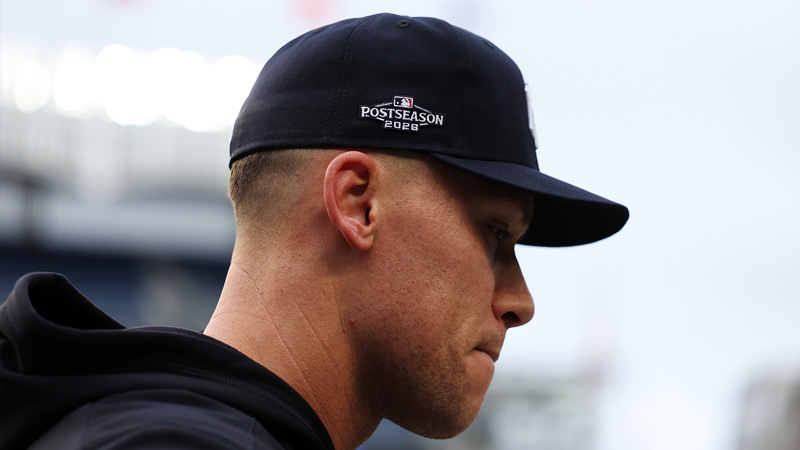
There is something uniquely painful about watching your team enter October with the brightest lights shining, only to find out that the one player you were counting on to carry the lineup will be spending the whole series in the dugout. That is the reality the New York Yankees are facing as they begin their American League Division Series against the Tampa Bay Rays, and it’s a reality that has left the franchise’s heart heavy. Captain Aaron Judge, the towering slugger who has become the very face of this team, was left off the roster entirely while he continues to try to work his way back from a calf injury. For a player of Judge’s caliber—a three-time AL MVP, according to the report—being reduced to a cheerleader at the most critical moment of the season is devastating. He hasn’t played since September 16, which means his body simply hasn’t healed enough to trust him in a five-game sprint where every at-bat, every swing, and every throw could mean the difference between a deep postseason run and another early, painful exit. Fans have grown used to seeing Judge step into the box with that familiar, intense stare, ready to launch a game-changing home run. But this October, the Yankees have to accept that their leader will be watching from the shadows, unable to do what he loves most. It’s a human story as much as a baseball story—a man who wants nothing more than to be out there with his brothers, yet whose body is telling him no. The decision to leave him off the roster wasn’t made lightly, and it came after days of conversation, testing, and the kind of disappointing conclusions that no athlete ever wants to hear. Now the Yankees have to figure out a way to survive without him, and that challenge will define everything about this series.
Paragraph 2: A Season of Struggle, Pain, and Unfinished Business
To understand how devastating this moment is for Judge, you have to understand everything he went through just to get back on the field in the first place. This season was supposed to be another chapter in a legendary career, a chance to lead the Yankees deep into October and perhaps finish the job that has eluded them for so long. Instead, it became a year of constant interruptions, medical reports, and setbacks. Judge was sidelined by a fractured rib from May 31 to September 8, a painful injury that not only kept him out of the lineup for more than three months but also robbed him of the rhythm and timing that hitters so desperately rely on. When he finally returned, he was far from the polished version of himself that has terrorized pitchers for years. He played in just seven games before straining his right calf—a new injury that reignited old frustrations and made it clear that his body was not cooperating. The numbers tell the story of a diminished and heartbroken competitor: limited to only 66 games this season, Judge hit a modest .241 with 18 home runs and 41 RBIs, posting an .871 OPS. Even more telling, his September was a struggle, as he batted just .174 with a single home run and three RBIs. For a man who once hit 62 home runs in a single season, these numbers feel like a cruel twist of fate. But beyond the stats, there is the emotional weight of watching a superstar humbled by injuries. Judge has never shied away from responsibility. He has always carried himself with grace, showing up daily with a work ethic that younger players admire. But in this season, he was forced to spend more time in the training room than on the field, and each setback chipped away at his spirit. Now, as the Yankees enter the playoff gauntlet without him, Judge must cope with the hardest role of his career—being a leader who cannot lead by example, a captain who must guide his team from the bench while secretly wishing he could be the one stepping into the batter’s box with the game on the line.
Paragraph 3: Giancarlo Stanton’s Return Brings Hope and Uncertainty
While Judge watches from the sidelines, another powerful Yankee is being given a chance at redemption—a player who knows exactly what it’s like to be haunted by injuries and doubt. Giancarlo Stanton, the massive designated hitter whose name carries enormous expectations, remained on the 26-man roster for this best-of-five series even though he hasn’t played since April 24 due to strained calf muscles in both legs. His presence is a gamble, but it is also a testament to how much the Yankees believe in his ability to change a game with one swing. Stanton was on the active roster during the Wild Card Series against the Boston Red Sox, a series the Yankees won in a convincing and almost surreal sweep. Yet despite being available, he didn’t get into either game because both contests turned into blowouts. There were no dramatic pinch-hit moments, no late-inning heroics, no chance for Stanton to shake off the rust in a real game situation. So he enters the ALDS cold, with all the pressure in the world on his shoulders and a body that hasn’t been tested in months. The Yankees are essentially betting that Stanton’s raw power and playoff experience are worth the risk. In the postseason, a single home run can answer an entire series’ worth of questions, and Stanton has been known to deliver those momentous blows before. But there’s also the possibility that his legs simply won’t hold up, or that his timing will be off, and the Yankees will be left to wonder what might have been. It’s a strange reality for the team—losing one superstar to injury while desperately counting on another whose health remains a fragile question. But baseball has always been a game of hope, and Stanton is the embodiment of that hope. He is not the player he once was, but he is still a threat, still a name that makes pitchers nervous, still a man who can turn a game inside out with one tremendous crack of the bat.
Paragraph 4: The Extra Arms and the Painful Cut That Nobody Envies
Roster decisions in the playoffs are always brutal, especially when you’re trying to balance pitching depth, defensive flexibility, and offensive firepower. The Yankees had to make some difficult choices to shape this roster, and those choices tell a story of their own. Adding left-hander Ryan Weathers to the roster as an 11th pitcher was a move designed purely for insurance, giving the team more length in the bullpen and the ability to navigate potential extra-inning nightmares. Weathers himself has been sidelined since August 22 with a left forearm flexor strain, so he is another player returning from injury without the benefit of much recent game action. But the Yankees clearly believe his arm is ready to contribute, and in a short series where relievers can be stretched and overworked, having an extra body is never a bad thing. The more painful decision, though, involved utilityman Amed Rosario, who was dropped from the roster. Rosario had just two plate appearances in the Wild Card Series, drawing a walk and striking out, but he was still a valuable presence who could play multiple positions and provide speed off the bench. Leaving a player like him home is never easy, and it speaks to the ruthless math of October. When you can only carry so many players, every spot matters, and the Yankees decided they needed another pitcher more than they needed another versatile position player. It’s the kind of decision that managers lose sleep over, and it’s also a reminder that for every player who gets to celebrate a playoff roster spot, another player is left feeling empty and frustrated. Rosario will still be with the team in spirit, but he won’t be in the dugout, won’t be able to cheer his teammates in person, and won’t get the chance to contribute if an injury pops up during the series. That is the cruelest part of the game—being so close to the dream, yet just far enough away to feel completely helpless.
Paragraph 5: The Rays’ Pitching Puzzle and the Art of Strategic Risk
On the other side of the field, the Tampa Bay Rays are also playing a game of roster chess, and their choices reveal a deep commitment to pitching versatility. For this ALDS, Tampa Bay carried 12 pitchers, a significant number that shows they want to be able to mix and match, keep their starters on short leashes, and use a parade of arms to keep Yankee hitters off balance. Included in that group were right-hander Cole Susler and left-hander Steven Matz, both of whom appear to have earned the trust of the coaching staff for this crucial series. Meanwhile, right-handers Brody Hopkins, Casey Legumina, and Manuel Rodriguez were left off the roster, a reminder that even strong regular-season performances don’t guarantee a spot when the games matter most. The Rays have built their entire identity around creative pitching usage, unorthodox strategies, and a willingness to ignore traditional baseball logic. Their bullpen is their weapon, and they treat every game as a seven-inning puzzle that needs to be solved with a committee approach. That puts extra pressure on the Yankees, who will have to be ready to face a different look every time they step into the batter’s box. But for all the strategy and number crunching, there is still a very human element to these decisions. Players like Hopkins, Legumina, and Rodriguez put in months of work to be considered for this roster. They probably spent the days leading up to the series checking their phones, hoping for good news, only to hear that they would not be part of this playoff run. It’s heartbreaking, but it’s also the reality of the game. The Rays are not thinking about sentiment; they are thinking about winning. And that means making cold, calculated decisions that give their team the best possible chance to advance to the next round.
Paragraph 6: Facing the Odds Without the Captain
So here they are, the New York Yankees, at the start of another playoff journey, except this time they are doing it without their captain. Aaron Judge may not be in the lineup, but his presence is sure to be felt—in the pregame speeches he might give, in the quiet encouragements he offers from the dugout, and in the expectations that follow every player who steps onto the field. The Yankees have proven before that they can win without relying on a single superstar, but the road through the Tampa Bay Rays will not be easy. Every game will be a fight, every mistake will be magnified, and every hero will need to step up. The story of this series is not just about statistics and matchups; it is about heart, resilience, and the willingness to lift each other up during the most stressful weeks of the season. Players like Giancarlo Stanton have the chance to rewrite their own narratives and remind the world why they were once considered among the greatest hitters in the game. Pitchers like Ryan Weathers get the opportunity to show that their bodies are ready for the big moments. And the players who remain healthy must carry an extra weight, knowing that they are playing for themselves, for the fans, and also for their injured captain who would give anything to swap places with them. In many ways, this is the truest test of what it means to be a team. October has always been a month of legends, a time when ordinary players become heroes and heroes become immortal. The Yankees may be missing their biggest weapon, but they are not missing the belief that a championship is still possible. As the first game of this best-of-five series gets underway, they will be playing with a heavy heart but a determined spirit. They know that Aaron Judge is with them, even if he isn’t on the field. And that, eventually, is enough to keep the dream alive. Reporting by The Associated Press.