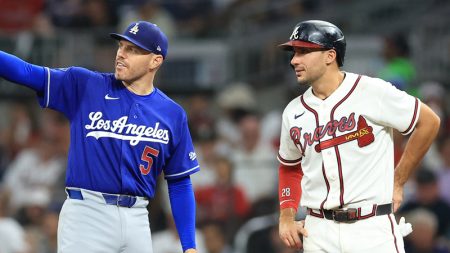






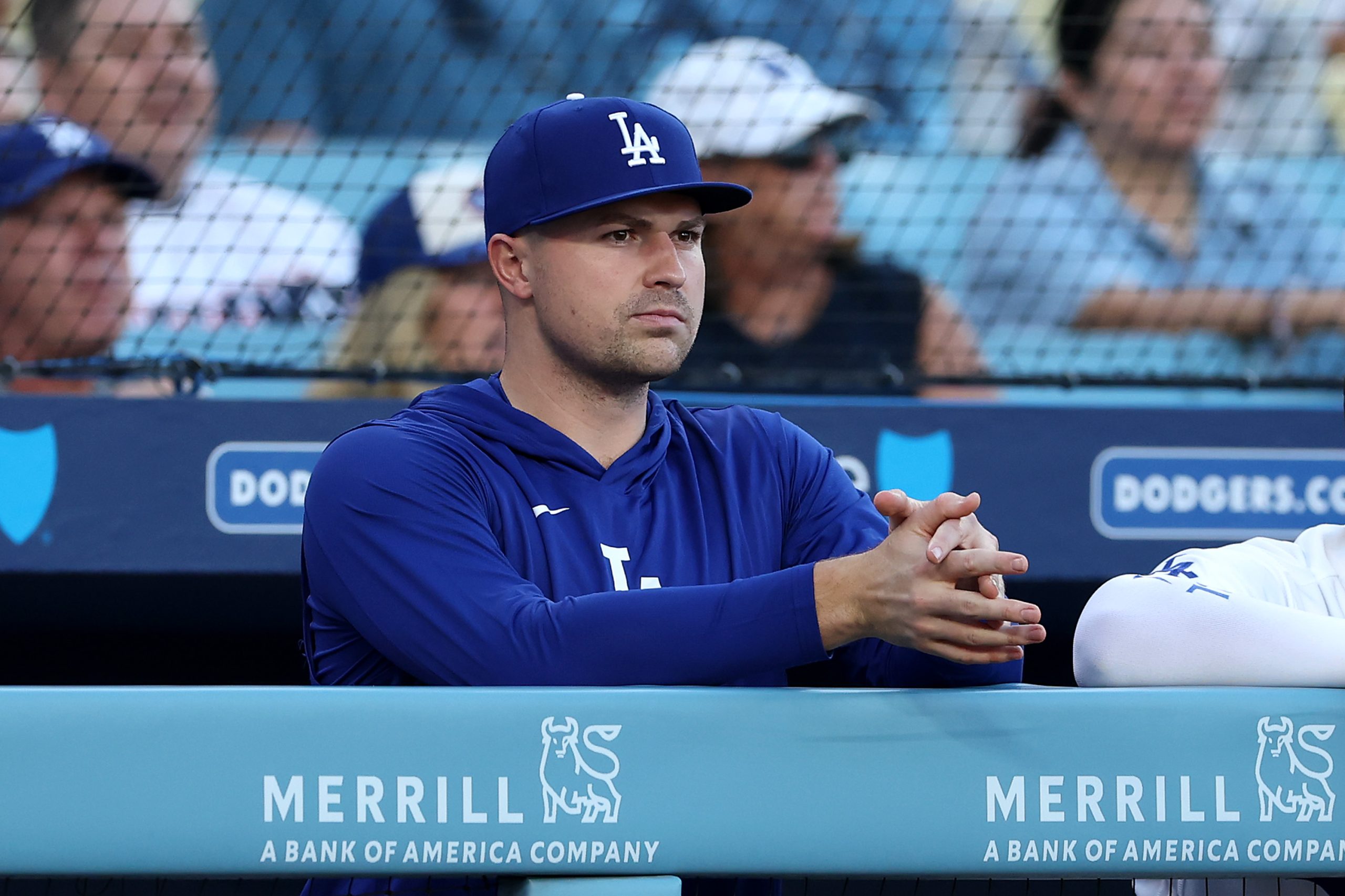
The Los Angeles Dodgers are standing on the edge of another October dream, and the beginning of that dream is a decision. When the National League Division Series opens against the Atlanta Braves on Saturday at Dodger Stadium, manager Dave Roberts will hand over a baseball with the weight of an entire franchise behind it. There will be a sellout crowd, cameras flashing, and a city holding its breath. Roberts has plenty of choices—veterans, young stars, former Cy Young winners, postseason heroes. Yet all signs indicate that Tarik Skubal, the left-handed ace acquired from Detroit in a blockbuster trade, will start Game 1. This feels both logical and poetic. Skubal arrived in Los Angeles as the biggest midseason acquisition, a pitcher whose reputation preceded him through clubhouse doors and into the daily conversation of fans. But his first few starts in Dodger blue were not flawless. He nibbled, he pressed, he seemed to want everything to be perfect instead of simply being himself. Then the old Skubal returned. The fastball sang, the slider bit, the changeup vanished out of the strike zone. He finished the regular season with a 3-2 record and a 2.52 ERA over eight starts for the Dodgers, a small sample that still felt like a statement. For Dave Roberts, the decision is about more than lining up the rest of the rotation; it is about announcing to the Braves, to the fans, and to the baseball world that the two-time defending champions are not going anywhere. When you have a lefty this dangerous, you don’t wait to use him. You put him on the biggest stage and let him be the first act of a performance everyone hopes will end with a parade.
To understand why Skubal is the right choice, you have to retrace a journey that began long before the trade deadline, when the Dodgers made the kind of aggressive move that defines a franchise unafraid of its own ambition. Detroit gave up its crown jewel, and Los Angeles welcomed him with open arms, expecting not merely a good pitcher but a dominant one. At first, there were hiccups. A new city, a new catcher, a new league, a new set of hitters, the weight of a pennant race—it takes a special kind of character to absorb all of that and still shine. Skubal struggled early, as if the blue uniform still belonged to someone else. Every pitcher wants to make a great first impression, and when you are traded to a defending champion with a fan base that expects greatness, that pressure can be suffocating. But great pitchers are not judged by their first few moments. They are defined by the adjustments they make and the calm they find in chaos. Slowly, then all at once, the old Skubal reappeared. He started attacking hitters instead of dancing around them. His confidence grew as he got to know his defense. He began to look less like a deadline addition and more like a franchise cornerstone, even though his future beyond this October remains uncertain. Indeed, Skubal is expected to be one of the most coveted free agents this winter, and every pitch he throws now is a reminder of why. This makes the postseason a fascinating opportunity for him. He can cement a legacy, repay the Dodgers for their faith, and make himself even more valuable in the months to come. But in the dugout, none of that is on his mind. What matters is the next inning, the next batter, the next pitch. The human grace of this story is that Skubal wants to prove his worth not because he has something to gain, but because he has something to give—a championship to a team that believed in him.
Roberts’s decision also sets up an elegant chain reaction for the rest of the rotation. If Skubal starts Game 1, the Dodgers can line up Yoshinobu Yamamoto or Blake Snell for Game 2, with the luxury of choosing based on how the opener unfolds and which arm matches up best against Atlanta’s hitters. That flexibility is exactly what a manager dreams of in October, when one wrong move can end a season. Yamamoto, the Japanese right-hander, has already proven he can handle bright lights and heavyweight moments, while Snell is a former Cy Young winner with some of the nastiest stuff in the game. Having either one as a Game 2 option would be a luxury for any franchise; having both makes the Dodgers terrifying. But the real value of Skubal on the mound in Game 1 is psychological. The Dodgers want to seize control of the series immediately, put the Braves on their heels, and let the home crowd create the kind of noise that rattles visitors. Skubal is the kind of pitcher who can deliver that. He attacks the strike zone, he does not shrink from big moments, and he gives his defense confidence. In many ways, the Game 1 starter is more than a pitcher—he is a message. By choosing Skubal, Roberts is saying that the Dodgers are not here to feel their way into the postseason; they are here to strike first, strike hard, and never look back.
Beyond the mound, this Dodgers team carries deep historical weight. They enter the postseason for the 14th consecutive season, a streak so extraordinary that it ties the Atlanta Braves’ run from 1991 to 2005. In a sport built on parity, injuries, and heartbreak, sustained excellence like this is almost impossible to maintain. It takes ownership willing to spend, executives willing to be creative, a coaching staff willing to adapt, and a clubhouse full of players who buy into something bigger than themselves. For the Dodgers, this streak has become both a badge of honor and a burden. They have won the World Series twice in a row, and now they are chasing something rarer still: a third consecutive title. The history of baseball is filled with dynasties that came up one game short, one pitch short, one swing short. The Dodgers know that history, and they carry it with them every single game. That is why Skubal’s start matters so much. It is not only about this October; it is about honoring a legacy that spans more than a decade. The fans in Los Angeles have come to expect October as a birthright, but they also understand how fragile it all is. One injury, one bad bounce, one cold streak, and the season disappears into the winter air. The players understand this too. Veterans in the clubhouse have been on teams that failed to finish the job; young players are learning that postseason baseball is a different sport. In that sense, the streak is both a triumph and a test. It says these Dodgers have been here before, but it also asks if they can keep the magic alive.
Over in the other dugout, the Braves are asking themselves very different questions, but they are no less urgent. Manager Walt Weiss has his own dilemma: who gets the ball for Game 1? The obvious choice is Chris Sale, the veteran ace whose comeback story has been one of the best in baseball. But Sale pitched in both Game 2 and Game 3 of the wild-card series against the Philadelphia Phillies, which means he carries a heavy workload into the NLDS. Weiss must decide whether to trust him on short rest or lean on another arm. It is a classic October conundrum, a struggle between emotion and logic, between loyalty and caution. The human body can only do so much, and a pitcher’s arm is as much a mystery as a weapon. Asking Sale to gather himself for another high-stakes outing could be heroic, or it could be reckless. The Braves, meanwhile, are used to being counted out. They have lost key players to injury, faced skepticism all season, and still found a way to reach the NLDS. There is a stubbornness in that clubhouse, a refusal to accept the idea that this series is already decided. The Braves know that baseball is not played on paper. If their starter can keep the game close early, their lineup has enough power to turn a deficit into a lead in one swing. They also know that the Dodgers’ bullpen, for all its depth, can be beaten if the starters do not go deep enough into games. For Weiss, the challenge is not just choosing a Game 1 starter; it is choosing an identity. Will his team play it safe, or will they gamble? Will they put their trust in a tired ace, or surprise everyone with a fresh arm? In October, every decision is a story, and the Braves are determined to write their own ending.
In the end, this NLDS matchup between the Dodgers and Braves is about the moments that make baseball a game of human emotion. For Tarik Skubal, this is a chance to quiet every doubt, reward every believer, and add a postseason chapter to a career still being written. For Dave Roberts, it is a chance to show that all those lineup cards and bullpen phone calls led to something beautiful. For the Dodgers, it is a chance to embrace the pressure of being champions and push it even further. For the Braves, it is a chance to defy expectations and remind the world that heart can beat talent. And for fans, it is a chance to sit on the edge of their seats, hear the crack of the bat, feel the rumble of the crowd, and remember why they fell in love with this sport in the first place. The stats will be recited in the television booth, the lineups will be debated on social media, and the predictions will be made in bold type. But what will linger long after the last out is the human side of it all: the nerves before the first pitch, the joy of a clutch hit, the heartbreak of an error, the unbreakable bond between a city and its team. Skubal may not have been in Los Angeles long, but he understands what this uniform means. He has heard the stories of the legends who came before him, the voices of a franchise that refuses to stay down. Now he gets to write his own verse in that long, loud poem. The game will be played on a diamond under the lights, with millions watching, but in the end it will be a simple human test: who wants it more, who trusts themselves more, and who can handle the fear and turn it into fire. The Dodgers have chosen their answer. The Braves are still searching for theirs. And that is exactly what makes October the best month of all.