




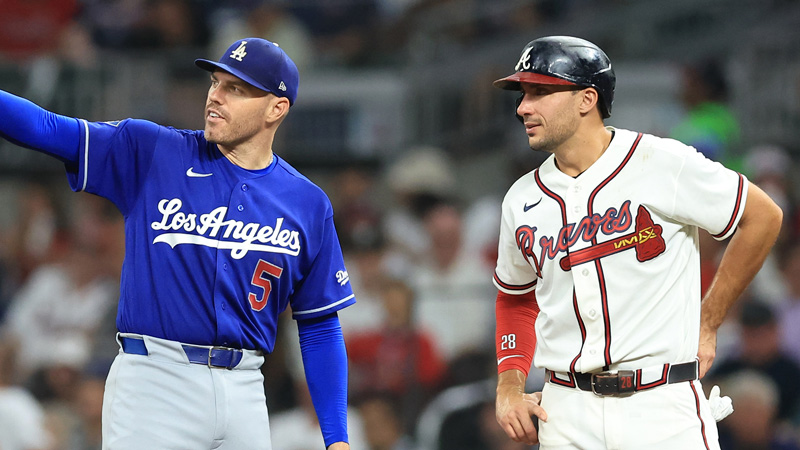
Baseball rivalries are often built on geography, bad blood, or decades of bad luck. The rivalry between the Los Angeles Dodgers and Atlanta Braves is a little different. It’s built on timing. For the better part of thirty years, these two franchises have had a habit of being great at the same time, and that means they keep running into each other when it matters most. There’s also one familiar face who ties them together: Freddie Freeman, the star first baseman who won a World Series with Atlanta, then left for Los Angeles and won another. That kind of crossover makes this rivalry feel less like a grudge and more like a family reunion with everything on the line. This weekend, the two teams add another chapter to that story, meeting in the 2026 National League Division Series. Game 1 is Saturday at 4 p.m. ET on FOX, with the Dodgers holding home-field advantage. It will be the sixth time these franchises have squared off in the postseason, and the fifth time since 2013. The previous five series have produced everything from a quick sweep to a historic collapse, from a neutral-site pandemic nightmare to a sweet revenge story. For Braves fans, some of these moments still sting. For Dodgers fans, they are proof that October can be as cruel as it is glorious. Before we get to the next act, it’s worth looking back at the five playoff wars that brought us here, because if history is any guide, this one will be unpredictable, emotional, and probably decided by a moment nobody sees coming.
In 1996, the Braves were the closest thing baseball had to a dynasty. They had won the World Series the year before, and they entered October looking like a machine. The Dodgers were simply in the way. Atlanta swept the best-of-five NLDS, and they did it with the kind of pitching that made the ’90s Braves so terrifying. John Smoltz started Game 1 and allowed just one run over nine innings, but the game was still tied in the tenth when catcher Javy López launched a home run off Antonio Osuna to give Atlanta a 2-1 win. Game 2 was more of the same, with Greg Maddux throwing seven shutout innings and allowing no walks. The Braves needed a late push, and they got it when Fred McGriff and Jermaine Dye hit back-to-back solo homers in the seventh to turn a tight game into a 3-2 victory. Then Tom Glavine closed it out at home, allowing just one run over 6⅓ innings. The bats did the rest: McGriff drove in a run with a double in the first, Mark Lemke added a two-run double in a four-run fourth, and a young Chipper Jones launched a two-run homer. It was a complete performance, the kind that made Atlanta look unstoppable. The Dodgers, meanwhile, managed just five runs in the entire series, and they never really looked like they belonged on the same field. The Braves went on to win the National League pennant for the second straight year. But then came the World Series, where they blew a 2-0 lead to the New York Yankees. That painful ending tends to get remembered more than the NLDS sweep, but the message was clear: the Braves were the class of the league, and the Dodgers, at that point, were just a footnote in Atlanta’s story.
Seventeen years later, the rivalry found new life. The 2013 Braves were back on top of the NL East for the first time in eight years, and they had a young, exciting team with a loud home crowd at Turner Field. But the Dodgers had Clayton Kershaw, and that made all the difference. In Game 1, Kershaw carved through Atlanta’s lineup with 12 strikeouts over seven innings, while Adrián González hit a two-run homer and Mark Ellis drove in a run. The Dodgers won 6-1, and the Braves looked rattled. They bounced back in Game 2 with a 4-3 win, thanks to Jason Heyward’s two-run single in the seventh and a solid start from Mike Minor, but the Dodgers were just getting started. Game 3 was a 13-6 blowout in Los Angeles, with Carl Crawford and Juan Uribe homering and Yasiel Puig and Hanley Ramírez each collecting three hits. The series shifted back to Atlanta for Game 4, and the Braves were on the verge of forcing a decisive Game 5. They led 3-2 in the eighth inning, with the home crowd ready to explode. Then Uribe, a veteran who always seemed to show up in October, launched a two-run homer to give the Dodgers the lead. Kenley Jansen struck out the side in the ninth, and just like that, the Braves were eliminated. It was a brutal way to lose, and it set a tone for what would become a recurring October nightmare. The Dodgers, meanwhile, were becoming the kind of team that expected to win those close games, and that confidence would only grow as the years went on.
By 2018, the Braves had finally emerged from a rebuild. Freddie Freeman was the veteran anchor, and around him were young stars like Ronald Acuña Jr. and Ozzie Albies. The future was bright, but the present belonged to the Dodgers. This series had an eerie similarity to 2013. Atlanta couldn’t score in the first two games, managing just nine hits combined while losing 6-0 and 3-0. Hyun Jin Ryu dominated Game 1, Max Muncy hit a three-run homer, and Joc Pederson and Kiké Hernández added solo shots. Game 2 was even more frustrating, because the Braves ran into Kershaw at his absolute best. He threw eight scoreless innings, allowed only two hits, and made Atlanta’s hitters look helpless. Manny Machado, in his brief and strange Dodgers tenure, hit a two-run homer, and Yasmani Grandal added a solo shot. The Braves finally woke up in Game 3, scoring five runs in the second inning, including a grand slam from Acuña that felt like a changing-of-the-guard moment. But the Dodgers answered, tying the game with a two-run single from Justin Turner, a two-run homer from Chris Taylor, and a solo shot from Muncy. Freeman then hit a solo homer in the sixth to put the Braves ahead for good, and they won 6-5. But the Dodgers closed it out in Game 4, rallying from a 2-1 deficit with two runs in the sixth and three more in the seventh, capped by Machado’s three-run homer. The bullpen shut things down, and the Dodgers moved on. They would lose in the World Series again, but for Atlanta, the lesson was harsh: the young core was talented, but the Dodgers were a wall they couldn’t climb.
Then came 2020, the strangest season in baseball history. The pandemic shortened the regular season to 60 games, and the playoffs were played at neutral sites, with the Braves and Dodgers meeting in the NLCS at Globe Life Field in Texas. For Atlanta, this was supposed to be the moment. They jumped out to a 2-0 series lead, winning Game 1 with a four-run ninth inning and taking Game 2 by an 8-7 score, with Freeman and Albies homering. The Braves were two wins away from the World Series, and the Dodgers looked vulnerable. Then came Game 3, and it was an all-time disaster for Atlanta. The Dodgers scored 11 runs in the first inning, with Muncy hitting a grand slam, Pederson hitting a three-run homer, and Edwin Ríos adding a solo shot. The final was 15-3, and the momentum shifted completely. The Braves answered with a 10-2 blowout in Game 4, breaking open a tie game with six runs in the sixth inning. Marcell Ozuna had four hits, and the Dodgers managed only three hits total. Atlanta was up 3-1, and the Dodgers were on the ropes. But then Los Angeles did what great teams do: they refused to die. Game 5 was a 7-3 win, with Corey Seager homering twice and Will Smith hitting a three-run shot. Game 6 was a 3-1 win, with Seager and Justin Turner going deep and Walker Buehler throwing six scoreless innings. Game 7 was a back-and-forth thriller, with the Braves scoring in the first, second, and fourth innings, but the Dodgers answered every time. Kiké Hernández homered in the sixth, Cody Bellinger homered in the seventh, and the Dodgers pulled off a 4-3 comeback. They went on to beat the Tampa Bay Rays in the World Series, winning their first championship since 1988. For the Braves, it was the most painful loss of them all, a 3-1 series lead that slipped away in the most heartbreaking way possible.
Revenge came quicker than anyone expected. The Braves and Dodgers met again in the 2021 NLCS, and this time, Atlanta was the team that refused to break. Game 1 was a tense, low-scoring affair that ended with Austin Riley’s walk-off RBI single in the ninth. Game 2 was even more dramatic, with Eddie Rosario delivering a walk-off infield single after a four-hit night. The Braves were up 2-0, and the ghosts of 2020 seemed to be fading. The Dodgers fought back in Game 3, with Cody Bellinger hitting a three-run homer in the eighth and Mookie Betts adding an RBI double to steal a 6-5 win. But Atlanta responded in Game 4 with a 9-2 rout, as Rosario hit two homers and collected four more hits, while Freeman and Adam Duvall also went deep. The Dodgers staved off elimination in Game 5 with an 11-run explosion, with Chris Taylor hitting three homers and AJ Pollock adding two, but the Braves finally closed it out in Game 6. Riley drove in a run in the first, and Rosario, who was having a series for the ages, hit a three-run homer in the fourth to put Atlanta up for good. The 4-2 win sent the Braves to the World Series, where they beat the Houston Astros and won their first championship since 1995. All of this happened with Acuña watching from the sidelines, having missed the second half of the season with a knee injury. It was a story of resilience, redemption, and sweet revenge. Now, five years later, the two teams are back at it again. Freddie Freeman, the man who once carried the Braves, is now the face of the Dodgers, and he’ll be standing across from the team that raised him. The history is rich, the emotions are raw, and Saturday’s Game 1 is another chance for two great franchises to write a new chapter in a rivalry that never seems to get old.