





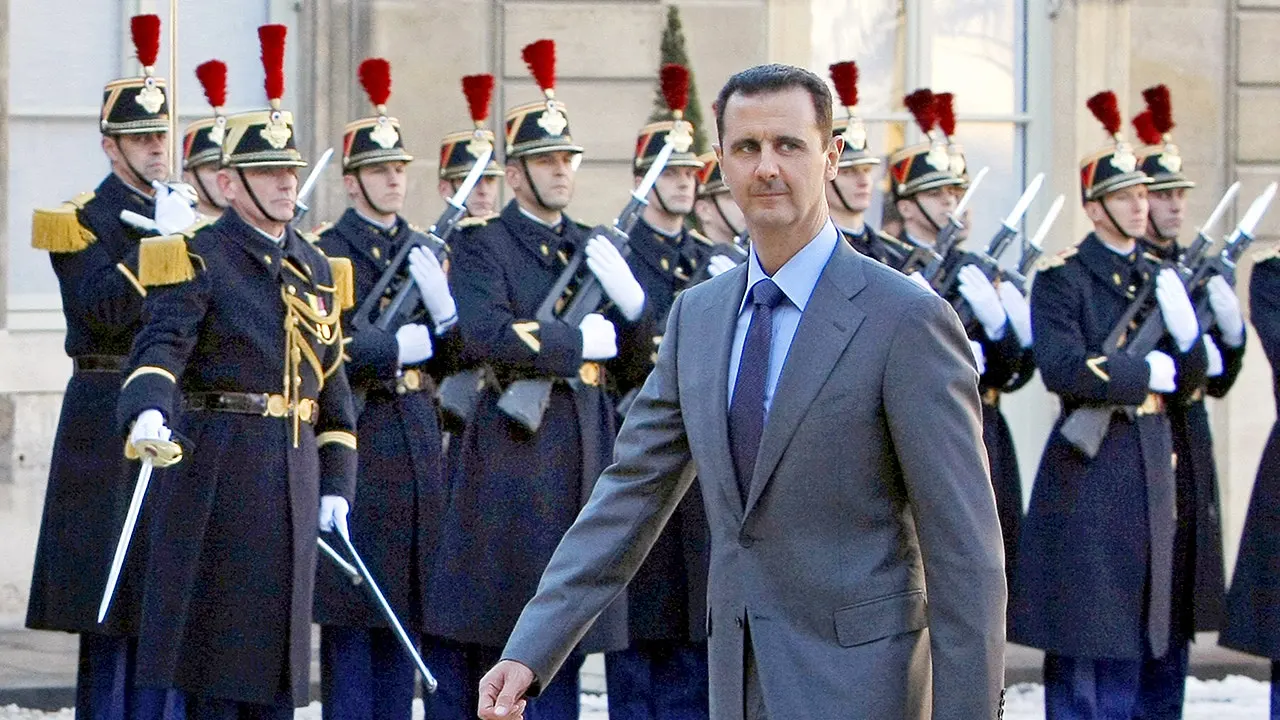
On a warm Tuesday morning in Damascus, a city still bearing the profound physical and emotional scars of a fourteen-year conflict, a historic moment of reckoning unfolded inside the wood-paneled chambers of the Fourth Criminal Court. In a nation where the judiciary was once a mere instrument of state terror, the televised broadcast of Judge Fakhareddine al-Aryan reading a death sentence against the ousted Syrian President Bashar Assad and his younger brother, Maher Assad, felt less like a standard legal proceeding and more like a collective exorcism of a nation’s multi-decade trauma. For nearly five decades, the Assad dynasty ruled Syria with an absolute iron fist, systematically silencing dissent through a vast, labyrinthine security apparatus that made the mere whisper of political opposition an invitation to torture or death. Yet, twenty months after a lightning rebel offensive in December 2024 brought a sudden, dramatic end to their dynastic reign, the invisible walls of fear that had long imprisoned the Syrian collective consciousness began to crumble under the weight of formal justice. As the judge’s voice echoed through the courtroom and was carried by live state television into living rooms, crowded cafes, and dusty displacement camps across the region, he declared that Bashar Assad had systematically utilized state agencies to commit heinous war crimes and crimes against humanity. For the families of the estimated half a million people who perished during the long, agonizing civil war, this verdict was a profound validation of their immense suffering, representing the first time a Syrian court had officially held the inner circle of the former regime accountable for the systemic slaughter of its own citizens. Outside the courthouse in central Damascus, tight security did little to deter crowds of ordinary Syrians who gathered to listen, their faces etched with a complex mixture of grief, relief, and disbelief as they witnessed the historic downfall of their former tormentors.
The court’s decision did not only target the brothers who sat at the apex of the state’s pyramid of power; it also delivered a severe, highly symbolic judgment against their maternal cousin, Atef Najib, whose actions in 2011 acted as the tragic catalyst for the entire national catastrophe. In the early spring of that fateful year, inspired by the wave of democratic uprisings sweeping across the Arab world, a group of teenage schoolboys in the southern provincial city of Daraa spray-painted anti-government graffiti on a school wall, naively writing, “Your turn, Doctor,” in reference to Bashar Assad’s medical training. Najib, who then served as a ruthless brigadier general and the head of the Political Security Branch in Daraa, responded with an act of such disproportionate and sadistic brutality that it permanently shattered the community’s tolerance for state oppression. The boys were arrested, held incommunicado, and subjected to horrific torture, including having their fingernails ripped out by security personnel. When their desperate parents and community elders went to Najib to beg for their children’s release, they were met with unspeakable insults and cold, arrogant indifference, a moment of sheer cruelty that stripped away any remaining illusion of the regime’s humanity. The resulting protests in Daraa, fueled by raw parental outrage and a demand for basic human dignity, were met with live ammunition and a scorched-earth military response from the central government, quickly spiraling from a localized call for reform into a nationwide, multi-sided civil war that would tear the country apart, displace millions of families, and leave ancient cities reduced to hollow shells of concrete.
While Najib’s localized cruelty sparked the initial flames of rebellion, it was Maher Assad, the younger brother of the president, who commanded the blunt-force military instrument that sought to extinguish the uprising through systematic terror and destruction. As the commander of the Syrian military’s notorious 4th Armored Division, Maher oversaw an elite, highly loyal force that came to symbolize the ultimate depravity of the regime’s survival tactics at any cost. Opposition activists, human rights organizations, and international observers have long documented the horrific catalog of atrocities linked to the 4th Armored Division, which operated not merely as a military unit, but as a heavily armed cartel and a shadow state unto itself. Beyond the active battlefields, where they deployed heavy artillery and chemical weapons against civilian neighborhoods, Maher’s forces ran their own private networks of clandestine detention facilities where torture, sexual violence, and summary executions were deployed as deliberate tools of psychological warfare to break the will of the population. To fund this massive apparatus of violence, the division engaged in widespread extortion, systematic looting of recaptured towns, and the manufacturing and trafficking of illicit narcotics like Captagon, turning Syria into a major global narco-state. For the millions of Syrians who had to cross checkpoints guarded by Maher’s soldiers, daily life was defined by a constant, paralyzing dread, knowing that a simple whim of a soldier could mean disappearance into a subterranean dungeon from which few ever returned alive.
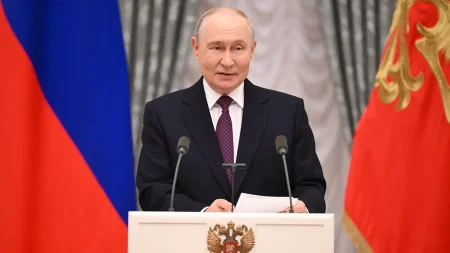
Despite their seemingly impregnable fortress of power, the Assad brothers’ rule collapsed with shocking speed in late 2024, culminating in a chaotic, nighttime flight to Moscow where they were quickly granted political asylum by their longtime patron, Vladimir Putin. This sudden transition of power left Syria’s new leadership with the monumental task of rebuilding a shattered state while seeking justice for a population desperate for closure. The sentencing of Bashar and Maher Assad in absentia carries a bitter, complicated emotional weight for many survivors, who recognize that the brothers are currently living in comfortable, secure exile in Russia, far beyond the physical reach of the newly reformed Syrian justice system. Syria’s new government has formally requested that Moscow extradite the Assads to face their punishment, setting up a tense diplomatic standoff that tests the boundaries of international accountability and the geopolitical calculations of a protective Kremlin. For the millions of Syrian refugees languishing in neighboring countries or seeking new lives in Europe, the sight of their former president living under the protection of a foreign superpower is a painful reminder of the limits of international law. Yet, the legal declaration of their guilt serves as an vital, permanent historical record, ensuring that the narrative of the Syrian conflict is written not by the victors who fled, but by the survivors who remained to rebuild.
In stark contrast to the empty spaces left by the exiled Assad brothers, the physical presence of Atef Najib inside the courtroom provided a visceral, undeniable anchor for the trial’s reality. Najib, who had been sanctioned by the United States Department of the Treasury in 2011 and was later captured and detained by opposition forces during the regime’s collapse, stood inside a metal cage wearing a drab prisoner’s uniform as the judge read his death sentence. The image of this once-untouchable general—who had once held the power of life and death over entire provinces and answered only to the president—reduced to a silent, caged captive was an incredibly potent symbol for a populace accustomed to the absolute impunity of the ruling class. The cage, a traditional feature of many Arab courtrooms, became a visual metaphor for the dramatic inversion of power that has taken place in Syria, showing that even the most feared architects of the state’s security apparatus are ultimately subject to the rule of law. Watching Najib stand in humiliation, the citizens of Daraa and the families of the tortured schoolboys saw a tangible manifestation of justice that had once seemed completely impossible during the dark decades of Ba’athist rule. It was a moment of profound psychological liberation, demonstrating that the heavy armor of state sovereignty can no longer protect individual perpetrators from the consequences of their cruelty.
Ultimately, while these death sentences represent a crucial milestone in Syria’s transition toward accountability, they are only the beginning of a long, painful journey toward national healing and reconstruction. The physical destruction of Syria’s infrastructure, the fragmentation of its communities, and the deep sectarian divisions sowed by decades of manipulative rule cannot be undone by a single courtroom verdict or the reading of a sentence. Millions of displaced Syrians remain scattered across the globe, hesitant to return to a homeland that is still struggling to establish basic stability, the rule of law, and economic viability. True healing will require more than just punishing the high-ranking architects of war; it will demand a comprehensive process of truth-telling, the location of the tens of thousands of forcibly disappeared persons, and the painstaking reconstruction of a society where human rights are woven into the very fabric of the new constitution. The trial in Damascus, however, has set an irreversible precedent, sending a clear message to future leaders and authoritarian regimes around the world that the clock of justice, though it may grind slowly, eventually catches up with those who wage war against their own people. As Syria steps into this fragile new chapter, the memory of those who suffered and died will remain the guiding light for a nation striving to build a future defined by dignity, justice, and the enduring strength of the human spirit.