





The NFL season is only four weeks old, but there is already a strange and uncomfortable scent in the air — the smell of desperation. Five teams have started the season with zero wins and four losses, tying a league record that has been reached just seven times in the history of professional football and not seen since 2019. For those franchises, the first month has become a recurring nightmare: every Sunday brings another disappointment, every Monday brings another autopsy. Coaches talk about fundamentals, players insist that corrections are just around the corner, but the standings show a hard, unblinking zero in the win column. It is almost impossible to overstate how difficult it is to climb out of an 0-4 hole. The math alone is brutal: with 13 games still to play, a team would need to go something like 10-3 just to reach a 10-7 record and have a real chance at the playoffs. Every loss makes the hill steeper, and the emotional toll is visible in the faces of the players and coaches who have to walk to the podium and explain what went wrong. What makes this particular moment so fascinating is that not all of these teams are supposed to be terrible. Some are being punished by the salary cap, some are in the middle of a painful rebuilding process, and some simply cannot catch the break that would flip their entire season. It takes a particular kind of mental toughness to walk into a locker room after four losses and still believe the season can be saved. But that is exactly what the players and coaches in Miami, Tennessee, Tampa Bay, Houston, and Los Angeles are trying to do. They are not all in the same boat. They are in different boats, in the same storm, and the shore is not visible. This is the race to the bottom — a race no one wants to win, yet a place where five teams now find themselves living and breathing every single day.
Let’s begin with the teams whose failures were not exactly shocking. The Miami Dolphins are 0-4, but that was almost expected given the bizarre financial situation they are in. Miami is carrying an unprecedented $184 million in dead money on the salary cap. That is not a typo. It is the largest figure in league history, and it basically means the Dolphins are paying enormous sums to players who are no longer on the roster while asking the current group to perform like contenders. It is the kind of season that gets defined by accounting more than ambition. The Dolphins are essentially in a rebuilding year, even if no one in the building wants to use that word publicly. They have to absorb the pain of previous contracts, let things get worse before they get better, and hope the young players develop in the meantime. The Tennessee Titans are in a similar place, though for less dramatic reasons. They won only three games in each of the past two seasons, and after that kind of sustained mediocrity, the roster needed a reset. There is no shame in being bad when the team is intentionally building for a better tomorrow, but that doesn’t make Sundays any easier for the fans in Nashville. Every loss still stings, but there is a weird sort of comfort in knowing that this was always likely. In Miami and Tennessee, the 0-4 start feels less like a collapse and more like a consequence. It’s the price of a plan. It’s not fun, but it’s logical. These are teams that are looking at the long game, and the short game is going to be painful. There’s no real panic in the front offices, because they probably saw this coming. The hard part for players and fans is being patient while the vision takes shape, especially in a league where patience is a luxury that no one really has.
The real whiplash in the winless club comes from two teams that were supposed to matter, and they have arrived at 0-4 through very different roads. The Tampa Bay Buccaneers were favored to win the NFC South when the season began, and their record is a strange mixture of bad luck and missed opportunities. All four of their losses have been decided by one score, and their point differential is just minus-20. That might not sound like a positive, but it is actually remarkable for a team with nothing to show for it: it ranks as the fifth-best point differential ever for an 0-4 team, and the best since the 2011 Minnesota Vikings were outscored by 19 points through their first four games. What that means is the Bucs are not getting blown off the field. They are competitive, disciplined, and maybe even a little dangerous. But in the NFL, beautiful losses are still losses. The Los Angeles Chargers, on the other hand, have not been competitive in the same way. They also made the playoffs last season, but their 0-4 start has been punctuated by a minus-39 point differential, the second-worst in the league. That means they are not just losing; they are losing badly. For a team with a young quarterback and playoff aspirations, that is far more concerning. The Bucs can watch the film and see a couple of plays that got away. The Chargers have to look much deeper, into their offensive line, their defensive coordination, and perhaps their own mental state. Both teams are winless, but one is probably closer to turning the corner than the other. For the fans in Tampa Bay and Los Angeles, the start is a brutal letdown because the preseason hype felt real. Now they are left asking how so much hope turned into so much silence, and whether the season can be saved before it completely slips away.
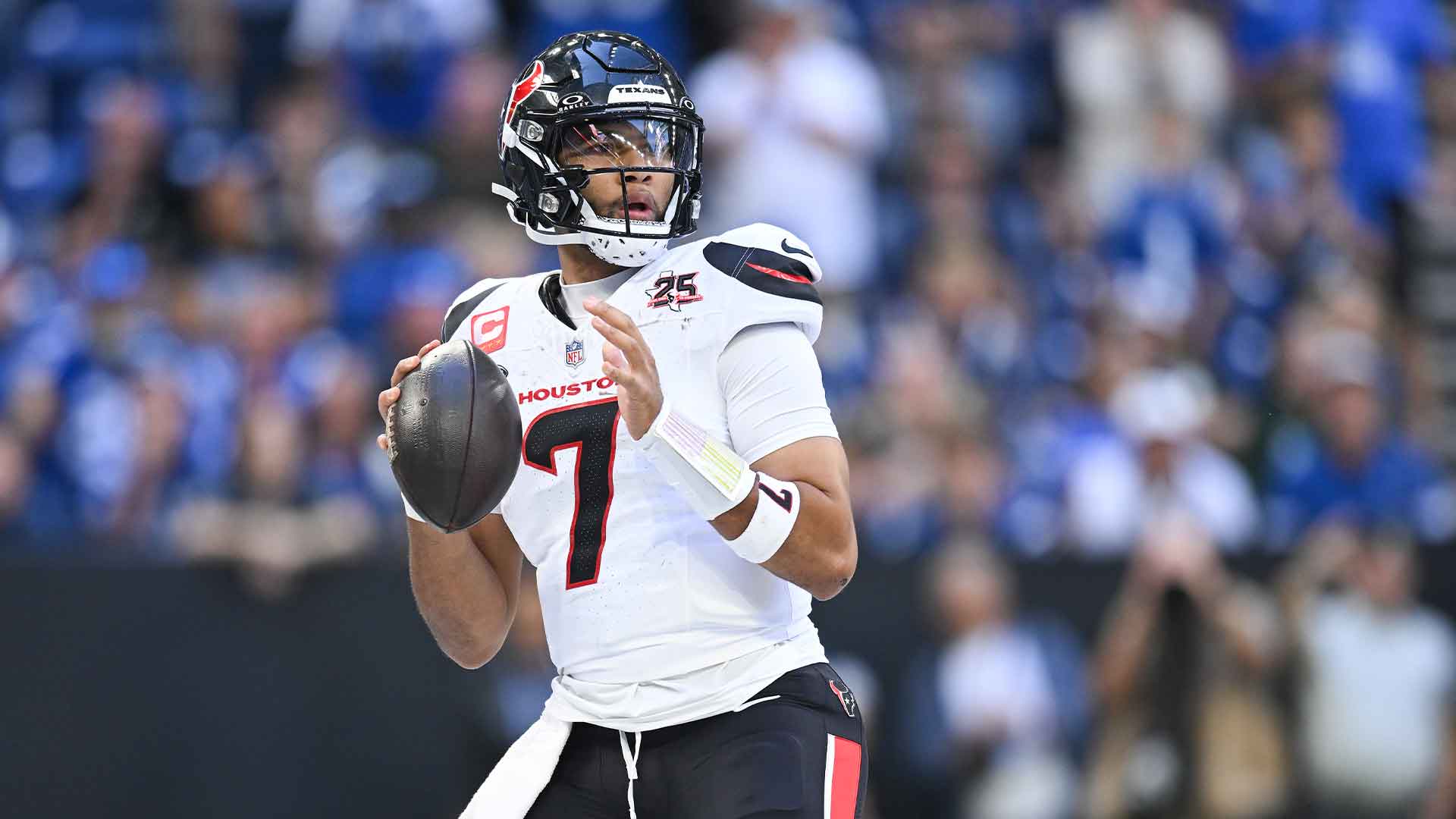
If heartbreak were a measuring stick, the Houston Texans would be the most successful 0-4 team in league history. They have led in the final two minutes in three of their four losses, a staggering amount of late-game torture. On Sunday, they were on the verge of finally getting a win, but the Dallas Cowboys scored the go-ahead touchdown with 40 seconds left to walk away with a 34-30 victory. It was the kind of defeat that leaves a locker room in a strange daze: what else are we supposed to do? The Texans are only the second team since 1991 to lose three of their first four games after leading in the final two minutes. The 2016 Chargers were the first. And if you expand the criteria to simply leading at any point in the fourth quarter in three of their first four games, the only other Super Bowl-era teams to start 0-4 under those circumstances were the 2013 Buccaneers and the 2011 Vikings. Then there is the strangest and most frustrating stat of all: quarterback C.J. Stroud has become the first quarterback since 1950, when starts were first officially tracked, to lose the first four games of a season without throwing a single interception. That is both a compliment and a curse. Stroud is doing his part. He is protecting the football, making smart throws, and giving his team chances to win. But quarterbacks are ultimately judged by wins, and after a month, the scoreboard says zero. It is the kind of start that can make an entire organization question its identity. Are the Texans a good team with a bad record? Or are they a team that finds new ways to lose? Right now, the evidence suggests they are close, but close only gets you so far in the standings. The hardest part for Houston is that there is no easy fix. They have to keep doing what they are doing, hope the breaks even out, and find a way to finish games. In a race to the bottom, the Texans are the team that keeps hitting the finish line just after everyone else.
History does not offer much comfort for teams in this position, but it is also not completely lifeless. This is only the third time in NFL history that two teams have started a season 0-4 after making the playoffs the previous year. The other times were in 1999, when the defending conference champions Atlanta Falcons and Denver Broncos both stumbled out of the gate, and in 1992, when the Los Angeles Raiders and New York Jets endured the same misery. Interestingly, 1992 also produced the greatest comeback story for an 0-4 team: the San Diego Chargers lost their first four games, then won 11 of their next 12, captured the AFC West, and made the playoffs. Since the 1970 NFL merger, they remain the only team to start 0-4 and still reach the postseason. That example should give every winless team a small but genuine spark of hope. Of course, the current group has different levels of urgency. Tampa Bay and Houston can reasonably look at their schedules and see plenty of winnable games ahead. The Dolphins and Titans have the benefit of low expectations and a fan base that understands the rebuilding process. The Chargers have the talent to go on a run, but they have to find a way to stop the bleeding first. No matter where these teams fall on the spectrum, the next few weeks will define their entire season. One win can change the mood in a building. A second win can make people believe again. Another loss, though, can send a franchise spiraling into a place where coaches get fired, veterans get traded, and the season becomes entirely about draft position. The NFL is a results-oriented business, and right now, the results are ugly. But the beauty of a long season is that it is not over. The 1992 Chargers are proof of what is possible, even if it requires a near-miracle. Sometimes the only way out of a hole is to dig in deeper and then climb out with your hands still bloody.
At the other end of the standings, there is a group of teams that are enjoying the exact opposite feeling. Three teams are 4-0, including the Kansas City Chiefs and Minnesota Vikings, both of whom missed the playoffs last season. That kind of rapid turnaround is exactly what the game produces at its best. The last time two teams started 4-0 after missing the playoffs the previous season was in 2013, when the Kansas City Chiefs and New Orleans Saints did it. It is a reminder that the NFL season is not a straight line; fortunes can change in a matter of months. For the winless teams, that message is both a curse and a blessing. It is a curse because it means there is no excuse for staying down. It is a blessing because it means they can still write a completely different story. Over the next 13 games, each of the five 0-4 teams will have a chance to define what kind of season this really is. Some will likely make trades, moving veterans for draft picks and openly shifting toward the future. Others will stay the course and fight for every win, no matter how small. Coaches might change, quarterbacks might get benched, and by December, most of these teams will be playing for pride, jobs, or a better draft slot. But before that happens, there is still football to be played. The race to the bottom is not a destination; it is a temporary home. The best teams in this league are built on resilience, and resilience doesn’t show up until things get hard. Right now, five teams are learning exactly how hard it can get. The season is not lost. It is just waiting for someone to fight back.